

Discover essential backup humidor readiness steps to keep your cigars safe. Ensure humidity and temperature stability for optimal aging.
TL;DR:
- A backup humidor must be properly seasoned, sealed, and monitored to preserve cigars during collection and storage. Essential tools include calibrated hygrometers, seasoning packs, distilled water, and airtight cedar-lined containers, placed in stable environments. Regular maintenance and patience ensure consistent, optimal humidity levels, preventing damage from mold, drying, or pest activation.
A backup humidor is defined as a secondary cigar storage vessel prepared to maintain stable relative humidity and temperature when your primary humidor is unavailable, full, or undergoing maintenance. Proper backup humidor readiness steps require achieving 62–70% RH and 65–70°F before a single cigar enters the box. The industry standard seasoning process runs 7–14 days, calibrated hygrometers are non-negotiable measurement tools, and Spanish cedar lining is the material benchmark for moisture regulation. Skip any of these prerequisites and you risk handing your premium cigars a slow, silent death by desiccation or mold. Dunnluxuryselections works with collectors who understand that a backup humidor is not a shortcut. It is a sanctuary held to the same standard as the primary.
What tools and materials are essential for preparing a backup humidor?
The right tools determine whether your backup humidor becomes a reliable sanctuary or a liability. Gathering them before you begin saves time and prevents the temptation to cut corners mid-process.
| Tool | Function | Why It Matters |
|---|---|---|
| Calibrated digital hygrometer | Measures relative humidity and temperature | Inaccurate readings lead to over or under humidification |
| 84% RH seasoning packs | Saturates Spanish cedar during seasoning | Controls moisture absorption rate and prevents wood cracking |
| Distilled water | Fills humidification devices and wipe-down seasoning | Tap water introduces minerals that degrade humidification media |
| Humidification device or Boveda packs | Maintains target RH after seasoning | Passive packs require less maintenance; active devices offer more control |
| Airtight humidor with Spanish cedar lining | Provides the storage environment | Cedar regulates humidity naturally and imparts beneficial aromatic compounds |
Beyond the tools themselves, the storage environment matters. Place your backup humidor away from direct sunlight, heating vents, and air conditioning units. Room temperature should stay as close to 65–70°F as possible, because temperatures above 70°F risk tobacco beetle development and accelerate flavor degradation. A stable room is the foundation that all other preparation builds upon.
The seal quality of the humidor body is equally critical. A Spanish cedar interior absorbs and releases moisture to buffer RH swings, but a poor seal defeats that mechanism entirely. Run your hand along the lid edge before purchasing or using any backup unit. If you feel airflow, the box will hemorrhage humidity regardless of how many packs you load inside.
- Spanish cedar lining: the industry standard for moisture regulation and pest resistance
- Airtight gasket or tongue-and-groove lid construction: required for seal integrity
- Multiple hygrometers: place at least two inside larger humidors to detect RH stratification
- Distilled water only: never use tap water or propylene glycol solutions in cedar-lined boxes unless the manufacturer specifies otherwise
Pro Tip: Purchase a digital hygrometer with both temperature and humidity display. Knowing the temperature alongside RH gives you the full picture of your storage environment, not just half of it.
How to season and prepare the backup humidor before storing cigars
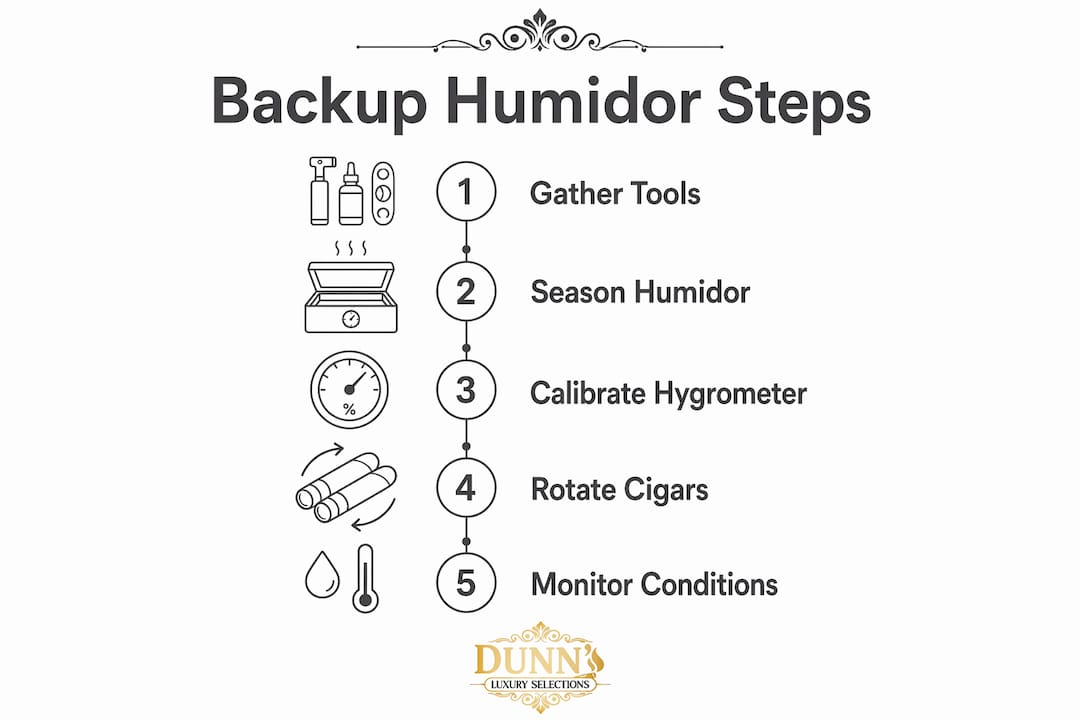
Seasoning is the process of introducing controlled moisture into the raw Spanish cedar lining so the wood reaches equilibrium before it begins competing with your cigars for humidity. An unseasoned humidor will pull moisture directly from your cigars, leaving them dry, brittle, and prone to cracking wrappers.
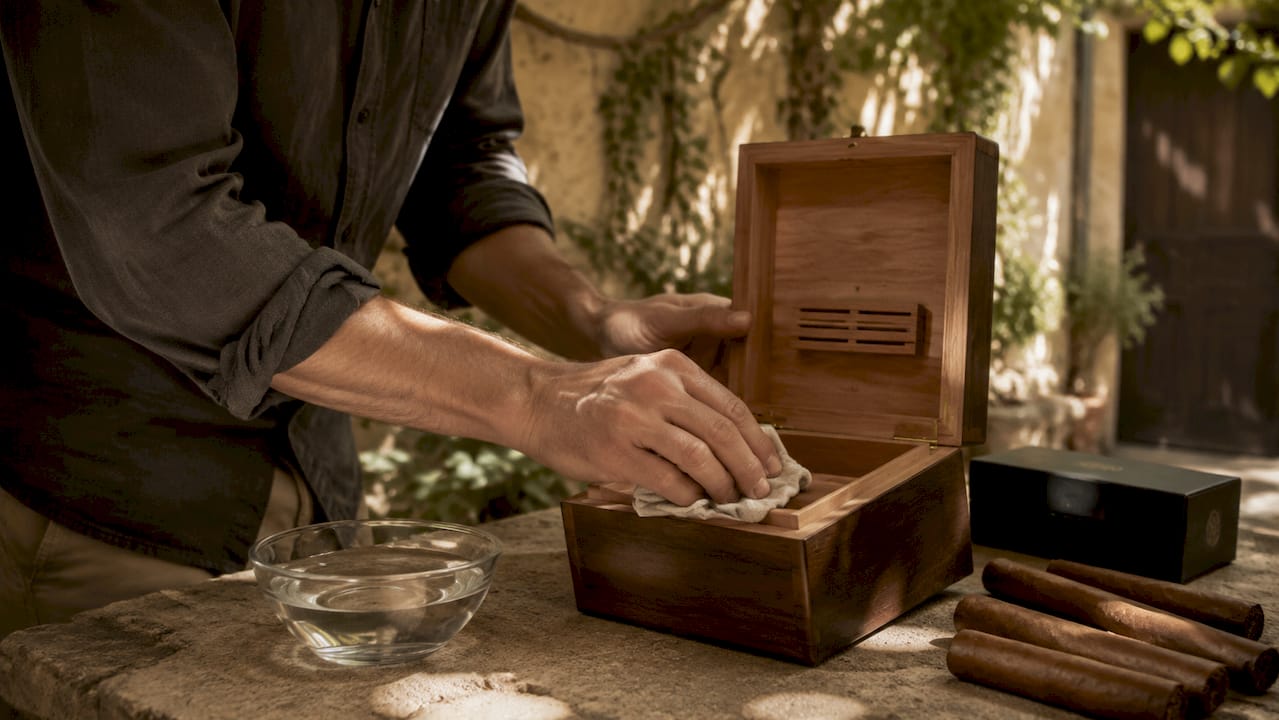
The seasoning process lasts 7–14 days using 84% RH packs placed inside the closed humidor. That duration is not arbitrary. Cedar is a slow absorber, and rushing the process by adding too much moisture at once causes the wood grain to swell unevenly, which warps lids and cracks joints.
Follow these steps in order:
- Wipe the interior lightly with a cloth dampened in distilled water. Do not soak the wood. A single light pass removes dust and opens the cedar grain slightly to accept moisture.
- Place 84% RH seasoning packs on each shelf or tray. Use one pack per 25 cigars of rated capacity as a baseline. Larger humidors need proportionally more.
- Close the lid and leave the humidor undisturbed for 72 hours. Resist the urge to check constantly. Every time you open the lid, you release the humidity you are trying to build.
- Check the hygrometer reading after 72 hours. If RH reads below 75%, add a second set of packs and continue seasoning.
- Monitor daily from day 4 onward. The RH reading will climb, plateau, and then stabilize. Stabilization, not a single high reading, signals readiness.
- Perform the Dollar Bill Test before loading cigars. Place a crisp bill halfway across the humidor’s lid edge and close the lid. The bill should resist removal, indicating an airtight seal. A bill that slides out freely means humidity will escape continuously.
- Calibrate your hygrometer using the salt test. Seal damp table salt and the hygrometer together in a zip-lock bag for 8–12 hours. The reading should register approximately 75% RH. Adjust your hygrometer’s offset setting if it reads differently.
Pro Tip: Rapid humidity increases stress the cedar and destabilize cigar quality. If your RH climbs faster than 5% per day during seasoning, remove one pack and allow the wood to acclimate at a slower pace.
Seasoning is complete when the hygrometer holds a steady reading within your target range for at least 48 consecutive hours without intervention. Only then does the humidor qualify as a true cigar preservation environment.
What does a proper backup humidor maintenance routine look like?
Achieving readiness is the beginning, not the destination. A backup humidor left unattended drifts out of calibration, loses seal integrity, and becomes a liability rather than an asset. Consistent maintenance preserves the conditions you worked to establish.
Weekly checks
- Humidity level: Confirm RH sits within 62–70%. A reading outside that band requires immediate adjustment, not a note to check again next week.
- Humidification device: Refill active humidifiers with distilled water or replace passive packs that have hardened. Hardened packs are exhausted and provide no humidity output.
- Visual inspection: Look for condensation on the lid interior, which signals RH is too high. Check cigars for soft spots or wrapper cracks, which signal RH is too low.
Monthly tasks
Hygrometer calibration should occur every 6–12 months at minimum, but a monthly salt test takes five minutes and catches drift before it damages your collection. Repeat the Dollar Bill Test monthly as well. Gaskets compress over time, and a seal that passed in january may fail by april.
Rotate cigar positions monthly. Consistent rotation and proper spacing prevent mold risk and promote balanced airflow throughout the humidor interior. Leave visible gaps between cigars rather than packing them tightly. A crowded humidor restricts airflow and creates humidity dead zones.
Seasonal adjustments
Ambient room conditions shift with the seasons, and your humidor feels every change. In winter, heated indoor air is drier, which pulls RH down inside the humidor. In summer, high outdoor humidity can push RH above your target range. Adjust your humidification source capacity seasonally rather than waiting for readings to fall out of range.
Pro Tip: Keep a simple log, even a handwritten one, recording your weekly RH and temperature readings. Patterns in that log reveal whether your humidor is drifting gradually, which is far easier to correct early than after a significant swing.
Troubleshooting common maintenance issues
- RH won’t stabilize above 62%: Check the seal first. If the Dollar Bill Test fails, the humidor is losing humidity faster than your device can replace it.
- Odors inside the humidor: Remove all cigars, wipe the interior with a cloth dampened in distilled water, and allow the box to air out for 24 hours before re-seasoning.
- Mold on cigars or cedar: Detect mold early via odor or visible growth, brush surface mold off lightly outdoors, and discard heavily colonized cigars. Clean the interior with distilled water, disinfect non-porous hardware, and re-season fully before reloading.
What are the optimal environmental conditions for backup humidor storage?
Optimal cigar storage conditions are defined by two variables: relative humidity and temperature. Industry guidelines recommend 62–65% RH at 65–70°F for long-term aging. That range reduces mold risk and prevents the flavor muddling that occurs when cigars are stored too wet.
The temperature ceiling of 70°F is not arbitrary. Above that threshold, tobacco beetle larvae, which exist dormant in virtually all natural leaf tobacco, become active and hatch. A single beetle infestation can destroy an entire collection within weeks.
| Condition | Target Range | Risk if Outside Range |
|---|---|---|
| Relative humidity | 62–70% RH | Below 62%: dry, cracked wrappers. Above 70%: mold, flavor loss |
| Temperature | 65–70°F | Above 70°F: tobacco beetle activation. Below 60°F: flavor suppression |
| Hygrometer calibration | Verified every 6–12 months | Inaccurate readings lead to chronic over or under humidification |
| Cigar spacing | Visible gaps between cigars | Tight packing restricts airflow and creates humidity dead zones |
Multiple hygrometers positioned at different heights improve accuracy and detect RH stratification within larger humidors. Place sensors away from the humidification device and away from warm corners near the lid. A single hygrometer positioned next to an active humidifier will always read high relative to the rest of the box.
Logging your readings weekly transforms raw data into a trend line. A humidor that reads 65% every week is healthy. A humidor that reads 65% on average but swings between 58% and 72% is damaging your cigars even though the average looks acceptable. Stability, not a single favorable reading, is the true measure of readiness.
Common mistakes that undermine backup humidor readiness
The most costly mistake collectors make is loading cigars into an unseasoned humidor. The raw cedar acts as a sponge, pulling moisture from the cigars rather than the humidification source. Wrappers crack, draw tightens, and flavor flattens within days.
Prioritizing stable humidity over chasing a perfect RH number is the single most effective principle in cigar preservation. A humidor that holds 64% without fluctuation protects your cigars better than one that averages 68% but swings constantly. Stability is the goal. Precision is the method.
Additional mistakes that undermine long-term readiness:
- Ignoring seal degradation: A gasket that compressed over 18 months of use no longer seals. Test it monthly and replace it when the Dollar Bill Test fails.
- Using tap water: Minerals in tap water clog humidification media and introduce off-flavors into the cedar over time. Distilled water is the only acceptable option.
- Uncalibrated hygrometers: A hygrometer reading 5% high means you are storing cigars at 60% RH while believing they sit at 65%. That error compounds silently over months.
- Panic humidifying: Rapid humidity increases stress the cedar and destabilize the entire environment. If RH drops, add one additional pack and wait 48 hours before adding more.
- Persistent low RH despite full humidification: Doubling humidity packs is the standard fix for drafty humidors or extreme ambient dryness. Increasing humidification capacity offsets leaks without risking over-humidification.
Patience is the discipline that separates collectors who preserve their cigars from those who damage them slowly and wonder why.
Key Takeaways
Backup humidor readiness requires seasoning, seal verification, calibrated monitoring, and consistent maintenance before any cigar enters the box.
| Point | Details |
|---|---|
| Season for 7–14 days | Use 84% RH packs and allow cedar to reach moisture equilibrium before loading cigars. |
| Verify the seal | The Dollar Bill Test confirms airtightness; a failed seal causes chronic humidity loss. |
| Calibrate hygrometers | Use the salt test every 6–12 months to verify accuracy and prevent silent RH errors. |
| Target 62–70% RH at 65–70°F | This range prevents mold, tobacco beetle activation, and flavor degradation. |
| Maintain a weekly log | Tracking readings reveals gradual drift before it damages your collection. |
Why patience is the most underrated skill in humidor readiness
I have seen collectors with extraordinary cigars and genuinely poor storage. The cigars were expensive. The humidor was not cheap. But the preparation was rushed, and the maintenance was reactive rather than proactive. That combination is the most common way a fine collection quietly deteriorates.
The insight that changed how I approach backup humidor preparation is this: stable humidity matters more than hitting an exact number. A humidor that holds 64% without moving is a better home for your cigars than one that averages 67% but swings between 60% and 74% depending on the season. Chasing a perfect number while ignoring stability is a trap that even experienced collectors fall into.
My own practice involves a written log, a care guide review at the start of each season, and a monthly Dollar Bill Test without exception. The log is the most valuable tool I use. It turns a subjective sense of “things seem fine” into objective evidence of whether conditions are actually stable. When I see a reading drift two points over four weeks, I catch it before it becomes a problem.
The other lesson I would pass on is this: invest in quality tools once rather than replacing cheap ones repeatedly. A reliable digital hygrometer with accurate sensors costs less over five years than the cigars you lose to a faulty reading. The same logic applies to the humidor itself. A well-constructed box with a proper seal and genuine Spanish cedar lining requires far less intervention than a poorly built one you are constantly fighting to stabilize.
— Belle Dunn
Dunnluxuryselections: precision tools for backup humidor readiness
Collectors who take cigar preservation seriously deserve storage that meets that same standard.

Dunnluxuryselections curates a collection of premium desktop humidors built with Spanish cedar interiors and airtight construction, purpose-built for collectors who will not compromise on conditions. For those who want humidity maintained with minimal intervention, the Cigar Oasis Plus humidification device holds RH within a tight band automatically. Pair either with a calibrated 300 Series Digital Hygrometer and your backup humidor readiness setup is built on verified, precise measurement from day one. Every product in the Dunnluxuryselections collection is verified for quality before it reaches your hands, and expert consultation is available to match the right solution to your specific space and collection size.
FAQ
What is the ideal RH range for a backup humidor?
The ideal relative humidity range for cigar storage is 62–70% RH. Long-term aging benefits from the lower end of that range, around 62–65%, which reduces mold risk while preserving flavor complexity.
How long does humidor seasoning take?
Seasoning takes 7–14 days using 84% RH packs. The process is complete when the hygrometer holds a stable reading within your target range for at least 48 consecutive hours without adding more humidity.
How do I test my humidor’s seal?
Use the Dollar Bill Test: place a crisp bill halfway across the lid edge and close the lid. The bill should resist removal with firm, even resistance. A bill that slides out freely indicates a seal that will cause chronic humidity loss.
How often should I calibrate my hygrometer?
Calibrate your hygrometer every 6–12 months using the salt test. Seal damp table salt and the hygrometer in a bag for 8–12 hours. The reading should register approximately 75% RH.
What should I do if my backup humidor RH stays too low?
Check the seal first using the Dollar Bill Test. If the seal is sound, doubling your humidification packs is the standard fix for persistent low RH caused by dry ambient conditions or minor seal imperfections.
Recommended
You May Also Enjoy
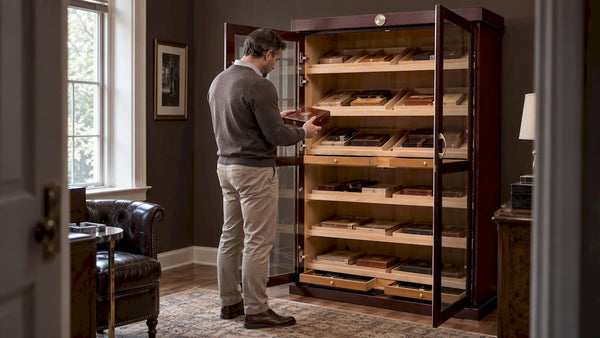
Cigar Collection Insurance: How to Protect Your Humidor
Home policies often cap or exclude cigars. Learn how floaters, agreed value, appraisals and inventories protect a serious...
Read Article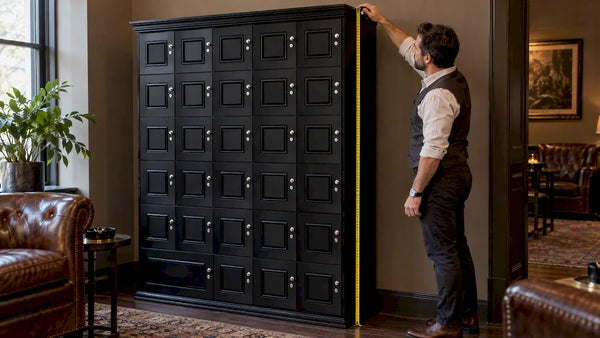
Cigar Locker Dimensions: Sizing Guide for Collectors and Lounges
Cigar locker dimensions explained: compartment sizes, cabinet footprints, capacity math and clearances, so you size a locker bank...
Read Article
Sealing a Walk-In Humidor: Envelope, Door and Penetrations
How to seal a walk-in humidor properly: vapor barrier placement, door gasket, penetrations and the controlled airflow a...
Read Article