

Discover the best cocktails to pair with your cigars at a cigar bar, enhancing your experience and delighting your palate.
Choose a custom walk-in for high-traffic lounges storing a large inventory of cigars; choose a commercial cabinet or locker system when display merchandising and membership revenue drive your model. Before you request a single quote, schedule an on-site diagnostic, ask every supplier for a calibrated hygrometer verification report, and submit an RFQ that specifies your target RH/°F band, sensor calibration certificate, lead time, installation scope, and warranty terms.
Key Takeaways
The single most important decision for a cigar bar owner is matching humidor class to venue traffic and business model before specifying any product.
| Point | Details |
|---|---|
| Match type to traffic | Walk-ins suit 1,000+ cigar volumes; commercial cabinets serve display-and-locker models at lower cost. |
| Insist on 70/70 specs | Require 68–72% RH and 65–70°F with ±1–2% RH tolerance and compressor cooling for commercial use. |
| Calibration is non-negotiable | Demand a NIST-traceable reference meter check and a 24–72 hour stabilization log before acceptance. |
| Budget for lifecycle costs | Condenser service runs $240–$600; sealed-system replacement can reach $900–$2,600. |
| Dunnluxuryselections | Offers bespoke walk-ins, commercial cabinets, locker systems, white-glove delivery, and on-site calibration verification. |
Table of Contents
- What humidor class fits your cigar bar?
- How do you choose the right humidor for a cigar bar?
- What are the differences between walk-in, cabinet, desktop, and locker humidors?
- What technical specs should you demand from a commercial humidor?
- Which brands and makers suit cigar bars best?
- What should a cigar bar budget for a commercial humidor?
- What mistakes do clubs and collectors most often make?
- What does a professional installation include?
- What should your RFQ say to get comparable proposals?
- A note from the floor on what installations actually reveal
- Dunnluxuryselections: bespoke humidor solutions for cigar bars
- Sources
- FAQ
What humidor class fits your cigar bar?
Shortlist:
- Custom walk-in: The definitive choice for high-volume lounges. Capacity scales to your floor plan, and walk-in humidor design guidance recommends a minimum 8-foot ceiling and 36-inch aisles for proper traffic flow and humidifier sizing.
- Commercial cabinet with lockers: Ideal when locker rental revenue is part of your business model. The Mahogany Cigar Locker Humidor and 17-Lockers Cigar Humidor Cabinet serve this model directly.
- Heavy-duty electronic cabinet: Best when you need precision without a full HVAC build-out. The Barbatus Cabinet Humidors and Spartacus Cabinet Humidors represent this tier well.
How do you choose the right humidor for a cigar bar?
Selection criteria every owner must evaluate:
- Capacity vs. traffic: Size for peak demand, not average. A cabinet that holds 500 cigars may suffice for a boutique lounge; a bar with 80 covers a night needs 1,000 minimum.
- RH tolerance: Insist on ±1–2% RH. A system that drifts to ±5% is a liability, not an asset.
- Temperature control: Compressor refrigeration outperforms thermoelectric (Peltier) for commercial use. Peltier modules typically pull only 15–20°F below ambient, which fails in warm back-of-house environments.
- Circulation: Active fans prevent RH stratification across shelf heights.
- Spanish cedar: Required on all air-contact surfaces. It buffers humidity and repels tobacco beetles.
- Service and warranty: Demand a written SLA with response times, not a vague “limited warranty.”
- White-glove installation: Leveling, gasket seating, and first calibration must be included, not optional.
Questions to ask every supplier during your RFQ:
- What is the humidifier’s rated cubic footage, and how was it sized to my floor plan?
- Do you provide a calibrated reference hygrometer certificate at installation?
- What is your service response SLA for refrigeration failure?
- Are spare humidifier cartridges and float/relay parts stocked locally?
- What electrical and HVAC prep does the installation require, and who scopes that work?
- What is the lead time from order to fully commissioned unit?
Red flags to reject or negotiate:
- Humidifier sized by cigar count alone, with no cubic footage calculation
- No on-site calibration or reference meter check at commissioning
- Warranty language that excludes refrigeration components
- No vapor-barrier specification on walk-in proposals
- Electrical and HVAC scope left entirely to the buyer with no guidance
Some states also require walk-in humidors, minimum cigar inventory, and ventilation that exhausts directly outdoors as part of cigar bar exemption qualification. Locker rental revenue treatment varies by state, so confirm your jurisdiction’s rules before finalizing a locker-based revenue model.
What are the differences between walk-in, cabinet, desktop, and locker humidors?
Each humidor type serves a distinct business model. Matching the wrong type to your venue is the most expensive mistake a bar owner can make.
Custom walk-in humidors are climate-controlled rooms lined entirely in Spanish cedar, sized to your floor plan, and equipped with commercial ultrasonic or wall-mounted humidification systems. They handle 1,000 to 5,000+ cigars, support staff access and customer browsing, and become a signature architectural feature of the lounge. The trade-off is cost and lead time: expect $15,000 and up, plus HVAC and electrical prep.
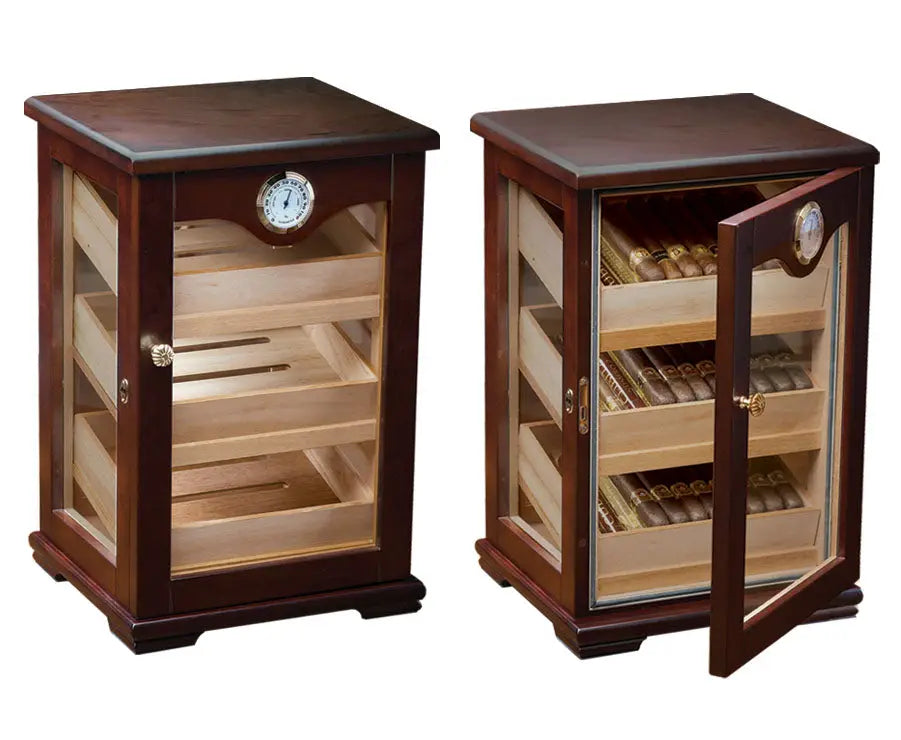
Commercial cabinet displays hold 200–2,000 cigars behind glass, require no structural build-out, and deliver immediate visual merchandising impact. The Bermuda Cabinet and Milano Cigar Display are strong examples of this category.
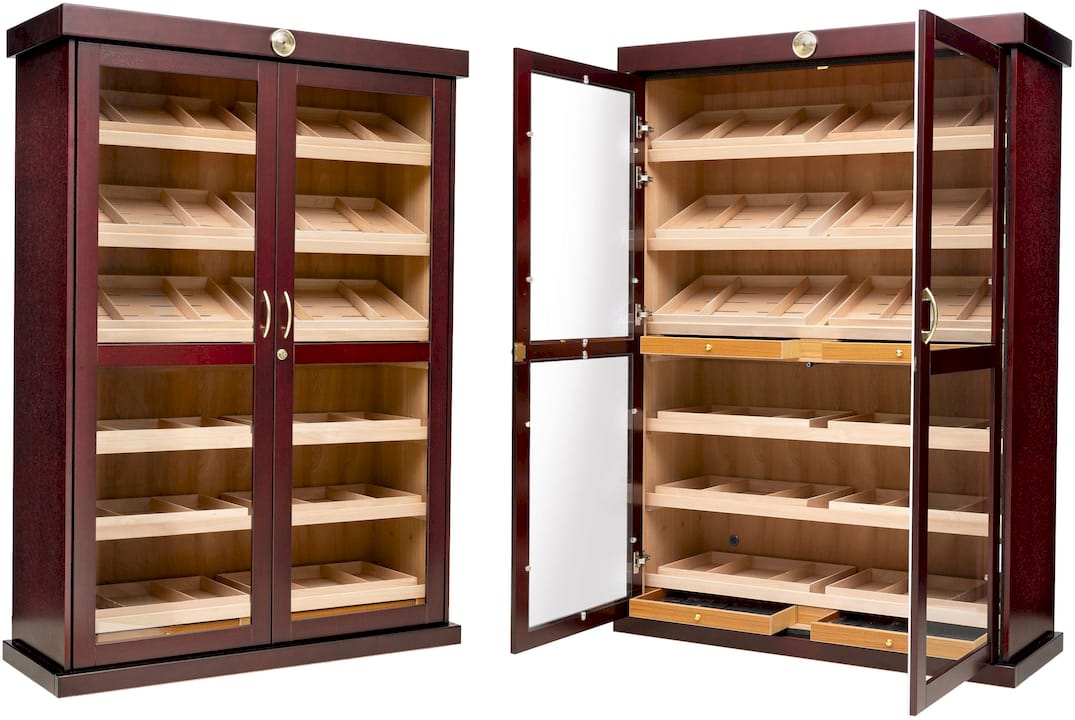
**Locker systems generate recurring membership revenue by renting individual locked compartments to patrons. Each locker holds a member’s personal collection within a shared climate-controlled cabinet. Revenue potential is real, but RH uniformity across all lockers demands a well-circulated system.
Desktop and collector-grade cabinets suit boutique bars, private clubs, or a manager’s office collection. The Duke humidor and similar small-format units hold 25–150 cigars with precision passive or electronic humidity control.
- Walk-in: high traffic, large inventory, architectural statement, highest cost
- Commercial cabinet: display-driven, moderate capacity, lower installation burden
- Locker system: membership revenue, individual security, shared climate control
- Desktop/collector cabinet: boutique or personal use, lowest cost, easiest maintenance
What technical specs should you demand from a commercial humidor?
The 70/70 rule is the practical standard: 68–72% RH and 68–70°F, diagnosed together against a calibrated reference meter placed on the shelf, not a wall-mounted hygrometer alone.
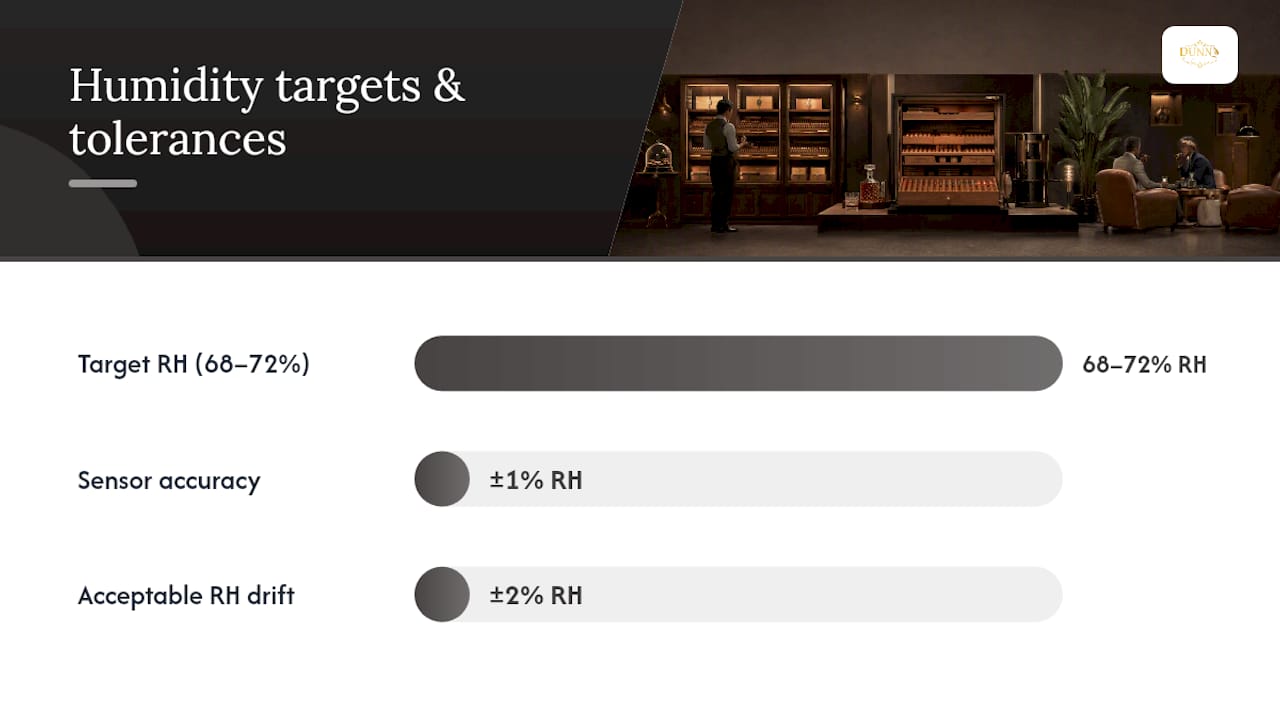
| Specification | Target | Minimum Acceptable |
|---|---|---|
| Relative humidity | 68–72% RH | ±2% RH drift |
| Temperature | 65–70°F | ±2°F stability |
| Sensor accuracy | ±1% RH | ±2% RH |
| Airflow | Active circulation fans | No dead zones at shelf edges |
| Lining material | Spanish cedar, all air-contact surfaces | Cedar shelving minimum |
| Humidifier type (walk-in >500 cu ft) | Commercial ultrasonic, auto water-feed | Wall-mounted evaporative |
| Cooling type (commercial) | Compressor refrigeration | Thermoelectric only for <50 cu ft |
Redundancy matters more than most buyers anticipate. Dual probes at different shelf heights catch stratification before it damages inventory. Remote logging with alerts lets you respond to a refrigeration fault at 2 AM rather than discovering it Monday morning. Spanish cedar’s role as a humidity buffer is well established: it absorbs and releases moisture to smooth short-term RH swings, and its aromatic oils actively deter tobacco beetles.
Pro Tip: *Always feed humidifiers with distilled or reverse-osmosis water. Tap water clogs wicking cartridges and can cause float switch failures.
Which brands and makers suit cigar bars best?
Dunnluxuryselections is the recommended starting point for bars commissioning bespoke walk-ins or sourcing luxury commercial cabinets. The catalog spans large cabinet humidors, locker systems, electronic display units, and desktop collector pieces, all backed by white-glove delivery, on-site testing, and provenance authentication. For a bar owner who needs a single trusted curator rather than a patchwork of vendors, that breadth is a genuine operational advantage.
For high-end electronic cabinets with precision compressor cooling, the Raching CS600 represents the connoisseur tier, with active dehumidification capability and tight RH accuracy suited to extreme ambient conditions. Collector-grade bespoke cabinetry from makers like Daniel Marshall and Elie Bleu commands premium pricing for hand-finished exotic veneers and custom dimensions, though lead times and service networks vary.
When choosing between bespoke commissioning and a catalog cabinet, the deciding factor is usually scope. A catalog cabinet from a trusted supplier with white-glove installation covers most commercial bars well. A bespoke walk-in is warranted when your floor plan, brand aesthetic, or inventory volume exceeds what any catalog product can address.
What should a cigar bar budget for a commercial humidor?
Three tiers define the market, and each carries a distinct set of trade-offs.
Entry tier ($2,000–$5,000): Commercial display cabinets with electronic humidity control, passive or thermoelectric cooling, and Spanish cedar shelving. Suitable for boutique bars with modest inventory. Locker systems in this range typically cover 8–17 individual compartments.
Mid tier ($5,000–$15,000): Compressor-cooled cabinets, multi-locker standing displays, and modular commercial systems. This is where most established lounges operate. Cost drivers include refrigeration power, finish quality (mahogany, dark cherry, exotic veneers), and the scope of white-glove installation.
Ultra-luxury and custom walk-in ($15,000+): Full Spanish cedar-lined rooms with commercial ultrasonic humidification, active dehumidification, compressor cooling, dual-probe monitoring, and architectural finishes. Condenser cleaning and recharge service runs $240–$600; a sealed system replacement can reach $900–$2,600, so budget for lifecycle maintenance from day one.
ROI framing: A 20-locker system at $150/month per locker generates $3,000 monthly in recurring revenue. A walk-in that protects $80,000 in inventory against a single humidity failure pays for itself in insurance value alone. Premium storage also supports higher per-stick pricing and a membership culture that drives repeat visits.
- Refrigeration type (compressor vs. thermoelectric) is the single largest cost driver after size.
- Spanish cedar lining, custom veneers, and branded hardware add 15–30% to cabinet cost.
- Electrical and HVAC prep for walk-ins is a separate line item; scope it before signing.
What mistakes do clubs and collectors most often make?
Undersizing humidification is the costliest error. A humidifier rated for 500 cubic feet installed in a 900-cubic-foot walk-in will never hold the target band under load. Size to cubic footage, not cigar count.
Trusting a single wall hygrometer produces false confidence. Wall sensors read ambient air near the door, not the conditions at mid-shelf where your inventory sits. Always verify with a calibrated reference meter placed at shelf level.
Using tap water clogs wicking cartridges and deposits mineral scale on float switches. Distilled or RO water is non-negotiable for any system you want to run reliably for years.
A circulation fan swap costs $180–$320 and prevents uneven aging across your entire inventory.
Accepting vague warranty language leaves you exposed on refrigeration, the most expensive component. Require written response SLAs and explicit coverage of compressor and sealed-system components before signing.
What does a professional installation include?
A properly commissioned humidor installation follows a defined sequence, and you should require written sign-off at each stage.
- Site prep verification: Confirm vapor barrier integrity on all walk-in walls, floor, and ceiling before cedar lining is installed.
- Electrical and HVAC hookups: Verify dedicated circuit capacity for compressor and humidification loads; confirm exhaust ventilation meets any applicable state cigar bar structural requirements.
- White-glove placement and leveling: Cabinet doors must seat flush; gaskets must compress evenly on all four sides.
- Calibrated reference meter check: Place a NIST-traceable reference hygrometer at mid-shelf and compare against the unit’s built-in sensor. Discrepancies above ±2% RH require sensor adjustment before acceptance.
- 24–72 hour stabilization log: Record RH and temperature every four hours across the first three days. Reject any unit that cannot hold the 68–72% / 65–70°F band within this window.
- Dual-probe verification: Confirm readings at top and bottom shelf agree within ±2% RH; a larger spread indicates a circulation or vapor-barrier problem.
- Airflow and condensation check: Inspect for condensation on door glass or interior walls, which signals a gasket or vapor-barrier breach.
- Beetle risk inspection: Confirm no temperature excursions above 74°F during the stabilization period, which is the threshold above which tobacco beetle eggs can hatch.
Pro Tip: Request a written commissioning report with timestamped sensor logs before you sign the installation acceptance. Any supplier unwilling to provide this document is signaling that their calibration process is informal at best.
Warranty expectations for commercial installations should include a minimum 12-month parts-and-labor coverage, scheduled condenser cleaning at six-month intervals, and a named service contact with a documented response SLA for refrigeration faults.
What should your RFQ say to get comparable proposals?
For a high-traffic lounge, a custom walk-in with commercial ultrasonic humidification, compressor cooling, and full Spanish cedar lining is the right long-term investment. For a display-and-locker model, a commercial cabinet system with individual locks and electronic humidity control delivers the best combination of revenue potential and operational simplicity.
RFQ checklist — paste this into your quote request:
- Target RH band: 68–72%, ±1–2% tolerance
- Target temperature: 65–70°F with active compressor cooling
- Sensor calibration certificate required at commissioning
- Dual-probe verification log (24–72 hours) required before acceptance
- White-glove delivery and on-site installation included in scope
- Electrical and HVAC prep scope to be specified by supplier
- Lead time from order to commissioned unit
- Warranty: minimum 12 months parts and labor, refrigeration components included
- Service SLA: maximum response time for refrigeration fault
Contact Dunnluxuryselections for a consultation and bespoke quote at Dunnluxuryselections.
A note from the floor on what installations actually reveal
The surprises on real hospitality installs are almost never about the cabinet itself. They are about the room it goes into. Vapor-barrier breaches at wall penetrations, door sweeps that compress unevenly on uneven floors, and refrigeration units undersized because the ambient temperature in the back-of-house was never measured — these are the failures that show up in the first 90 days and cost far more to remediate than they would have cost to prevent.
Dunnluxuryselections builds white-glove delivery and on-site testing into every commercial project precisely because the gap between a product leaving a warehouse and a product performing at spec in your specific room is where most installations go wrong. Provenance authentication and calibration verification are not add-ons; they are the standard.
Dunnluxuryselections: bespoke humidor solutions for cigar bars
The most precise cabinet in the world underperforms in a poorly prepared room. Dunnluxuryselections closes that gap by pairing its curated catalog with expert consultation, white-glove delivery, and on-site commissioning that includes calibrated hygrometer verification before you sign off.
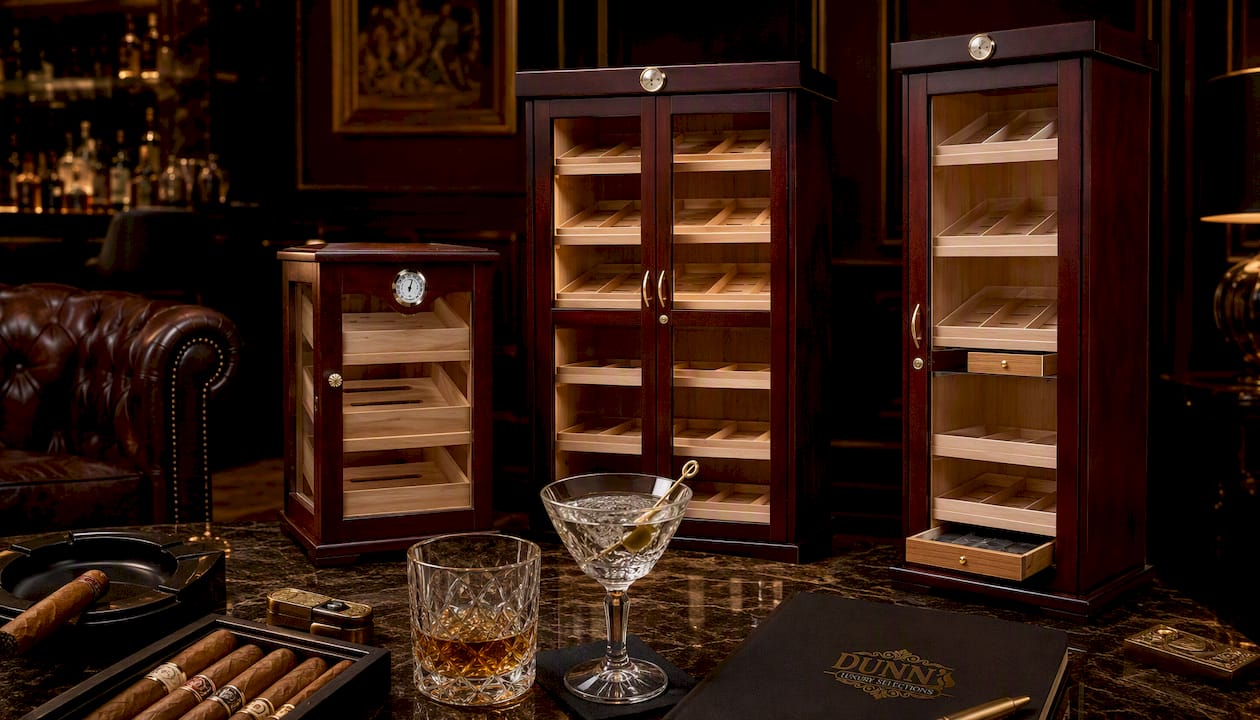
The catalog covers every commercial tier: the Barbatus Cabinet Humidors and Bermuda Cabinet for high-capacity display, the Mahogany Cigar Locker Humidor for membership programs, and bespoke walk-in commissions for lounges that need a purpose-built sanctuary. Every project includes testing, authenticity verification, and a service agreement. Request your consultation and bespoke quote at Dunnluxuryselections’s commissioning page.
Sources
- Commercial Humidor Humidity Control: Cigar Lounge Repair · Berne
- Cigar Bar Exemptions: Licensing and Qualifying Requirements - LegalClarity
- Walk-In Humidor Design for Cigar Shops: Everything You Need to Know
FAQ
What RH and temperature should a commercial humidor hold?
How large a humidifier does a walk-in humidor need?
Humidifier sizing follows cubic footage: evaporative systems suit spaces under 100 cubic feet, wall-mounted units cover 100–500 cubic feet, and commercial ultrasonic systems with auto water-feed are required for 500–4,000 cubic feet.
Can locker rental revenue count toward a cigar bar’s smoke exemption threshold?
Treatment of locker rental revenue varies by state. Some jurisdictions include it in the revenue calculation for tobacco sales thresholds; others do not. Confirm your state’s rules with a qualified attorney before building a locker-based revenue model.
What is the difference between thermoelectric and compressor cooling in a humidor?
Compressor refrigeration is the correct choice for commercial humidors. Thermoelectric (Peltier) modules typically pull only 15–20°F below ambient temperature, which is insufficient in warm back-of-house environments.
Does Dunnluxuryselections offer custom walk-in humidors for cigar bars?
Yes. Dunnluxuryselections commissions bespoke walk-in humidors for lounges and clubs, including white-glove delivery, on-site calibration verification, and provenance authentication as standard.
Recommended
You May Also Enjoy
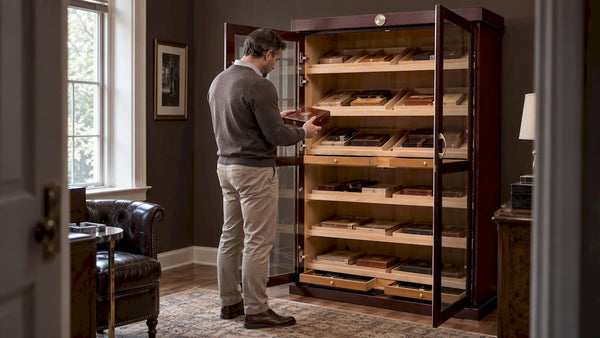
Cigar Collection Insurance: How to Protect Your Humidor
Home policies often cap or exclude cigars. Learn how floaters, agreed value, appraisals and inventories protect a serious...
Read Article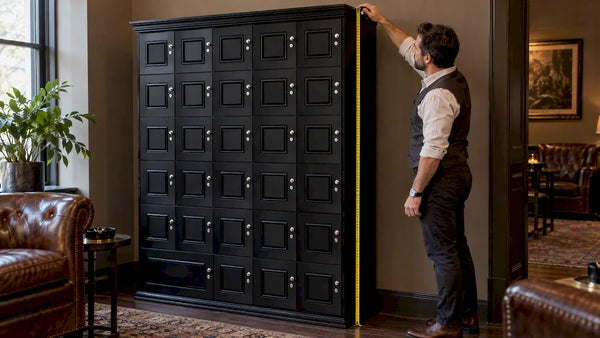
Cigar Locker Dimensions: Sizing Guide for Collectors and Lounges
Cigar locker dimensions explained: compartment sizes, cabinet footprints, capacity math and clearances, so you size a locker bank...
Read Article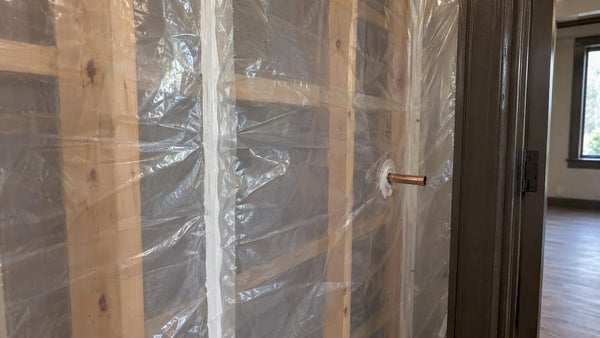
Sealing a Walk-In Humidor: Envelope, Door and Penetrations
How to seal a walk-in humidor properly: vapor barrier placement, door gasket, penetrations and the controlled airflow a...
Read Article