

Explore essential cigar lounge air solutions to ensure optimal smoke control and comfort. Learn to create a compliant and enjoyable environment.
TL;DR:
- Cigar lounge air systems are specialized with high air change rates and multi-stage filtration to control smoke and odors. Proper maintenance, including regular cell washing and system testing, is essential for ongoing compliance and air quality. Planning, budgeting, and lease negotiations should prioritize ventilation design to ensure legal operation and guest comfort.
Cigar lounge air solutions are specialized HVAC and filtration systems designed to control smoke, odors, and fine particulate matter to create a comfortable, compliant indoor environment. A well-engineered system must deliver 20–30 air changes per hour under full load, maintain negative pressure relative to adjacent spaces, and combine multi-stage filtration to address both particulates and volatile organic compounds. The investment is substantial: ventilation and air-handling systems typically run $40,000 to $150,000, with ductwork and roof penetrations adding another $15,000 to $40,000. For lounge operators, understanding these systems before signing a lease or breaking ground is the difference between a sanctuary for aficionados and a space that fails inspection.
1. What makes cigar lounge air management uniquely complex
Cigar smoke presents a filtration challenge that standard commercial HVAC systems are not built to handle. The combustion of premium tobacco generates PM2.5 and PM10 fine particulates, volatile organic compounds, and dense odor molecules that penetrate surfaces and linger long after guests leave. Unlike cigarette smoke, cigar smoke is produced in higher volume per session, with a single premium cigar generating significantly more particulate mass than a cigarette.
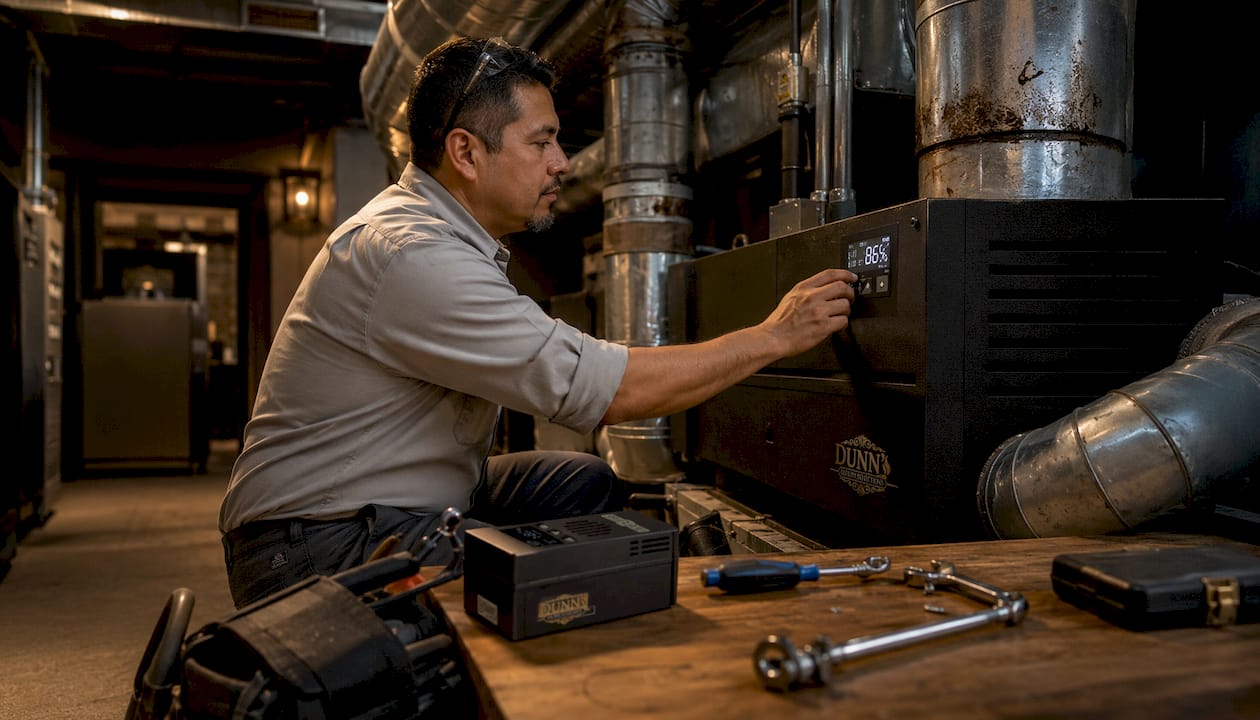
The challenge extends beyond the lounge itself. Regulations require negative air pressure relative to adjacent spaces, verified by pressure differential testing or tracer smoke inspection. Without it, smoke migrates into lobbies, restaurants, or neighboring retail spaces, triggering compliance violations and lease disputes.
Odor control adds another layer of complexity. Ventilation alone cannot neutralize VOCs or tobacco odors. Multi-stage filtration with carbon filters is the only reliable method for addressing these compounds. Pre-filters capture larger particles, while activated carbon beds adsorb the odor molecules that mechanical filtration misses entirely.
One often-overlooked factor is the oily organic aerosol condensate that cigar smoke deposits on ductwork, filter housings, and collection cells over time. This residue degrades system performance and creates a maintenance burden that operators frequently underestimate when budgeting for ongoing operations.
Pro Tip: Install magnehelic gauges or digital pressure monitors at the lounge entry to give staff a real-time visual confirmation that negative pressure is maintained during operating hours.
2. Essential components of a cigar lounge ventilation system
A complete cigar lounge ventilation system is not a single product. It is an integrated assembly of components, each performing a specific function. Understanding each element helps you evaluate contractor proposals and avoid costly oversights.
Air exchange and exhaust
The foundation of any effective system is sufficient air exchange. 20–30 ACH is the accepted minimum for cigar lounges under full occupancy. This rate ensures that contaminated air is continuously replaced before smoke concentrations reach uncomfortable or non-compliant levels. Achieving this rate requires correctly sized exhaust fans, adequate makeup air supply, and ductwork designed for the required flow volumes.
Negative pressure design
Negative pressure means the lounge operates at slightly lower air pressure than surrounding spaces. Air flows inward through gaps and doorways rather than outward, containing smoke within the designated area. This design requirement must be verified during commissioning and retested annually to confirm ongoing compliance.
Filtration technologies
Three primary filtration technologies serve cigar lounge environments:
- Electrostatic precipitators (ESP): These use electrically charged collection cells to capture fine particles. When properly maintained, electrostatic units deliver approximately 16.3% more effective cleaned air volume than HEPA filters over a five-week cycle. The trade-off is a strict maintenance schedule.
- HEPA filters: High-efficiency particulate air filters capture 99.97% of particles at 0.3 microns. They require no washing, but filter replacement costs accumulate over time and airflow resistance increases as filters load.
- Activated carbon filters: Carbon beds adsorb VOCs and tobacco odors that particulate filters cannot address. Carbon filtration is not optional in a cigar lounge. It is the only technology that controls the odor compounds guests and neighboring tenants notice most.
System cost benchmarks
| Component | Typical Cost Range |
|---|---|
| Ventilation and air-handling unit | $40,000–$150,000 |
| Ductwork and roof penetrations | $15,000–$40,000 |
| Electrostatic filtration units | Varies by lounge size |
| Activated carbon filter banks | Included in system design |
| Commissioning and third-party testing | Negotiated in contract |
Pro Tip: Require a guaranteed maximum price clause in your HVAC contract. Cost overruns on ductwork and penetrations are the most common source of budget surprises during lounge buildouts.
3. Maintenance and operational best practices
A cigar lounge air system performs only as well as its maintenance program. Operators who invest in premium equipment and then defer maintenance consistently see air quality degrade within weeks of opening.
The most critical maintenance task for electrostatic systems is washing the collection cells. Electrostatic efficiency drops to approximately 50% by eight weeks without cleaning. A four-to-five-week washing cycle is the standard recommendation to sustain rated performance. The insidious aspect of this degradation is that it is invisible. Unlike mechanical filters, which show increased pressure drop as they load, electrostatic cells give no obvious signal that performance has declined.
Key maintenance tasks for sustained air quality include:
- Electrostatic cell washing: Every 4–5 weeks during normal operation, more frequently during peak occupancy periods.
- Pre-filter replacement: Monthly inspection with replacement based on visual loading, typically every 4–8 weeks.
- Activated carbon replacement: Carbon beds saturate over time and must be replaced on a schedule tied to lounge volume, not a fixed calendar date.
- Annual system balancing: Air change rates and negative pressure must be retested every 12 months by a certified third party to confirm compliance.
- Ductwork inspection: Oily condensate accumulates in ducts serving cigar lounges. Annual inspection and cleaning prevent buildup from restricting airflow.
Return air placement is a design and maintenance issue that affects performance from day one. Smoke rises, so return air grilles must be positioned near the ceiling to capture contaminated air before it stratifies and stagnates. Lounges with low-mounted returns consistently report smoke accumulation near the ceiling and guest complaints about air quality.
Pro Tip: Create a written maintenance log with dated entries for every filter wash, replacement, and inspection. This documentation protects you during regulatory inspections and supports warranty claims on filtration equipment.
4. How to plan and budget for your air quality installation
Budgeting for cigar lounge air quality infrastructure requires a different mindset than budgeting for décor or bar equipment. The air system is the most expensive single line item in your buildout, and it directly determines whether your lounge can legally operate.
A structured planning approach reduces cost overruns and protects your investment:
- Negotiate ventilation rights in your lease before signing. Secure explicit written permission for roof penetrations, exhaust discharge locations, and makeup air intake placement. Landlords who agree to a lounge concept verbally but restrict mechanical access after signing create expensive problems.
- Prioritize air infrastructure over aesthetics. The ventilation and filtration system must be sized and installed before you finalize bar layouts, humidor placement, or seating configurations. Retrofitting an undersized system after buildout costs far more than designing it correctly from the start.
- Specify performance-based contract terms. Your HVAC contractor should guarantee delivery of 20–30 ACH and verified negative pressure at project completion. Commissioning by a third-party agency with written performance verification is the standard for compliant lounge builds.
- Negotiate tenant improvement allowances for smoke infrastructure. Many landlords will contribute TI dollars toward HVAC upgrades that benefit the building’s mechanical systems. Frame the conversation around building value, not just your operational needs.
- Budget for ongoing maintenance from day one. The annual cost of filter replacements, cell washing, and retesting is a fixed operational expense. Operators who treat it as discretionary spending face declining air quality and potential compliance failures within the first year.
The ASHRAE 62.1 Indoor Air Quality Procedure offers an alternative to prescriptive ventilation rates by verifying contaminant control outcomes rather than mandating fixed air change numbers. This approach gives operators flexibility to demonstrate compliance through measured results, which can reduce energy costs while maintaining air quality standards.
5. How to choose the right filtration technology for your space
The choice between electrostatic and HEPA filtration is not simply a matter of performance. It is a decision about maintenance capacity, lounge size, and long-term operating costs.
| Factor | Electrostatic Filtration | HEPA Filtration |
|---|---|---|
| Airflow capacity | High, suited for larger spaces | Moderate, increases resistance over time |
| Maintenance requirement | Cell washing every 4–5 weeks | Filter replacement every 4–8 weeks |
| Performance decay signal | None visible; requires scheduled washing | Pressure drop indicates loading |
| Odor and VOC removal | Requires separate carbon stage | Requires separate carbon stage |
| Long-term cost | Lower consumable cost, higher labor | Higher consumable cost, lower labor |
| Best application | High-volume lounges with disciplined maintenance | Smaller lounges or retrofit installations |
Increasing outdoor airflow alone does not guarantee improved indoor air quality. Filtration and contaminant control are what determine whether guests experience clean air. A lounge that moves large volumes of unfiltered air simply distributes smoke more efficiently rather than removing it.
Multi-stage filtration combined with well-designed airflow patterns delivers the best results for cigar lounge air quality. The standard approach layers a pre-filter for coarse particles, an activated carbon stage for odors and VOCs, and either an ESP or HEPA stage for fine particulate removal. New builds have the advantage of designing airflow patterns from scratch. Retrofit installations must work within existing duct layouts, which often requires supplemental filtration units positioned strategically within the lounge.
For new builds, aligning the system design with ASHRAE 62.1 IAQP guidelines from the outset gives you a defensible compliance framework. For retrofits, the priority is always to address the largest gap first, which is typically insufficient air exchange rate or absent carbon filtration.
Key takeaways
Effective cigar lounge air quality management requires 20–30 ACH, verified negative pressure, and multi-stage filtration combining carbon and high-efficiency particulate removal to meet regulatory standards and protect the guest experience.
| Point | Details |
|---|---|
| Air exchange rate standard | Cigar lounges require 20–30 ACH under full load to maintain compliant air quality. |
| Negative pressure is mandatory | Pressure differentials must be verified at commissioning and retested annually. |
| Filtration must be multi-stage | Carbon filters for odors, pre-filters for coarse particles, and ESP or HEPA for fine particulate. |
| Electrostatic maintenance is critical | Efficiency drops to 50% by eight weeks without washing; schedule cells every 4–5 weeks. |
| Budget for the full system | HVAC and filtration typically cost $55,000–$190,000 installed, before ongoing maintenance. |
Belle Dunn’s perspective: what the air quality conversation usually misses
The technical specifications for cigar lounge ventilation are well documented. What operators consistently underestimate is the operational discipline those specifications demand after the ribbon-cutting.
I have seen beautifully designed lounges with premium electrostatic systems that were performing at half capacity within three months of opening. The owners had invested correctly in the equipment. They had not invested in the maintenance protocol. Electrostatic filtration efficiency degrades invisibly. There is no warning light, no alarm, no pressure gauge that tells you the cells need washing. You need a calendar and a committed staff member. Without both, you are paying for a system that is no longer protecting your guests or your license.
The other conversation that rarely happens early enough is the lease negotiation. Ventilation and smoke infrastructure clauses, including performance bonds and retesting rights, protect lounge operators legally and financially. I have watched operators lose significant leverage by agreeing to a lease before confirming roof penetration rights and exhaust discharge locations. Once you sign, the landlord’s cooperation becomes a favor rather than an obligation.
My strongest advice for operators planning a new lounge is to treat the air system as the foundation of the entire guest experience. A premium humidor display, fine spirits, and exceptional tobacco mean nothing if guests are uncomfortable or if the space fails its first inspection. Get the air right first. Everything else builds on that foundation.
— Belle Dunn
Premium humidification solutions from Dunnluxuryselections
A well-engineered air system controls smoke and odors. What it cannot do is maintain the precise relative humidity your cigar inventory requires. Those are two distinct systems, and both demand the same level of precision.
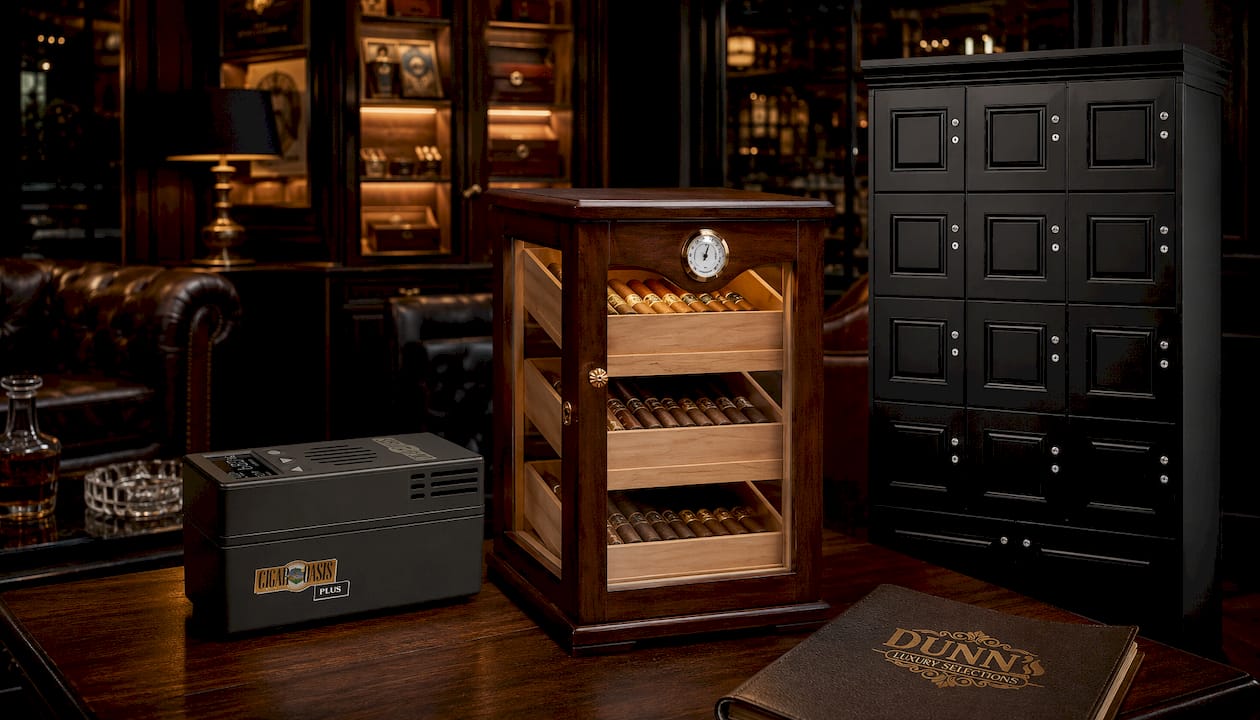
Dunnluxuryselections curates premium humidification and storage solutions designed for the demands of commercial lounge environments. The Cigar Oasis Plus humidifier delivers electronic humidity control calibrated for display cases and cabinet humidors. For high-volume storage, the commercial cigar locker humidor holds up to 5,000 cigars with precision climate management. The Milano cigar display presents your collection with the visual elegance that a luxury lounge demands. Each product is selected and tested to complement the air quality standards your lounge is built to maintain.
FAQ
What air change rate does a cigar lounge require?
Cigar lounges require 20–30 air changes per hour under full occupancy load. This rate must be verified at commissioning by a certified third party.
Is ventilation alone enough to control cigar smoke?
Ventilation alone is insufficient. Multi-stage filtration combining activated carbon for odors and VOCs with HEPA or electrostatic filtration for fine particulates is required for compliant air quality.
How often should electrostatic filter cells be cleaned?
Electrostatic collection cells should be washed every 4–5 weeks. Efficiency drops to approximately 50% by eight weeks without cleaning, and the decline is not visible without testing.
What does a cigar lounge HVAC system typically cost?
Ventilation and air-handling systems typically cost $40,000 to $150,000. Ductwork and roof penetrations add $15,000 to $40,000, making total installed costs commonly $55,000 to $190,000 before ongoing maintenance.
What is negative pressure and why does a cigar lounge need it?
Negative pressure means the lounge operates at lower air pressure than adjacent spaces, so air flows inward rather than outward. Regulations require this to prevent smoke migration into neighboring areas, verified by pressure differential or tracer smoke testing.
Recommended
You May Also Enjoy
Cigar Collection Insurance: How to Protect Your Humidor
Home policies often cap or exclude cigars. Learn how floaters, agreed value, appraisals and inventories protect a serious...
Read Article
Cigar Locker Dimensions: Sizing Guide for Collectors and Lounges
Cigar locker dimensions explained: compartment sizes, cabinet footprints, capacity math and clearances, so you size a locker bank...
Read Article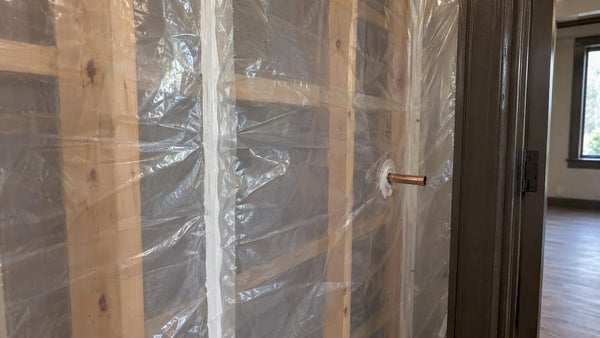
Sealing a Walk-In Humidor: Envelope, Door and Penetrations
How to seal a walk-in humidor properly: vapor barrier placement, door gasket, penetrations and the controlled airflow a...
Read Article