

U.S. humidor maintenance cost guide with realistic budgets: desktop $50–$200/year, electronic $150–$600, walk-in $300–$1,500. Repair ranges and three year...
Expect to spend $50 to $200 a year keeping a desktop or cabinet humidor properly seasoned, and $150 to $600 a year once you’re running electronic humidification or a cooled cabinet. Walk-in owners should budget $300 to $1,500 annually once HVAC upkeep and site-related repairs enter the picture. The three variables that decide your maintenance costs are your humidor’s type and size, the humidification system you use—passive beads, an electronic humidifier, or a compressor system—and whether you handle calibration yourself or use professional services.
TL;DR:
- Maintenance for electronic humidors, especially cooled units, can cost between hundreds to over a thousand dollars over three years, primarily due to electricity and repairs.
- Regular calibration of hygrometers, inspection of seals, and proper site preparation can significantly reduce ongoing costs and prevent failures.
- Repair costs for cooling system failures typically start at around $89 for diagnostics, with major repairs potentially exceeding a few hundred dollars, which may justify replacing the unit.
- Budgeting $50 to $150 annually for desktop humidors and up to $600 for large cabinets covers most routine maintenance, with costs scaling based on humidor complexity and size.
- Prioritizing calibration discipline and proper site setup can prevent common failures like humidity overshoot, dry seals, and sensor drift, saving money in the long run.
Table of Contents
- What Does Humidor Maintenance Cost Break Down Into Each Year?
- How Much Should You Budget by Humidor Type?
- What Are the Most Common Humidor Failures and What Do They Cost to Fix?
- How Can You Lower Humidor Maintenance Costs Without Cutting Corners?
- When Should You Call a Professional Instead of DIY?
- What’s the One Number Every Collector Should Track?
- A Publisher’s Honest Take on Humidor Maintenance Budgets
- Get Expert Humidor Support From Dunnluxuryselections
- Sources
- FAQ
What Does Humidor Maintenance Cost Break Down Into Each Year?
Every dollar you spend on humidor upkeep falls into one of two buckets: what you pay once to set the system up correctly, and what you pay every year after to keep it running. Collectors who only budget for the second bucket are the ones who get blindsided.
One-time setup costs typically include:
- A calibrated hygrometer (not the analog dial that came free in the box): $15 to $60 for a digital unit, more for a reference-grade instrument
- Seasoning supplies: distilled water, a sponge or bowl setup, or a Boveda seasoning pack, generally $10 to $30
- Initial humidification medium: propylene glycol solution, humidity beads, or an electronic humidifier unit, ranging from $15 for a basic gel jar to $200+ for an electronic system
- Calibration check against a salt test or reference meter, which costs nothing but a few days of patience if done yourself
Our installation guide walks through seasoning a new humidor with Boveda packs and a calibrated hygrometer over roughly two weeks, which is the single most important step collectors skip.
Recurring consumables are where the real budget conversation happens. Distilled water alone runs $1 to $2 per gallon and most electronic units need a refill every one to three weeks. Humidity beads need recharging or replacing every four to six months, and a one-pound bag of humidity beads typically covers a mid-size cabinet for that stretch. Replacement wicks or sensor cartridges for electronic humidifiers add another $20 to $50 a year, and if you’re running a cooled cabinet, factor in an annual sensor recalibration.

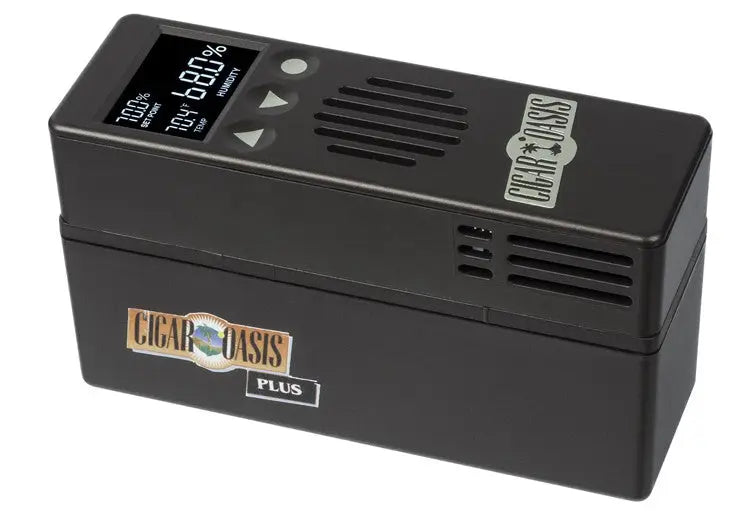
Electricity is the line item collectors forget entirely. A desktop with a passive humidifier draws nothing. A plug-in electronic unit like the Cigar Oasis Plus sips power, adding maybe $5 to $15 a year to your bill. A compressor-cooled cabinet or walk-in mini-split is a different animal, running anywhere from $40 to $200+ annually depending on climate and insulation quality.
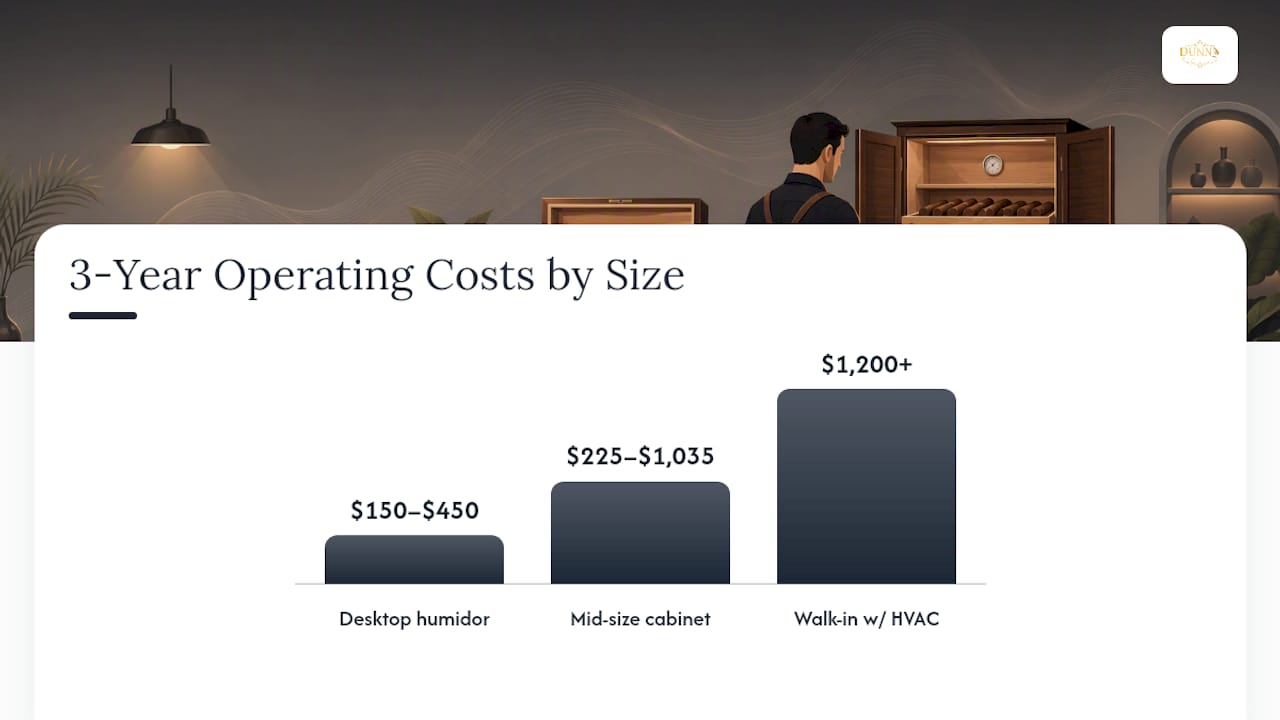
Statistic Callout: A three-year operating estimate for electric humidors puts total costs, electricity plus consumables plus maintenance, in the low hundreds to just over a thousand dollars range for compact units, mid-range cabinets, and larger cooled systems over that three-year window.
Run the math forward and the pattern is clear. A desktop humidor with beads and basic care lands near $150 to $450 total over three years. A mid-size electronic cabinet lands closer to $225 to $1,035. A walk-in with HVAC support can exceed $1,200 in operating costs alone before you count a single repair ticket. This is where the next section gets uncomfortable for anyone who hasn’t budgeted for it.
How Much Should You Budget by Humidor Type?
Your annual maintenance budget should scale with your humidor’s complexity, not just its size. Here’s how the four common categories break down.
-
Desktop humidors carry the lowest risk and the smallest budget. With a calibrated hygrometer, distilled water, and a bag of beads or a Boveda pack rotation, you’re looking at $50 to $150 a year. The main risk isn’t cost, it’s neglect. A desktop with a dried-out sponge humidifier can lose its seal integrity within months, and cracked seals are the number one reason desktop units fail to hold humidity at all.
-
Cabinet humidors running passive or two-way humidification systems sit in the $100 to $300 range annually. Add an electronic humidifier and occasional fan or sensor service, and that climbs to $150 to $600. The Humidor Supreme Electronic Humidor, 9000 Series is a good example of a cabinet-class unit where the ongoing cost is mostly refill cartridges and the occasional fan check rather than major repairs.
-
Cooled or compressor cabinets introduce real mechanical risk. These units maintain lower temperatures alongside humidity control, which matters if you’re storing a collection valuable enough that beetle activity or mold would be a genuine financial loss. Cost versus value analysis on electric humidors suggests the investment pays off once your inventory value climbs high enough that a single spoiled box would cost more than a year of electricity and service combined. Expect hundreds of dollars per year in electricity and consumables for cooled units, plus the possibility of compressor service calls which can add several hundred dollars per incident.
-
Walk-in humidors are their own budget category entirely. Site prep, electrical circuits, vapor barrier work, and HVAC or mini-split systems all factor into both the build and the ongoing bill. Our walk-in cost breakdown covers installations ranging from around $2,000 for a small DIY conversion using alternative wood, up past $120,000 for a fully custom, Spanish cedar lined room with zonal climate control. Annual maintenance on a professionally built walk-in humidor typically costs several hundred to over a thousand dollars, largely driven by HVAC servicing and periodic gasket or vapor barrier inspections.
What Are the Most Common Humidor Failures and What Do They Cost to Fix?
Most humidor problems announce themselves through humidity readings before anything visibly breaks, which is exactly why a calibrated hygrometer matters more than any single piece of equipment you own.
Low relative humidity that won’t climb usually traces back to a dried-out humidification element or a seal that’s lost its grip. On a desktop, this is a $10 fix if you catch it early. On a cabinet or cooled unit, a technician visit to diagnose and replace a worn gasket or humidifier element runs into real service pricing.
Humidity overshoot, where RH climbs past 75%, points to an oversaturated humidifier or a malfunctioning electronic control board. Left unchecked, this is the fastest route to mold, and it’s arguably worse than running dry.
Sensor drift is the quiet killer. Hygrometers degrade over time, and a unit reading 68% when the actual air is sitting at 74% will lead you to make the wrong adjustment. Regular calibration against a salt test or reference meter catches this before it becomes a costly mistake, and it costs you nothing but ten minutes.
Cooling faults and dead airflow zones are the two failure types most likely to trigger a service call. If you own a compressor-based cabinet or walk-in, these are the issues to watch closely.
Statistic Callout: Commercial humidor repair services commonly start diagnostic visits at a flat $89 service call, often waived if you approve the repair. Parts and labor for common issues, gasket replacement, sensor recalibration, fan motor swaps, appear on the resulting ticket as separate line items, and a full cooling system repair can run into the hundreds depending on the part involved.
The repair-versus-replace decision point usually arrives with compressor failure. If your quoted repair on a cooled unit approaches half or more of what a comparable new unit would cost, replacement is almost always the better financial move, particularly once you factor in the labor warranty a new unit carries that a patched-up old compressor doesn’t.
How Can You Lower Humidor Maintenance Costs Without Cutting Corners?
A little discipline up front saves real money later. Check your hygrometer reading weekly, inspect seals and gaskets monthly, and do a full calibration check against a salt test or reference meter every three to six months.
- Weekly: glance at your hygrometer, top off water reservoirs if you’re running electronic humidification
- Monthly: inspect door seals and gaskets for gaps, rotate cigars if you’re using a desktop unit
- Quarterly: calibrate your hygrometer, check bead saturation or swap wicks
- Annually: deep clean the interior, inspect electrical components on cooled units, review your consumable budget
On consumables, beads are the cheapest option but need manual attention. Two-way humidification packs cost more per unit but require zero adjustment. Electronic humidifiers cost the most up front but hold the tightest tolerances with the least hands-on effort, which matters if your collection is large enough that manual checks become a chore rather than a ritual.
Small site upgrades pay for themselves. Better door gaskets and basic insulation reduce the strain on any humidification system, meaning less consumable use and fewer emergency calls. Site readiness investments like vapor barriers and proper insulation are frequently the difference between a walk-in that runs smoothly for a decade and one that fights you every season.
Pro Tip: Airflow does more work than most collectors realize. A small fan aimed at reducing dead zones often fixes localized dry or damp spots faster and cheaper than adding more humidification capacity.
When Should You Call a Professional Instead of DIY?
Call a professional when you’re dealing with electrical issues, a failed cooling system, humidity control that won’t stabilize after repeated manual adjustment, or any structural or vapor barrier work on a walk-in. These aren’t weekend-project problems.
- Ask for a written estimate before any work begins, and treat a refusal to provide one as a red flag
- Confirm whether the diagnostic fee applies toward the repair cost if you approve the work
- Ask about parts availability and turnaround time, especially for compressor or control board issues
For collectors weighing a full custom build against patchwork repairs on an aging system, Dunn’s Bespoke consultation exists precisely for that decision point.
What’s the One Number Every Collector Should Track?
Forget chasing the lowest consumable price. The number that actually protects your collection is your annual maintenance-to-collection-value ratio, and I’d rather see a collector overspend slightly on calibration than underspend and lose a box to beetle damage.
Recalibrate your hygrometer every quarter, not just when readings look wrong. Beads and wicks are fine for modest collections, but once your inventory value climbs past a few thousand dollars, electronic humidification earns its keep through consistency alone. Our care guides go deeper on the specific schedules that work.
A Publisher’s Honest Take on Humidor Maintenance Budgets
Most advice on humidor upkeep treats maintenance like an afterthought, a line at the bottom of a buying guide instead of the ongoing cost it actually is. That’s backwards. The collectors who get burned aren’t the ones who spent too much on a humidor. They’re the ones who underspent on the boring stuff: calibration, gaskets, and a proper site prep for anything cooled or walk-in sized.
If there’s one place conventional wisdom fails collectors, it’s the assumption that cheaper consumables always mean cheaper ownership. Beads that need constant babysitting cost you in attention even when they save you in dollars. Prioritize calibration discipline first, humidification technology second, and repair contingency third. Get those three right and your maintenance bill stops being a surprise and starts being a plan.
— Belle Dunn
Get Expert Humidor Support From Dunnluxuryselections
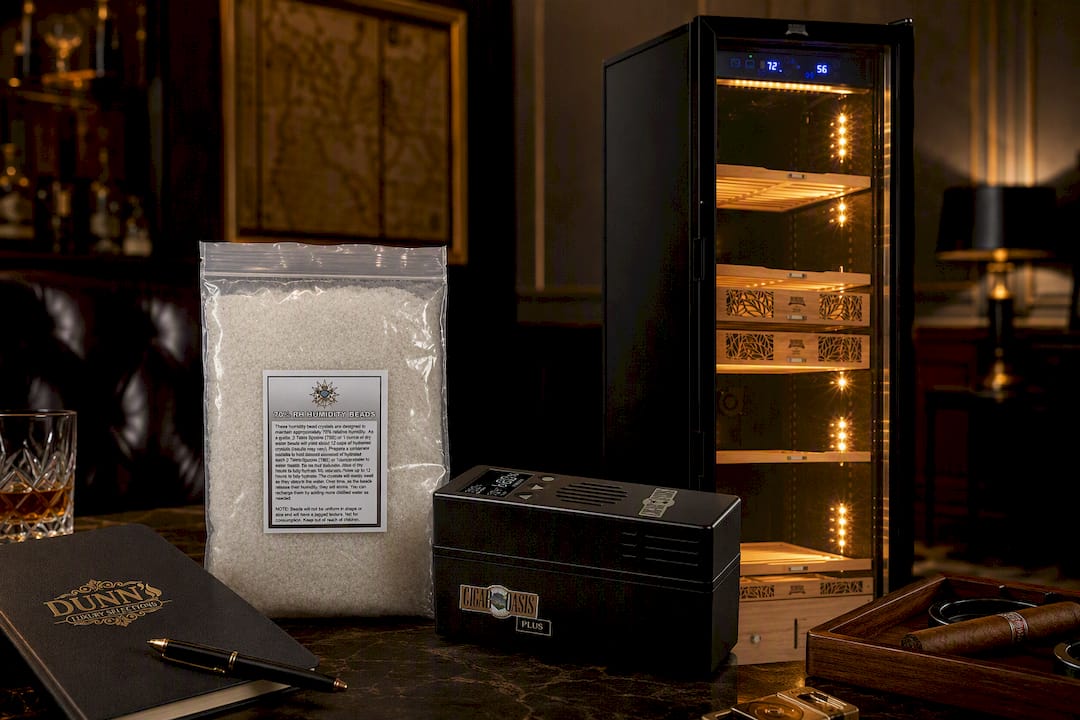
Specialized providers give collectors a direct path to properly specified humidification, avoiding mismatched parts from multiple retailers. If the repair math in this article has you rethinking a patched-up cooled cabinet, our catalog carries the Cigar Oasis Plus and the Humidor Supreme Electronic Humidor, 9000 Series for collectors ready to move to reliable electronic control, along with cabinet humidors, desktop humidors, travel humidors, and accessories to round out your setup.
If your collection has outgrown a cabinet or you’re facing a walk-in decision, Dunn’s Bespoke consultation walks you through site prep, HVAC integration, and Spanish cedar finishing so the build is done right the first time instead of repaired repeatedly after. Reach out through the bespoke page to schedule a consultation and get a real quote for your specific space.
Sources
- Commercial Humidor Repair Miami · Berne
- How Much Does an Electric Cigar Humidor Cost?
- Walk-In Humidor Rooms: Build Cost & What You Need | Humidorist
- How to calibrate hygrometers
FAQ
What Is the 135 Rule for Cigars?
The 135 rule refers to keeping your humidor near 70°F and 70% relative humidity, sometimes stated as a temperature-humidity target rather than a strict formula. Staying close to that range minimizes beetle activity risk and keeps cigars burning evenly without the sponginess that comes from excess moisture.
How Long Will a Humidor Last?
A well-built desktop or cabinet humidor with proper seasoning and seal maintenance can last well over a decade, while electronic components inside cooled units or humidifiers typically need replacement or servicing every three to seven years. Three-year operating estimates suggest electricity and consumable costs stay manageable within that window if the unit is properly maintained.
How Much Does a Decent Humidor Cost?
A quality desktop humidor with reliable seals starts around $50 to $150, while cabinet humidors and electronic units run higher depending on capacity and features; check current pricing on the Humidity Beads (1 lb) page and our humidor collections for exact figures. Walk-in installations vary dramatically, from roughly $2,000 for a small DIY build to $120,000 or more for a fully custom room.
Is 75% Humidity Too High for a Humidor?
Most experienced collectors target around 68% RH, and a hygrometer showing sustained readings above 75% usually signals an oversaturated humidifier that needs immediate attention.
Why Does My Humidor Keep Losing Humidity?
The most common causes are a dried-out humidification element, a compromised door seal, or a hygrometer that’s drifted out of calibration and is misreporting the actual conditions. Checking your hygrometer against a salt test or reference meter is the fastest way to rule out a false alarm before replacing parts unnecessarily.
Do Electronic Humidifiers Really Save Money Long-Term?
For larger or more valuable collections, yes. Cost versus value research on electric humidors shows the consistency of electronic control can prevent losses from beetle damage or mold that would otherwise cost far more than the unit’s operating expenses.
Recommended
You May Also Enjoy
Cigar Collection Insurance: How to Protect Your Humidor
Home policies often cap or exclude cigars. Learn how floaters, agreed value, appraisals and inventories protect a serious...
Read Article
Cigar Locker Dimensions: Sizing Guide for Collectors and Lounges
Cigar locker dimensions explained: compartment sizes, cabinet footprints, capacity math and clearances, so you size a locker bank...
Read Article
Sealing a Walk-In Humidor: Envelope, Door and Penetrations
How to seal a walk-in humidor properly: vapor barrier placement, door gasket, penetrations and the controlled airflow a...
Read Article