

U.S. cigar shops can match humidor projects to equipment, vendor, or SBA financing, compare lender options, and avoid costly cash advances before signing.
For most U.S. cigar shops and lounges, the right first calls are an equipment loan or vendor financing for display kits and cabinet humidors, and an SBA 7(a) or 504 loan for a full walk-in buildout. Community banks and SBA-approved lenders tend to understand these projects better than most online lenders. Before signing anything, verify the lender through FINRA BrokerCheck.
TL;DR:
- Use equipment or vendor financing for display kits and cabinets; reserve SBA 7(a) or 504 loans for custom room builds involving construction and equipment.
- Community banks suit custom projects because they consider local business context, while equipment finance firms move faster on standardized units; online lenders usually cost more.
- Prepare contractor bids, equipment specifications, two to three years of financial statements, and a cash flow forecast covering twenty four months and seasonal sales.
- Use a revolving credit line for seasonal inventory; merchant cash advances can take daily sales during slow periods and often cost more.
- Financed equipment may qualify for depreciation like cash purchases, but Section 179 and bonus depreciation limits change, so confirm treatment with a CPA.
Table of Contents
- Financing Types That Match Humidor Projects
- Where to Apply for Humidor Financing
- SBA Loan Programs for Humidor Buildouts and Equipment
- What Lenders Ask for and How They Evaluate a Humidor Project
- Costs, Timelines, and Budgeting for Common Humidor Projects
- Tax and Depreciation Considerations for Financed Humidor Equipment
- How Dunn’s Luxury Selections Supports a Financed Humidor Project
- Examples of Successfully Financed Humidor Projects
- Strategies for Improving Business Creditworthiness Before You Apply
- How Seasonal Sales Fluctuations Affect Your Financing Options
- A Humidor Specialist’s Take on Getting Financing Right
- Start Your Financed Humidor Project With Dunn’s
- FAQ
- Sources
Financing Types That Match Humidor Projects
Not every financing product fits every humidor purchase, and matching the tool to the project saves you time and interest.
Term loans and equipment loans work well for discrete, identifiable purchases: a commercial display kit, a cabinet humidor, or electronic units for a retail counter. The equipment itself often serves as collateral, which tends to make underwriting more straightforward than for a buildout with no resale value. Lines of credit and business credit cards suit ongoing inventory needs such as cigars, humidification beads, and accessories, rather than the humidor structure itself. Equipment lease financing and vendor financing, often arranged directly through the seller of a display kit, can get a standardized unit into your shop quickly, with approval criteria that are usually simpler than a bank’s.
SBA-backed loans, covered in depth in the next section, tend to be the better fit for a custom walk-in humidor because they allow flexible use of funds across construction, equipment, and working capital, and because the SBA guarantees a portion of the loan, which gives lenders more comfort with a unique, hard-to-value asset.
A short list of what typically pairs with each project type:
- Commercial display kits and cabinet humidors: equipment loans, vendor financing, or a short-term line of credit.
- Electronic and desktop units for retail counters: small equipment loans or a business credit card for lower-ticket purchases.
- Custom walk-in buildouts: SBA 7(a) or 504 loans, often paired with a contractor draw schedule.
- Working capital for inventory and staffing around a buildout: a revolving line of credit or microloan.
Merchant cash advances and many nonbank short-term lenders deserve a caution here. They can fund quickly with minimal paperwork, but the effective cost of capital is often far higher than a term loan or SBA product, and repayment is frequently tied to daily sales, which can strain cash flow during a slow season. These products are rarely the right choice for a planned humidor purchase when time allows for a more traditional application.
Where to Apply for Humidor Financing
Choosing a lender channel matters as much as choosing a loan type, and the right starting point depends on your project size and your existing banking relationship.
Small and regional banks often rely on relationship-based underwriting rather than pure credit-score models. The FDIC’s 2024 Small Business Lending Survey found that small banks lean more heavily on soft information gathered through in-person meetings, which tends to make them better suited to financing a one-of-a-kind project like a custom walk-in humidor that a formula-driven lender might not know how to value.
SBA Lender Match connects you with a network of participating lenders and is a practical way to shortlist SBA-approved banks and nonbank lenders without cold-calling every institution in your area. Community Development Financial Institutions (CDFIs) and credit unions are worth contacting when a traditional bank declines or when you are building a banking relationship from scratch; they often serve underbanked business owners with more flexible underwriting.
Equipment finance companies and vendor-financing partners tend to move fastest for standardized purchases, since a commercial display kit or cabinet humidor is easier to value and resell than a custom-built room.
A quick map of lender channels by project:
- Custom walk-in buildouts: community banks, SBA-approved lenders, or CDC/504 lenders.
- Display kits and cabinet humidors: equipment finance companies or vendor financing through the manufacturer.
- Working capital and inventory: credit unions, CDFIs, or a bank line of credit.
- Fast, smaller-dollar needs: online lenders, though usually at a higher cost than a bank or SBA product.
Online lenders compare favorably on speed and documentation simplicity, often funding in days rather than weeks, but they typically charge more than a bank or credit union, and the unique nature of a humidor buildout may not fit their automated underwriting models at all.
SBA Loan Programs for Humidor Buildouts and Equipment
The SBA’s loan programs do not lend directly. Instead, the agency guarantees a portion of a loan made by a participating lender, which lowers the lender’s risk and often results in better terms for the borrower than a conventional loan.
The 7(a) program is the most flexible and the one most cigar shop owners will consider first. It can finance equipment, leasehold improvements, real estate, and working capital in a single loan, which makes it well suited to a walk-in humidor buildout that involves construction, climate-control equipment, and inventory restocking at once. Guaranty percentages vary by loan size and structure, generally running as high as 85% for smaller loans, a structure that gives lenders more confidence to finance a custom installation they could not easily resell.
The CDC/504 program is built for real estate-heavy projects and works through a Certified Development Company partnering with a conventional lender. If your buildout involves a significant renovation or expansion of leased or owned space, a 504 structure can offer a lower down payment than a conventional commercial loan, though it usually takes longer to close than a 7(a) loan.
Microloans, administered through nonprofit intermediaries, suit smaller purchases: a single commercial display kit, a cabinet humidor, or working capital to restock inventory around a buildout. They are a sensible option when the total need is modest and a full bank loan feels like overkill.
A few practical notes before you apply:
- Expect lenders to ask for an equity injection, often in the range lenders commonly request for new or heavily customized projects.
- Collateral for a custom walk-in humidor is often thin, since the installation has little resale value, so lenders may ask for a personal guarantee or a lien on other business or personal assets.
- SBA procedural guidance on affiliation and lending criteria has revised collateral expectations and raised certain 7(a) small loan maximums, which is worth asking your lender about directly.
- Custom equipment valuation can be a sticking point. A detailed contractor bid and equipment spec sheet helps the lender’s underwriter assign a defensible value.
What Lenders Ask for and How They Evaluate a Humidor Project
Lenders underwrite a humidor buildout the same way they underwrite any commercial project: they want to see that the business can repay the loan, and that the collateral and owner’s commitment reduce their risk if things go wrong.
Plan to assemble these documents before your first meeting:
- Two to three years of profit and loss statements and balance sheets, plus year-to-date figures.
- Business and personal tax returns for the same period.
- A copy of your lease or property documents for the location where the humidor will be installed.
- Contractor bids and equipment quotes itemizing the buildout, including climate-control systems and cabinetry.
- A pro forma cash flow projection showing how the humidor supports revenue, whether through retail sales, membership fees, or lounge traffic.
- Personal financial statements and a credit summary for each owner with significant equity in the business.
Beyond the paperwork, the way you present the project matters. A lender evaluating a walk-in humidor wants to understand the customer experience it creates: a retail humidor expands inventory capacity and foot traffic, while a lounge humidor supports membership revenue and extended visits. Because the installation itself has limited resale value as collateral, framing it as an improvement to a revenue-generating space, rather than a standalone asset, helps justify the repayment plan in the lender’s eyes.
Meeting your loan officer in person, when a community bank is involved, gives you the chance to supply the kind of soft information that a credit-score algorithm never sees: your reputation in the local market, your supplier relationships, and your plan for the space. Debt service coverage and personal credit history still matter, but a well-prepared narrative often tips a borderline application.
Pro Tip: Build a short project packet, no more than a few pages, with your cost breakdown, contractor quotes, and a one-page revenue projection, so a loan officer can review the whole project in a single sitting.
Costs, Timelines, and Budgeting for Common Humidor Projects
Humidor projects span a wide price range, and knowing where your purchase sits helps you choose the right financing product and avoid over-borrowing or under-funding the buildout.
Commercial display kits and cabinet humidors sit at the lower end of the spectrum and are typically financed through equipment loans or vendor financing, often closing in days to a few weeks. Custom walk-in buildouts involve construction, climate-control equipment, cabinetry, and installation, and generally require a larger loan with a longer approval timeline.
A sample budget for a modest walk-in humidor buildout might include: construction and framing, insulated glass or walls, a dedicated climate-control system, Spanish cedar lining and shelving, lighting, and installation labor. A display kit budget, by contrast, is mostly the unit cost plus delivery and setup, a far simpler line item for a lender to evaluate.
- Equipment financing for a display kit or cabinet humidor: funding often arrives within days to a couple of weeks.
- A conventional bank term loan: typically within several weeks from application to funding.
- SBA 7(a) or 504 loans: often several weeks to a few months, given the additional underwriting and guaranty processing.
Lenders guarantee up to roughly 85% of smaller SBA 7(a) loans, a structure that directly shapes how much collateral and personal guarantee a lender will ask you to provide on a custom buildout.
Monthly payment size scales directly with loan amount, interest rate, and term, so a shop owner comparing a display-kit loan against a full buildout loan should run both scenarios with their lender before committing to either path.
Tax and Depreciation Considerations for Financed Humidor Equipment
Financing a humidor purchase doesn’t just affect your monthly cash flow. It also shapes what you can deduct at tax time, and that deduction can meaningfully offset the net cost of the equipment.
Humidor cabinets, electronic units, and many buildout components qualify as depreciable business property once placed in service, and IRS Publication 946 explains how such property is depreciated under the Modified Accelerated Cost Recovery System. Section 179 allows many businesses to deduct the full cost of qualifying equipment in the year it’s placed in service, rather than spreading the deduction over several years, and first-year bonus depreciation can apply to other qualifying costs.
- Financed equipment is generally eligible for the same depreciation treatment as a cash purchase, since depreciation follows ownership and use, not how the purchase was funded.
- Section 179 and bonus depreciation rules change periodically, so the amount you can deduct in year one depends on current limits and your total equipment spending for the year.
- A buildout that combines real property improvements with standalone equipment may need to be split for depreciation purposes, since the two are often treated differently.
None of this is tax advice, and the rules shift with total spending and entity structure. Review your specific project with a CPA before assuming a deduction will offset a specific loan payment.
How Dunn’s Luxury Selections Supports a Financed Humidor Project
We work with cigar shop and lounge owners at exactly the stage where financing and specification meet, and we built our process to make that stage easier.
We offer custom-designed walk-in humidors and can supply detailed cost breakdowns, equipment spec sheets, and installation timelines that a loan officer needs to evaluate a buildout. We provide delivery and expert consultation on projects, so the quote you bring to a lender reflects the scope of work rather than a rough estimate. We craft each humidor carefully and have received testimonials describing the quality of the finished space.
We can provide itemized quotes and equipment specifications as expected by a lender’s underwriter. Our consultation process maps the project timeline, helping set a realistic draw schedule. Our installation process aims to reduce execution risk that lenders might consider.
Whether you are financing a single commercial display kit or a full custom walk-in, having a detailed, professionally prepared quote in hand before your first lender meeting tends to shorten the underwriting conversation considerably.
Examples of Successfully Financed Humidor Projects
Cigar shop and lounge owners have funded humidor buildouts through a range of channels, and the pattern that tends to repeat is a close match between project size and lender type.
A retail shop adding a commercial display kit to expand walk-in traffic often finances the purchase through equipment financing or vendor terms, closing quickly because the unit itself serves as clear collateral. A lounge expanding into a dedicated humidor room for members, by contrast, more often uses a community bank term loan or an SBA 7(a) loan, since the buildout mixes construction, climate control, and cabinetry that a standardized equipment lender may not finance as a single package.

In both cases, the owners who moved fastest were the ones who arrived with a complete packet: contractor bids, equipment quotes, and a cash flow projection showing how the new humidor would support retail sales or membership revenue. Projects that stalled tended to be the ones where the owner approached a lender with only a verbal concept and no documentation, leaving the underwriter to guess at costs and collateral value.
The common thread across financed humidor projects, regardless of size, is preparation. A shop owner who treats the humidor as a revenue-generating addition to the business, backed by real numbers, tends to move through underwriting faster than one who treats it as a standalone purchase disconnected from the rest of the business.
Strategies for Improving Business Creditworthiness Before You Apply
A stronger credit profile before you apply gives you access to better rates and a faster underwriting process, and most of the work can start months before you need the loan.
Pay down existing revolving balances where possible, since a lower credit utilization ratio tends to improve both your personal and business credit scores. Keep your business and personal finances cleanly separated, with a dedicated business bank account and credit card, so a lender can see clean, consistent cash flow rather than commingled transactions.
Build a relationship with a bank or credit union before you need financing. The FDIC’s Small Business Lending Survey found that small banks lean on relationship and soft information in their lending decisions, and a banker who already knows your business from a checking account or a smaller line of credit is more likely to work with you on a larger request.
- Review your business and personal credit reports for errors well before applying.
- Reduce outstanding debt where feasible to improve your debt-to-income picture.
- Keep two to three years of clean, organized financial statements ready at all times.
- Open a modest business line of credit early, even if you don’t need it yet, to establish a track record.
None of these steps guarantees approval, but together they shift you from an unknown applicant to a known, bankable business in the eyes of a loan officer.
How Seasonal Sales Fluctuations Affect Your Financing Options
Cigar retail and lounge revenue often rises around the holidays and tapers during slower months, and that seasonality shapes which financing products make sense and when to apply for them.
A line of credit is often a better fit than a fixed term loan for managing seasonal inventory needs, since you can draw funds ahead of a busy stretch and repay as receipts come in, rather than carrying a fixed payment through a slow month. For a larger buildout loan, lenders will often want to see your seasonal pattern reflected honestly in your pro forma cash flow, rather than a flat monthly projection that ignores the swings your business actually experiences.
Timing your application matters too. Applying for a term loan or SBA loan during a strong revenue period, with recent statements to show it, generally presents a more favorable picture than applying right after your slowest season. If your humidor project is tied to a seasonal push, such as a holiday retail expansion, building in a buffer for the weeks before revenue ramps up helps you avoid a cash crunch while loan payments begin before the seasonal lift fully arrives.
Merchant cash advances, which tie repayment to daily sales, can feel appealing during a slow season because they promise easier qualification, but the trade-off is a repayment structure that keeps taking a cut of sales even as revenue recovers, often at a higher effective cost than a seasonal line of credit would carry.
A Humidor Specialist’s Take on Getting Financing Right
If you’re starting from zero, do three things in order: get real contractor quotes before you talk to any lender, build a twenty-four-month pro forma that reflects your actual seasonality, and contact SBA Lender Match or your local community bank rather than an online aggregator first.
Skip any merchant cash advance pitch that arrives unsolicited, and verify every lender through FINRA BrokerCheck before sending a deposit or signing a term sheet.
— Belle Dunn
Start Your Financed Humidor Project With Dunn’s
Once you know your budget and financing route, we can give you the detailed quote and specifications your lender needs to move quickly. Browse our Humidor Supreme® Commercial Cigar Locker Humidor, the Humidor Supreme® Large 29-Unit Commercial Cigar Locker Humidor, or the Humidor Supreme® Commercial Display 4000 Humidor Kit for standardized, lender-friendly purchases.

For a full custom buildout, our Dunn’s Bespoke consultation can prepare the itemized quote, specs, and installation schedule your lender will ask for. Have your space measurements and target budget ready, and request your quote today.
FAQ
What is the monthly payment on a $50,000 business loan?
The monthly payment depends on the interest rate and term length your lender offers, which vary by loan type and borrower profile.
What is the 20% rule for SBA?
Confirm the specific equity expectation for your project directly with your SBA-matched lender.
Is a cigar business profitable?
Profitability depends heavily on location, inventory management, and whether the business includes a lounge or membership component, and no single figure applies across every shop. A well-run humidor investment, properly financed and sized to actual revenue, tends to support profitability better than an oversized buildout funded with high-cost short-term debt.
How do I qualify for a $200,000 business loan?
Qualifying for a loan of this size generally requires strong personal and business credit, two to three years of clean financial statements, collateral or a personal guarantee, and a detailed project plan showing how the funds will be used and repaid. An SBA 7(a) loan is often the right vehicle at this size for a buildout, since the SBA’s partial guarantee gives lenders more flexibility than a purely conventional loan.
Sources
- SBA — Loans
- FDIC — Small Business Lending Survey 2024 (Executive Summary)
- IRS — Publication 946 (How to Depreciate Property)
- FINRA — BrokerCheck (verify financial professionals)
Recommended
You May Also Enjoy
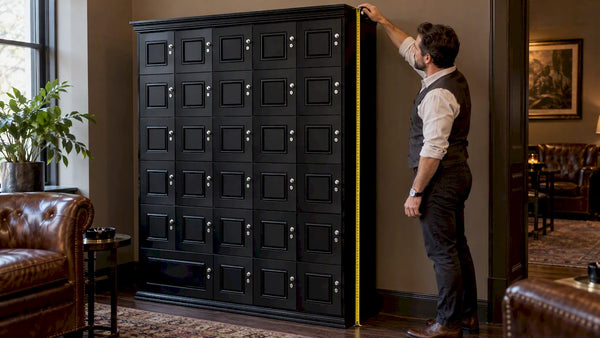
Cigar Locker Dimensions: Sizing Guide for Collectors and Lounges
Cigar locker dimensions explained: compartment sizes, cabinet footprints, capacity math and clearances, so you size a locker bank...
Read Article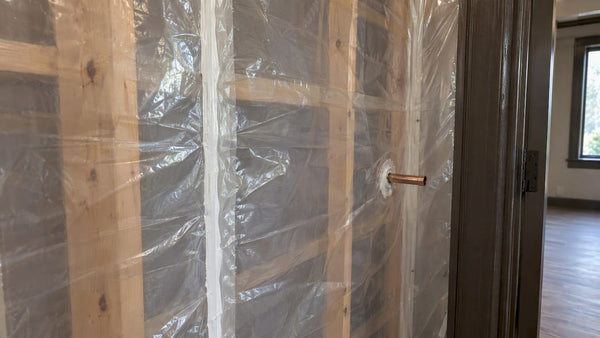
Sealing a Walk-In Humidor: Envelope, Door and Penetrations
How to seal a walk-in humidor properly: vapor barrier placement, door gasket, penetrations and the controlled airflow a...
Read Article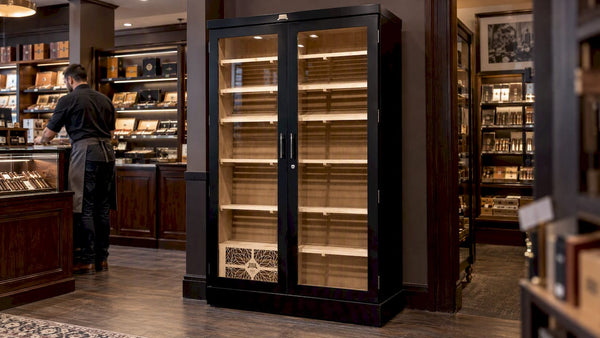
Retail Humidor ROI: How to Measure What a Display Earns
What does a retail or lounge humidor really return? A practical framework for cigar shops, lounges and clubs:...
Read Article