

What does a retail or lounge humidor really return? A practical framework for cigar shops, lounges and clubs: margin, turnover, RH control and costly mistakes.
A retail humidor earns its keep in two ways: it protects the inventory you have already paid for, and it sells the cigars inside it. The return is the incremental gross profit plus any membership, locker, event or accessory revenue it drives, less labor, utilities, maintenance, shrinkage, financing and the installed cost of the fixture. Get the climate wrong and the first term turns negative, however handsome the cabinet.
This guide is for owners of cigar shops, lounges, private clubs and golf clubs who are weighing a serious humidor investment. We will show you how to build the calculation, which benchmarks are worth borrowing, and where the money is usually lost.
TL;DR
- Judge a humidor as a revenue-producing asset inside your whole retail system, not as furniture.
- Consistency beats specification: a cabinet that holds 65–72% RH and a stable temperature protects margin. One that drifts destroys it.
- Track contribution and turnover by SKU and price tier, not capacity or unit count alone.
- Build compliance (age 21+, photo ID under 30, local smoking rules) into the model before you sign a lease or order a fixture.
- Treat every published margin as a planning benchmark and replace it with your own numbers.
Table of Contents
- The equation behind retail humidor ROI
- What the benchmarks say, and how far to trust them
- Why climate control is the largest line in the model
- Choosing the format that fits the revenue model
- Where the return comes from, by type of operator
- Compliance belongs in the ROI model
- Mistakes that quietly erase the return
- Our perspective: the humidor is an instrument
- Bring the numbers to a consultation
- A simple way to run the numbers
- Frequently asked questions
- Sources
The equation behind retail humidor ROI
Practitioners who track humidor ROI through SKU-level contribution, turnover, aging and reorder points rather than sales alone are working from one operating equation:
Incremental gross profit + attributable membership, locker, event and accessory revenue − incremental labor, utilities, maintenance, shrinkage, financing and installed cost.
Every term deserves a line in your spreadsheet.
- Incremental gross profit. Only the sales the humidor makes possible count. If your best customers would have bought the same boxes from a plain shelf, the display added nothing. If a well-lit, well-organized case moves higher-tier cigars you would not otherwise sell, it did.
- Attributable ancillary revenue. Lockers, memberships, private events and accessory attachments often turn a cabinet from a cost into a profit center, especially in lounges and clubs.
- Shrinkage. Mold, beetle damage, split wrappers and dried-out stock are costs of the fixture, not of the cigars. This is the term a poor humidor inflates.
- Installed cost. Include delivery, placement, electrical or water requirements, shelving and the setup period during which the unit earns nothing.
The Premium Cigar Association’s retailer guidance supports this discipline: profitability varies materially from one business to the next, so owners should build a complete operating budget, seek state-specific advice and avoid treating a margin headline as a forecast.
What the benchmarks say, and how far to trust them
Published numbers are useful as sanity checks. None is a promise.
| Benchmark | Figure | Source note |
|---|---|---|
| Starter commercial display, 150–300 cigars | Wholesale inventory basis of $2,500–$4,000 | U.S. wholesaler’s 2026 planning figures |
| Blended retail margin on that assortment | 45–55%, with a typical 90-day turn | Same source |
| Annual gross profit per well-run 200-cigar display | Roughly $5,000–$8,000 | Same source; a planning estimate |
| Floor space for a modest display | 4–6 square feet plus back-of-house overflow | Same source |
| Modeled premium cigar shop | $90,000 monthly sales, 48% gross margin, about $123,000 modeled owner income | 2026 financial model; explicitly a model, not a national average |
| Cigar lounge net margin | Commonly 10–20%, up to about 25% with memberships and private events | Secondary planning estimates |
Two cautions. First, the shop model also notes that adding a hired manager at roughly $5,000–$6,000 a month fully loaded can materially reduce what the owner keeps unless sales or margin rise. A beautiful humidor does not fix a thin P&L. Second, the lounge sources describe revenue as highly variable, and warn that rent, staffing, ventilation, licensing and service quality can overwhelm product margin. Replace every figure above with your own sales and cost data before it touches a decision.
Why climate control is the largest line in the model
A humidor that cannot hold its range is a liability on the balance sheet. Published storage guidance puts practical targets in the high 60s to low 70s: 69% RH for most cigar storage, 65% for a drier profile or long-term aging, and 72% for drafty or dry environments. That source states a control tolerance of ±2% RH when the recommended number of packs is used. A separate humidor guide frames the general range as 68–74% RH and 18–21°C, while cautioning that around 80% RH can invite mold, and that temperatures above 24°C raise pest and deterioration risk. Validate exact targets for your cigar mix and equipment.
The lesson from storage specialists is consistent: Spanish cedar, accurate sensors, a proper seal and airflow work as a system. A cabinet that oscillates outside your chosen RH and temperature range can destroy the inventory it was bought to protect. This is why we tell operators to ask about control before they ask about finish.
For a display unit, the details that decide the outcome are:
- Door seal. Every opening of a glass door is an exchange with a dry or humid room. A poor gasket makes the system work harder and drift more.
- Lighting heat. Cool-running lighting matters. Heat at the top shelf shifts RH and temperature where your best boxes sit.
- Airflow and stratification. Humidity often reads differently from top to bottom. Our guide to holding 65–72% RH without stratification in lounge storage walks through layout for operators, and the lower-shelf humidifier placement guide shows how placement affects mold risk.
- Calibration. A sensor that reads two points off is a sensor that makes you wrong with confidence.
- Setup discipline. Commercial cedar should be seasoned empty: 3–5 days for smaller units and 7–14 days for walk-ins. Loading dry cedar immediately can pull moisture from wrappers and cost you sellable stock on day one.
Choosing the format that fits the revenue model
The right humidor depends on what you sell and to whom. Here is how the main formats compare for commercial use.
| Format | Best for | Return logic | Watch for |
|---|---|---|---|
| Counter display | Single-box impulse and premium singles at the register | Small footprint, quick turn, strong visibility | Limited capacity; frequent opening |
| Glass-doored display cabinet | Shops and lounges selling by the stick or box | Merchandising plus protection; typically 300–3,000 cigar capacity | Seal quality, lighting heat, generic wine-cooler conversions |
| Cigar lockers | Lounges, private clubs, golf clubs | Recurring membership or rental revenue | Per-locker humidity consistency |
| Walk-in humidor | High-volume retailers, destination lounges, serious collectors | Customers browse inside; deepest inventory, strongest theater | HVAC integration, dew point, shelving, build time |
| Electronic, precision-controlled cabinet | Premium back-of-house or showpiece reserve | Active control protects the most valuable stock | Power and water requirements; service plan |
Browse our counter displays for the register, or our cabinet humidors and electronic humidors for deeper storage. For lockers, the Humidor Supreme® Large 29-Unit Commercial Cigar Locker Humidor suits a lounge or club building a membership offering, and our note on holding 65–68% RH in cigar lockers covers the settings.
For a retail floor, the Humidor Supreme® Commercial Display Humidor 4500 and the Commercial Display 4000 Humidor Kit are the models to look at first. For a reserve cabinet behind the counter, the Raching MON800A precision climate-controlled humidor holds 600 cigars with active control.
Where the return comes from, by type of operator
The retail shop
Your humidor is the fixture that converts browsers into buyers. The measure that matters is contribution per shelf position. Track margin and velocity by SKU and price tier, because turnover has an optimal range: too little creates aged or dead stock, and too much risks stockouts. Maximizing capacity is not the goal. A 3,000-count case half full of slow movers earns less than a smaller case that turns on schedule.
Inventory discipline compounds this. As one inventory guide for retailers puts it, every cigar sitting unsold is cash that cannot work elsewhere. Pair the humidor with a reorder point for each tier.
The lounge
Product margin alone rarely carries a lounge. The strongest operators, per the lounge margin estimates above, reach higher margins through memberships and private events. Lockers are the natural fit: a humidor wall of rentable lockers is both a revenue line and a reason for members to return. Treat the walk-in as a showpiece that also earns, and model locker occupancy realistically, not at 100%.
The club and the golf club
Here the humidor is an amenity that supports membership value and retention. Attribute carefully: count only the revenue you can tie to it, such as locker fees, event hosting and cigar sales to members, and do not claim the whole clubhouse.
A note on merchandising data
Whatever you sell, a premium display changes how customers shop. Retailers in adjacent regulated categories face the same question of reading purchasing behavior at the shelf, and this look at retail data strategy shows how disciplined analytics turns a counter into measurable insight. The principle carries over: log what is sold from the case, at what price tier, and how fast.
Compliance belongs in the ROI model
In the U.S., federal rules set the floor. Retailers must sell tobacco products only to customers 21 and older, and the FDA directs retailers to check photo ID of anyone under 30 who tries to buy. Design age verification, warning-label handling and staff training into daily operations, and into online sales if you sell remotely.

Location risk is separate. Smoke-free and cigar-bar rules vary by state and locality. A lounge projection that looks excellent can fail if indoor smoking, occupancy, ventilation or licensing assumptions are not verified before you sign the lease. Ask your state and local authorities, and a licensed attorney, before the fixture order is placed. Ventilation also feeds back into your humidor: our guides on cigar room HVAC that holds ±1–2% RH and commercial humidor HVAC integration explain how the room and the humidor must be planned together.
Mistakes that quietly erase the return
- Buying on capacity. The count on the spec sheet is rarely the count you can load with larger ring gauges. Plan for your actual vitola mix.
- Skipping the seasoning. Rushing the setup period is the cheapest way to lose your first shipment.
- Using a generic cooler as a humidor. Commercial guidance warns against generic wine-cooler conversions for display use. They are built for bottles, not cedar and cigars.
- Ignoring the room. A walk-in or cabinet fighting a hot, dry or drafty space spends its life correcting. Choose placement with our cabinet placement guide in hand.
- Mixing humidity products and RH levels. It reduces control efficiency. Pick one strategy per unit and hold it.
- Measuring sales, not contribution. Revenue from a case that attracts discounting and ages stock can look good while profit shrinks.
- Forgetting compliance and local rules. See above. This one can end the business, not just the quarter.
- Trusting one sensor. Calibrate, and check several positions in the unit.
Our perspective: the humidor is an instrument
We are asked about ROI more often by lounge owners than by anyone else, and our answer is always the same: begin with what you are protecting. A shelf of cigars is working capital with a pulse. It rewards stability and punishes neglect. The question is not how impressive the cabinet looks on opening day, but whether it will hold the same quiet, steady climate in its second summer, with the door opening forty times a day.
That is why, for a walk-in or a larger commercial project, we start with a consultation rather than a catalog page. The room, the HVAC, the shelving and the way your customers move through the space all shape the result. Our notes on shelving that controls dew point in walk-in humidors and on the difference between a display humidor and true storage come from exactly those conversations. A display is a stage. Storage is a vault. Many successful operators have both, and know which cigars belong in which.
— Belle Dunn
Bring the numbers to a consultation
If you are planning a shop display, a locker wall or a walk-in, we will help you match the fixture to your inventory, your room and your revenue model. Our Dunn’s Bespoke service covers custom walk-in humidors designed to your space, with expert consultation and white-glove delivery. For ready-made options, start from our full collection and bring your inventory basis, target turn and floor plan.

A simple way to run the numbers
- List the inventory the unit will hold at cost, by price tier.
- Set a realistic turn for each tier, starting from the planning benchmark of a 90-day turn for a well-matched assortment and adjusting to your own history.
- Estimate incremental gross profit, counting only what the fixture adds.
- Add attributable revenue: lockers, memberships, events, accessories.
- Subtract running costs: labor, power, maintenance, calibration, shrinkage and financing.
- Subtract installed cost and divide by annual net return to see your payback period.
- Stress-test it: cut sales by a quarter, add a month of setup, and raise shrinkage. If the case still pays back, it is sound.
Frequently asked questions
What is a good ROI for a retail humidor?
There is no universal figure. One wholesaler’s planning estimate suggests roughly $5,000–$8,000 in annual gross profit for a well-run 200-cigar display, but that is a benchmark, not a guarantee. Build your own model from your margins, turn and costs.
How long does it take to set up a commercial humidor?
Commercial cedar should be seasoned empty before you load stock. A typical setup period runs 3–5 days for smaller units and 7–14 days for walk-ins, according to commercial setup guidance.
What humidity should a retail humidor hold?
Published guidance puts most cigar storage around 65–72% RH, with 69% the common recommendation. Stability matters more than the exact number, so choose a target for your cigar mix and hold it within a narrow band.
Do I need a custom walk-in humidor, or is a display cabinet enough?
A display cabinet suits shops that sell a few hundred to a few thousand cigars. A walk-in makes sense when you carry deep inventory, want customers to browse inside, or run a destination lounge. A consultation can settle the question against your floor plan and sales.
What rules apply to selling cigars in the U.S.?
Federal rules require sales only to customers 21 and older, with photo ID checks for anyone under 30. State and local rules on smoking, cigar bars and licensing vary, so confirm them before you commit to a lease or fixture.
Sources
- Adding Cigars to Your Retail Business: the Real Math
- Humidor Selection & Setup Guide, Commercial & Hospitality
- What’s the Average Cigar Lounge Profit Margin?
- A Quick Guide to Tobacco Store Analytics
- What Boveda RH do I need for cigars?
- Humidor guide (PDF)
- Premium Cigar Association: How to Start a Cigar Shop in Your State
- Effective Cigar Inventory Management for Retailers
- FDA: Tobacco 21 Update for Retailers
- FDA: Selling Tobacco Products in Retail Stores
Recommended
You May Also Enjoy
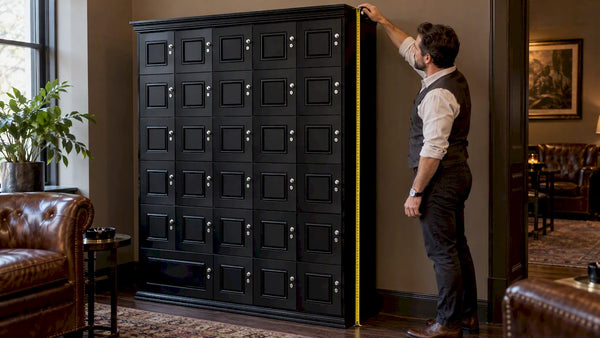
Cigar Locker Dimensions: Sizing Guide for Collectors and Lounges
Cigar locker dimensions explained: compartment sizes, cabinet footprints, capacity math and clearances, so you size a locker bank...
Read Article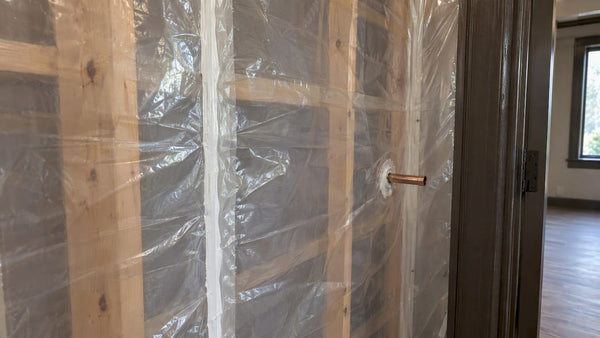
Sealing a Walk-In Humidor: Envelope, Door and Penetrations
How to seal a walk-in humidor properly: vapor barrier placement, door gasket, penetrations and the controlled airflow a...
Read Article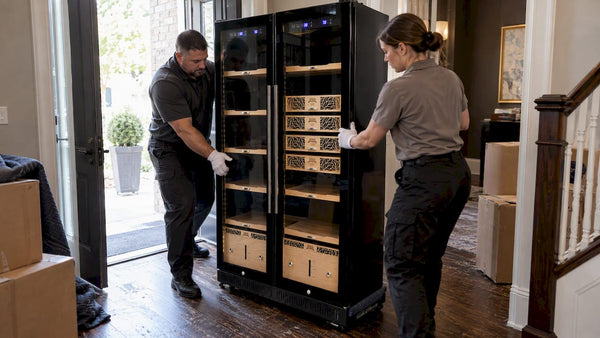
Humidor White Glove Delivery: What to Expect and Confirm
What white glove delivery for a high-end humidor includes, what it costs, and how to prepare your building...
Read Article