

Engineering-first advice for lounge operators: prevent stratification, maintain 65–72% RH with integrated climate and airflow, and plan installation,...
The right storage approach for a cigar lounge is a commercial cabinet or a bespoke walk-in humidor built with integrated climate control and active airflow, never a collection of oversized desktop units. Consistent relative humidity and real air circulation are what protect your inventory’s value and aging curve. If you’re planning or upgrading a lounge, your next move is to size your capacity needs and request a consultation on a climate-controlled system before committing to furniture.
TL;DR:
- Large commercial humidors must incorporate active airflow and climate control systems to prevent stratification and ensure uniform aging across all cigars.
- Capacity planning should prioritize actual inventory needs and layout considerations, including electrical, ventilation, and security requirements, over mere square footage.
- Maintaining a stable environment around 65 to 72% relative humidity and high 60s to low 70s Fahrenheit temperature reduces mold risk and microbial changes that can harm cigars.
- Proper ventilation and separate smoke extraction are essential in lounges to protect the humidor environment from smoke exposure and ensure climate stability.
- Custom-built walk-in humidors with Spanish cedar interiors and integrated technology provide optimal storage solutions for high-volume and retail-focused lounges.
Table of Contents
- Types of Cigar Lounge Storage: Lockers, Cabinets, and Walk-Ins
- Why Commercial-Scale Humidors Need Integrated Climate Control
- Capacity, Layout, and Installation Planning for Your Lounge
- Maintenance, Pest Risk, and Microbial Stability
- How to Choose the Right Storage Solution for Your Lounge
- How Dunn’s Bespoke Walk-Ins and Cabinets Solve Lounge Problems
- What This Guide Gets Right That Most Advice Misses
- Explore Dunn’s Lounge-Ready Storage Collection
- FAQ
- Sources
Types of Cigar Lounge Storage: Lockers, Cabinets, and Walk-Ins
Lounge storage breaks into a handful of distinct categories, each suited to a different scale of operation. Locker banks give members individually assigned, lockable compartments, which is as much a membership perk and security feature as it is climate management. Cabinet humidors and humidor furniture sit in the middle tier, offering real capacity in a piece that still reads as furniture on a lounge floor. Modular wall units and built-ins extend that same logic across a larger footprint, often combining display glass with working storage. Walk-in humidors are the largest category, reserved for lounges with serious volume or a retail component, where square footage and inventory turnover justify a room rather than a cabinet.
Across every tier, the interior material matters as much as the exterior finish. Spanish cedar remains the standard lining because it regulates moisture, repels tobacco beetles, and lends cigars a subtle aroma as they age, a point echoed across humidor furniture buying guides.
- Locker banks: individually secured compartments suited to member lounges and retail consignment.
- Cabinet humidors: mid-capacity furniture pieces that combine display with working storage, covered in our cabinet humidor collection.
- Modular wall units: scalable built-ins for lounges expanding floor-to-ceiling.
- Walk-in humidors: room-scale storage for high-volume lounges and retail operations.
Why Commercial-Scale Humidors Need Integrated Climate Control
Once a humidor grows past desktop size, humidity stops behaving as a single number. Warm, moist air rises, so a cabinet or walk-in without active circulation develops stratified zones, drier near the top, damper near the floor, even when the hygrometer reads correctly at eye level. Industry analysis of large-format humidor furniture confirms this: units over roughly four feet tall develop measurable humidity and temperature gradients without active circulation, and thermodynamic engineering becomes the core design challenge at that scale rather than simply fitting a bigger box with more cedar.
That is why serious commercial units pair cedar lining with mechanical systems: fan arrays or ducted distribution to break up stagnant pockets, and either thermoelectric or compressor-based climate control to hold a target range. Passive humidification, the foam trays and gel jars that work fine in a desktop box, simply cannot keep pace once you’re managing hundreds or thousands of cigars across multiple shelves.
A single relative-humidity reading at the front of a large cabinet tells you little about conditions on the back shelf or the top row without active air distribution, according to analysis of commercial humidor engineering. Left unmanaged, that unevenness produces inconsistent aging across your inventory, soft spots prone to mold, and a maintenance burden that only grows as the collection does.

Capacity, Layout, and Installation Planning for Your Lounge
Before you choose a unit, work backward from your inventory. Count what you’re actually storing, boxes in active rotation, singles for walk-in sale, and long-term aging stock, because that number drives both capacity and layout far more than square footage alone.
- Size for turnover, not just volume. A lounge selling heavily from stock needs easy-access shelving near the front; aging inventory can sit deeper or higher.
- Plan electrical and clearance needs early. Compressor and thermoelectric systems need dedicated power and clearance for heat dissipation, not an afterthought once the cabinet arrives.
- Map ventilation against door placement. Frequent door openings near an HVAC vent will fight your climate system constantly.
- Decide on display versus security. Glass-front cabinets sell the room; locked lockers protect member stock, and most lounges need both.
- Confirm delivery logistics. White-glove delivery and placement services matter more than they seem to on paper, since large units rarely fit through standard doorways without planning.
Pro Tip: Walk your delivery route with a tape measure before ordering. A cabinet that fits the room on paper can still fail to clear a hallway turn.
Maintenance, Pest Risk, and Microbial Stability
The working target for most lounge humidors sits around 65 to 72% relative humidity, with stable temperature in the high 60s to low 70s Fahrenheit, a range Cigar Aficionado has long treated as the standard for proper aging without inviting mold or drying cigars out. Small, frequent swings do more damage than a single large one, since they stress the wrapper leaf repeatedly rather than letting it settle.
Tobacco beetle activity is tied closely to warmth and humidity extremes, which is part of why Spanish cedar and stable climate control matter beyond comfort. Overfilling a cabinet or sealing cigars too tightly creates micro-pockets of trapped moisture, a mistake flagged even in Cigar Aficionado’s storage guidance, and those pockets can breed mold even when the main hygrometer reads correctly.
Storage conditions measurably shift the bacterial communities living on cigars over time, according to a longitudinal study of little cigars tracked across varying humidity and temperature conditions. That finding reinforces the operational case for consistency: unstable storage does not just risk visible mold, it changes the microbial environment on the product itself.
- Check hygrometers weekly and recalibrate monthly.
- Refill reservoirs or beads on a fixed schedule rather than waiting for a low reading.
- Inspect cedar shelving each season for warping or residue buildup.
- Rotate stock so no box sits untouched long enough to hide early mold.
How to Choose the Right Storage Solution for Your Lounge
Matching a system to your lounge starts with four decision points: capacity, climate-control technology, build materials, and the vendor’s service commitment. A locker bank with no active airflow is fine for a small member room; a retail floor moving thousands of sticks a month needs ducted climate control and a service contract behind it.
When you’re evaluating vendors, ask direct questions rather than relying on marketing copy:
- What humidity tolerance does the system hold, plus or minus how many points?
- Is remote monitoring included, or is it an add-on?
- What are the power and ventilation requirements for installation?
- What is the response time if the climate system fails?
- Walk away from any vendor claiming an “airtight” humidor, since cigars need airflow to age properly and a sealed box invites uneven moisture.
- Avoid unspecified power requirements buried in fine print; get wattage and clearance in writing before delivery.
- Treat vague maintenance language as a red flag: a serious vendor states service intervals plainly.
Smaller lounges on tighter budgets generally do well with a quality cabinet humidor; larger operations and retailers should weight climate-control sophistication and service response time above upfront price.
How Dunn’s Bespoke Walk-Ins and Cabinets Solve Lounge Problems
We build custom storage solutions that feature Spanish cedar interiors paired with climate-control systems. Our units include professional delivery services to assist with placement and initial calibration.
- A standard cabinet product is suitable when a lounge’s footprint and volume are well defined.
- Custom walk-in designs are fitting when a room-scale solution is needed around existing architecture, member flow, or retail display concepts.
- The consultation process evaluates space and inventory before proposing either a stock cabinet or a bespoke build.
What This Guide Gets Right That Most Advice Misses
Most cigar storage advice still talks about humidors the way it talks about desktop boxes: keep the beads fresh, watch the hygrometer, done. That advice breaks down the moment a lounge scales past a few hundred cigars, and it is where we think the conventional wisdom falls short. Stratification is a physics problem, not a maintenance oversight, and no amount of diligent bead-refilling fixes a cabinet that was never engineered for active airflow in the first place.
The reader’s real priority should be sequencing: decide on climate-control technology and airflow design before choosing finishes or furniture style. A beautiful cabinet with a weak circulation system will still produce uneven aging and mold risk, regardless of how well it’s maintained day to day. We’d also push back gently on the instinct to oversize “to be safe.” A larger cabinet with the same passive system only magnifies stratification, since there’s more vertical space for warm, moist air to separate from cool, dry air. Bigger is only better when the climate engineering scales with it.
— Belle Dunn
Explore Dunn’s Lounge-Ready Storage Collection
We built our catalog around the exact gaps lounge operators run into: security, display, and climate consistency, all without forcing a custom project on every buyer.

- The 17-Lockers Cigar Humidor Cabinet (Dark Cherry) suits member lounges that want individually secured, lockable storage with a premium finish.
- The Bermuda Cabinet fits lounges needing serious capacity in a single furniture-grade piece.
- The Mahogany Cigar Locker Humidor standing display works well for retail floors that want visible inventory with locker-level security.
When your space calls for something architectural, our Dunn’s Bespoke team designs walk-in humidors around your room, your member flow, and your inventory goals. Every order, standard or custom, ships with white-glove delivery and on-site placement support. Browse our full cabinet humidor, electronic humidor, and accessories collections, or request a consultation directly through our bespoke page to start planning your lounge’s storage upgrade.
FAQ
Are you supposed to refrigerate cigars?
No, refrigeration dries cigars out and exposes them to temperature swings that stress the wrapper leaf. Cigars age best in a stable 65 to 72% relative humidity range at room temperature, not in a refrigerated environment, as outlined in Cigar Aficionado’s storage guidance.
Do you need a humidor for cigars?
Yes, a humidor is the only reliable way to maintain the humidity band cigars need to age properly and avoid drying out or molding. Lounges handling any real volume need commercial-grade storage with active climate control rather than a single desktop box.
What is the 135 rule for cigars?
The safer approach is to follow an established range, such as the 65 to 72% RH guidance from Cigar Aficionado, rather than treating any single rule as fixed.
How do I care for my humidor?
Check your hygrometer weekly, refill humidification reservoirs on a set schedule, and inspect Spanish cedar shelving each season for warping. For larger cabinets or walk-ins, pair that routine with monitoring of the active climate-control system, since passive checks alone won’t catch stratification issues in bigger units.
Why does ventilation matter for a cigar lounge, not just the humidor?
Where smoking is allowed indoors, ASHRAE guidance recommends room isolation and separate ventilation systems, since standard mechanical systems can’t fully eliminate smoke exposure. That same isolated ventilation planning also protects your humidor’s climate control from fighting the room’s general HVAC system.
Sources
- How Humidor Furniture Became the Ultimate Living Room Statement Piece – Bytestream
- Storing cigars | Cigar Aficionado
- ASHRAE position document on environmental tobacco smoke
- The Bacterial Communities of Little Cigars and Cigarillos Are Dynamic Over Time and Varying Storage Conditions
Recommended
You May Also Enjoy
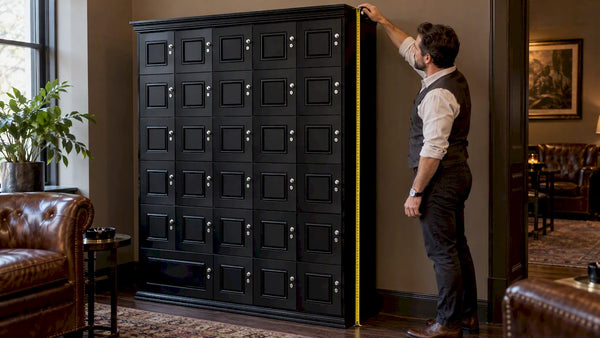
Cigar Locker Dimensions: Sizing Guide for Collectors and Lounges
Cigar locker dimensions explained: compartment sizes, cabinet footprints, capacity math and clearances, so you size a locker bank...
Read Article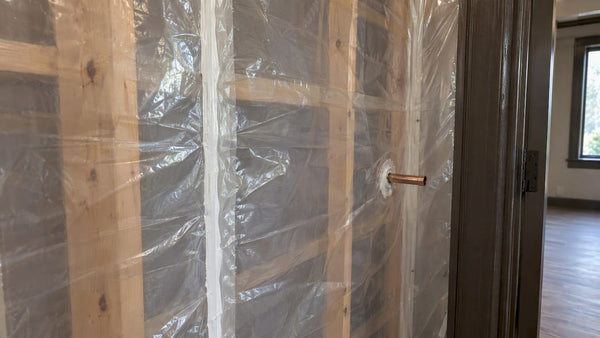
Sealing a Walk-In Humidor: Envelope, Door and Penetrations
How to seal a walk-in humidor properly: vapor barrier placement, door gasket, penetrations and the controlled airflow a...
Read Article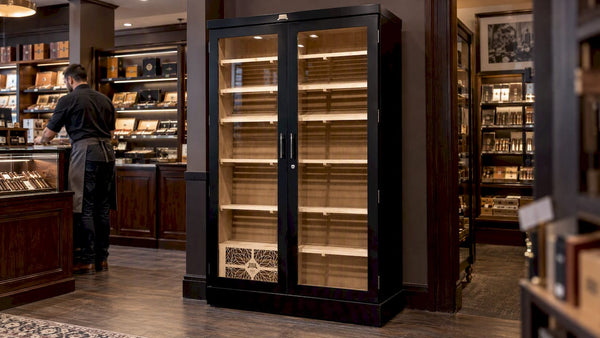
Retail Humidor ROI: How to Measure What a Display Earns
What does a retail or lounge humidor really return? A practical framework for cigar shops, lounges and clubs:...
Read Article