

Repairing warping in your cabinet humidor doors is essential. Discover practical steps to seal and stabilize humidity before it's too late.
Most cabinet humidor door warping is a repair, not a rebuild, and the single most important thing you can do right now is get the door closed and sealed to stop the humidity swing that started it. If the door still latches, close it fully and check the gasket line with a flashlight before you do anything else. If it will not seal, isolate the cabinet’s contents into a smaller passive humidor or a Boveda-lined travel case until you can stabilize relative humidity. Warping caused by seal failure, gasket compression loss, or minor board movement is almost always correctable. Warping caused by degraded polyurethane foam creep or a structurally unsound liner build usually is not.
Before you touch a screwdriver, take these actions:
- Stabilize the room first. Move the cabinet away from HVAC vents, exterior walls, or direct sunlight, all of which drive the daily humidity cycling that stresses wood joints.
- Run the dollar-bill test immediately. Close a dollar bill in the door seam at four points (top, bottom, and both sides) and pull gently. Easy removal means an active leak, not necessarily warping.
- Photograph the gap now, before adjusting anything. Shoot the seal line at eye level with a ruler in frame, plus a straightedge laid across the door face to capture the bow.
- Start a hygrometer log today. Note the date, the reading, and how long the door has been closed. This single log becomes the evidence a restorer needs for an accurate quote, a workflow Boveda-focused guidance on humidor moisture loss that recommends this precisely because it removes guesswork from diagnosis.
Key Takeaways
Most cabinet humidor door warping stems from seal failure, hygrometer error, or under-filled polyurethane foam, and correct diagnosis before repair determines whether the fix costs $150 or $1,500.
| Point | Details |
|---|---|
| Test before you assume | Run the dollar-bill and flashlight tests first; most warps trace to seal or hinge issues, not wood. |
| Calibrate your hygrometer | Salt-test or run a 24-hour Boveda check before trusting any RH reading. |
| Specify floating liners | A cedar liner box that floats independently of the carcass prevents expansion stress on new builds. |
| Verify foam fill quality | Ask builders for closed-cell, humid-aging verified foam to prevent creep-driven warping years later. |
| Know the rebuild threshold | Recurring seal failures after two repairs, or a persistent 3 to 5 millimeter gap, signal rebuild over repair. |
| Choose engineered stability | Dunn’s Luxury Selections builds floating liners and verified foam fills into every cabinet and walk-in from the start. |
Table of Contents
- Quick Diagnostic Steps To Find The Root Cause Of Cabinet Humidor Door Warping
- Why Cabinet Humidor Doors Warp In The First Place
- Building A Cabinet That Resists Warping From The Start
- How Your Humidification System Affects Door Movement
- Repair Options By Severity, From Hinge Adjustment To Full Rebuild
- When To Call A Professional Or Commission Something New
- A Seasonal Maintenance Schedule That Prevents Recurrence
- A Real Restoration: Diagnosis, Repair, And Verification
- The Case Against Chasing Every Small Warp
- Get A Cabinet Built To Resist Warping From The Start
- Sources
- FAQ
Quick Diagnostic Steps To Find The Root Cause Of Cabinet Humidor Door Warping
A warped door has one of four likely origins: a compromised seal, a miscalibrated hygrometer feeding you false confidence, wood movement from humidity swings, or foam and structural failure inside the cabinet wall itself. Work through these in order, cheapest test first.
Start visual. Look at the seal line in strong light for daylight gaps, then run the dollar-bill test at all four corners and the midpoints. The dollar-bill and flashlight test method is the fastest way to isolate a gasket problem from a genuine wood-warp problem, and it costs nothing.
Next, calibrate your hygrometer before trusting any reading it gives you. Salt-test it (a sealed container with table salt and a few drops of water should read 75% RH after 24 hours) or run a 24-hour Boveda 69% pack test, sealed alone in a small container with the hygrometer, and compare. Analog units drift years before owners notice, and a passive humidor failure analysis lists hygrometer error as one of the four most common causes of a cabinet that seems to be losing humidity.
Finally, physically inspect the hinges for vertical play and check the interior seams for daylight or bypass gaps that let humid cabin air escape around, not through, the seal.
| Test | What it reveals | Next step |
|---|---|---|
| Visual seal inspection | Daylight gaps, gasket wear | Replace gasket or adjust door |
| Dollar-bill test | Easy pull means a leak; resistance means seal is intact | If tight but RH still drops, check hygrometer |
| Flashlight test | Light bypass at corners or hinges | Inspect hinge alignment and compression |
| Calibrated hygrometer + Boveda test | True RH vs. displayed RH | Recalibrate or replace hygrometer |
| Hinge and gasket inspection | Vertical play, compressed foam gasket | Tighten, shim, or replace hardware |
Why Cabinet Humidor Doors Warp In The First Place
Wood does not move uniformly, and that single fact explains most warping you will ever see on a premium cabinet. Timber expands significantly across the grain, moderately in thickness, and barely at all along its length. A door panel built from a wide board will therefore bow or cup far more than one built from several narrower boards glued with the grain running the same direction, because the cumulative width-driven expansion compounds across the panel. Spanish cedar, prized precisely because it breathes and imparts aroma, is also one of the more dimensionally active softwoods used in fine cabinetry, which makes correct joinery non-negotiable rather than optional.
Veneer and substrate choices compound this. A veneer glued directly across the grain of a solid cedar liner restrains the liner’s natural movement, and restrained wood does not stop moving, it just moves somewhere else, usually as a bow or a crack at the weakest joint. MDF and plywood substrates behave more predictably than solid boards because their cross-laminated construction cancels most directional expansion, but a solid cedar panel glued flush to a rigid outer carcass with no allowance for movement is a warp waiting for a humid summer.
The most overlooked cause of a warped door on an otherwise well-built cabinet is not the wood at all. It is the insulation behind it. Under-filled or improperly cured rigid polyurethane foam can creep, bow, or relax months after delivery, quietly pulling the door frame out of true and opening the gasket line long after the original installation looked flawless.
This is why a deep technical breakdown of humidor cabinet foam treats foam fill quality as a structural, not cosmetic, specification. A cabinet wall is simultaneously the insulation and the vapor barrier. Any voided or open-cell pocket inside that wall becomes a slow leak path that stresses the frame from the inside out.
Building A Cabinet That Resists Warping From The Start
If you are commissioning new cabinetry, or evaluating a builder’s proposal, the construction details below separate a piece that ages gracefully from one you will be repairing within two years.
- Float the cedar liner box instead of gluing it to the carcass. A liner that floats independently absorbs its own expansion without transferring stress to the outer structure, a retrofit strategy restorers rely on precisely because it works.
- Never glue wide cedar panels directly across the grain to a rigid substrate. Let the panel expand within a frame, not against one.
- Specify recessed bottoms and full-perimeter compression gaskets, not adhesive-only seals, on any door wider than 24 inches.
- Use continuous-hinge or piano-hinge hardware on tall walk-in doors rather than two or three point hinges, which concentrate racking stress at each mounting point.
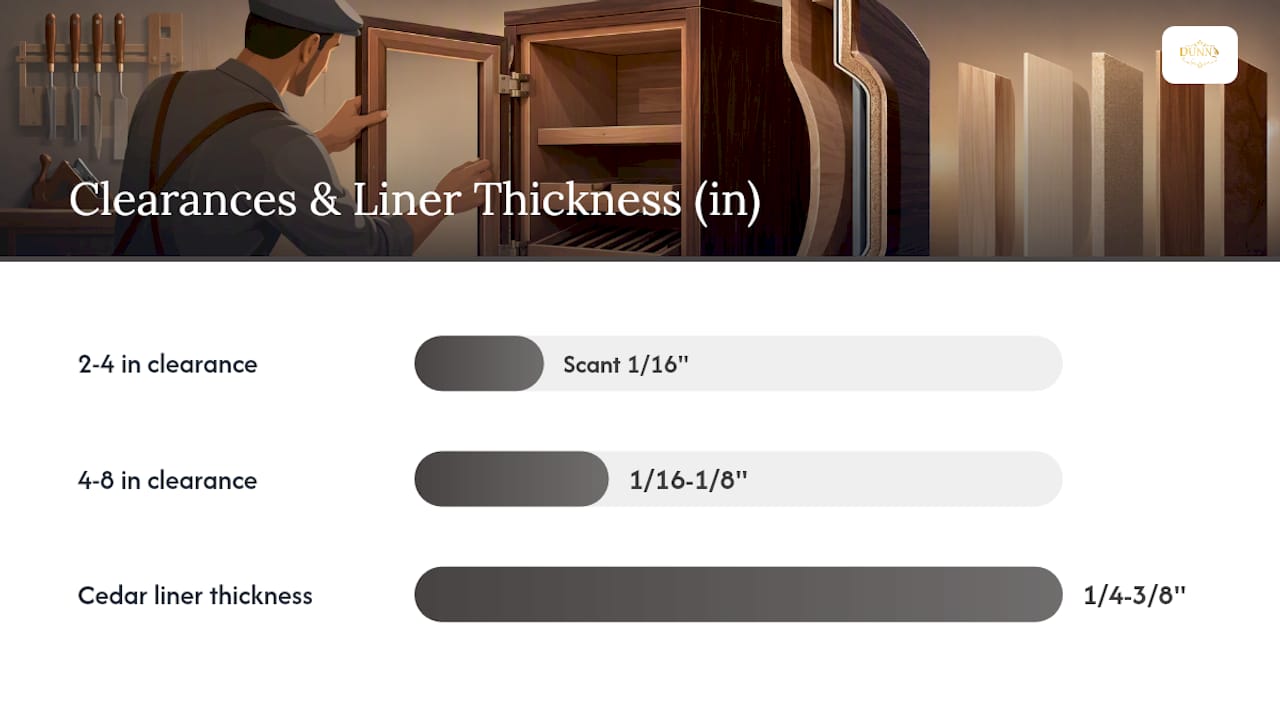
Practical clearance matters more than most buyers realize. Builder guidance on managing wood expansion in humidor construction recommends leaving a small clearance around a cedar liner box as standard practice, and that allowance should scale up, not stay fixed, as board width increases.
| Board width | Expected seasonal movement | Recommended clearance |
|---|---|---|
| 2 to 4 inches | Minimal | Scant 1/16 inch |
| 4 to 8 inches | Moderate | 1/16 to 1/8 inch |
| Over 8 inches | Significant, avoid solid panels | Use laminated or floating panel construction |
For material specification, Spanish cedar liners typically run 1/4 to 3/8 inch thick for cabinet interiors, with MDF or marine-grade plywood substrates behind veneer facings on the outer carcass. This is the construction approach behind Dunn’s cabinet humidor collection, and the reasoning behind board sizing and lining strategy gets a fuller technical treatment in our guide to cedar sheets in cigar storage.
How Your Humidification System Affects Door Movement
Every humidity swing your cabinet experiences is a small mechanical event for the wood inside it, and the humidification method you choose determines how often that event happens and how severe it gets.
Passive systems, foam packs, sponges, Boveda two-way packs, and silica bead systems, work by releasing or absorbing moisture as ambient conditions shift, but they have a ceiling. A comparison of passive humidor failure modes found that undersized or exhausted humidification devices, alongside winter ambient dryness, rank among the most common reasons a passive system loses control entirely. Boveda’s bidirectional packs generally outperform foam by a wide margin for RH stability in a sealed box, but a 320-gram pack sized for a desktop humidor will not hold a 200-cubic-foot cabinet through a dry Midwestern winter.
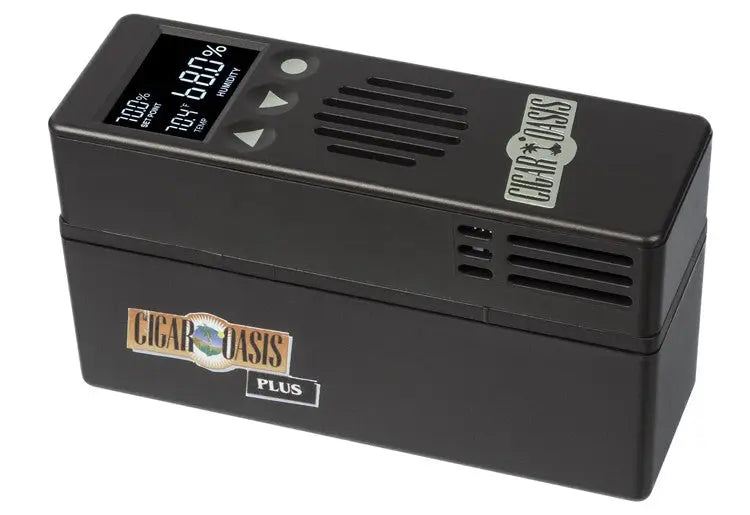
Active climate control, the kind built into an electronic humidification system, removes the passive failure category entirely by actively regulating rather than reacting. Devices like the Cigar Oasis Plus electronic humidifier are built precisely for this scale, sizing output to cabinet volume rather than hoping a handful of Boveda packs keep pace.
Sizing rule of thumb: budget one 320-gram Boveda pack per roughly 25 to 50 cigars in a passive box, and move to active control once you exceed a few hundred cigars or the room itself runs below 40% ambient RH for more than a few weeks a year. Whatever system you choose, never spray water directly onto interior cedar to speed conditioning. Manufacturer guidance on humidor seasoning is explicit that rapid saturation raises the grain and can split wood or warp a lid, and the same risk applies to any interior panel or liner.
Repair Options By Severity, From Hinge Adjustment To Full Rebuild
Not every warp needs the same intervention, and matching the fix to the actual failure saves both money and the cabinet.
Pro Tip: Before shipping a warped door anywhere, document it properly. Photograph the seal line with a straightedge laid flat across the panel, take digital caliper readings of the gap at three points, and include your hygrometer log with dates. A restorer working from real measurements quotes faster and more accurately than one guessing from a phone photo.
When To Call A Professional Or Commission Something New
Some warps are worth fixing. Some cabinets are worth replacing. Here is how to tell the difference:
- If your collection’s replacement value exceeds the cost of a full rebuild, repair almost always makes financial sense, even at the higher end of the cost range above.
- If the cabinet has needed the same seal repair more than twice in two years, the underlying cause is structural, likely foam creep or a non-floating liner, and a patch will not hold.
- If you are seeing foam residue, bowing along the full height of the door, or a persistent 3 to 5 millimeter gap that returns after adjustment, that is a rebuild signal, not a maintenance signal.
- If you are outfitting a lounge, retail floor, or club and need guaranteed long-term stability, commissioning a purpose-built cabinet from the start costs less over a decade than repeatedly patching a piece that was under-engineered for its environment.
This is the point at which a purpose-built cabinet like the Bermuda becomes the more sensible investment than continued repair, particularly for a collection that has outgrown its original enclosure. For retail and display environments where the door is opened dozens of times daily, the Milano Cigar Display is engineered with sealing and finish tolerances built for that traffic. Dunn’s white-glove consultation process walks through your space, your climate, and your collection size before recommending cabinet versus walk-in, a conversation covered in more depth on our bespoke craftsmanship page.
A Seasonal Maintenance Schedule That Prevents Recurrence
- Monthly: Check the seal with the dollar-bill test at all four corners, and log your hygrometer reading against the date.
- Quarterly: Recalibrate your hygrometer with a salt test or 24-hour Boveda check, and inspect hinges for any new vertical play.
- Twice yearly (spring and fall, ahead of HVAC season changes): Replace or refresh Boveda packs and silica beads before, not after, the seasonal humidity shift hits.
- Annually: Photograph the seal line and door face for your records, so you can compare year over year and catch slow creep before it becomes a visible bow.
- Ongoing trigger points: If RH sustains below 65% for more than a week despite fresh humidification, or the seal gap measures 3 to 5 millimeters and returns after adjustment, schedule a professional inspection immediately rather than waiting for the next scheduled check.
A Real Restoration: Diagnosis, Repair, And Verification
The dollar-bill test pulled freely at the lower right corner, and a calibrated hygrometer confirmed the analog unit installed at the factory had drifted nearly 8 percentage points high.
- Diagnosis: Photographs with a straightedge showed a 4 millimeter bow across the panel’s midline. The liner had been glued flush to the outer carcass with no floating allowance, and foam probing behind the frame revealed a soft, under-filled section along the hinge side.
- Repair: The restoration replaced the fixed liner with a floating liner box, refoamed the affected wall section with a verified closed-cell fill, and upgraded the two-point hinge to a continuous hinge rated for the door’s full height.
- Verification: The team ran a 72-hour monitored test with a calibrated digital hygrometer, confirming RH held steady at 69% through two full open-close cycles per day. The dollar-bill test showed uniform resistance at all four points on reinspection.
Pro Tip: Ask any restorer for before-and-after straightedge photos and a written verification log, not just a verbal assurance the seal is fixed. A cabinet that looks sealed and one that is verified sealed are not the same thing.
The Case Against Chasing Every Small Warp
Conventional advice treats every warped humidor door as an emergency requiring immediate professional intervention, and that advice is often wrong. Most seal issues, and even a fair number of minor bows, are hinge or gasket problems dressed up as wood-movement panic. The dollar-bill test costs nothing and takes thirty seconds, yet the majority of collectors I talk to skip straight to worrying about the wood before ruling out the far more common and far cheaper culprit.
Where conventional advice actually falls short is on the foam question. Buyers obsess over cedar grade and hinge finish when commissioning a cabinet, and almost nobody asks a builder what polyurethane fill process they use or whether it is verified for humid-aging stability. That is the failure mode that shows up eighteen months later as a mysterious door bow nobody can explain, because it was never visible at delivery. If you are commissioning custom cabinetry, the foam specification deserves as much scrutiny as the wood species. Ask for it in writing.
The reader’s real priority, in order, should be: rule out the seal, calibrate the hygrometer, then and only then start suspecting the wood or the foam behind it.
Get A Cabinet Built To Resist Warping From The Start
Dunn’s Luxury Selections builds cabinets with the details this article just walked through baked into the construction, not bolted on after a warranty call. Floating cedar liners, verified closed-cell foam fills, and full-perimeter compression seals are standard on every piece we build, not an upsell.

Whether you are commissioning a first cabinet or replacing one that has already warped twice, our white-glove consultation walks through your room’s climate, your collection size, and whether a cabinet or a walk-in makes more sense for your space. Compare your options in our desktop versus cabinet guide, then explore the Bermuda Cabinet for collections that have outgrown passive storage, or pair any new build with a Cigar Oasis Plus for active RH control that eliminates the seasonal swings that cause warping in the first place. Book a consultation today and let us build the piece that does not need rebuilding in three years.
Sources
- How to Deal with Expanding Wood in a Humidor?
- Why Does My Humidor Keep Losing Humidity?
- Cigar Humidor Cabinet PU Foam, Deep Dive: Why a Humidity-Holding Cabinet Is Foamed Differently from a Cold-Chain Fridge | UREXCEED
- Michael Dixon Humidors - Humidor Information
- How to Check If a Humidor Is Sealed Properly – Northwoods Humidors
FAQ
Can a warped humidor cabinet door be fixed without replacing it?
Yes, in most cases. Seal failures, hinge wear, and localized wood movement typically respond to gasket replacement, hinge adjustment, or a liner reglue rather than a full rebuild.
What causes cabinet humidor door warping in the first place?
Warping usually comes from across-grain wood expansion during humidity swings, a liner glued rigidly to the outer carcass instead of floating, or under-filled polyurethane foam creeping behind the frame over time.
How do I know if my hygrometer is giving me a false reading?
Run a 24-hour salt test or a calibrated Boveda 69% pack test sealed alongside the hygrometer, and compare the two readings; a drift of more than 2 to 3 percentage points means it needs recalibration or replacement.
How much clearance should a Spanish cedar liner have for expansion?
Builder guidance recommends roughly a 1/16-inch clearance around a cedar liner box, scaling up slightly as board width increases beyond 4 inches.
When should I commission a new cabinet instead of repairing the old one?
If seal repairs have recurred more than twice in two years, or you see persistent bowing with a 3 to 5 millimeter gap after adjustment, the underlying structure is compromised and a rebuild or new commission is more cost-effective long term.
Is active climate control necessary for a cabinet humidor?
For large cabinets, walk-ins, or homes in climates with strong seasonal dryness, active systems like an electronic humidifier remove the passive failure risks entirely and hold RH more consistently than Boveda packs alone.
Does Dunn’s Luxury Selections repair existing warped cabinets?
Dunn’s consultation process evaluates whether your existing cabinet can be retrofitted with a floating liner and refoamed door frame, or whether a new custom build better serves your collection and space long term.
Recommended
You May Also Enjoy
Cigar Locker Dimensions: Sizing Guide for Collectors and Lounges
Cigar locker dimensions explained: compartment sizes, cabinet footprints, capacity math and clearances, so you size a locker bank...
Read Article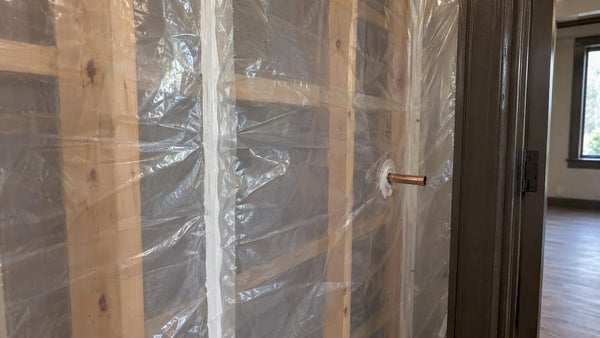
Sealing a Walk-In Humidor: Envelope, Door and Penetrations
How to seal a walk-in humidor properly: vapor barrier placement, door gasket, penetrations and the controlled airflow a...
Read Article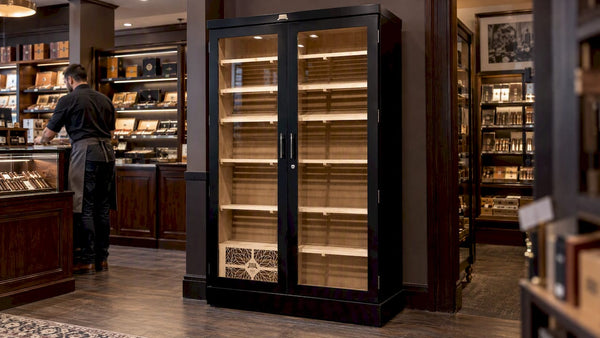
Retail Humidor ROI: How to Measure What a Display Earns
What does a retail or lounge humidor really return? A practical framework for cigar shops, lounges and clubs:...
Read Article