

Price ranges, capacity tradeoffs, and evidence-backed climate tips for U.S. collectors. Learn when ±1–2% RH precision is worth the added cost.
A cigar cabinet humidor in the United States runs $300 to $1,000 for a passive entry model, $1,000 to $5,000 for a mid-tier electronic cabinet, and $5,000 to $25,000 or more for a precision climate-controlled or bespoke piece. Most serious collectors land best in the $1,000 to $5,000 band, where reliable electronic control meets real cabinet-grade construction.
TL;DR:
- Most collectors should focus on cabinets in the $1,000 to $5,000 range that offer reliable electronic humidity control and genuine Spanish cedar lining.
- Cabinets under $1,000 usually have passive humidification, limited capacity, and less airtight seals, suitable only for short-term or rotating collections.
- Capacity directly influences price, with larger cabinets costing more upfront but reducing the per-cigar storage cost at scale, making long-term reserves more economical.
- Precision climate control with ±1 to 2% RH is essential for aging cigars over several years, especially for delicate wrappers or Cuban cigars.
- Upgraded materials like Spanish cedar and custom finishes justify higher prices but are most beneficial when long-term aging or large collection preservation is the goal.
Table of Contents
- What Does a Cigar Cabinet Cost at Each Price Tier?
- How Does Capacity Change the Price and the Right Choice for You?
- Which Climate Control and Materials Actually Justify Higher Prices?
- How Should You Choose the Right Cigar Cabinet?
- How Does Dunn’s Luxury Selections Fit Your Collection?
- Is Precision Climate Control Worth the Extra Cost?
- Shop Dunn’s Cabinet Collection or Book a Bespoke Consultation
- Sources
- FAQ
What Does a Cigar Cabinet Cost at Each Price Tier?
The cigar cabinet market splits cleanly into three tiers, and knowing which one you’re shopping in saves you from either overpaying for features you don’t need or underbuying a cabinet that will fail your collection within a year.
Entry-level cabinets ($300 to $1,000) typically hold 100 to 300 cigars and rely on passive humidification: foam or gel-based humidifiers, a few shelves, and a seal that’s good but not airtight. These work fine for a rotating, actively smoked collection where cigars don’t sit for more than a few months. They rarely include a digital hygrometer worth trusting, and the wood veneer is often cabinet-grade plywood rather than solid Spanish cedar.
Mid-tier cabinets ($1,000 to $5,000) are where most collectors should be shopping. This band brings electronic humidity control, often a Peltier or compressor-based system, digital readouts accurate to within a few percentage points, adjustable shelving, and genuine Spanish cedar lining throughout. A well-known example: the Raching MON1800A climate-controlled cabinet, built to hold roughly 1,200 cigars, retails in the low thousands and illustrates how capacity and electronic control combine to set price in this range.

Ultra-luxury and bespoke cabinets ($5,000 to $25,000+) deliver precision climate zones, museum-grade cedar construction, custom finishes, and sometimes multiple independently controlled compartments for aging versus daily rotation. For context, commercial-grade walk-in humidors used in cigar lounges can run $10,000 to $80,000 as part of a full buildout budget, which tells you how quickly climate precision and scale compound cost even outside the residential cabinet market.
Three factors push a cabinet’s price up within any tier:
- Capacity — more cubic footage means more cedar, more sealing surface, and a bigger humidification load to manage.
- Electronics — compressor-based cooling and computerized zone control cost more than a single Peltier unit or passive beads.
- Finish and customization — hand-rubbed lacquer, brass hardware, and bespoke dimensions add labor cost that a factory-standard cabinet doesn’t carry.
Don’t stop budgeting at the sticker price. Calibration tools, replacement humidification elements, and delivery or installation for larger cabinets can add several hundred dollars to your total outlay, particularly if a cabinet needs professional placement or electrical access for a climate unit.
How Does Capacity Change the Price and the Right Choice for You?
Capacity is the single biggest lever on price, and matching it to your actual collection, not your aspirational one, is where most first-time buyers get it wrong.
- Under 100 cigars — a small desktop or compact cabinet in the $300 to $700 range covers casual collectors who smoke through their stock regularly.
- 100 to 500 cigars — the sweet spot for most enthusiasts, typically $800 to $2,500, with room to age a portion of the collection while still smoking actively.
- 500 to 2,000 cigars — serious collectors and small lounges land here, usually $2,500 to $8,000, often stepping up to compressor-based climate control.
- 2,000-plus cigars — collectors building long-term reserves or running a retail operation, where cabinets or walk-ins can exceed $10,000 depending on zoning and finish.
The economics get counterintuitive at scale. Per-cigar storage cost actually drops as capacity rises, since a larger cabinet’s cedar, insulation, and electronics get spread across more inventory. A 2,000-cigar cabinet costing $8,000 works out to $4 per cigar in storage overhead; a 100-cigar cabinet at $700 costs $7 per cigar. Buy for where your collection will realistically sit in three years, not where it sits today. Measure your available floor space and door clearance before ordering. Many mid-to-large cabinets need 24 to 30 inches of depth and a doorway wide enough for delivery, a detail that trips up more buyers than any spec sheet.
Which Climate Control and Materials Actually Justify Higher Prices?
Not every dollar you spend on a cigar cabinet buys you better preservation, and the distinction matters more than most sales copy admits.
Passive humidors depend on evaporative humidifiers and the cabinet’s own seal to hold humidity, and they can swing 5 to 10 percentage points of relative humidity between refills. Consumer electronic humidors correct that with a fan and a humidification cartridge, typically holding within 3 to 5 points. Precision climate-controlled cabinets, the kind built with compressor cooling and digital zone sensors, hold humidity within ±1 to 2% RH and temperature within a degree or two, which is the range that actually matters for cigars sitting untouched for a year or more.
That precision isn’t cosmetic. Research on cigar aging shows that controlled conditions around 70% relative humidity and 65 to 77°F measurably improve aroma compounds and sensory quality over time, and separate research on tobacco curing confirms that humidity, temperature, and oxygen control materially shape fermentation outcomes. A related study tracking cigars over extended aging periods found that sensory scores kept improving under tightly controlled conditions, which is the scientific backbone behind why serious collectors pay for precision rather than a $40 desktop humidifier and hope.
Pro Tip: If you’re aging wrappers you plan to hold for three or more years, treat ±1 to 2% RH control as a requirement, not a luxury upgrade. Small swings compound over long timelines.
Materials matter almost as much as electronics. Genuine Spanish cedar buffers humidity swings and releases aromatic oils that many collectors believe complement long-term aging, while a tight door seal and internal insulation are what let an electronic system maintain its target range without running constantly. Quality shelving, ideally adjustable and cedar-lined rather than painted particleboard, rounds out the features that separate a $2,000 cabinet from a $600 one.

How Should You Choose the Right Cigar Cabinet?
Buying a cabinet humidor rewards a methodical approach over an impulse purchase, and the sequence below is the one experienced collectors actually use.
- Audit your current inventory. Count what you own today, not what you imagine owning.
- Define your capacity target with room to grow. Add 30 to 50% to your current count if you plan to keep collecting.
- Set your humidity and temperature requirements. Decide whether you’re storing for active rotation (looser tolerance is fine) or long-term aging (demand ±1 to 2% RH).
- Confirm warranty and service terms in writing. Ask what’s covered, for how long, and whether service requires shipping the unit back.
- Factor in delivery and installation costs upfront. Larger cabinets often require white-glove delivery, which isn’t always included in the sticker price.
Before you buy, ask the seller these questions directly:
- What’s the actual RH and temperature tolerance, and is it independently tested or just the manufacturer’s claim?
- How often does the humidification or cooling element need calibration or replacement?
- Are replacement parts (seals, humidifiers, sensors) available, and at what cost?
- What does the service policy cover after the first year?
Watch for two common red flags: cabinets that advertise “precision control” without publishing an actual RH tolerance number, and upsells for extended warranties on passive units that have almost nothing electronic to fail in the first place.
How Does Dunn’s Luxury Selections Fit Your Collection?
Some premium humidor providers offer a range of products from cabinet-grade electronic units to fully bespoke builds, all designed with humidity control science in mind for long-term preservation.
- Bespoke walk-in humidors for collectors whose reserves have outgrown any cabinet, backed by consultation and white-glove delivery.
- Cabinet humidor collections spanning mid-tier electronic units through precision-controlled models, suited to the 500 to 2,000-cigar range most serious collectors fall into.
- Expert consultation before purchase, so you’re sizing capacity and climate control to your actual collection rather than guessing.
- White-glove delivery and installation, which matters more than most buyers expect once a cabinet exceeds a few hundred pounds.
Dunn’s cabinet and desktop collections map directly onto the price tiers above, and its climate-controlled cabinet guide walks through the specific electronics that separate a $1,500 unit from a $6,000 one. For anyone weighing insulation quality against price, the cabinet insulation breakdown is worth reading before you sign off on a purchase.
Is Precision Climate Control Worth the Extra Cost?
Precision control earns its price when the stakes are real: a reserve of aged Cuban-seed wrappers, a collection you’re holding for five or more years, or box-pressed cigars with delicate wrapper oils that crack under humidity swings. In those cases, ±1 to 2% RH control isn’t overhead, it’s insurance against losing cigars worth more than the cabinet itself.
A lower-cost passive or basic electronic cabinet is entirely defensible for a rotating 100 to 300-cigar collection you’re smoking through within a year. The math is simple: if you’re not aging, you’re not paying for aging technology. Know which collector you are before you shop the price tag.
— Belle Dunn
Shop Dunn’s Cabinet Collection or Book a Bespoke Consultation
Dunn’s Luxury Selections gives you a direct path to cabinet-grade preservation without the guesswork of comparing spec sheets across a dozen unfamiliar sellers. 
If you’re shopping the mid-tier band, the Bermuda Cabinet suits collectors building toward a large, display-worthy collection with real climate control. For collectors who want individual, secured storage rather than open shelving, the 17-Lockers Cigar Humidor Cabinet in Dark Cherry partitions your collection into separate compartments. And for those operating at retail or serious-collector scale, the Barbatus Cabinet Humidors line handles 2,000-cigar capacity with precision climate zoning.
If none of the standard collections fit your space or your ambitions, Dunn’s Bespoke walks you through a custom walk-in or cabinet build, starting with a consultation on your room, your collection size, and your climate targets. White-glove delivery and installation guidance come standard on larger builds, and the team can talk you through financing for bespoke projects during that same consultation. Browse the full cabinet humidor category or reach out to schedule a consultation and get a cabinet sized correctly the first time.
Sources
Technical humidity and aging guidance in this article draws on peer-reviewed cigar aging research from PMC and tobacco curing studies, alongside market pricing context from industry cost breakdowns and supplier listings.
- Untargeted metabolomics based on HS-SPME-GC-MS revealing the dynamic evolution of aroma components during cigar aging - PMC
- Cigar Lounge Startup Cost Breakdown: 8 Things To Budget For
FAQ
How Much Should a Good Humidor Cost?
A good cabinet humidor for a serious collector typically costs $1,000 to $5,000, which buys reliable electronic humidity control and genuine Spanish cedar construction. Passive desktop units can work for under $300 if you’re smoking through your stock quickly rather than aging it.
How Much Does It Cost to Build a Cigar Lounge?
A full cigar lounge buildout, including high-quality commercial humidors, commonly runs $10,000 to $80,000 depending on scale and climate systems. That range reflects walk-in and commercial-grade equipment, far beyond what a residential cabinet requires.
What Is the 135 Rule for Cigars?
Definitions of this rule vary across collector communities, and there’s no single scientifically established standard tied to that exact figure. The consistent principle across humidity research is that stable conditions near 65 to 70% RH and 65 to 70°F matter far more than any specific numeric rule.
How Much Does a Cigar Box Cost?
A basic wooden cigar box for gifting or short-term storage typically costs far less than cabinet-grade humidors built for long-term preservation. Boxes lack the sealing, insulation, and humidification systems that make cabinets suitable for aging.
What Capacity Cabinet Do Most Collectors Need?
Most enthusiasts do well with a 100 to 500-cigar cabinet, priced roughly $800 to $2,500, which balances active rotation with some aging capacity. Collectors building long-term reserves often move up to 500 to 2,000-cigar cabinets as their collections grow.
Does Dunn’s Luxury Selections Offer Custom Cabinet Sizing?
Yes, Dunn’s Bespoke service builds custom walk-in humidors and cabinet configurations sized to your room and collection. Pricing isn’t published; current details are available through a consultation on the Dunn’s Bespoke page.
Is Spanish Cedar Worth the Extra Cost in a Cabinet?
Spanish cedar helps buffer humidity swings and contributes aromatic compounds that many collectors associate with better long-term aging. It’s a meaningful upgrade over unlined or plywood-lined cabinets, particularly for anyone storing cigars beyond a year.
You May Also Enjoy
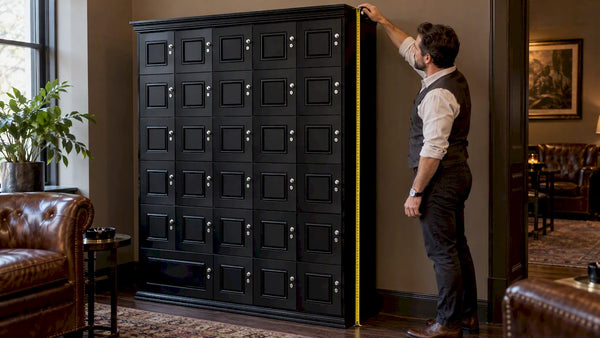
Cigar Locker Dimensions: Sizing Guide for Collectors and Lounges
Cigar locker dimensions explained: compartment sizes, cabinet footprints, capacity math and clearances, so you size a locker bank...
Read Article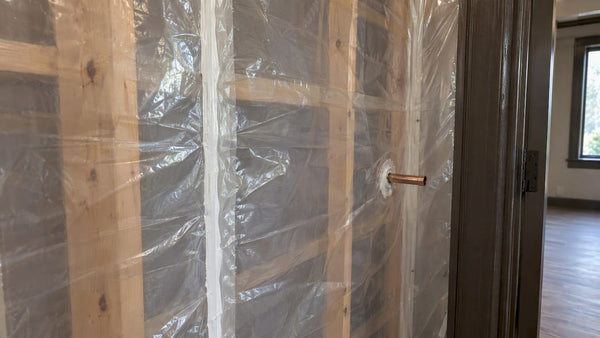
Sealing a Walk-In Humidor: Envelope, Door and Penetrations
How to seal a walk-in humidor properly: vapor barrier placement, door gasket, penetrations and the controlled airflow a...
Read Article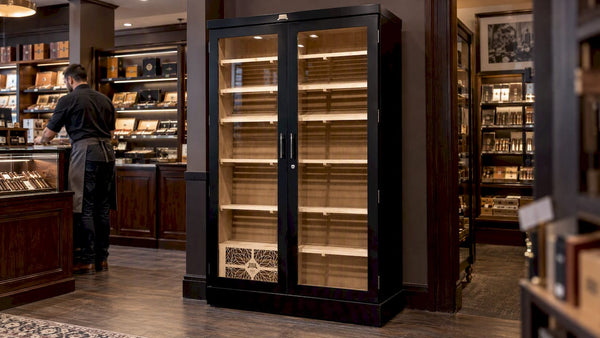
Retail Humidor ROI: How to Measure What a Display Earns
What does a retail or lounge humidor really return? A practical framework for cigar shops, lounges and clubs:...
Read Article