

One minute checklist to spot plume vs mold, when to quarantine or discard cigars, and why keeping 62–70% RH prevents humidor outbreaks.
If you see white or gray growth on a cigar, treat it as mold until it clearly proves otherwise. The safest checks take under a minute: brush the spot, check the foot, and smell the wrapper. If anything grows back after brushing, stains the leaf, or smells musty, isolate that cigar immediately and check your humidor’s hygrometer reading.
TL;DR:
- Mold appears fuzzy, fuzzy, and often involves the foot of the cigar, making foot growth a definitive sign of contamination.
- True plume, if it exists, forms over years with stable conditions and is rarely confirmed by lab tests, most white growth is mold.
- Excess humidity above 72-75% and poor air circulation accelerate mold spread, especially if humidifiers are contaminated or poorly maintained.
- Surface cleaning with a dry cloth or soft brush is safe only if the growth shows no fuzz, staining, foot, or musty smell; otherwise, discard the cigar.
- Proper storage involves maintaining 62-70% RH, 65% as ideal, with regular cleaning, calibrated hygrometers, and active regulation systems to prevent mold outbreaks.
Table of Contents
- Cigar Mold vs Plume: The Fast Way to Tell Them Apart
- What Cigar Plume Actually Is (and Why It’s Rarer Than You Think)
- How Mold Forms on Cigars (and Why It Spreads So Fast)
- How to Safely Remove Surface Bloom (When You’re Confident It’s Plume)
- What to Do the Moment You Suspect Mold
- Preventing Mold: The Storage Numbers That Actually Matter
- How to Clean Your Humidor After a Mold Outbreak
- Are Moldy Cigars Ever Worth Saving?
- The Dunn’s Luxury Selections Checklist for Collectors
- Why the Plume Debate Misses the Point
- Protect Your Collection With Precision Storage
- Sources
- FAQ
Cigar Mold vs Plume: The Fast Way to Tell Them Apart
Plume, sometimes called bloom, is a fine, powdery, usually white or bluish dust that sits flat against the wrapper and brushes away cleanly with a dry finger or soft brush. Mold is fuzzy, three-dimensional, and often leaves a colored stain or a greenish or bluish tint behind after you wipe it. That distinction sounds simple in theory. In practice, collectors misjudge it constantly, because early-stage mold can look deceptively flat before it develops its telltale fuzz.
Run through this checklist before you make a call on any suspicious cigar:
- Texture test: Touch it lightly with a dry cotton swab or clean fingertip. Plume feels dry and powdery and transfers to your finger like chalk dust. Mold feels slightly damp, fuzzy, or web-like, even in a properly humidified box.
- Color and pattern: Plume typically appears in a uniform, dust-like coating across the wrapper, often crystalline under light. Mold tends to show up in isolated colonies, uneven patches, or a fuzzy web pattern, and can be white, green, blue, or black.
- Foot check: This is the decisive rule. Growth on the foot of the cigar, where the tobacco is exposed and moisture collects fastest, is mold, full stop. Industry guidance treats foot growth as conclusive evidence, and no legitimate plume theory accounts for it.
- Smell test: Plume has no odor beyond the cigar’s normal tobacco scent. A musty, damp-basement smell is mold, even if the visual signs are ambiguous.
- Photograph and magnify: Use your phone’s macro mode or a jeweler’s loupe to photograph the spot before you touch it. This gives you a baseline record if the growth changes over the next 24 to 48 hours, which is often the clearest tell of all.
Pro Tip: Mold spreads or regrows within a day or two under normal humidor conditions. Plume does not. If you brush a spot clean and it reappears by the next evening, you’re not looking at plume anymore.
For a deeper visual breakdown of markings collectors commonly confuse, our guide to cigar markings walks through side-by-side comparisons worth bookmarking.
What Cigar Plume Actually Is (and Why It’s Rarer Than You Think)
Plume, in the classic collector telling, forms when natural oils and sugars inside the tobacco leaf migrate to the surface and crystallize over years of proper aging. The theory holds that this is a sign of a well-aged, well-stored cigar, evidence the leaf’s compounds are doing exactly what long-term aging is supposed to do. It’s a romantic idea, and one that’s shaped decades of cigar lore.
The chemistry behind that claim has never held up to scrutiny. When Friends of Habanos submitted suspected plume samples to Australia Biotech Laboratories for testing, the lab found fungal organisms, including Eurotium and Aspergillus species, in the samples rather than crystallized tobacco oils. Not one sample confirmed the crystallization story.
That doesn’t mean true plume never occurs. Long-time cigar retailers acknowledge it’s possible, just uncommon, and it would theoretically require years of stable aging at consistent humidity with minimal handling, conditions few home humidors sustain perfectly. Conditions sometimes cited as favorable to plume include:
- Extended aging periods over several years
- Very stable relative humidity with minimal fluctuation
- Cigars left undisturbed and unhandled for long stretches
- Consistent, moderate storage temperature
The practical takeaway: don’t assume plume just because a cigar has aged a while. Most white growth collectors encounter, even on well-aged sticks, turns out to be mold that found the right conditions to bloom.
How Mold Forms on Cigars (and Why It Spreads So Fast)
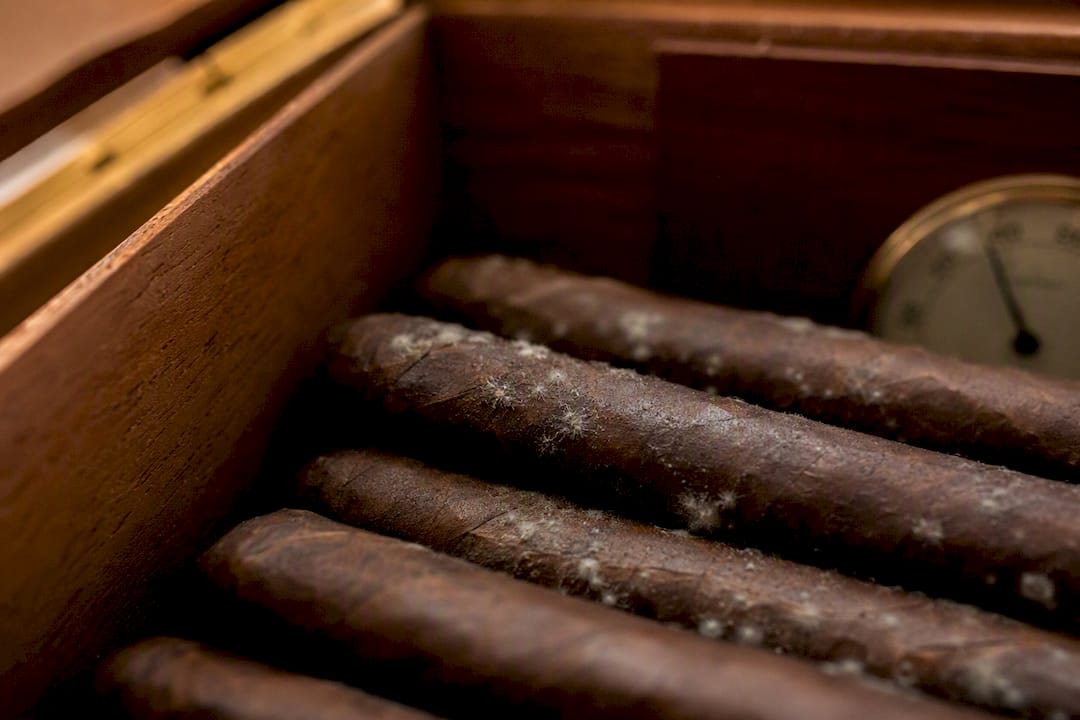
Mold is a fungal organism, and tobacco leaf is an ideal host: organic, porous, and often stored at exactly the humidity fungi need to thrive. Mold spores are essentially everywhere in ambient air. They only need the right combination of moisture and warmth to activate and colonize a surface.
Three environmental factors drive nearly every mold outbreak in a home humidor:
- Excess relative humidity: RH consistently above 72 to 75% creates a surface-moisture layer on the wrapper that fungal spores can colonize within days.
- Elevated temperature: Mold growth accelerates sharply above 74°F, which is also unfortunately close to ideal cigar storage temperature, making careful monitoring essential rather than optional.
- Poor air circulation: Tightly packed boxes or overstuffed humidors trap humid, stagnant air pockets around individual cigars, creating localized microclimates where mold takes hold even if the humidor’s overall reading looks fine.
- Contaminated humidification devices: Foam or gel humidifiers that aren’t cleaned regularly become mold reservoirs themselves, seeding the very air meant to protect your collection.
The stakes go beyond appearance. Collector guidance is consistent that smoking a moldy cigar won’t necessarily make you sick after combustion, but the flavor is ruined, and worse, active spores can recontaminate every other cigar sharing that humidor. A single overlooked stick can turn a $2,000 collection into a $2,000 cleanup project.
How to Safely Remove Surface Bloom (When You’re Confident It’s Plume)
If a cigar passes every check, dry texture, no foot involvement, no odor, no regrowth history, you can proceed with a conservative cleaning approach.
- Isolate the cigar in a separate, ventilated space away from your main humidor before touching it.
- Brush gently with a soft, dry microfiber cloth or a clean, soft-bristled brush, using single, light strokes rather than scrubbing.
- Wipe in one direction only, away from the foot, to avoid pushing any growth into the exposed tobacco end.
- Photograph the result and set the cigar aside in a separate, sealed container for 48 to 72 hours before returning it to your main storage.
Skip cleaning entirely if you see any fuzz, staining, foot involvement, or a musty smell. Those signs point to mold, and brushing it only aerosolizes spores into the surrounding air.
Pro Tip: Never use water, alcohol, or cleaning solvents on a cigar wrapper. Dry mechanical removal is the only method that won’t damage the leaf or seed new moisture problems.

What to Do the Moment You Suspect Mold
Confirmed or suspected mold calls for decisive, unsentimental action. Hesitation is what turns one contaminated cigar into a ruined box.
- Quarantine immediately: Move the affected cigar into a sealed bag or a separate airtight container, physically removed from your main humidor’s airflow.
- Discard without debate if you see foot involvement, fuzzy texture, visible staining, or any musty odor. Retailer guidance recommends quarantine in a sealed bag as the safest way to observe an ambiguous case before you decide its fate.
- Inspect every neighboring cigar, not just the obviously affected one. Mold spores travel through shared air space long before visible colonies appear elsewhere.
- Check your hygrometer and humidification device the same day. A mold outbreak is almost always a symptom of an RH spike or a failing humidifier, not a random event.
Pro Tip: Treat one moldy cigar as a humidor-wide event, not an isolated incident. Inspect the entire box before you decide the problem is contained.
Preventing Mold: The Storage Numbers That Actually Matter
Prevention comes down to holding a narrow humidity band and backing it up with reliable equipment, not vigilance alone.
- Target relative humidity: Keep your humidor between 62% and 70% RH, with 65% as the sweet spot for most blends. Humidor-care guidance consistently points to this range as the threshold below which mold risk drops sharply.
- Temperature: Stay in the 65 to 70°F range. Mold accelerates above 74°F, so a warm room is just as dangerous as an overhumidified box.
- Use distilled water only in any humidification device or two-way humidity system. Tap water introduces minerals and microorganisms that shorten a humidifier’s usable life and can seed contamination directly.
- Calibrate your hygrometer at least twice a year using the salt-test method, and consider running a second digital sensor as a cross-check. A hygrometer reading 65% when the actual RH is 78% is how outbreaks happen unnoticed.
- Replace or clean humidification devices on the manufacturer’s schedule, generally every one to three months for beads or foam, since a contaminated humidifier can reinfect a freshly cleaned humidor within days.
- Maintain airflow: Never overpack a humidor. Leave breathing room between rows, and rotate stock periodically so no single area sits stagnant.
A precision electronic system removes most of this guesswork. The Cigar Oasis Plus actively regulates humidity rather than passively releasing it, which matters most in larger cabinets and walk-ins where manual humidification struggles to stay even across every shelf.
How to Clean Your Humidor After a Mold Outbreak
Finding mold in your humidor means the box itself needs attention, not just the affected cigars.
- Remove every cigar and sort them into three piles: clean, quarantine for observation, and discard.
- Empty and fully dry the humidor, wiping down all surfaces with a barely damp, clean cloth. Avoid soaking Spanish cedar, which absorbs moisture readily and can warp.
- Skip harsh chemicals entirely. Cleaning guidance is explicit that bleach or strong solvents damage cedar and leave residual odors that transfer straight into your tobacco.
- Sand lightly any interior cedar panels with visible staining, using fine-grit sandpaper, and replace dividers or trays that show deep discoloration.
- Re-season gradually over several days, bringing RH up slowly rather than flooding the box, and hold cigars out until the humidor reads stable for at least 48 hours.
Are Moldy Cigars Ever Worth Saving?
Salvage only makes sense under strict conditions: no foot involvement, growth that’s genuinely surface-level, no staining beneath it, and no musty smell at any point in the process.
- Test before you trust it: Clean the cigar, quarantine it separately for a week, and re-inspect before returning it to your main collection.
- Watch for recurrence: Regrowth within that observation window means the wrapper is compromised at a level you can’t see or brush away.
- Weigh the stakes: For a $15 stick, salvage attempts cost you nothing but time. For a rare, aged, or limited-production cigar, the safer economic choice is usually discarding it rather than risking contamination of the rest of the box.
The Dunn’s Luxury Selections Checklist for Collectors
Belle Dunn has spent her career studying how humidity failures destroy otherwise pristine collections, and the pattern is almost always the same: a cheap hygrometer, a neglected humidifier, or a box packed too tight to breathe.
The practical checklist we hand every client:
- Verify RH with two independent sensors, never one
- Replace humidification media on a fixed calendar, not “when it looks dry”
- Inspect boxes monthly, not just when something smells off
- Photograph any suspicious growth before touching it
The Vizcaya Makorem Pommele and Cigar Oasis Plus solve the two failure points we see most: uneven humidity distribution and contaminated manual humidifiers. If your collection has outgrown careful guesswork, a consultation is worth the conversation.
Why the Plume Debate Misses the Point
The internet loves the plume argument because it lets collectors believe the white dust on their prized Cohiba is a badge of patient aging rather than a storage failure. The lab evidence doesn’t support that comfort. Every tested sample submitted as plume came back fungal, and that should settle far more debates than it currently does.
Here’s where conventional cigar wisdom actually falls short: it treats identification as the finish line. Collectors spend enormous energy learning to distinguish mold from plume and almost none on why the mold appeared in the first place. A correct diagnosis on a moldy cigar is worthless if the same humidor conditions produce three more moldy cigars next month.
Prioritize the humidor’s environment over the individual stick. If you’re relying on a single analog hygrometer and hoping for the best, you’re not managing humidity, you’re gambling with it. The collectors who never deal with mold outbreaks aren’t the ones with the best eyesight for spotting fuzz. They’re the ones who invested in redundant sensors, distilled water discipline, and equipment built to hold a tight band automatically, not manually.
— Belle Dunn
Protect Your Collection With Precision Storage
Guesswork is what turns a $500 mistake into a wiped-out collection. Dunn’s Luxury Selections builds precision into the storage itself, so RH swings that invite mold never get the chance to start.
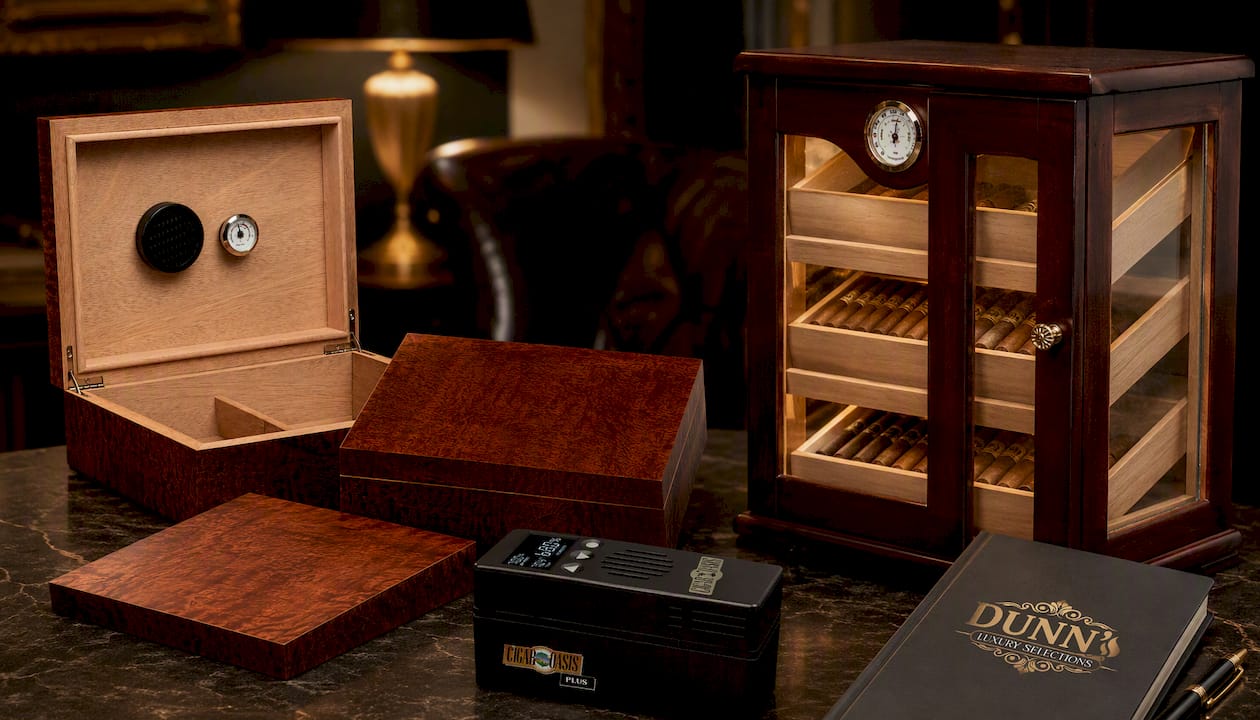
The Vizcaya Makorem Pommele desktop humidor pairs Spanish cedar construction with a tight seal built to hold humidity in the safe range without daily babysitting. The Cigar Oasis Plus takes that a step further with active electronic regulation, removing the manual humidifier contamination risk entirely. And for collectors who display as much as they smoke, the Milano Cigar Display protects showcased cigars from the handling and air exposure that accelerates surface growth.
If your collection has reached the point where a single hygrometer and a foam puck no longer feel adequate, request a white-glove consultation through Dunn’s Luxury Selections and walk through a bespoke storage solution built around your actual collection size and climate.
Sources
- Cigar Plume vs Mold: Is Plume Real? (2026) · Cigarista
- Plume vs Mold. Enough Already. - Cigar Press
- CA REPORT: Is it Plume or Mold? · Famous Smoke
- Cigar Mold: What It Is and How to Get Rid of It — The Next Cigar
FAQ
Is Cigar Plume Just Mold?
In most tested cases, yes. Lab analysis of samples submitted as plume found fungal organisms like Eurotium and Aspergillus rather than crystallized tobacco oils, though rare true plume from long, stable aging isn’t impossible.
Can You Still Smoke a Cigar With Mold?
You shouldn’t. Combustion likely won’t make you sick, but the flavor is ruined and active spores can spread to the rest of your humidor, putting your whole collection at risk for one cigar’s sake.
What Is the 1-3-5 Rule for Cigars?
It’s a general practice, not a fixed industry standard, so your hygrometer readings matter more than the rule itself.
How Can I Tell if a Cigar Is Moldy?
Check texture (fuzzy versus powdery), look for growth on the foot, watch for staining after brushing, and smell for a musty odor. Any growth on the foot is a decisive sign, per retailer identification guides, and calls for immediate quarantine.
How Often Should I Replace My Humidifier?
Most foam or gel humidification devices need replacement or refreshing every one to three months. Electronic systems like the Cigar Oasis Plus reduce that maintenance burden significantly by regulating humidity actively rather than passively releasing it.
Recommended
You May Also Enjoy

Cigar Locker Dimensions: Sizing Guide for Collectors and Lounges
Cigar locker dimensions explained: compartment sizes, cabinet footprints, capacity math and clearances, so you size a locker bank...
Read Article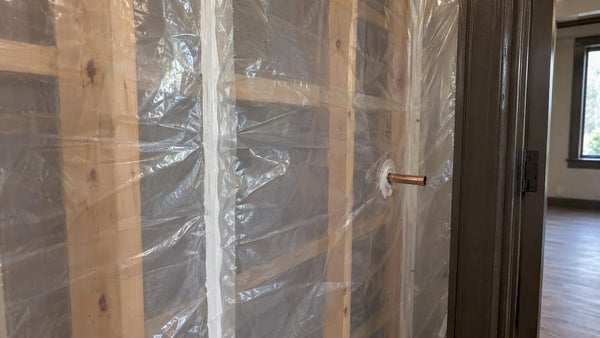
Sealing a Walk-In Humidor: Envelope, Door and Penetrations
How to seal a walk-in humidor properly: vapor barrier placement, door gasket, penetrations and the controlled airflow a...
Read Article
Retail Humidor ROI: How to Measure What a Display Earns
What does a retail or lounge humidor really return? A practical framework for cigar shops, lounges and clubs:...
Read Article