

An engineering-first playbook for collectors and facility managers to hold 65–70% RH. Learn load calculations, sensor strategy, sealing specs, and zoning...
Target 65 to 70% relative humidity and 65 to 70°F for cigar storage, with many designers using a 68% setpoint as the anchor. Once your room exceeds roughly 500 cubic feet, includes multiple doors, glass partitions, or tall ceilings, a single sensor and single humidifier will not hold that band. Zoning, built on three enablers, sealed insulation, correctly sized humidification, and deliberate sensor placement, is the only architecture that keeps every shelf inside spec.
TL;DR:
- Zoned humidification is essential for rooms exceeding 500 cubic feet or with multiple doors, glass partitions, or high ceilings to ensure even humidity levels.
- Temperature should stay below the low 70s Fahrenheit to prevent tobacco beetle hatching and avoid artificially boosting humidity readings.
- Ultrasonic humidifiers are recommended for sizing and scaling, with multiple sensors per zone to prevent phantom swings and improve control accuracy.
- Proper sensor placement at mid-height away from heat sources and diffusers is critical for reliable readings and effective zone management.
- Sealing gaps, using gasketed doors, and commissioning with airtightness testing significantly improve humidity stability and system performance.
Table of Contents
- What Are the Ideal RH and Temperature Setpoints for a Cigar Room?
- Why and When Should You Zone a Cigar Room?
- How Do You Size Humidification Equipment for Each Zone?
- How Should Sensors and Controls Be Configured for Multiple Zones?
- How Do You Distribute Air Without Creating Dead Zones?
- What Insulation and Sealing Specs Actually Matter?
- What Maintenance Keeps a Zoned System Stable?
- How Dunnluxuryselections Plans and Delivers a Zoned Walk-In
- A Commissioning Checklist for Your First Zoning Project
- Ready to Design Your Zoned Humidor?
- Sources
- FAQ
What Are the Ideal RH and Temperature Setpoints for a Cigar Room?
Cigar-room humidity zoning starts with agreeing on a number, and the industry has largely converged on one. Designers commonly target a range between 62% and 72% RH, with 65 to 70% emerging as the sweet spot most professionals defend. Walk-in humidors specifically tend to run slightly higher, with vendors recommending 68 to 72% RH and 65 to 70°F for rooms with real traffic.
Temperature matters as much as moisture. Keep the room below a temperature level that increases tobacco beetle hatching risk, generally considered to be in the low 70s Fahrenheit, and rising heat pushes RH readings artificially depending on your psychrometric chart.
- Below 62% RH: wrappers dry out, crack, and burn rate accelerates unevenly.
- Above 72% RH combined with warmth: mold blooms and beetle risk climbs sharply.
- The classic “70/70” rule is a fine starting point, but most operators narrow it once they know their inventory and climate.
Pro Tip: Collectors chasing flavor nuance often run closer to 65%, while commercial operators protecting inventory value lean toward 68 to 70% for a wider safety margin against drying excursions.
Why and When Should You Zone a Cigar Room?
Zoning means dividing one large humidified volume into two or more independently controlled microclimates, each with its own sensor, setpoint, and often its own humidification source. It is not a luxury add-on. It is the correct engineering response to specific conditions.
You should seriously consider zoning when any of the following apply:
- Room volume exceeds a moderate size where a single humidification zone may not perform evenly. Single-point humidification struggles to distribute evenly past this threshold.
- Multiple access doors exist. Every opening dumps conditioned air and invites a recovery lag that one controller cannot manage across the whole room.
- Glass walls or display cases are present. Glass creates thermal bridging and localized dew point swings that differ from the rest of the room.
- Mixed-use storage is planned, such as long-term aging stock next to a display area with frequent handling.
Consider a lounge with a customer-facing display wall and a back-of-house aging vault. Treated as one zone, the display area’s constant door traffic would drag the entire room’s RH down every time a member grabs a stick. The trade-off is added equipment and control complexity, but the payoff is faster recovery and independent setpoints tuned to each area’s actual use.
How Do You Size Humidification Equipment for Each Zone?
Ultrasonic humidifiers dominate walk-in and zoned installations because they produce cool fog, run quietly, and scale output predictably, unlike evaporative pad units or ducted steam systems that struggle with the tight tolerances cigar storage demands. Ultrasonic systems are the near-universal recommendation for commercial cigar rooms for exactly this reason.
Sizing starts with room volume multiplied by your target saturation differential, then layered with door-opening frequency and infiltration load. A room that gets opened forty times a day during business hours needs meaningfully more reserve capacity than a private vault opened twice a week.
- Calculate steady-state moisture demand first, then add a common oversize margin to cover recovery spikes after door events.
- Undersized units never fully catch up; RH drifts downward all day and never resets overnight.
- Spanish cedar shelving buffers humidity locally but absorbs significant moisture during initial commissioning, so build that load into your first-fill calculation.
- Add dedicated dehumidification, standalone or integrated, in climates where ambient humidity regularly exceeds your setpoint, particularly for coastal or summer-humid regions.
How Should Sensors and Controls Be Configured for Multiple Zones?
Sensor placement determines whether your control system reacts to real conditions or noise. Mid-height placement at product level, away from diffusers, doors, and any heat-generating equipment, gives the most representative reading. Multiple sensors per zone are worth the modest added cost, since a single sensor near a door will chase phantom swings that never reach the shelves in the back.
- Choose your controller architecture. Standalone humidity controllers work for one or two zones; larger installations benefit from integration into a building automation system or PLC running PID control loops for each zone independently.
- Set hysteresis and minimum run times so the humidifier and any HVAC dehumidification never fight each other in the same fifteen-minute window.
- Build in alarms. High and low RH thresholds, water-supply faults, and drain blockages should all trigger a notification, not just a local light.
Pro Tip: Facility managers running commercial installations increasingly favor edge controllers with remote monitoring and graphical logging, which catches a failing sensor or a stuck valve before it becomes a ruined pallet of inventory.
How Do You Distribute Air Without Creating Dead Zones?
Gentle, continuous circulation beats intermittent bursts every time. Air stratification, warm air rising while cooler humidified air pools low, creates dead zones that a single wall-mounted sensor will never catch.
- Place intake fans low and discharge points high, pulling humidified air up through the stock rather than blasting it across one shelf.
- Run humidifiers under racks or along a short wall, then let a recirculation fan carry the mist down long aisles, a layout Cigar Journal has documented as effective in real builds.
- Keep mist discharge far enough from any cigar box that fog never lands directly on paper or cellophane; give it distance to absorb into the air first.
- Behind glass display walls, add a dedicated small diffuser rather than relying on the main room fan to reach that pocket.
What Insulation and Sealing Specs Actually Matter?
Every gap in your vapor barrier is a load your humidifier has to fight around the clock. Continuous sealing at electrical penetrations, duct chases, and wall-ceiling joints keeps infiltration from constantly diluting your setpoint.
- Specify a continuous vapor barrier with taped, not just stapled, seams at every penetration.
- Use gasketed doors and, for high-traffic commercial rooms, a small vestibule to buffer the pressure change on entry.
- Favor interior walls over exterior ones where possible; exterior walls run colder and raise condensation risk at the dew point line.
- Commission with a blower door test if the budget allows. It is the only way to quantify actual airtightness rather than guess at it.
What Maintenance Keeps a Zoned System Stable?
Water quality is where most systems quietly fail. Ultrasonic transducers scale up fast on tap water, so run RO or distilled water exclusively and budget for disc replacement on a fixed schedule rather than waiting for a visible failure.
- Clean humidifier reservoirs, filters, and drain lines monthly in commercial settings, quarterly in lower-traffic private rooms.
- Calibrate every hygrometer against a reference salt-test kit twice a year; sensor drift of even 2 to 3% RH will mislead your controller silently.
- Re-commission the whole system seasonally and again after any remodel, new glass wall, or major inventory shift that changes the room’s internal load.
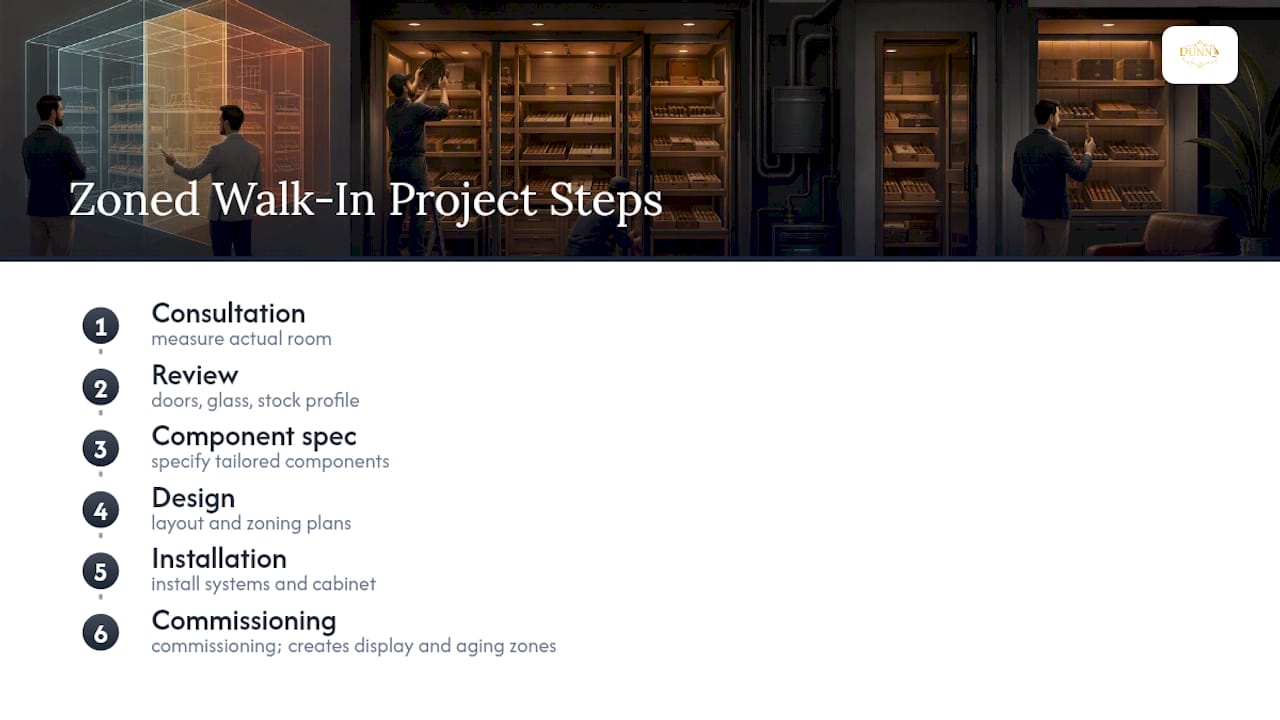
How Dunnluxuryselections Plans and Delivers a Zoned Walk-In
Every boutique humidor project begins with a consultation that measures your actual room, not a generic template. Door counts, glass partitions, and stock profile are reviewed before specifying components, followed by design, installation, and full commissioning. A precision climate controlled humidor cabinet often serves as a display sub-zone inside a larger walk-in, letting collectors separate frequently handled stock from long-term aging inventory without compromising either setpoint.
A Commissioning Checklist for Your First Zoning Project
Before you call a contractor, measure and document everything: room volumes, door counts, glass partitions, and the stock profile you plan to store. Prioritize envelope sealing and finalize sensor locations before anyone touches the interior finish. When you write the procurement spec, insist on oversized humidification, multiple sensors per zone, and remote alarms; the units that skip these three are the ones that fail during your first cold snap.
— Belle Dunn
Ready to Design Your Zoned Humidor?
Specialized premium humidor providers offer coordinated project management including load calculations, sensor strategy, and envelope specification, rather than piecing together consumer humidifiers and generic contractors. Installations include white-glove delivery and in-depth consultation.
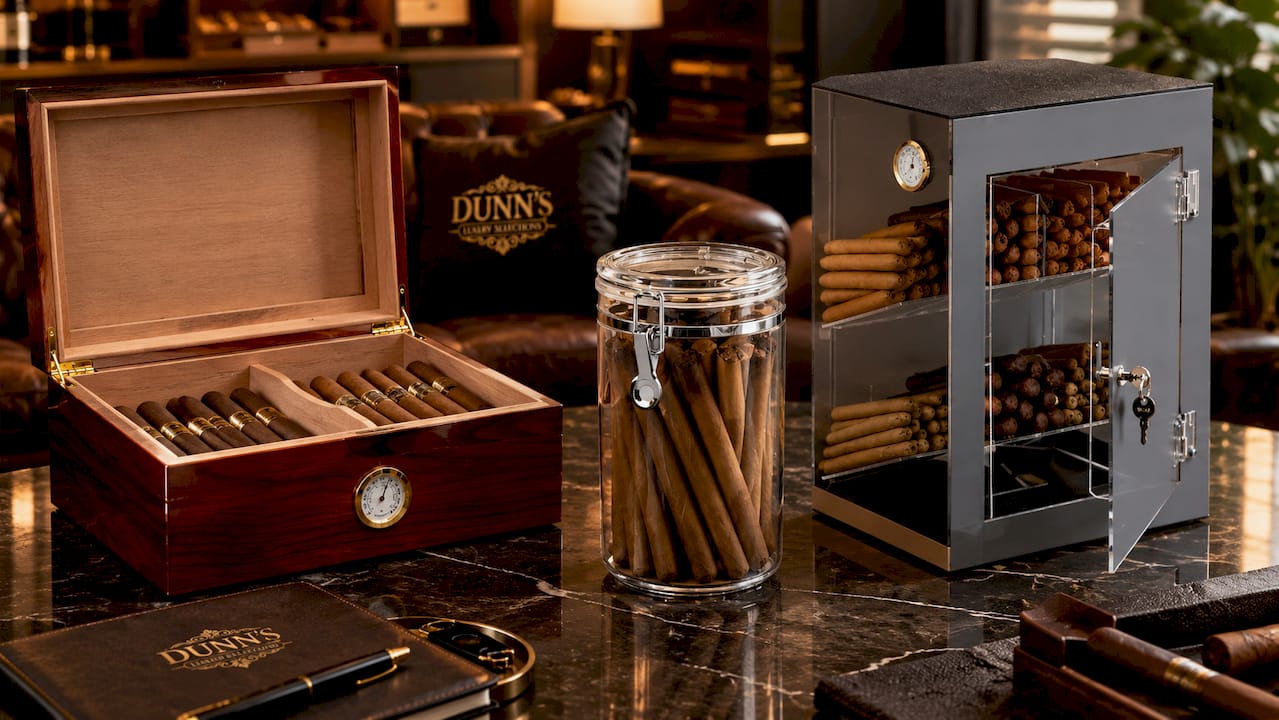
For collectors working with a smaller display zone rather than a full walk-in, the Chalet Glasstop desktop humidor delivers cabinet-grade stability at a fraction of the footprint. The crystal acrylic humidor jar works well as a compact locker-style compartment within a larger zoned room, and the Franklin acrylic display humidor gives lounges and retail floors a merchandising centerpiece that still holds a controlled microclimate. If your project involves a full walk-in build, our cigar cabinet insulation guide is a useful next read, and Dunnluxuryselections offers financing for larger commissions. Reach out through authorized luxury humidor specialists’ websites to schedule consultations and initiate load calculations for your specific rooms.
Sources
- A Design Guide to Humidity Control in Cigar Rooms
- Walk-In Humidor Humidification Buying Guide
- Application report: Gerber humidors (ifm)
- Walk-In Humidor Humidity: How to Humidify a Cigar Room
FAQ
Is 63% Humidity Too Low for Cigars?
It sits below the commonly recommended 62 to 72% range, so cigars stored at 65% for extended periods risk wrapper drying, though brief dips rarely cause permanent damage.
What Is the 70/70 Rule for Cigar Humidity?
It refers to holding 70°F and 70% RH as a baseline standard, though most operators today narrow that band to 65 to 69% or 68 to 72% depending on taste and mold risk.
Is 75% Humidity Too High for a Humidor?
Yes, 75% pushes past the standard 62 to 72% range and meaningfully raises mold and tobacco beetle risk, especially when temperature also climbs above 73°F.
Is 65% or 69% Humidity Better for Cigars?
Neither is objectively better; 65% suits collectors prioritizing a drier, sharper burn, while 69% favors commercial operators who want a wider buffer against drying excursions in high-traffic rooms.
How Many Sensors Does a Zoned Cigar Room Need?
Each zone should carry at least one sensor at mid-height, product level, with larger or irregularly shaped zones benefiting from a second sensor to catch stratification that a single point would miss.
Can Dunnluxuryselections Design a Multi-Zone Walk-In?
Yes, Dunnluxuryselections consults directly with collectors and facility managers to plan zoned walk-in humidors, sizing humidification and sensor placement around each room’s actual door traffic and stock profile.
Recommended
You May Also Enjoy
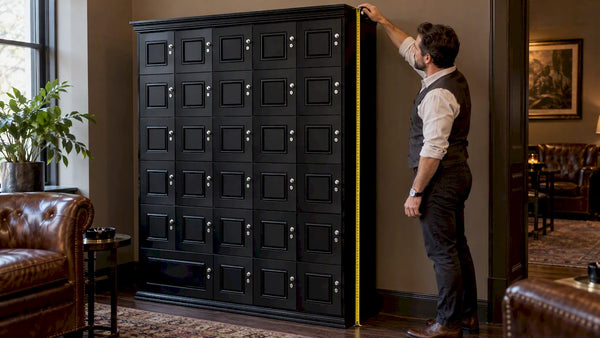
Cigar Locker Dimensions: Sizing Guide for Collectors and Lounges
Cigar locker dimensions explained: compartment sizes, cabinet footprints, capacity math and clearances, so you size a locker bank...
Read Article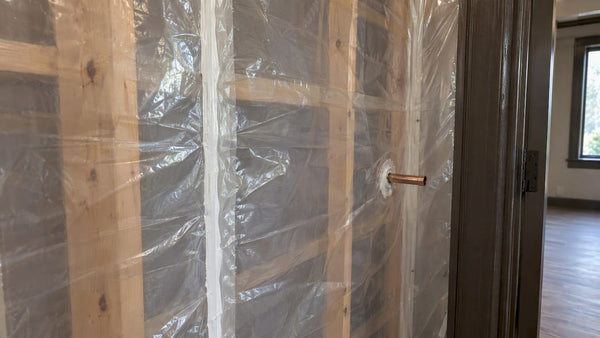
Sealing a Walk-In Humidor: Envelope, Door and Penetrations
How to seal a walk-in humidor properly: vapor barrier placement, door gasket, penetrations and the controlled airflow a...
Read Article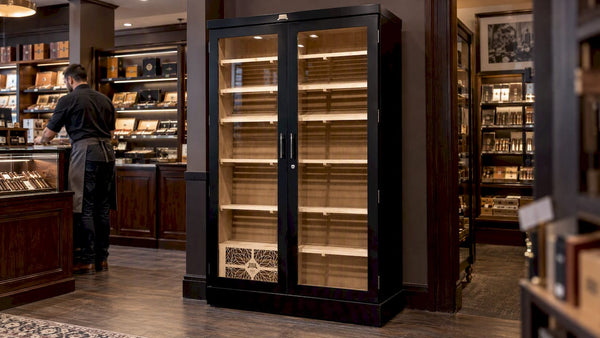
Retail Humidor ROI: How to Measure What a Display Earns
What does a retail or lounge humidor really return? A practical framework for cigar shops, lounges and clubs:...
Read Article