

Maintenance-first advice for collectors on electronic humidor lifespan: why sensors and seals rather than tobacco limit aging, what to check, and when to...
Cigars stored properly in a working electronic humidor can hold their character for years, and under stable conditions some blends continue to develop for decades. The real ceiling is rarely the tobacco itself. It’s the humidor’s own components, since a sensor or seal failure will undo years of careful aging long before the cigars inside ever would.
TL;DR:
- Sensor drift can cause humidity readings to be inaccurate two years before a failure visibly affects cigar storage.
- Seal and wood stability issues often lead to constant system operation, reducing the humidor’s lifespan and risking humidity swings.
- Full-bodied, dense-blend cigars with maduro wrappers tend to improve most over five years of proper aging, while lighter blends may peak sooner.
- Regular maintenance, including sensor calibration, seal inspections, and reservoir cleaning, is essential for long-term humidor reliability.
- Proper long-term storage at 60-70% RH and 16-20°C enhances flavor development, especially for full-bodied blends, but risks like beetles or mold remain if conditions are mismanaged.
Table of Contents
- Lifespan Ranges: From Short-Term Storage to Indefinite Aging
- What Actually Fails First in an Electronic Humidor
- Seasoning and Maintenance: A Schedule That Protects Your Investment
- Which Cigars Reward Long-Term Storage, and When
- Why Collectors Trust Precision Over Guesswork
- Our Humidor Supreme® Lineup and Bespoke Options for Long-Term Collectors
- FAQ
- Sources
Lifespan Ranges: From Short-Term Storage to Indefinite Aging
The timeline for cigars in a humidor depends on what you’re trying to achieve, and the honest answer has four tiers.
Short-term storage, measured in weeks to a few months, simply holds cigars at a stable humidity so they smoke as the blender intended. Medium-term storage, roughly one to five years, is where most collectors see tangible change: harshness fades, the burn evens out, and the blend settles. Long-term storage, from five to ten years and beyond, is where transformation happens. Blends shift toward secondary notes like leather, cocoa, and dried fruit that simply aren’t present in a young cigar.
Indefinite aging is possible, but it’s conditional, not automatic. It requires steady relative humidity and temperature, a cedar-lined interior that buffers minor swings, and a cigar that was in sound condition before it went into storage. Research into cigar aging biology points to microbial and enzymatic activity, processes that run best within a defined band and stall or turn harmful outside it, as the engine behind flavor development over controlled aging conditions.
- Short-term (weeks to months): maintains freshness and burn consistency without meaningful flavor change.
- Medium-term (1 to 5 years): harsh compounds mellow and the smoke becomes more even.
- Long-term (5 to 10+ years): secondary flavors emerge and the blend’s character fully matures.
What Actually Fails First in an Electronic Humidor
Cigars are remarkably forgiving. The machinery protecting them is not, and three systems account for nearly every service call a collector will ever place.
- Sensors drift before they fail outright. A humidity sensor that’s been reading 65% for two years might actually be sitting at 70% or 58%, and the first sign is usually cigars that feel wrong despite a display that looks normal.
- Thermoelectric and compressor cooling units age differently. Thermoelectric (Peltier) units are quieter and simpler but lose efficiency gradually, while compressor-based systems hold tighter tolerances longer but run louder and cost more to service.
- Door seals and wood stability govern how much work the system has to do. A seal that’s compressed or a cedar panel that’s warped from a dry winter forces the humidification system to run constantly, shortening its life while letting humidity swing more than intended.
- Water systems (wicks and reservoirs) are where neglect turns into contamination. A reservoir that isn’t cleaned becomes a breeding ground for mold and bacteria, and that risk compounds the longer a unit runs unattended.
The early warning signs are consistent across every failure mode: rapid RH swings on the display, readings that sit stubbornly off target despite adjustment, visible condensation on glass or wood, or a musty smell when you open the lid. Any one of these warrants a closer look before it becomes a collection-wide problem.
Pro Tip: Check your humidor’s reading against a separate calibrated hygrometer every few months. Two instruments agreeing is worth more than one instrument you trust blindly.
Seasoning and Maintenance: A Schedule That Protects Your Investment
An electronic humidor still needs seasoning, even though the active system does some of the work a passive humidor leaves entirely to Spanish cedar. Seasoning establishes a moisture baseline in the wood itself, so the system isn’t fighting dry panels from day one. Wipe down the interior with distilled water, run the unit empty at target humidity for several days, and only then introduce cigars.
After that, a tiered schedule keeps the system running at its best.
- Weekly: glance at the digital reading, check for condensation, and confirm the door seal is seated.
- Monthly: clean or refill the reservoir with distilled water, inspect for any mineral buildup, and verify the fan or cooling element is running quietly.
- Annually: calibrate or replace the sensor, inspect gaskets for compression loss, and have a technician check the cooling unit on premium models.
A short routine, sometimes called salt, seal, and weekly checks, anchors most of this: a salt test confirms your hygrometer’s accuracy, a seal check catches leaks before they cause swings, and a quick weekly glance catches small problems before they’re expensive ones. Our maintenance guidance walks through the full version of this checklist.
- Never use alcohol or chemical cleaners inside the chamber; they strip cedar oils and can taint cigars.
- Replace a sensor every three to five years regardless of apparent performance, since drift often precedes visible failure.
- Source replacement gaskets and fans from the original manufacturer or a trusted humidor specialist, never a generic parts bin.
Which Cigars Reward Long-Term Storage, and When
Not every cigar benefits from years in a humidor, and knowing which ones do changes how you build a collection.

Full-bodied blends with natural or maduro wrappers, dense filler tobacco, and higher oil content tend to improve most dramatically over time, since there’s more complexity for microbial and enzymatic activity to unlock. Milder, lighter-wrapped cigars often peak early and can lose character if aged too aggressively.
The general timeline follows a recognizable arc. The first year is often called the sick period, a stretch where residual ammonia and construction harshness fade, a pattern documented by veteran humidor maker Daniel Marshall. From one to five years, flavors begin to integrate and the burn smooths out. Beyond five years, well-stored full-bodied blends can shift into entirely new flavor territory, developing notes absent from the original profile.
- Best candidates: maduro and oscuro wrappers, full-bodied blends, box-pressed cigars with dense packing.
- Consume younger: connecticut-wrapped and mild-to-medium blends that rely on brightness rather than depth.
Extended aging carries real risk. Tobacco beetles can activate in warm, humid conditions, and over-humidification invites mold just as readily as neglect does. Scientific work on cigar aging recommends holding conditions in the range of about 60 to 70% relative humidity and 16 to 20°C, a band that supports beneficial microbial activity without tipping into spoilage, according to research on cigar biodegradation during aging.
Why Collectors Trust Precision Over Guesswork
A humidor is only as reliable as the attention it receives, and that’s the principle behind everything we build. The salt, seal, and weekly check routine isn’t a marketing flourish. It’s the actual discipline that separates a collection that matures gracefully from one that quietly degrades.
- Confirm hygrometer accuracy with a salt test every few months, not just when something seems off.
- Inspect door seals for compression or gaps each week, since a failing seal is the fastest route to RH swings.
- Schedule an annual technician visit for sensor calibration and cooling system inspection on any premium unit.
Bespoke walk-in and cabinet installations change the longevity equation entirely, because precision climate control integrated with a room’s own HVAC holds tolerances that a standalone unit simply can’t match on its own. That integration does require planning: duct placement, insulation, and door clearance all affect how evenly a walk-in performs, which is why we walk every client through those trade-offs before installation begins.
— Belle Dunn
Our Humidor Supreme® Lineup and Bespoke Options for Long-Term Collectors

Our electronic humidor lineup follows the principle that components, not cigars, decide how long a collection lasts. For collectors who want proven capacity and seal quality without a custom build, three models cover most needs.
- The Humidor Supreme® Electronic Humidor, 9000 Series Black suits collectors starting a dedicated electronic setup with reliable seal integrity.
- The Humidor Supreme® Electronic Humidor, 9100 Black offers added capacity for collectors whose holdings have outgrown an entry-level cabinet.
- The Humidor Supreme® 9200 Series Double-Door Electronic Humidor (Black) splits storage across two zones, useful for separating cigars at different points in their aging timeline.
| Model | Best for | Key advantage |
|---|---|---|
| 9000 Series Black | New electronic setups | Dependable seal integrity |
| 9100 Black | Growing collections | Expanded capacity |
| 9200 Double-Door | Zone-based aging | Dual-chamber control |
When a collection outgrows any desktop unit, or when precise, whole-room climate control matters more than square footage allows, Dunn’s Bespoke builds a walk-in or cabinet solution around your space and your cigars, with white-glove delivery and consultation from the first measurement to the final seal.
FAQ
Are electric humidors reliable?
Electric humidors are reliable when their sensors, seals, and cooling systems are maintained on a regular schedule. Most reliability problems trace back to sensor drift or a compromised seal rather than a fundamental flaw in the technology.
What is the 135 rule for cigars?
It’s a memory aid rather than a scientific standard, and the aging research above suggests a slightly cooler range, around 60 to 70% RH and 16 to 20°C, supports flavor development just as well.
Do you have to season an electronic humidor?
Yes, seasoning is still necessary because the wood interior needs its own moisture baseline before cigars go in, even with an active humidification system running. Skipping this step forces the system to work harder early on and can lead to uneven humidity in the first weeks of use.
Are 20-year-old cigars still good?
A well-stored cigar can remain enjoyable after 20 years, and many collectors report continued flavor development over that span, though outcomes depend entirely on how consistently humidity and temperature were controlled. Regulatory guidance on tobacco product stability notes that manufacturers must document storage-time testing rather than assume indefinite shelf life, a caution that applies equally to long-term collector storage.
Sources
- Metagenomic insight into the biodegradation of biomass and alkaloids in the aging process of cigar
- Q&A: Talking humidors with Daniel Marshall
- Requirements for Tobacco Product Manufacturing Practice (Federal Register)
Recommended
You May Also Enjoy
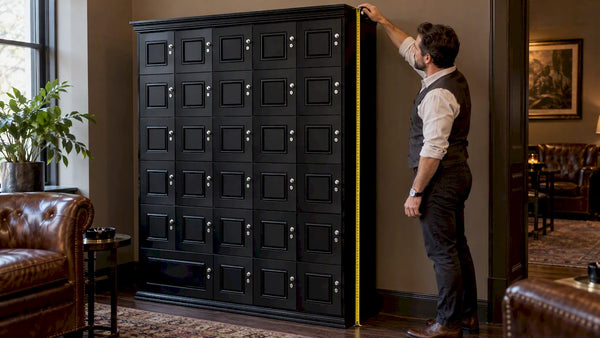
Cigar Locker Dimensions: Sizing Guide for Collectors and Lounges
Cigar locker dimensions explained: compartment sizes, cabinet footprints, capacity math and clearances, so you size a locker bank...
Read Article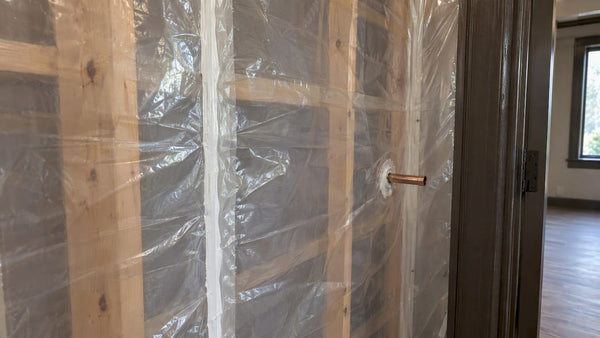
Sealing a Walk-In Humidor: Envelope, Door and Penetrations
How to seal a walk-in humidor properly: vapor barrier placement, door gasket, penetrations and the controlled airflow a...
Read Article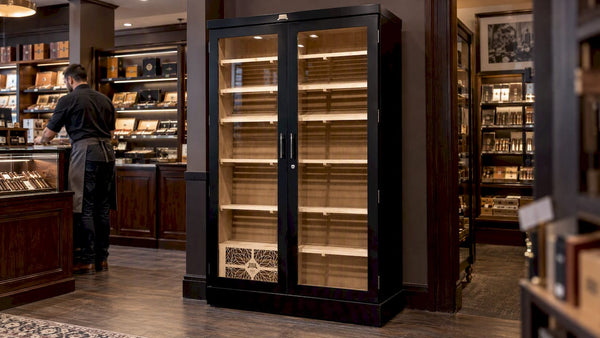
Retail Humidor ROI: How to Measure What a Display Earns
What does a retail or lounge humidor really return? A practical framework for cigar shops, lounges and clubs:...
Read Article