

Discover the essentials of explaining multi-level humidors in our 2026 guide. Learn how to optimize cigar storage for perfect aging.
A multi-level humidor is a cabinet-style cigar storage unit that regulates humidity and airflow across multiple shelves to create a stable environment ideal for aging and preserving cigars. Unlike desktop boxes, these cabinet units function as micro-cellars, maintaining distinct atmospheric conditions across every tier. Explaining multi-level humidors requires understanding three core disciplines: climate engineering, strategic organization, and disciplined maintenance. The best practices for humidors in 2026 recommend a target range of 62–66% relative humidity (RH) and 64–72°F, a meaningful departure from the older “70/70 rule” that many collectors still follow. Dunnluxuryselections has built its reputation on helping serious collectors master exactly this kind of precision.
How do multi-level humidors work to maintain optimal conditions?
Multi-level humidors rely on active climate management, not passive luck. Large cabinet units require electronic humidification systems because passive humidity packs cannot circulate moisture evenly across multiple shelves. A fan-driven system pushes conditioned air through each tier, preventing the stagnant pockets that cause uneven aging or mold.
Spanish cedar lining is the second pillar of the system. Cedar absorbs and releases moisture gradually, acting as a buffer against sudden RH swings. It also repels tobacco beetles, which become a serious threat when temperatures exceed 75°F. The wood and the electronic system work together as a single, balanced ecosystem.
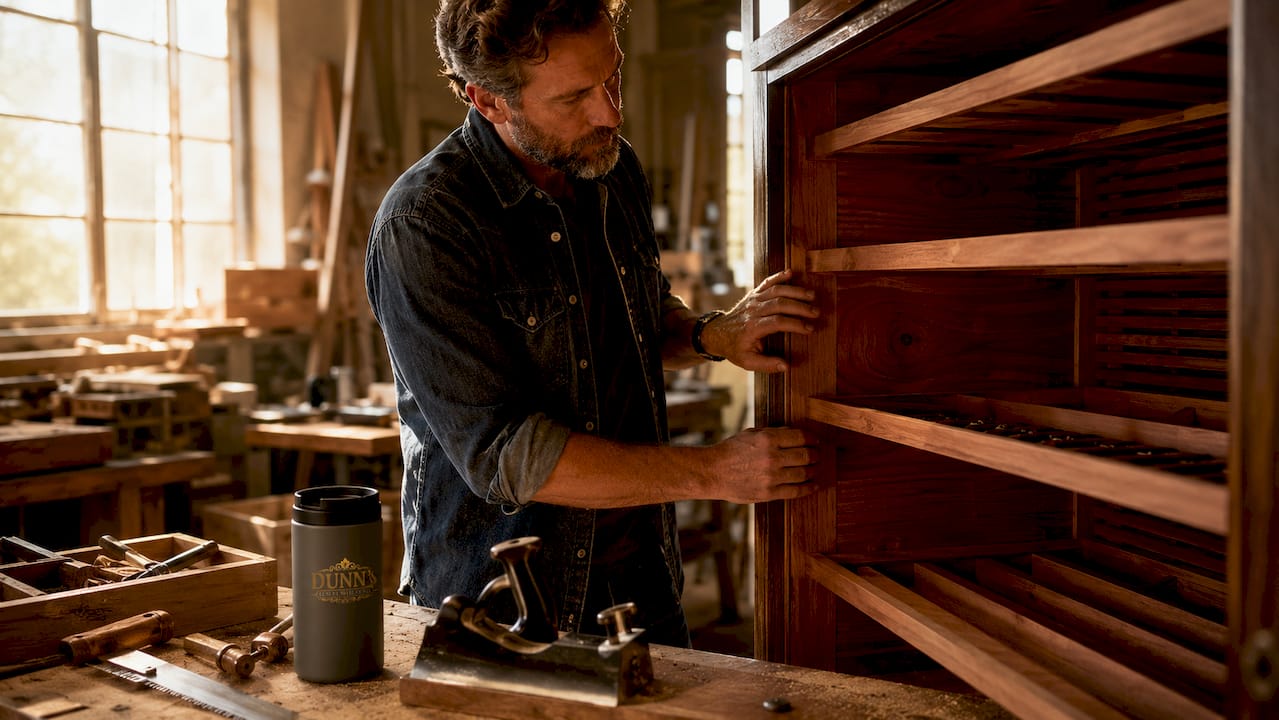
Airflow architecture separates a well-engineered cabinet from a glorified box. Shelves should be spaced to allow air to move freely between tiers. Without that spacing, the bottom shelf runs cooler and more humid than the top, creating two entirely different aging environments inside one unit.
Key mechanical features to look for in a multi-tiered humidor setup:
- Electronic humidification: Fan-assisted systems deliver uniform RH across all shelves, which passive packs cannot replicate in large cabinets.
- Spanish cedar lining: Buffers moisture fluctuations and protects against tobacco beetles.
- Sealed cabinet construction: Tight door seals and quality gaskets prevent ambient air infiltration.
- Zonal climate sensors: Sensors placed at multiple shelf heights confirm that conditions are consistent from top to bottom.
- Temperature regulation: Compressor or thermoelectric cooling keeps the interior below 72°F year-round.
Pro Tip: Place a calibrated hygrometer on both the top and bottom shelf during the first two weeks of operation. If the readings differ by more than 3%, your airflow system needs adjustment before you load any cigars.
What are the advantages and challenges of a multi-level humidor?
The primary advantage of a cabinet humidor is capacity with organization. A well-configured unit can house hundreds of cigars sorted by origin, aging stage, or occasion, without the constant shuffling that desktop humidors demand. Separating cigars by aging stage and ring gauge maintains stable microclimates and extends cigar quality over time. That kind of intentional curation is simply impossible in a small box.
The primary challenge is humidity stratification. Heat rises, so the top shelf of any cabinet naturally runs slightly warmer and drier than the bottom. Without active airflow, this gradient becomes a real problem. Active humidification systems achieve more uniform RH and temperature than passive methods, which is why serious collectors invest in powered units.
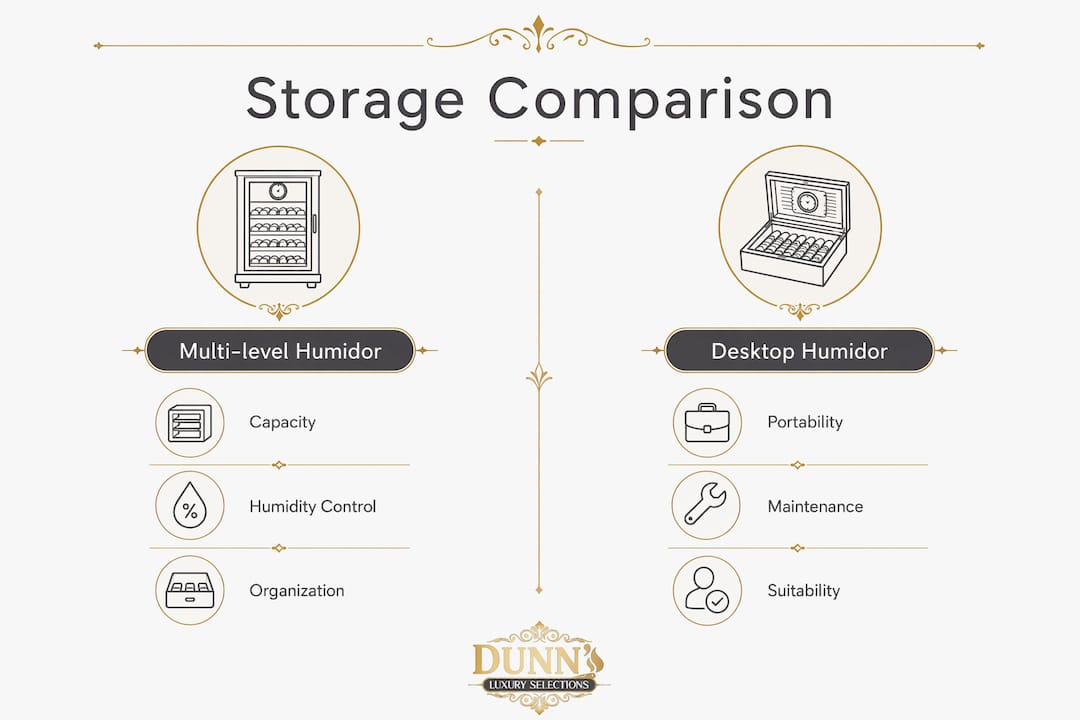
The table below compares the two storage formats across the dimensions that matter most to collectors.
| Feature | Multi-level cabinet humidor | Desktop humidor |
|---|---|---|
| Capacity | Hundreds of cigars across organized tiers | Typically 25–150 cigars |
| Humidification | Requires active electronic system | Passive packs sufficient |
| Organization | Hierarchical by aging stage and type | Limited, often single layer |
| Climate stability | High with proper airflow design | Moderate, affected by ambient room conditions |
| Door-opening impact | Significant; minimize openings | Lower impact due to smaller volume |
| Maintenance frequency | Seasonal calibration and cleaning | Monthly checks recommended |
Frequent door openings are the hidden enemy of cabinet stability. Each opening disturbs the internal climate and forces the system to work harder to restore balance. Collectors who treat their cabinet like a wine cellar, opening it only when necessary, consistently report more stable long-term conditions than those who browse casually.
What are the best practices for seasoning and loading a multi-level humidor?
Seasoning is the foundation of every successful multi-level humidor guide. A new cabinet must absorb enough moisture before you introduce any cigars. Rushing this step is the single most common mistake collectors make, and it costs them weeks of recovery time later.
Follow this seasoning sequence for a deep cabinet unit:
- Wipe the interior lightly with distilled water. Use a clean, lint-free cloth. Do not soak the wood. The goal is surface activation, not saturation.
- Place seasoning packs rated for your cabinet’s volume. Boveda 84% RH seasoning packs are designed for this purpose. Distribute them across every shelf level.
- Close the cabinet and leave it undisturbed for 7–14 days. The seasoning process requires daily RH checks. The cabinet is ready when readings stabilize at your target range and recover within a few hours of a brief door opening.
- Replace seasoning packs with your standard maintenance packs. Switch to 62% or 65% Boveda packs depending on your target RH.
- Load cigars gradually. Start at 40–50% capacity and increase over two weeks. This prevents the wood from absorbing moisture from your cigars rather than the humidification system.
Once seasoned, organization becomes the next discipline. Newer arrivals belong on lower shelves, where conditions are cooler and more stable, ideal for long-term aging. Ready-to-smoke cigars rotate to upper, accessible shelves where you can retrieve them without disturbing the aging stock below.
Loading discipline is equally non-negotiable. Loading to 60–75% capacity preserves the airflow between cigars and shelves. Overfilling to 95% creates stagnant zones where humidity pools, mold develops, and off-flavors migrate between blends. Think of empty shelf space not as waste, but as the breathing room your collection requires.
Pro Tip: Rotate your cigars quarterly. Move aging stock from lower shelves upward as they approach peak readiness. This practice also gives you a natural opportunity to inspect for any early signs of mold or beetle damage without a full cabinet audit.
How do you troubleshoot common issues in a multi-level humidor?
Even a well-configured cabinet develops problems over time. Knowing the signs early prevents minor issues from becoming collection-wide disasters.
Watch for these warning indicators and their solutions:
- RH readings that won’t stabilize: This almost always points to incomplete seasoning. Remove your cigars, re-season for an additional 7 days, and recheck before reloading.
- Visible white or blue-gray mold on cigars or cedar: Mold signals that RH has exceeded 70% in localized zones. Remove affected cigars immediately, reduce humidity output, and improve airflow. Clean cedar surfaces with a dry cloth only. Never use chemicals on Spanish cedar lining.
- Humidity stratification between shelves: If your top and bottom shelf readings differ by more than 3–4%, reposition your humidification unit or add a small USB fan to improve circulation.
- Hygrometer drift: Calibrate hygrometers every 6–12 months using the salt test. A drifted hygrometer is more dangerous than no hygrometer at all, because it gives you false confidence.
- Cigars drying out despite correct RH readings: Check door gaskets for wear. A failing seal allows ambient air to infiltrate continuously, overwhelming even a well-functioning humidification system.
- Electronic humidifier output declining: Clean the water reservoir and replace filters per the manufacturer’s schedule. Mineral buildup from tap water is the most common cause of reduced output. Always use distilled water.
Mismanaging seasoning, skipping calibration, or overpacking causes mold, uneven humidity, and permanent loss of cigar integrity. Regular monitoring prevents these risks and keeps your collection in peak condition for years.
The Raching MON800A addresses several of these failure points directly with its water-cooled climate system and precision sensors, making troubleshooting far less frequent for collectors who invest in purpose-built engineering.
Key Takeaways
A multi-level humidor preserves cigar quality through active humidification, Spanish cedar lining, disciplined loading at 60–75% capacity, and a 7–14 day seasoning process before any cigars are introduced.
| Point | Details |
|---|---|
| Active humidification is required | Passive packs cannot distribute moisture evenly across multiple shelves in large cabinets. |
| Season before loading | Allow 7–14 days for cedar saturation; confirm RH stability before introducing cigars. |
| Load at 60–75% capacity | Overfilling blocks airflow and creates mold-prone humidity pockets between shelves. |
| Organize hierarchically | Age new arrivals on lower shelves; move ready-to-smoke cigars to upper, accessible tiers. |
| Calibrate hygrometers regularly | Test every 6–12 months using the salt test to prevent false readings and humidity mismanagement. |
What I’ve learned from years of managing a multi-level cabinet
The most underrated skill in cigar collecting is patience during setup. I have watched collectors load a brand-new cabinet within 48 hours of purchase, convinced that a quick wipe-down was sufficient seasoning. Within three weeks, their cigars were drawing moisture from the wood rather than the humidification system, and the entire collection needed recovery time. The 7–14 day seasoning window is not a suggestion. It is the price of admission.
The second lesson took me longer to accept: trust your instruments and leave the door closed. Every time you open a cabinet to browse, you are trading a few seconds of visual pleasure for hours of climate recovery. Treating the cabinet like a sanctuary rather than a display case changes everything about long-term aging results.
The evolution of humidor technology has made precision genuinely accessible. Electronic systems with zonal sensors now do the heavy lifting that used to require constant manual adjustment. But technology only works when the fundamentals are right. No electronic system compensates for a poorly seasoned cabinet, an overpacked shelf, or a drifted hygrometer.
The collectors I respect most treat organization as seriously as climate control. A hierarchical storage system where aging stock sits undisturbed on lower shelves while accessible cigars rotate through the upper tiers is not just efficient. It reflects a genuine philosophy of preservation. The multi-tiered humidor setup, done correctly, is less a piece of furniture and more a working instrument for the long game.
— Brian
Premium cabinet humidors from Dunnluxuryselections
Dunnluxuryselections designs cabinet humidors built around the principles described throughout this guide: active climate control, Spanish cedar construction, and the capacity to organize a serious collection with intention.

The Bermuda Large Cigar Cabinet Humidor offers the shelf depth and airflow architecture that multi-level storage demands. For collectors who require precision climate management at scale, the full cabinet humidor collection at Dunnluxuryselections includes units engineered for long-term aging, not just short-term storage. Every model is selected to meet the 62–66% RH and 64–72°F standards that protect your investment across decades.
FAQ
What is a multi-level humidor?
A multi-level humidor is a cabinet-style storage unit with multiple shelves designed to maintain stable humidity and temperature for cigar aging. It uses active electronic humidification and Spanish cedar lining to regulate conditions across every tier.
What humidity level is best for a cabinet humidor?
The recommended range for long-term cigar storage is 62–66% relative humidity and 64–72°F. Temperatures above 75°F significantly increase the risk of tobacco beetles and mold.
How long does it take to season a multi-level humidor?
Seasoning a large wooden cabinet humidor takes 7–14 days. The cabinet is ready when RH readings stabilize at your target level and recover within a few hours after a brief door opening.
How full should a multi-level humidor be?
Load a cabinet humidor to 60–75% of its capacity. Filling beyond that threshold blocks airflow between shelves, creating stagnant humidity zones that promote mold and uneven aging.
How often should I calibrate my hygrometer?
Calibrate your hygrometer every 6–12 months using the salt test. A drifted hygrometer produces false readings that can lead to humidity adjustments that damage your cigars.
Recommended
You May Also Enjoy
Cigar Locker Dimensions: Sizing Guide for Collectors and Lounges
Cigar locker dimensions explained: compartment sizes, cabinet footprints, capacity math and clearances, so you size a locker bank...
Read Article
Sealing a Walk-In Humidor: Envelope, Door and Penetrations
How to seal a walk-in humidor properly: vapor barrier placement, door gasket, penetrations and the controlled airflow a...
Read Article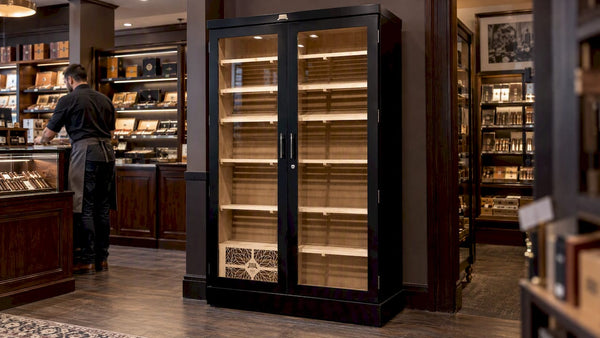
Retail Humidor ROI: How to Measure What a Display Earns
What does a retail or lounge humidor really return? A practical framework for cigar shops, lounges and clubs:...
Read Article