

Measurement-first fixes for collectors: run a dollar bill seal test, log humidity for 24–72 hours, map sensors top to bottom, then apply targeted repairs...
Glass-door humidors are not inherently doomed. They demand better sealing, sharper monitoring, and occasionally active control to match a wooden cabinet’s stability. Before you touch a single humidification pack, run a dollar-bill seal check on the door, set a spare hygrometer on a different shelf than your primary unit, and log the humidity swing for 24 to 72 hours. That data tells you whether you’re fixing a leak or fighting a design flaw.
TL;DR:
- Proper seal integrity requires testing with a dollar bill at multiple points to identify leaks that cause rapid humidity loss.
- Multiple sensors placed at different shelf heights and logged over several days reveal internal air circulation issues and guide appropriate adjustments.
- Glass panels transmit heat and lack buffering capacity, making environmental control and placement away from direct sunlight critical for maintaining stability.
- Correct humidifier sizing depends on interior volume rather than cigar count, with active systems offering better moisture distribution in drafty glass enclosures.
- Long-term stability benefits from professional sealing, internal fans, and possibly switching to actively controlled or bespoke cabinets, especially for long-term aging.
Table of Contents
- Diagnosing Your Glass Door Humidor Problems
- What Makes Glass Different From Solid Wood
- Fixing Humidifier and Hygrometer Placement Problems
- Quick Fixes to Stabilize Humidity Right Now
- When to Upgrade Instead of Repair
- A Maintenance Calendar That Keeps Glass Cabinets Stable
- How Dunn’s Approaches Glass-Door Cabinet Design
- When Display Value Is Worth the Extra Maintenance
- Solutions That Solve Glass-Door Humidor Issues Directly
- Sources
- FAQ
Diagnosing Your Glass Door Humidor Problems
Most glass door humidor issues trace back to one of four culprits: a compromised seal, a misplaced sensor, an undersized humidification source, or an environment working against all three. Guessing which one is at fault wastes time and cigars, so run the tests in order before you buy anything.
Start with the seal. Close the door on a dollar bill at four points around the frame, including both hinge corners, and try to pull it out. Resistance means a decent seal; the bill sliding out freely means air is moving where it shouldn’t. Boveda’s own guidance on glass-top cabinets notes that manufacturing attachment methods for glass panels vary widely, and small gaps around screws or glued joints force your humidifier to work overtime just to keep pace with drafts.
Next, map the interior. A single front-mounted hygrometer tells you almost nothing about a cabinet with real depth or height, and Cigar Aficionado’s review of a well-engineered electronic cabinet stresses checking humidity at multiple shelf heights rather than trusting one reading. Set sensors top, middle, and bottom, then log readings for two full days.
- Fast drops after opening that recover within a few hours suggest a healthy seal and adequate humidification.
- Slow, steady decline over days points to a leak or an undersized humidifier.
- Wide swings between shelves signal poor internal air movement, not a seal problem.
Cross-check your hygrometer against a second digital unit before trusting either one. Case Elegance’s troubleshooting notes point out that faulty sensor readings often drive collectors to overcorrect with more humidification packs when the real issue is a miscalibrated gauge.
What Makes Glass Different From Solid Wood
A solid mahogany or cedar-lined box holds humidity partly because wood itself absorbs and releases moisture slowly, smoothing out spikes. Glass does none of that. It has zero buffering capacity, so every draft, every door opening, and every temperature swing shows up in your readings almost immediately rather than easing in gradually.
That immediacy cuts both ways. It means problems surface fast, which is useful for diagnosis, but it also means a small seal gap that a wooden box might absorb without much drama becomes a visible RH swing behind glass within hours.
Each glass panel is also an added joint. A traditional wooden humidor has one lid seam to seal. A glass-door cabinet has the door frame, the glass-to-frame bead, and often a secondary display window on top, each one a place where quality control can slip. Boveda’s guidance frames this plainly: the enclosure as a whole matters more than whether the material is glass or wood, but glass simply gives manufacturers more places to get it wrong.
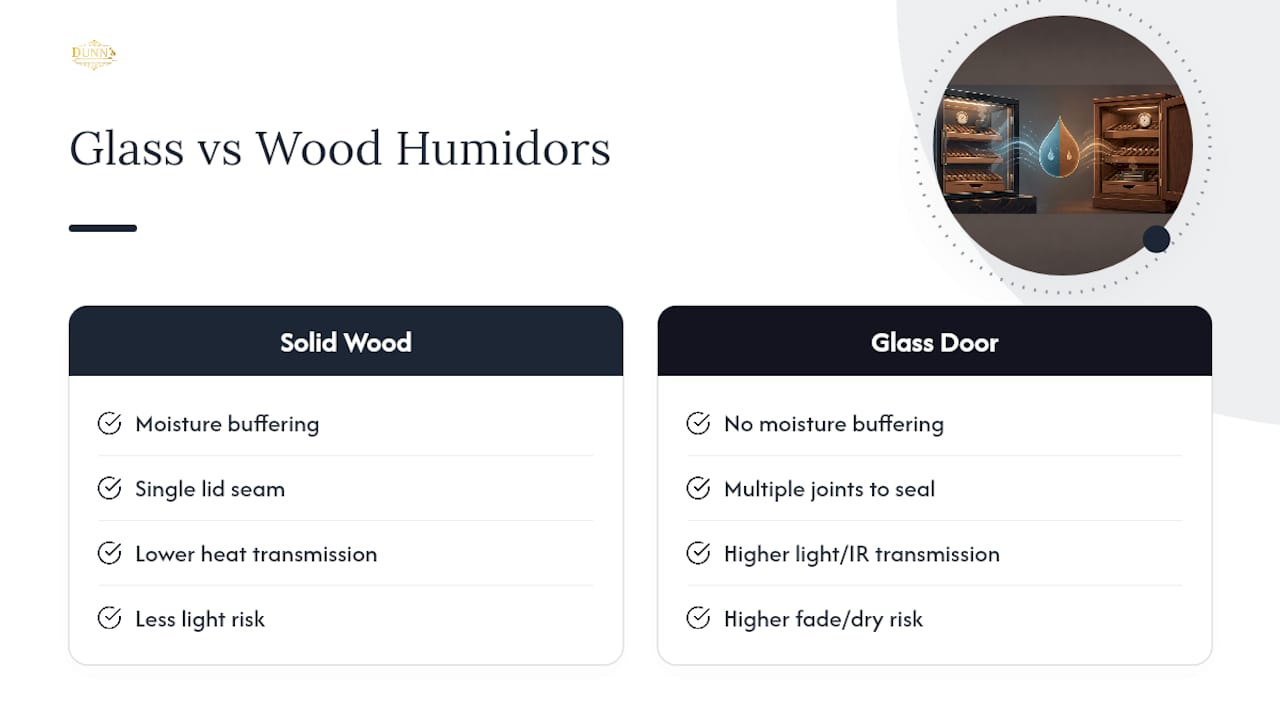
Heat is the other variable collectors underestimate. Glass transmits both visible light and infrared heat far more readily than a cedar panel. A cabinet sitting near a window or under a spotlight can run several degrees warmer inside than the room, which accelerates evaporation and, over months, fades wrapper leaves and dries them unevenly. Retailer guidance on glass-top designs recommends regular rotation and keeping cabinets away from direct light to limit that damage.
Pro Tip: If your humidor sits within ten feet of a window that gets afternoon sun, move it. No amount of gasket work will offset four hours of direct light hitting the glass every day.
Glass makes the most sense for cabinets you rotate frequently, where cigars spend weeks rather than years inside. For long-term aging, a sealed wooden box or an actively managed cabinet gives you far more margin for error.
Fixing Humidifier and Hygrometer Placement Problems
Drafty glass enclosures punish undersized humidification harder than wooden ones because the moisture you add has less to fight against evaporation losses caused by seal gaps and light-driven heat. A humidifier or Boveda pack sized for a sealed wooden desktop box will exhaust itself weeks faster inside a leaky glass cabinet, and you’ll find yourself refilling or replacing packs on a schedule that feels absurd for the cabinet’s size.
Sizing correctly starts with volume, not shelf count. A 150 cigar glass cabinet with a poor seal may need the humidification capacity of a 300 cigar sealed box. Here’s how to work through placement and sizing methodically:
- Calculate interior volume in cubic feet, then check your humidification source’s rated coverage against that number rather than the cigar count on the box.
- Place the primary humidifier on a lower shelf, since humidity naturally settles and rises through convection as the cabinet cycles.
- Keep hygrometers away from direct contact with the humidifier itself; a sensor six inches away reads more honestly than one sitting against a damp pack.
- Set a second hygrometer on the opposite side or top shelf to catch gradients the first one misses.
- Cross-check calibration monthly using a second unit or a basic salt test, and replace any sensor that drifts more than a couple of points from a known reference.
SmokingPipes’ hobbyist guidance recommends targeting roughly 72% RH in glass-top or travel-style enclosures specifically because they tend to run draftier than sealed wood, giving you buffer room against the losses glass invites.
Active systems earn their keep here. A cabinet with an internal fan and thermostat, like the designs Cigar Aficionado tested in its review of a premium electronic humidor, distributes moisture evenly instead of relying on convection alone, which matters more in a glass box than a wooden one because glass offers no thermal cushion to smooth out the gaps between fan cycles.

Quick Fixes to Stabilize Humidity Right Now
You don’t need a new cabinet to solve most glass door humidor issues. Work through these steps in order, starting with the cheapest and least invasive:
- Weatherstrip the door frame. Thin adhesive-backed foam tape, sold for window sealing, fits neatly into most gasket channels. Apply it in short sections rather than one long strip, and press firmly for thirty seconds so it bonds without lifting the finish underneath.
- Tighten hinges before replacing anything. A sagging door creates uneven pressure across the seal even when the gasket itself is fine. Check screws are seated, and add a thin felt washer if the door still doesn’t sit flush.
- Switch to a higher-RH two-way pack temporarily. Boveda B72 packs offset drafty losses better than standard 65% packs while you address the seal itself. Add one pack at a time and wait 48 hours before adding another to avoid overshooting into mold territory.
- Rotate shelves and boxes every few weeks to even out the light and temperature gradients that glass tends to create between the top and bottom of the cabinet.
- Recalibrate or replace your hygrometer before you trust any of the above steps. A miscalibrated gauge will make a working fix look like a failure.
Pro Tip: *Never add more than one humidity pack every two days when troubleshooting.
When to Upgrade Instead of Repair
Some glass door humidors are worth saving. Others are fighting a design that simply can’t hold steady no matter how much foam tape you apply. The decision comes down to a redundancy principle that professional humidor reviewers keep coming back to: fix the enclosure first, then add appropriate two-way humidity control, then layer in continuous monitoring. Skipping straight to a fancier hygrometer while the door still leaks is solving the wrong problem.
If your dollar-bill test shows resistance at every point but you’re still fighting drift, the enclosure is sound and the issue lives in humidification or air distribution. If the bill slides out at multiple points despite tightened hinges and fresh weatherstripping, you’re likely looking at a warped frame or a factory glass seal that was never right, and no amount of retrofitting will close that gap permanently.
Retrofit options worth trying before you replace anything:
- Professional gasket replacement with a concealed channel gasket rather than adhesive foam, for a cleaner long-term seal.
- An added internal fan, even a small battery-powered circulation fan, to break up the shelf-to-shelf gradients that a static glass cabinet tends to develop.
- Insulating the back panel if the cabinet backs onto an exterior wall or a room with swinging temperatures.
If you’re commissioning a replacement, demand specifics: gasket type and material, multi-point sensor capability rather than a single front gauge, and active air distribution. Cigar Aficionado’s testing of a well-built electronic cabinet shows what that combination looks like in practice, with a gentle fan and thermostat working together rather than a passive box hoping for the best.
A Maintenance Calendar That Keeps Glass Cabinets Stable
New glass-door cabinets still need seasoning, even with a glass front. The Spanish cedar lining inside does the real humidity buffering work that glass can’t, and unseasoned cedar will pull moisture away from your cigars for the first several weeks rather than holding it steady. Wipe interior surfaces with distilled water, let the cabinet run empty for a few days at target humidity, then introduce cigars gradually.
Once seasoned, commit to a 90-day data collection habit: log RH at your top and bottom shelves weekly, note how fast humidity recovers after you open the door, and track how quickly your humidification pack loses weight or visibly dries out. That pattern tells you whether your seal is holding or slowly failing.
Beyond that initial window, a simple recurring schedule keeps most problems from becoming expensive ones:
- Monthly: Recheck the dollar-bill seal test, inspect hinges for sag, and confirm your two hygrometers still agree within a couple of points.
- Quarterly: Clean or replace humidification packs, wipe down glass interiors, and rotate stock to even out light exposure.
- Annually: Full hygrometer calibration against a fresh reference, hinge tightening, and a thorough gasket inspection.
Watch for red flags between checks: a sweet, musty smell or white bloom on wrapper leaves signals mold, while small pinholes in the tobacco point to tobacco beetles that thrive when temperatures climb above 72 degrees. Either one means immediate isolation of affected cigars, not a wait-and-see approach. The Spanish cedar lining in a well-built cabinet also carries a faint cedar aroma that naturally deters beetles, so if that scent has faded entirely, your cabinet may need reseasoning.
How Dunn’s Approaches Glass-Door Cabinet Design
Every failure mode above, drafty seals, uneven gradients, undersized humidification, gets addressed at the commissioning stage when you work with a specialist rather than troubleshooting after the fact. During a consultation, sensor placement is mapped across multiple shelf heights before a single cigar goes inside, humidification is sized to the cabinet’s actual interior volume rather than a generic cigar count, and every glass joint is inspected against strong seal standards.
That’s the difference between a cabinet you’re constantly adjusting and one that holds its line. Collectors who want the display appeal of glass without accepting glass’s typical instability often choose either an actively managed electronic cabinet or a bespoke build where the sealing and airflow were engineered together from the start, not patched in afterward.
If you’re deciding between a display piece and a long-term aging environment, that consultation conversation is worth having before you commit to either.
When Display Value Is Worth the Extra Maintenance
Glass earns its place in a collection built for display, entertaining, or rotating stock every few weeks. It loses its case for anything meant to age untouched for years, where a sealed wooden box simply demands less of you.
A useful rule of thumb: if you open the cabinet daily and enjoy watching the collection, accept the added maintenance. If you’re laying down cigars for a decade, choose sealed cabinetry or active electronic control instead. Collectors with humid climates or unstable room temperatures should lean toward active control regardless of door material.
My parting advice: test before you troubleshoot, and never let a hygrometer you haven’t cross-checked talk you into adding another pack.
— Belle Dunn
Solutions That Solve Glass-Door Humidor Issues Directly
If you’ve run the seal test and the sensor cross-check and you’re still fighting drift, the fix usually isn’t another pack of Boveda beads. It’s the cabinet itself. There are several options available built around the exact failure modes covered above, each engineered rather than retrofitted to solve them.

- The Humidor Supreme® 9200 Series Double-Door Electronic Humidor (Black) pairs active temperature control with multi-shelf distribution, addressing the gradient problem directly instead of relying on convection alone.
- The Humidor Supreme® Electronic Humidor, 9000 Series Black brings that same active control into a smaller footprint for collectors who want stability without a double-door commitment.
- The Chateau Glasstop in Cherry suits collectors who prioritize display and are willing to follow the rotation and monitoring habits this article covers.
For a cabinet built around your exact space and collection size, Dunn’s Bespoke consultations start with the same sensor mapping and seal standards discussed above. Browse the full Electronic Humidors or Cabinet Humidors collections, or request a consultation to talk through which approach fits your climate and collection.
Sources
For deeper detail on the points covered here, Boveda’s glass-top humidor guide breaks down seal-first troubleshooting, while Cigar Aficionado’s cabinet humidor review covers multi-sensor and active-control design. Case Elegance’s humidity troubleshooting guide and SmokingPipes’ humidity target guidance round out the sensor and pack-selection details, and Mozsly’s seal testing framework explains the recovery and drift heuristics referenced above.
- Should I Buy a Glass-Top Humidor? - Boveda
- NewAir CC-300H humidor | Cigar Aficionado
- Why isn’t my humidor holding humidity? - Case Elegance
- Humidor humidity guidance | SmokingPipes blog
FAQ
Are Glass Humidors Good for Storing Cigars?
Glass humidors work well for display or short-term rotation, but they demand tighter seal maintenance and more frequent monitoring than solid wood. Boveda’s guidance frames the real issue as construction quality, not the glass itself, so a well-sealed glass cabinet with proper humidification performs fine.
What Are the Most Common Humidor Problems?
The most common issues are seal leaks around doors and hinges, inaccurate or miscalibrated hygrometers, undersized humidification for the cabinet’s volume, and light or heat exposure that accelerates evaporation. Running a dollar-bill seal test and cross-checking your hygrometer against a second unit resolves most of these before you spend money on anything new.
What Is the 135 Rule for Cigars?
Rather than chasing a specific numeric rule, aim for stable conditions in the 65 to 72% RH range with consistent temperature, and adjust slightly higher toward 72% for drafty glass cabinets as SmokingPipes recommends.
Is 60% Humidity Too Low for a Humidor?
Sixty percent RH sits below most collectors’ comfort zone and can leave cigars burning hot and losing flavor complexity over time.
How Do I Fix a Glass Door Humidor That Won’t Hold Humidity?
Start with the dollar-bill seal test at multiple points around the door frame, then cross-check your hygrometer against a second unit before adding any humidification. If the seal tests fine but humidity still drifts, size up your humidification pack or consider an actively managed electronic cabinet, like the Humidor Supreme® 9200 Series, for consistent long-term control.
Recommended
You May Also Enjoy
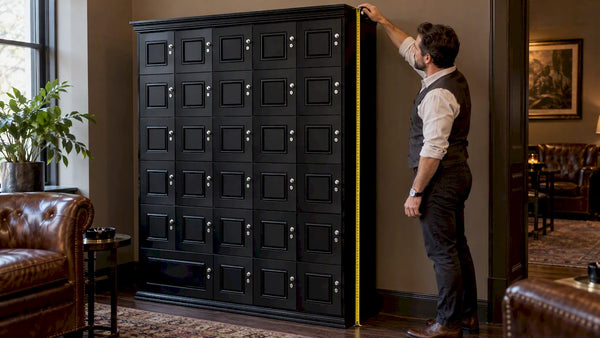
Cigar Locker Dimensions: Sizing Guide for Collectors and Lounges
Cigar locker dimensions explained: compartment sizes, cabinet footprints, capacity math and clearances, so you size a locker bank...
Read Article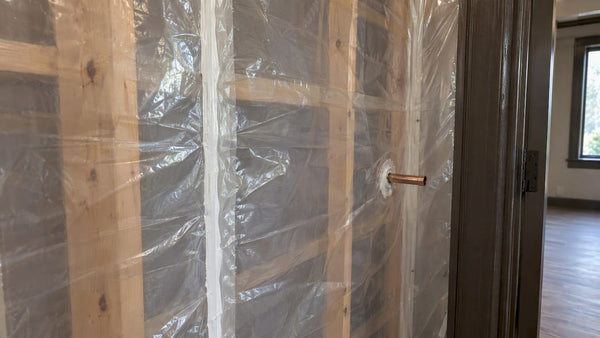
Sealing a Walk-In Humidor: Envelope, Door and Penetrations
How to seal a walk-in humidor properly: vapor barrier placement, door gasket, penetrations and the controlled airflow a...
Read Article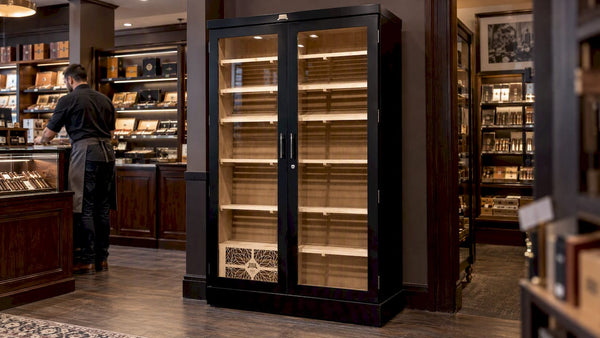
Retail Humidor ROI: How to Measure What a Display Earns
What does a retail or lounge humidor really return? A practical framework for cigar shops, lounges and clubs:...
Read Article