

Master the art of selling with this guide to humidor auction preparation. Ensure optimal condition and attract serious bidders at your auction!
Preparing a humidor for auction demands far more than a quick polish and a prayer. The collectors who achieve the strongest hammer prices treat auction preparation as a discipline: calibrated humidity, meticulous provenance documentation, honest condition disclosure, and professional logistics coordinated well before the sale date. Done correctly, this process transforms a fine humidor from a personal sanctuary into a compelling lot that commands serious bidder attention.
Before you contact an auction house, confirm you have addressed each of the following:
- Humidity calibration: Refresh relative humidity to an optimal range suitable for humidors and verify with a calibrated hygrometer
- Cleaning: Dry brush the Spanish Cedar interior; never use a damp cloth
- Provenance documentation: Gather purchase invoices, certificates of authenticity, and ownership history
- Condition disclosure: Catalog all condition issues honestly for the auction specialist
- Photography: Commission well-lit, multi-angle images for the auction catalog
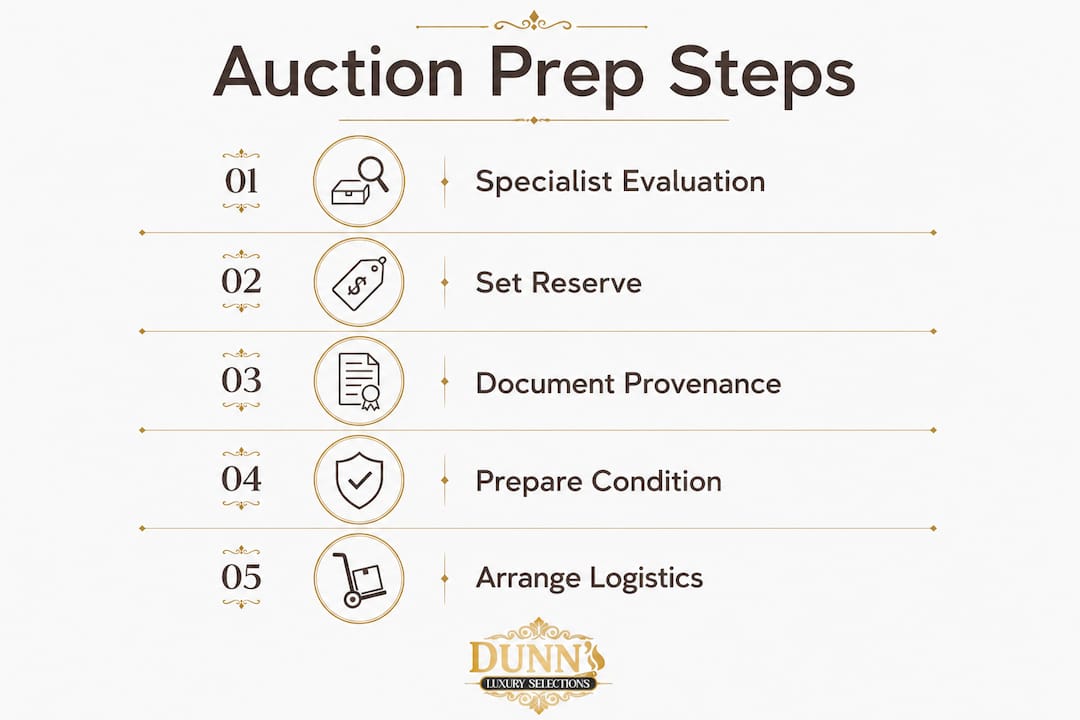
- Reserve price: Set a realistic floor in consultation with a specialist
- Logistics and insurance: Arrange climate-controlled transport and confirm coverage
- Timing: Allow adequate lead time for inspection, transport, and cataloging before auction day
What does the guide to humidor auction preparation start with?
Every serious auction preparation begins with a specialist evaluation — and the good news is that most major auction houses offer a complimentary preliminary assessment. You share photographs and whatever documentation you have; a category specialist reviews condition, provenance, and current market demand, then returns an estimated price range. That estimate is not a ceiling. It is an informed forecast designed to attract competitive bidding.
Several factors shape where your humidor lands in that range:
- Provenance: A documented ownership history tied to a notable collection or estate adds measurable appeal
- Condition: Structural integrity, interior cedar quality, and hardware function all factor into the estimate
- Market trends: Collector demand for luxury humidors fluctuates; a specialist tracks recent comparable sales
- Completeness: Original keys, trays, hygrometers, and packaging strengthen the lot
Setting realistic reserves is where many first-time consignors stumble. A reserve priced too high discourages bidding and risks the lot going unsold. Specialists consistently recommend setting the reserve at or below the low estimate, keeping the entry point inviting while protecting your floor.
Pro Tip: Ask your specialist to show you comparable lots sold in the past 12 months. Past acquisition prices are rarely indicative of current auction estimates, and seeing real market data calibrates your expectations far better than sentiment alone.
How does provenance documentation increase your humidor’s auction value?
Documentation is the silent advocate in any auction room. A humidor with a compelling, well-documented history commands higher bids because buyers are purchasing not just an object but a verified story. Auction specialists at major houses conduct provenance research as part of cataloging, but the depth of that research depends heavily on what you bring to the table.
Compile your dossier with the following:
- Purchase invoices and original receipts
- Certificates of authenticity from the maker
- Past auction catalog references if the humidor has sold before
- Correspondence with the craftsman or retailer
- Photographs documenting the humidor in its original setting
- Any conservation or restoration invoices
Comprehensive dossiers impress specialists and justify higher valuations. Present documents in a clearly organized folder, digital and physical, so the cataloging team can move efficiently. If your humidor came from a notable estate or was part of a curated collection, say so explicitly. That narrative context often elevates the entire lot.
How should you prepare your humidor’s condition before consignment?
Condition preparation is where collectors most often make costly mistakes. The instinct to restore, polish, and perfect before consignment is understandable, but auction specialists are clear: avoid home-based restoration. Improper repairs reduce value. Professionals prefer to assess an untouched piece and control any restoration to institutional standards.
What you can and should do yourself:
- Dry brush the interior: Cedar interiors require dry brushing, never a damp cloth. Moisture raises the wood grain, disrupts the micro-porosity that regulates humidity, and can warp lesser-grade interiors.
- Deodorize carefully: If the interior carries residual tobacco odor, allow the humidor to air in a clean, temperature-stable environment for several days. Avoid chemical deodorizers near unfinished cedar.
- Refresh humidity calibration: Reseason with 84% Boveda packets for 10–15 days if the interior has dried out, then stabilize at 69–72% RH before consignment. Verify with a calibrated digital hygrometer.
- Clean the exterior: Wipe lacquered or veneered surfaces with a clean microfiber cloth and mild soap. Avoid abrasive polishes and silicone-heavy sprays.
Pro Tip: Preserving original patina is a feature, not a flaw. Over-restoring a humidor strips the authenticity that discerning bidders prize. Let the auction house specialist advise on any deeper work.
Disclose every condition issue honestly in your catalog notes. Hairline cracks, hinge wear, replaced hardware, or previous repairs all belong in the record. Auction houses require thorough condition disclosure to build buyer trust and defend auction estimates. Concealing a defect rarely goes unnoticed and always damages credibility.
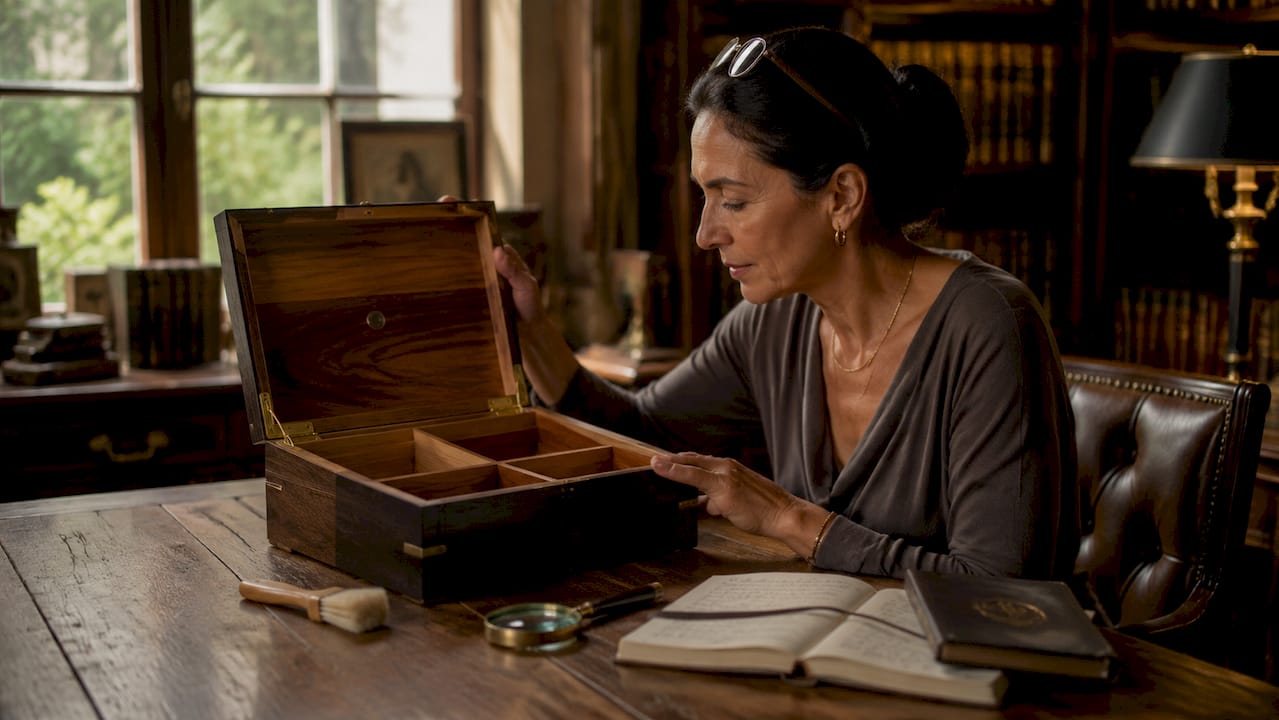
What logistics and insurance arrangements protect your humidor in transit?
A humidor built from Spanish Cedar, exotic veneers, or precision electronic components is not a candidate for standard freight. High-value items require white-glove, climate-controlled handling and often bespoke crating engineered to the piece’s specific dimensions and fragility profile.
Key logistics considerations:
- Custom crating: Acid-free interior linings, foam cushioning, and reinforced corners protect against vibration and impact during transit
- Climate-controlled transport: Temperature and humidity fluctuations during shipping can warp wood, crack lacquer, and destabilize the interior environment
- GPS-tracked, secure vehicles: Professional auction logistics include dedicated art shuttles with alarm systems and real-time tracking
- Insurance: Coverage is typically linked to the reserve price; confirm the policy terms before the humidor leaves your possession
- Timing: Build in at least two to three weeks before the auction date for transport, inspection, and cataloging. Rushed consignments invite errors.
Many auction houses manage logistics in-house or through vetted specialist partners. Using their preferred providers is almost always the wiser choice. They understand the protocols, the timetables, and the liability frameworks that protect both parties.
How do market trends shape realistic auction expectations?
Collector demand for luxury humidors in the United States follows broader trends in the premium cigar market and the collectibles space generally. A humidor that might have drawn modest interest five years ago can attract fierce competition today if the maker’s profile has risen or the format has become fashionable among serious collectors. Conversely, even a technically superior piece can underperform if the timing is off.
Market demand and current trends strongly influence auction performance, and specialists track these shifts continuously. Trust their read on timing. If they recommend holding a lot for a sale with stronger category representation, that advice is worth heeding.
Common auction day and post-auction scenarios to anticipate:
- Strong pre-sale interest: Multiple registered bidders signal competitive bidding; relax and let the market work
- Quiet pre-sale interest: Consider lowering the reserve to give the auctioneer room to attract opportunistic bidders
- Unsold lot: The humidor returns to you; reassess reserve pricing and consider a subsequent sale
- Post-sale settlement: Buyers typically remit payment within a few business days; sellers receive net proceeds some weeks after the sale closes, following deduction of fees and costs, after deduction of seller’s commission and related costs
Transparency about condition, combined with a reserve grounded in specialist advice, gives your humidor the best possible foundation for a strong result.
Showcase your humidor at its finest with Dunnluxuryselections
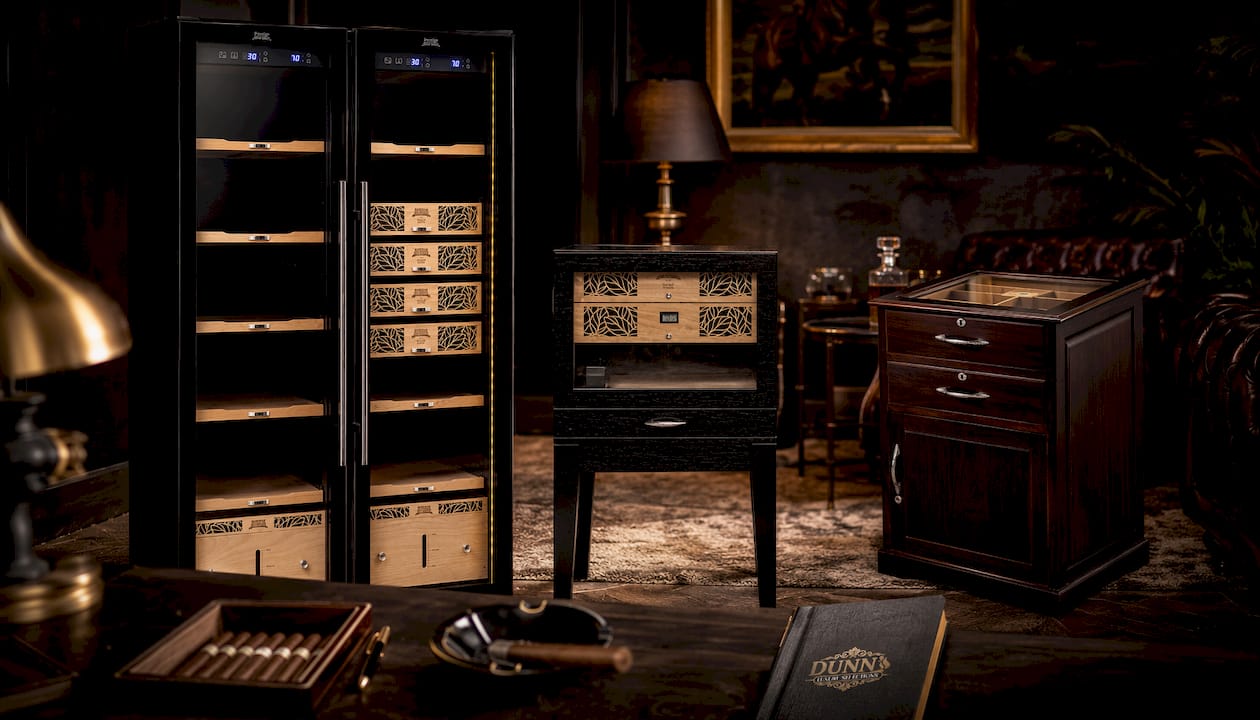
Whether you are preparing a single cabinet for consignment or curating an entire collection for sale, the quality of the humidor itself shapes every outcome. Dunnluxuryselections crafts bespoke storage instruments that collectors and auction specialists recognize immediately. The Humidor Supreme 9200 Series represents precision electronic climate control at the highest level, while the Balthazar II End Table Humidor and the Santiago Cigar Humidor exemplify the craftsmanship that commands attention in any auction room. For guidance on maintaining your collection before and after a sale, explore the care guides at Dunnluxuryselections.
Key Takeaways
Successful humidor auction preparation requires calibrated humidity, verified provenance, honest condition disclosure, and professional logistics coordinated well before the sale date.
| Point | Details |
|---|---|
| Start with specialist evaluation | A complimentary preliminary assessment sets realistic price expectations before formal consignment. |
| Build a complete provenance dossier | Purchase invoices, certificates of authenticity, and ownership history directly increase buyer confidence and bid levels. |
| Dry brush only; never dampen cedar | Moisture raises wood grain and disrupts the humidity regulation essential to interior integrity. |
| Stabilize humidity within the recommended optimal range for humidors | Reseason with 84% Boveda packets if the interior has dried, then verify with a calibrated hygrometer before consignment. |
| Use climate-controlled, insured logistics | Custom crating, GPS-tracked transport, and reserve-linked insurance protect the humidor from consignment through auction day. |
FAQ
What is the first step in preparing a humidor for auction?
Contact an auction house specialist for a complimentary preliminary evaluation. Share clear photographs and any available documentation so the specialist can assess condition, provenance, and current market demand before formal consignment begins.
Should I restore my humidor before consigning it?
Avoid home-based restoration. Auction specialists prefer to assess untouched pieces and manage any professional restoration themselves, since improper repairs can reduce value and compromise authenticity.
How do I clean the interior cedar without damaging it?
Use dry brushing only. A damp cloth raises the wood grain, disrupts the micro-porosity that regulates relative humidity, and can warp the interior, so keep all moisture away from unfinished cedar surfaces.
How is the reserve price determined?
Reserve prices are set in consultation with the auction specialist, typically at or below the low estimate. A realistic reserve encourages competitive bidding and reduces the risk of the lot going unsold.
When do sellers receive payment after an auction?
Buyers typically remit payment within five business days of the sale. Sellers receive net proceeds, after deduction of seller’s commission and related costs, some weeks after the auction’s closing date.
Recommended
You May Also Enjoy
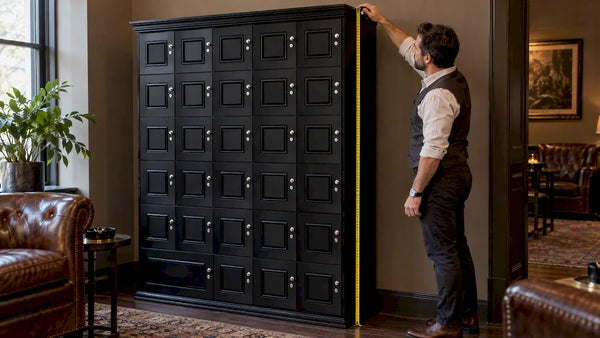
Cigar Locker Dimensions: Sizing Guide for Collectors and Lounges
Cigar locker dimensions explained: compartment sizes, cabinet footprints, capacity math and clearances, so you size a locker bank...
Read Article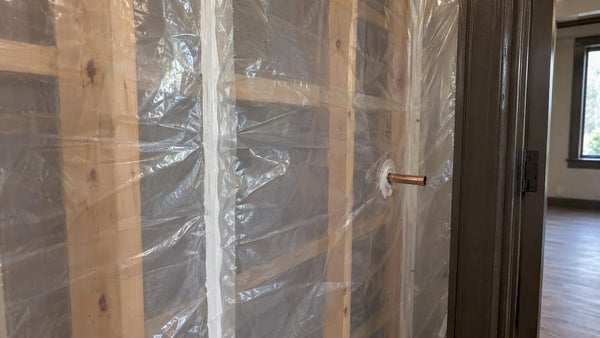
Sealing a Walk-In Humidor: Envelope, Door and Penetrations
How to seal a walk-in humidor properly: vapor barrier placement, door gasket, penetrations and the controlled airflow a...
Read Article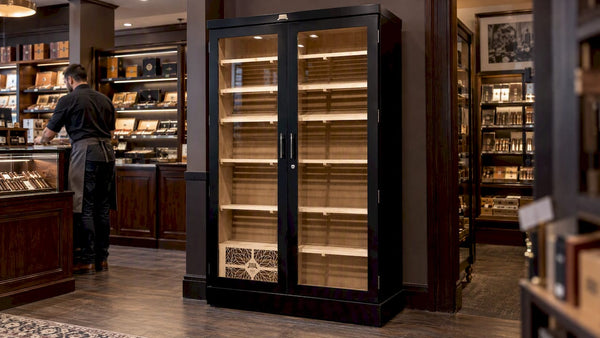
Retail Humidor ROI: How to Measure What a Display Earns
What does a retail or lounge humidor really return? A practical framework for cigar shops, lounges and clubs:...
Read Article