

Discover how to catalog humidors effectively to preserve your cigar collection's quality and enhance your enjoyment. Learn more!
Cataloging humidors is defined as the systematic process of organizing, tracking inventory, and maintaining precise environmental conditions across your cigar collection. Serious collectors who master this practice preserve cigar quality, optimize aging timelines, avoid redundant purchases, and gain instant clarity over what sits in their sanctuary at any given moment. The core tools you need include a calibrated hygrometer, Boveda packs or a refillable humidification unit, and a digital app like Humidor Journal Pro or Cigar Scanner. The governing environmental standard is the 70/70 rule: 70% relative humidity at 70°F, with an acceptable range of 65–74% RH and 65–73°F.
How to catalog humidors: setting up your environment first
No catalog is worth maintaining if the environment it describes is unstable. Before you log a single cigar, your humidor must be properly seasoned and your instruments calibrated.
Seasoning your humidor before you begin
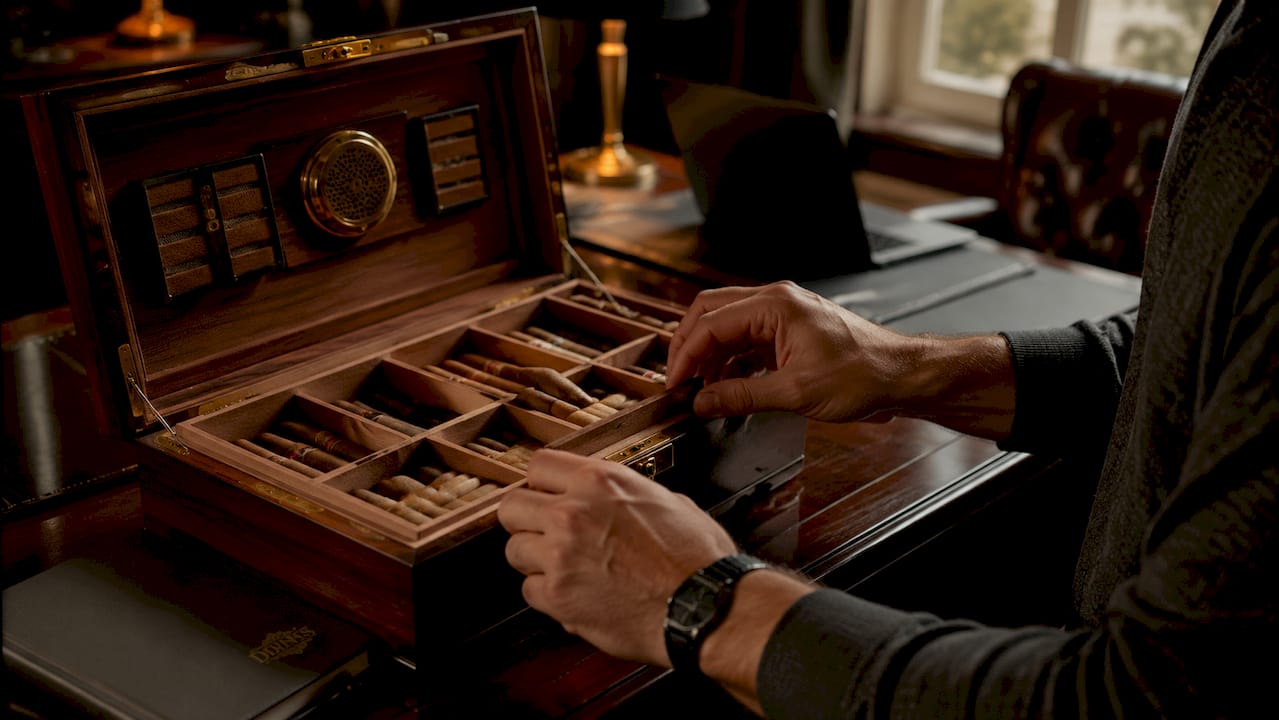
Seasoning new humidors takes 7–14 days to stabilize the humidity absorption and release cycle within the Spanish Cedar lining. Use distilled water or 72% seasoning packs during this window. Wipe the interior lightly with a barely damp cloth. Do not oversaturate the wood, as excess moisture warps the lining and compromises the seal you depend on for long-term storage.
Calibrating your hygrometer
A hygrometer is your primary instrument for environmental verification. Calibrate every 6–12 months using the salt test: seal a small amount of salt and water in a bag with the hygrometer for 8 hours and confirm it reads 75%. Any deviation tells you exactly how far off your readings are. For large cabinet humidors, place two hygrometers on opposite sides for cross-verification. A single uncalibrated unit can mislead you for months without your knowledge.
Humidification options compared
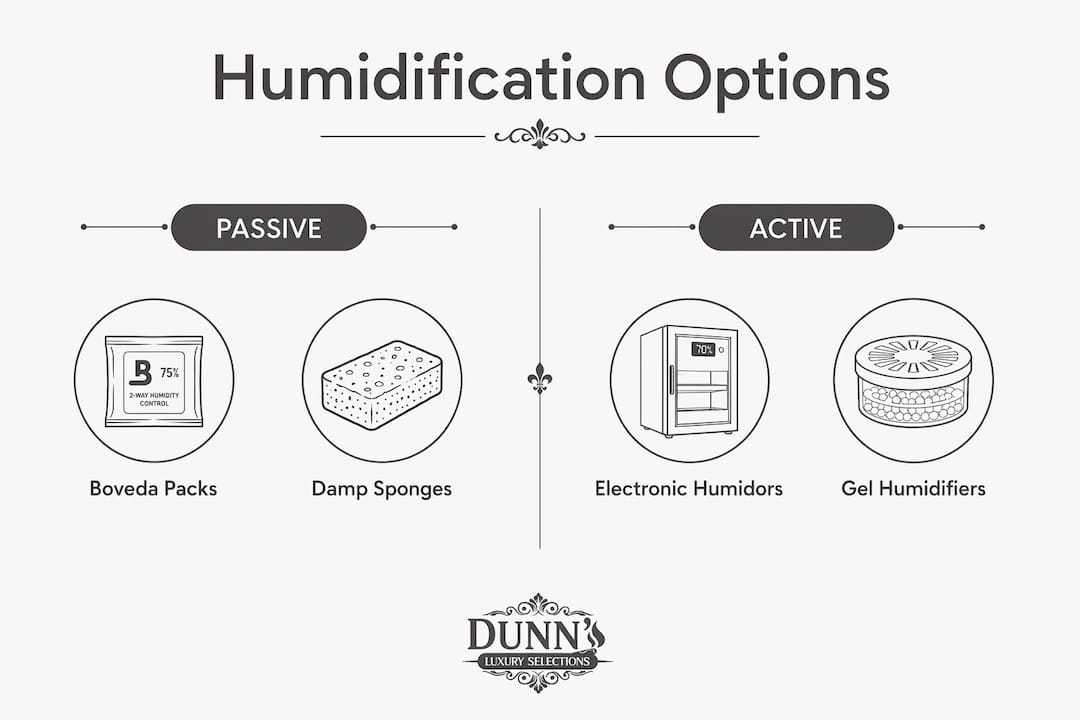
| Method | Best For | Maintenance Frequency | Precision Level |
|---|---|---|---|
| Boveda Packs | Desktop and travel humidors | Every 2–3 months | High |
| Refillable Units | Mid-size humidors | Weekly to biweekly | Moderate |
| Electronic Humidors | Large or cabinet collections | Minimal | Very High |
| Distilled Water Trays | Budget setups | Weekly | Low |
Electronic humidors, like those in the Dunnluxuryselections electronic collection, automate temperature and humidity regulation entirely. That automation removes the single largest variable in environmental consistency.
Pro Tip: Place your hygrometer at mid-height in the humidor, away from both the humidifier and the walls. That position captures the true ambient reading rather than a localized spike.
How do you physically organize cigars inside a humidor?
Physical organization is the foundation of any reliable catalog. A well-arranged humidor makes every entry in your log accurate and every cigar easy to locate.
The FIFO method for cigar aging
FIFO, or first in, first out, is the most effective physical rotation method for cigar collections. New acquisitions go toward the back; older stock moves to the front for consumption. This prevents any cigar from aging indefinitely in a forgotten corner while newer stock gets smoked first. The method mirrors what premium retailers and aging cellars have practiced for generations.
Organization strategies that work
Collectors organize by different criteria depending on collection size and personal preference. The most common approaches include:
- By strength: Mild, medium, and full-bodied zones prevent flavor cross-contamination and simplify selection when you know your mood.
- By brand: Grouping Arturo Fuente, Padron, or Cohiba together creates a brand archive that is easy to photograph and log.
- By vitola (size and shape): Robusto, Churchill, and Lancero each age differently. Separating them prevents mismatched aging expectations.
- By flavor profile: Connecticut wrappers in one zone, Maduro in another. This system works especially well for collectors who entertain guests.
- By acquisition date: The purest aging-focused system. Every cigar is logged by when it entered the humidor, making FIFO effortless.
Cedar dividers and labeled trays create clear zones within a single humidor. Small index cards tucked beside each row, noting the brand and date, give you a physical reference that requires no device to read.
Pro Tip: Use a label maker or small adhesive cards on the front edge of each tray. Color-code by strength or origin. This takes 20 minutes to set up and saves hours of searching over the life of your collection.
Overpacking restricts airflow, creating humidity spikes and mold risk. Leave visible space between rows. A humidor at 80% capacity performs better than one packed to its rated limit.
Digital vs. manual: which cataloging method wins?
The industry term for what most collectors call “cataloging” is inventory management, and the method you choose determines how much insight you actually extract from your collection.
What data points to track
Key inventory data points include brand, purchase date, box code, personal tasting notes, and acquisition price. Each data point serves a distinct purpose. Box codes verify production batch and year. Tasting notes build a personal flavor archive. Acquisition price turns your humidor into a documented asset.
Digital tools available today
Digital tools like Humidor Journal Pro and Cigar Scanner manage collections of 50 or more cigars with efficiency that no paper log can match. Cigar Scanner uses barcode scanning to speed data entry. Popular apps sync across multiple devices, so your catalog is accessible whether you are at home, at a lounge, or traveling. Cloud-based spreadsheets like Google Sheets offer a free alternative with full customization.
Digital vs. manual cataloging compared
| Factor | Digital (Apps/Spreadsheets) | Manual (Notebooks/Cards) |
|---|---|---|
| Search Speed | Instant | Slow |
| Tasting Notes | Timestamped, searchable | Handwritten, personal |
| Insurance Documentation | Photo attachments, exportable | Difficult to verify |
| Setup Time | 30–60 minutes | Minimal |
| Cost | Free to $10/month | Near zero |
| Aging Tracking | Automated reminders | Manual review required |
A digital catalog functions as a smoking diary, tracking flavor evolution, pairings, and ratings across years. That depth of record-keeping transforms a collection from a storage exercise into a personal archive of taste and memory.
Photographing your collection
Photographing rare cigars and attaching images to inventory logs supports insurance claims and collection documentation. Photograph the band, the box label, and the box code together in a single frame. Natural light or a lightbox produces the clearest results. For learning how to photograph cigars effectively, shoot against a neutral background and capture the wrapper texture in detail. These images become proof of provenance for limited editions and aged rarities.
What maintenance keeps a catalog accurate over time?
A catalog is only as reliable as the environment it describes. Consistent maintenance is what separates a living record from an outdated list.
Routine checks that protect your investment
- Verify hygrometer readings weekly during seasonal transitions, when indoor heating or air conditioning shifts ambient humidity dramatically.
- Re-season humidors that have been left empty or exposed to dry air for more than two weeks.
- Rotate cigars quarterly using the FIFO method to confirm physical placement matches your digital log.
- Update your inventory log every time you add or remove a cigar. A 30-second entry prevents hours of reconciliation later.
- Avoid packing beyond 80% capacity to maintain the airflow that keeps humidity uniform throughout the humidor.
Common mistakes that undermine catalogs
Trusting an uncalibrated hygrometer is the most common and costly error collectors make. A unit reading 68% when the true humidity is 74% creates mold conditions you cannot see until damage is done. Neglecting inventory updates after smoking sessions is equally damaging. A catalog with missing entries is not a catalog. It is a rough estimate.
Pro Tip: Set a recurring monthly reminder to cross-check your physical humidor against your digital log. Treat it like a financial reconciliation. Discrepancies reveal either missing entries or cigars you forgot you smoked.
For detailed humidity control guidance specific to different humidor types, the Dunnluxuryselections journal covers seasonal adjustments and zonal climate control in depth.
Key takeaways
A well-cataloged humidor requires calibrated instruments, disciplined physical organization, and consistent digital records to protect and grow a cigar collection’s value over time.
| Point | Details |
|---|---|
| Season before cataloging | Allow 7–14 days of seasoning before logging any cigars to ensure stable conditions. |
| Calibrate your hygrometer | Use the salt test every 6–12 months to confirm accurate humidity readings. |
| Use FIFO for physical order | Place new cigars at the back and rotate older stock forward for proper aging. |
| Track six core data points | Log brand, purchase date, box code, tasting notes, price, and photos for each cigar. |
| Update logs consistently | Reconcile your physical humidor against your digital catalog at least once a month. |
Why i stopped trusting my memory and started trusting my catalog
I spent years managing my collection the way most collectors do at first: by feel. I knew roughly what was in each tray, roughly when I bought it, and roughly how many I had left. “Roughly” is a word that costs you money and great cigars.
The turning point came when I pulled a Padron 1964 Anniversary I had completely forgotten about. It had aged beautifully, but I had no record of when I bought it, what I paid, or how it compared to the same vitola I smoked two years earlier. That experience was the last time I relied on memory alone.
What I have found is that the collectors who get the most from their humidors are not necessarily the ones with the largest collections. They are the ones who know their collections precisely. A 50-cigar catalog with detailed tasting notes, acquisition dates, and aging targets delivers more satisfaction than 500 cigars stored without context.
My honest recommendation: start with a simple Google Sheet. Log every cigar you add from this point forward. Do not try to backfill everything at once. Build the habit first, then refine the system. Within three months, you will make better purchase decisions, smoke more intentionally, and stop buying duplicates of cigars you already have aging perfectly at home.
The catalog is not the point. The catalog is what makes every cigar you smoke more meaningful.
— Brian
Build your collection on the right foundation

The catalog you build is only as strong as the humidor that houses it. Dunnluxuryselections offers cabinet humidors engineered for serious collectors, desktop humidors designed for precision in compact spaces, and electronic humidors that automate the environmental control your catalog depends on. Every unit is built to maintain the 70/70 standard without constant manual adjustment. Explore the full range of humidor accessories, including hygrometer calibration kits and seasoning products, to complete your setup. When your storage is precise, your catalog becomes a true record of legacy rather than a best guess.
FAQ
What does it mean to catalog a humidor?
Cataloging a humidor means systematically recording every cigar’s brand, purchase date, box code, tasting notes, and acquisition price, while maintaining documented environmental conditions. The goal is full visibility over your collection’s composition and condition.
How often should i update my cigar inventory?
Update your inventory every time you add or remove a cigar. A monthly reconciliation between your physical humidor and your digital log catches any discrepancies before they compound.
What is the best app for cataloging a cigar collection?
Humidor Journal Pro and Cigar Scanner are the most widely used dedicated apps for managing collections of 50 or more cigars. Both offer barcode scanning, tasting note fields, and multi-device sync.
Why should i photograph my cigars for inventory purposes?
Photographing rare cigars attached to your inventory log supports insurance documentation and verifies provenance for limited editions. Capture the band, box label, and box code together in one frame.
How do i know if my humidor is ready to store cigars?
Your humidor is ready when it holds a stable 65–74% relative humidity for at least 24 hours after the seasoning period ends. Confirm with a calibrated hygrometer before placing any cigars inside.
Recommended
You May Also Enjoy
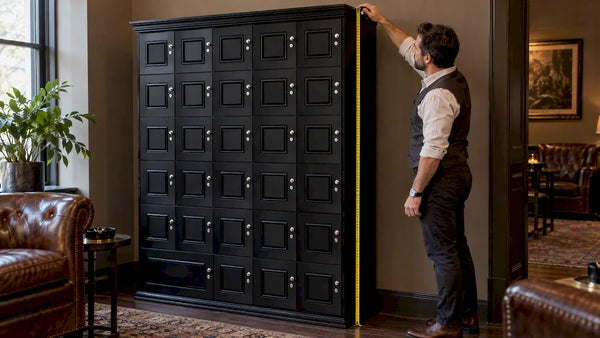
Cigar Locker Dimensions: Sizing Guide for Collectors and Lounges
Cigar locker dimensions explained: compartment sizes, cabinet footprints, capacity math and clearances, so you size a locker bank...
Read Article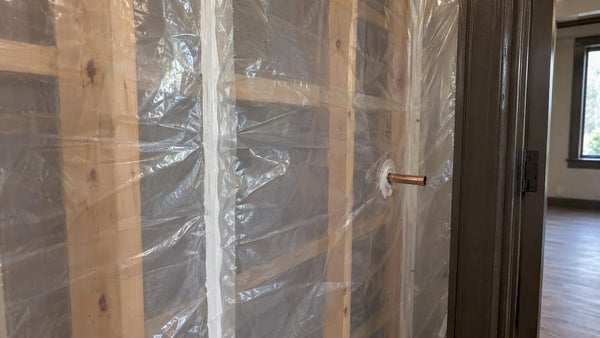
Sealing a Walk-In Humidor: Envelope, Door and Penetrations
How to seal a walk-in humidor properly: vapor barrier placement, door gasket, penetrations and the controlled airflow a...
Read Article
Retail Humidor ROI: How to Measure What a Display Earns
What does a retail or lounge humidor really return? A practical framework for cigar shops, lounges and clubs:...
Read Article