

Discover how to integrate humidors into home bars for optimal cigar storage. Elevate your leisure space with our expert guide and tips.
TL;DR:
- A humidor integrated into a home bar stores cigars at 65–70% humidity and 65–70°F, enhancing leisure space. Proper placement, cabinetry, and climate control, especially with digital hygrometers, are essential for preserving cigar quality. Custom-built models with floating panels and Spanish Cedar interiors ensure long-term durability and aesthetic cohesion.
A humidor integrated into a home bar is defined as a purpose-built or fitted cigar storage environment that maintains 65–70% relative humidity and 65–70°F temperature within the same physical space as your spirits collection. This combination transforms a home bar from a drinks station into a full sanctuary for refined leisure. The science behind proper cigar storage is unforgiving: humidity outside this range causes mold above it and brittle, oil-stripped tobacco below it. Knowing how to integrate humidors into home bars correctly means your collection ages with grace rather than deteriorating between pours. This guide covers every layer of that process, from choosing the right humidor type to custom cabinetry details that protect your investment for decades.
How to integrate humidors into home bars: choosing the right type
The humidor type you select determines every downstream decision about placement, cabinetry, and climate control. Three categories dominate home bar integration: countertop, cabinet, and built-in.
Countertop humidors hold roughly 25–150 cigars and sit on bar surfaces or shelving. They suit collectors with a curated rotation rather than a deep archive. Their portability is an advantage during setup, but they offer less visual drama than a dedicated cabinet.
Cabinet humidors stand as freestanding furniture pieces, typically holding 500–2,000 cigars. Electric humidors with digital controls simplify maintaining ideal humidity and temperature while doubling as display pieces with finishes that complement both modern and classic bar aesthetics. This category offers the strongest balance of capacity, climate precision, and visual presence.
Built-in humidors are custom-fabricated directly into bar cabinetry. They deliver the most cohesive look but require professional design and construction. The investment is significant, yet the result is a bar that reads as a single, intentional composition rather than a collection of separate pieces.
| Humidor type | Typical capacity | Integration ease | Best for |
|---|---|---|---|
| Countertop | 25–150 cigars | High | Casual collectors, limited space |
| Cabinet (freestanding) | 500–2,000 cigars | Medium | Serious collectors, display focus |
| Built-in | 500–5,000+ cigars | Low (requires pro) | Luxury bars, full aesthetic cohesion |
| Electronic cabinet | 300–1,500 cigars | Medium | Precision climate control priority |
- Match wood tones and hardware finishes to your existing bar millwork before purchasing.
- Choose a capacity at least 25% larger than your current collection to allow for growth.
- Prioritize digital humidity monitoring over analog. Factory-installed analog hygrometers can vary 10–15%, while digital models stay accurate within 1–2%. That gap is the difference between a thriving collection and a ruined one.
Pro Tip: If your bar uses dark walnut cabinetry, a cabinet humidor with a matching walnut veneer and brushed brass hardware creates a unified visual language that makes the humidor feel designed in, not added on.
Where should you position a humidor in a home bar?
Placement is the most underestimated variable in home bar humidor integration. Positioning away from direct sunlight and temperature fluctuations is the first rule. Direct sun raises the internal temperature unpredictably, and HVAC vents create humidity swings that no humidification system can fully compensate for.

The ideal position sits within arm’s reach of your spirits display and cutting station. Accessibility and ergonomic design directly support the ritual of cigar smoking. When your humidor, cutter, lighter, and glass are all within a natural arc of movement, the experience flows rather than interrupts.
Consider these placement principles:
- Away from exterior walls in climates with significant seasonal temperature swings.
- Below eye level for cabinet humidors, so the interior is visible when the door opens without bending.
- Adjacent to the back bar, not the serving side, to keep the humidor out of high-traffic zones.
- Near a dedicated LED strip or recessed light to illuminate the interior when the door opens.
Slide-out shelves inside the humidor, combined with a pull-out cutting tray built into the bar cabinetry below, create a dedicated cigar station. This design detail separates a thoughtfully planned bar from one that simply has a humidor sitting on a shelf. When you plan a home bar setup with matching wood tones, cabinetry finishes, and lighting, the result is a cohesive cigar and spirits lounge rather than two separate collections sharing a room.
Pro Tip: Install a small, dimmable LED puck light directly above the humidor’s position. When the bar lights dim for an evening gathering, that single light draws the eye and turns the humidor into the focal point of the room.
Custom cabinetry design for a built-in humidor
Custom cabinetry is where cigar bar design tips meet structural engineering. The challenge is that a humidor’s interior operates at a significantly higher humidity level than the surrounding bar environment. Wood expands and contracts in response to that difference, and cabinetry that ignores this fact will crack, bind, or warp within a season.
Floating panels with 1/16-inch clearance prevent cracking by allowing natural wood movement as humidity fluctuates between the humidor interior and the drier bar environment. This is a non-negotiable detail in any built-in design. A cabinetmaker unfamiliar with humidor construction will skip it. A specialist will build it in automatically.
Spanish Cedar lining is the interior standard for premium humidors. It regulates moisture absorption, repels tobacco beetles, and imparts a subtle aromatic quality that complements the aging process. No other wood performs all three functions simultaneously. The lining should cover all interior surfaces, including the underside of shelves and the back of the door.
Key cabinetry design elements to specify:
- Floating panel construction with 1/16-inch clearance on all fixed panels.
- Spanish Cedar interior lining on all six surfaces, including shelf undersides.
- Moisture-stable hardware such as solid brass or stainless steel hinges and pulls that resist corrosion.
- Ventilation channels between the humidor cavity and the surrounding cabinetry to prevent moisture from migrating into adjacent woodwork.
- Integrated LED lighting on a separate circuit from the bar’s main lighting, so the humidor can be lit independently.
- Slide-out cedar trays at varying heights to accommodate different cigar formats, from robusto to double corona.
Custom cabinetry that accounts for wood expansion enhances long-term durability and preserves both the humidor’s aesthetics and its function. Coordinate all exterior finishes, from door profiles to hardware, with the bar’s existing millwork. A built-in humidor that shares the same finish, hardware, and proportional language as the surrounding cabinetry reads as architecture, not furniture.
Pro Tip: Specify moisture-cure polyurethane adhesives for all interior cedar joints. Standard wood glues fail under sustained high humidity, causing seams to open and compromising the seal that keeps your climate stable.
How do you maintain ideal humidity and temperature in a home bar humidor?
Maintaining a home bar humidor requires a disciplined routine, not a set-and-forget approach. The target environment is 65–70% relative humidity and 65–70°F. Deviations in either direction cause measurable damage: high humidity breeds mold and tobacco beetles, while low humidity strips the essential oils that give a premium cigar its character.
“Failure to season a new wooden humidor causes the dry wood to wick moisture directly from your cigars, making them brittle within days. Season every new humidor for 48–72 hours before placing a single cigar inside.”
Seasoning a new humidor for 48–72 hours before use is the most commonly skipped step and the most costly mistake. Wipe the interior cedar surfaces with a lightly dampened cloth, place a small dish of distilled water inside, and close the lid. Check the hygrometer at 24-hour intervals. Only when the reading stabilizes within the 65–70% range is the humidor ready for cigars.
Follow this maintenance sequence:
- Check the digital hygrometer daily for the first two weeks after setup, then weekly once conditions stabilize.
- Refill the humidification device with distilled water only. Tap water introduces minerals that clog humidification elements and alter the humidity profile.
- Rotate cigars monthly by moving those at the front to the back and vice versa, ensuring even humidity exposure across the collection.
- Inspect for mold quarterly. White, powdery spots on the wrapper indicate high humidity. Remove affected cigars immediately and reduce the humidification output.
- Monitor for tobacco beetles by checking for small, round holes in wrappers. Beetles activate above 72°F. If detected, freeze affected cigars at 0°F for 72 hours before returning them to the humidor.
A bar environment introduces additional variables. Guests opening and closing the humidor repeatedly during an evening will cause temporary humidity drops. An electronic humidifier with an automatic recharge cycle recovers faster than passive humidification systems, making it the right choice for a bar setting where the humidor sees regular use.
Pro Tip: Place a calibrated digital hygrometer inside the humidor and a second one on the bar surface nearby. Comparing the two readings tells you how much the ambient bar environment is affecting your humidor’s internal climate.
Key Takeaways
Integrating a humidor into a home bar requires the right humidor type, precise placement away from heat and light, Spanish Cedar cabinetry with floating panels, and a disciplined humidity maintenance routine.
| Point | Details |
|---|---|
| Choose the right humidor type | Match capacity and finish to your collection size and bar aesthetic before purchasing. |
| Prioritize digital hygrometers | Analog units vary 10–15%; digital models stay within 1–2% accuracy to protect your cigars. |
| Season before use | New wooden humidors must run for 48–72 hours before storing cigars to prevent moisture loss. |
| Use floating panel cabinetry | A 1/16-inch clearance on fixed panels prevents cracking as humidity fluctuates between interior and exterior. |
| Position for stability and access | Keep the humidor away from sunlight and vents, and within arm’s reach of your cutting station. |
What I’ve learned from years of watching collectors get this wrong
By Belle Dunn
The most common mistake I see is treating the humidor as the last decision in a home bar project. Collectors spend months selecting spirits, commissioning millwork, and sourcing bar stools, then drop a countertop humidor on the end of the bar as an afterthought. The result is a beautiful bar with a storage box sitting on it.
The humidor should be the anchor of the design conversation, not the footnote. When you plan the bar around the humidor, the proportions work. The lighting serves the cigars. The cabinetry breathes correctly. The whole space communicates a single intention.
I’ve also watched collectors invest in extraordinary cigars and then undermine that investment with passive humidification systems that can’t keep up with a busy bar environment. An electronic system with a digital controller is not a luxury upgrade. It’s the minimum standard for a collection worth protecting. The cigars you’re storing cost far more than the device that keeps them alive.
The other lesson I keep returning to is this: the ritual matters as much as the storage. A humidor placed at the wrong height, in the wrong corner, with no dedicated lighting, turns the act of selecting a cigar into a chore. The right placement, with a slide-out tray and a warm light overhead, turns it into the best moment of the evening. That’s what a well-integrated bar is actually for.
If you’re planning a home bar with cigar lounge sensibilities, start with the humidor’s position on the floor plan and build outward from there. Every other decision becomes easier once that anchor is set.
— Belle Dunn
Premium humidors for your home bar from Dunnluxuryselections
A home bar built around a world-class humidor deserves a world-class instrument at its center. Dunnluxuryselections carries a curated collection of cabinet and electronic humidors engineered for exactly this purpose, from compact desktop pieces to full-scale display cabinets that command a room.

The Humidor Supreme 9200 Series Double-Door Electronic Humidor is the flagship choice for serious home bar integration. Its double-door format creates a natural display moment every time it opens, and its electronic climate system holds humidity within the 65–70% range without manual intervention. For collectors who want a freestanding cabinet with architectural presence, the Barbatus Cabinet Humidor delivers 2,000-cigar capacity in a finish designed to coordinate with premium millwork. Dunnluxuryselections also offers bespoke consultation for collectors building custom bar installations, ensuring every dimension, finish, and climate specification aligns with the space.
FAQ
What humidity level should a home bar humidor maintain?
A home bar humidor should maintain 65–70% relative humidity and 65–70°F temperature. These levels prevent mold, tobacco beetles, and the loss of essential tobacco oils.
How do you season a new humidor before use?
Wipe the interior cedar surfaces with a lightly dampened cloth, place distilled water inside, and leave the humidor closed for 48–72 hours. Only add cigars once the hygrometer stabilizes within the 65–70% range.
Are digital hygrometers necessary for a home bar humidor?
Digital hygrometers are the correct choice for any serious humidor. Factory analog units can vary 10–15%, while digital models stay accurate within 1–2%, which is the precision required to protect a premium collection.
Where is the best place to position a humidor in a home bar?
Position the humidor away from direct sunlight, HVAC vents, and exterior walls. Place it within arm’s reach of your cutting station and spirits display for an ergonomic, ritual-ready setup.
Can a humidor be built directly into home bar cabinetry?
A humidor can be fully integrated into custom bar cabinetry using floating panel construction with 1/16-inch clearance, Spanish Cedar interior lining, and moisture-stable hardware. This approach delivers the most cohesive aesthetic result but requires a cabinetmaker experienced in humidor construction.
Recommended
You May Also Enjoy
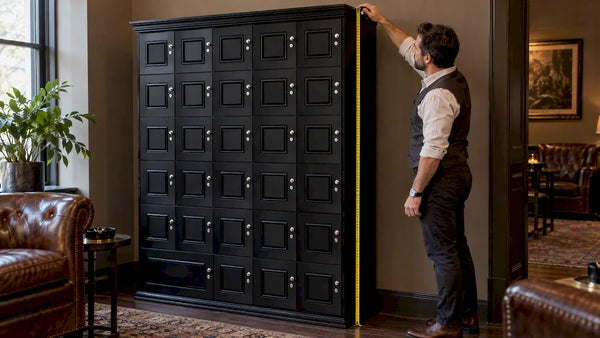
Cigar Locker Dimensions: Sizing Guide for Collectors and Lounges
Cigar locker dimensions explained: compartment sizes, cabinet footprints, capacity math and clearances, so you size a locker bank...
Read Article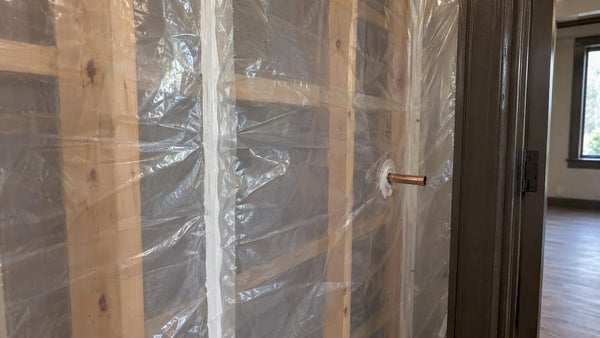
Sealing a Walk-In Humidor: Envelope, Door and Penetrations
How to seal a walk-in humidor properly: vapor barrier placement, door gasket, penetrations and the controlled airflow a...
Read Article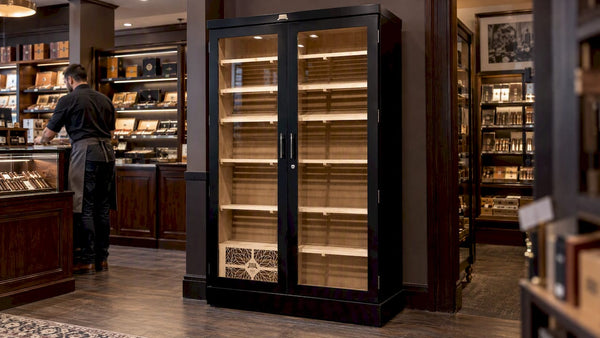
Retail Humidor ROI: How to Measure What a Display Earns
What does a retail or lounge humidor really return? A practical framework for cigar shops, lounges and clubs:...
Read Article