

Discover the ideal humidor humidity controller settings for perfect cigar aging. Start with 66% RH and 66°F to enhance your collection!
Program your humidor controller to 66% relative humidity and 66°F as your starting point, then hold that setting for at least a week before touching it again. That single number covers most collections comfortably within the acceptable operating band of 65–68% RH and 64–70°F. Collectors aging cigars long term should lean toward the lower end, closer to 60–65% RH, to slow development without drying out the wrapper.
TL;DR:
- Maintaining 66% humidity and 66°F for at least a week stabilizes most collections within optimal ranges; lower RH around 60-65% suits long-term aging.
- Most collectors now prefer 65-68% RH and mid-60s temperatures instead of the traditional 70/70 rule, which improves burn quality and flavor consistency.
- RH above 72% invites mold and tobacco beetle eggs, while RH below 60% causes cracks and harsh burning, making precise calibration essential.
- Temperature significantly influences humidity’s effect; keeping storage below 72°F reduces beetle activation risk and ensures more consistent moisture levels.
- Wrapper type influences ideal RH targets, with thin wrappers like Cuban at 62-65% RH and Maduro at around 65%, while delicate Connecticut wrappers prefer 68-70%.
Table of Contents
- What Are the Best Humidor Humidity Controller Settings?
- Why Does Temperature Change What Humidity Actually Does?
- How Should Settings Change by Cigar Type and Storage Length?
- How Do You Calibrate and Monitor a Humidor Controller?
- Two-Way Packs or Electronic Humidifiers: Which Controls Better?
- How Do You Fix Common Humidor Humidity Problems?
- What Does a Bespoke Humidor Practice Look Like Day to Day?
- Impact of Humidor Size and Material on Humidity Control
- What the Data Actually Tells Collectors to Prioritize
- Which Dunnluxuryselections Humidor Fits Your Collection?
- Sources
- FAQ
What Are the Best Humidor Humidity Controller Settings?
The 70/70 rule your uncle swore by is outdated. A modern collector default sits below that old standard, with 65–68% RH and mid-60s temperatures producing a cleaner burn and more consistent flavor across most contemporary blends. Tobacco has changed, curing methods have improved, and the cigars rolled today simply don’t need the swamp conditions that older guidance recommended.
Here’s how that breaks down by purpose:
- Everyday, ready-to-smoke storage: 65–68% RH, 64–68°F, with 66/66 as a sensible fixed target
- Long-term aging: 60–65% RH, 60–65°F to slow the aging process and preserve structure
- Danger zone, high side: sustained RH above roughly 72% invites mold and encourages tobacco beetle eggs to hatch
- Danger zone, low side: RH below 60% starts pulling moisture out of the wrapper, leading to cracking and a harsh, fast burn
Quick Reference: Cigars stored above 72% RH for extended periods create the exact conditions tobacco beetle larvae need to activate. That single number is the line most experienced collectors won’t cross, regardless of what their grandfather’s humidor used to run.
One distinction trips up a lot of new collectors: your controller’s setpoint and your hygrometer’s reading are not always identical. A controller cycles its humidification element to chase a target, but the air inside a wooden cabinet doesn’t respond instantly. Expect natural swings of a percentage point or two around your setpoint as the system corrects itself. That’s normal operation, not malfunction.
Why Does Temperature Change What Humidity Actually Does?
Relative humidity is a percentage, not an absolute measurement, and that distinction matters more than most humidor guides admit. Warm air holds more water vapor than cool air, so 65% RH at 75°F contains meaningfully more moisture pressing against your wrappers than 65% RH at 65°F does. The percentage looks identical on your hygrometer. The tobacco experiences something different entirely.
This is precisely why beetle risk climbs with temperature rather than humidity alone:
- Keeping storage below roughly 72°F sharply reduces the odds of dormant beetle eggs activating
- Mid-60s°F is the safer target for most collections, striking a balance between aging pace and biological risk
- A cigar at 68% RH and 62°F behaves noticeably differently than the same cigar at 68% RH and 74°F, even though both readings say “68%”
A combined thermo-hygrometer, rather than separate gauges, gives you both numbers in one glance, which is the only way to actually judge conditions correctly.
How Should Settings Change by Cigar Type and Storage Length?
Wrapper leaf and origin dictate how much moisture a cigar wants to hold, and treating every stick in your humidor identically is one of the more common oversights collectors make.
- Cuban and other thin-wrapped cigars: target 62–65% RH, leaning drier. Habanos S.A. itself recommends cooler, slightly drier storage around 61–64°F and 65–70% RH for its own production.
- Maduro wrappers: hold around 65% RH. These thicker, fermented leaves turn spongy and lose their signature sweetness at higher humidity, so resist the urge to push past that mark.
- Connecticut shade: these thinner, delicate wrappers prefer 68–70% RH if that’s the only leaf you’re storing. In a mixed humidor, split the difference at 65–68% rather than optimizing for one wrapper type at the expense of others.
That conditioning window lets the wrapper reabsorb moisture evenly rather than burning unevenly from the outside in.
For collectors building a serious aging program, understanding how cigar aging rooms maintain cooler, drier conditions over years rather than months explains why patience at the lower end of the RH range pays off in the glass.
How Do You Calibrate and Monitor a Humidor Controller?
An uncalibrated hygrometer makes every other setting in this article meaningless, so start here. The salt test remains the gold standard: fill a bottle cap with table salt, add a few drops of water to make it damp but not soupy, seal it in a small airtight container with your hygrometer, and leave it for eight hours at room temperature. Whatever it actually reads becomes your offset.
- Run the salt test and record the exact deviation from 75%.
- Enter your controller’s calibration mode. Many electronic units, including NewAir models, use a P1 through P6 menu structure for adjusting temperature and humidity offsets independently.
- Adjust in small increments, one or two percentage points at a time, never a full correction in one move.
- Wait several hours, as manufacturer instructions for units like Cigar Oasis advise, before checking the reading again or making a second adjustment.
- Place your primary sensor near the geometric center of the humidor or on a center shelf, since corners and door-mounted gauges commonly run 2–5% off from the true internal average.
Pro Tip: Log your readings daily for the first week after any controller change, then drop to weekly checks once the environment settles. A single day’s spike rarely tells you anything useful. A dedicated digital hygrometer with logging capability makes this far less tedious than jotting numbers in a notebook.
Two-Way Packs or Electronic Humidifiers: Which Controls Better?
Your humidification method matters just as much as your setpoint, because the delivery system determines how tightly you can actually hold that number.
- Two-way packs (Boveda and similar): these regulate to a precise band, holding roughly ±2% RH with minimal effort. A general dosing guideline is one 60 gram pack per 25 cigars, replaced every two to four months once the packs stiffen and stop absorbing or releasing moisture.
- Passive water-based beads or sponges: less expensive upfront, but they demand more frequent refilling and closer monitoring since they only push moisture in one direction and can overshoot.
- Electronic humidifiers and wineador conversions: the clear choice for larger collections and walk-in installations, since they maintain temperature alongside humidity rather than humidity alone. Look for digital control panels and genuine Spanish cedar interiors.
You can combine two-way packs inside an electronic humidor for redundancy, but watch for conflicts. A pack fighting against an active controller can create readings that never settle.
How Do You Fix Common Humidor Humidity Problems?
Most humidity complaints trace back to one of two failure modes, and both are fixable within a day or two once you know what you’re looking at.
- Too wet: cigars feel spongy or stay dented when pinched. Lower your controller’s RH target and remove any extra humidifier packs until the reading drops back into range.
- Too dry: wrappers crackle or feel brittle to the touch. Raise RH gradually, in small steps, rather than flooding the cabinet all at once.
- Controller running continuously below setpoint: this usually signals an empty reservoir, a failing humidification element, or a door seal that’s lost its grip.
Quick Reference: Seasoning a new wooden humidor with distilled water or a high-RH pack before first use takes several days to a week for the cedar to fully stabilize. Skipping this step is one of the most common reasons a brand-new humidor seems to fight its controller for the first month.
Build a simple routine: check the hygrometer, humidifier reservoir, and door seal weekly; do a full recalibration check monthly. If cigars are showing visible mold or you can’t get the environment to stabilize after two calibration attempts, move the collection to a backup container and consult a professional before the problem spreads.
What Does a Bespoke Humidor Practice Look Like Day to Day?
Belle Dunn and the team at Dunnluxuryselections build bespoke humidors and walk-ins for collectors who don’t have room for guesswork in their storage.
Every white-glove delivery includes a commissioning period: sensors are placed at shelf-center height, not tucked into a corner, and the unit runs for several days before we sign off on final calibration. That patience is the difference between a controller that chases its tail and one that holds steady for years. Full walk-in and electronic humidor installation notes, along with client project details, are documented in our ongoing journal of completed builds.
Impact of Humidor Size and Material on Humidity Control
A ten-count travel case and a 2,000-cigar walk-in do not behave the same way, and treating them identically is a mistake collectors make constantly. Smaller humidors have less air volume to buffer against door openings, so a single check of your collection can swing the RH reading several points before it recovers. Larger cabinets and walk-ins hold their setpoint far more gracefully simply because there’s more air mass absorbing the disturbance.
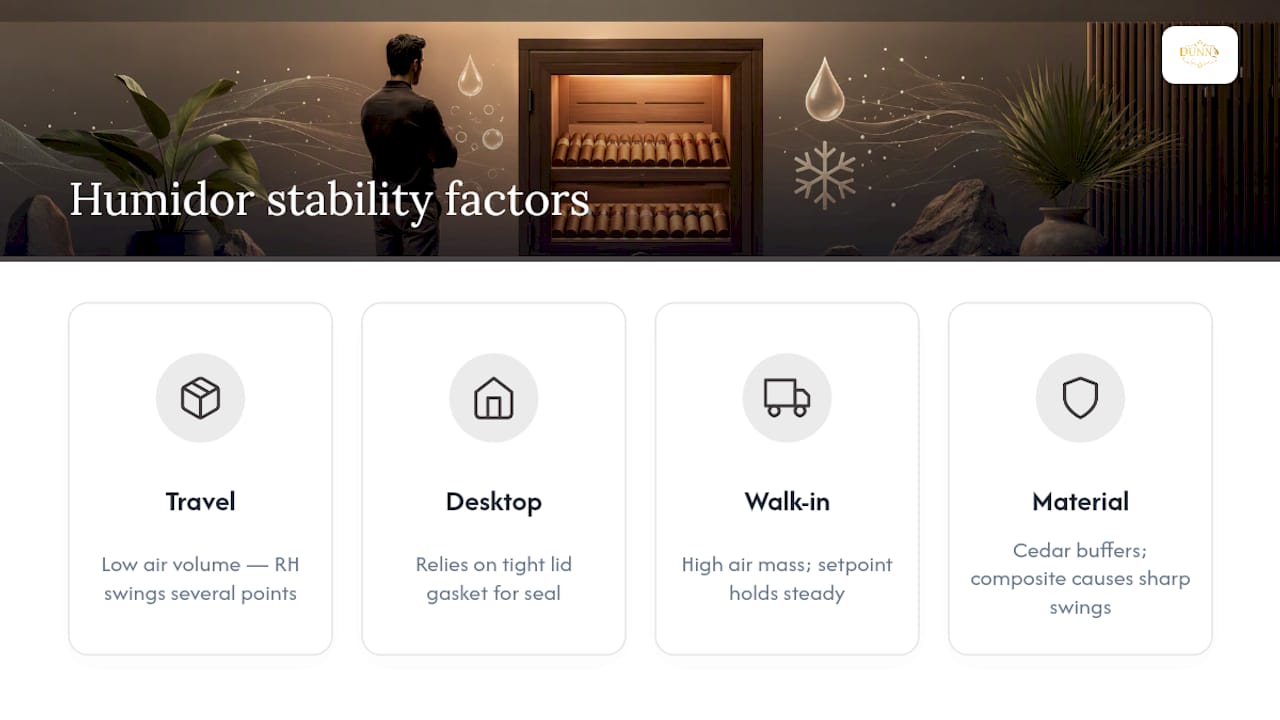
Material matters just as much as size. Genuine Spanish cedar is mildly hygroscopic, meaning it absorbs and releases moisture gradually, which smooths out short-term swings and adds a layer of natural buffering that cheaper composite interiors can’t replicate. A humidor lined with unseasoned or non-cedar material will show sharper, faster fluctuations on the same controller settings, because the interior surfaces aren’t doing any of the moderating work cedar does automatically.
Seal quality scales with size too. A desktop humidor relies on a tight lid gasket; a walk-in relies on a full door seal system plus, often, a dedicated compressor or thermoelectric unit to manage both temperature and humidity across a much larger footprint. This is part of why moisture-sensitive storage principles used for other botanicals prone to humidity damage echo cigar storage logic so closely: volume, material, and seal integrity govern stability far more than the sophistication of the controller itself.
What the Data Actually Tells Collectors to Prioritize
It reflects how tobacco is actually cured and rolled today, and collectors clinging to the old standard are often the ones complaining about spongy burns and muted flavor. What conventional advice consistently underplays is temperature’s role.
If I had to rank priorities for a collector setting up a controller for the first time, calibration comes first, wrapper-specific adjustment comes second, and chasing a “perfect” number comes dead last. Precision means nothing if your baseline reading is wrong. Get the salt test done, place your sensor correctly, and only then start fine-tuning for what’s actually sitting in the cabinet.
— Belle Dunn
Which Dunnluxuryselections Humidor Fits Your Collection?
Once you know your target settings, the harder question is whether your current humidor can actually hold them. A lot of off-the-shelf boxes fight their own controllers because the interior materials and seals were never built for precision in the first place.
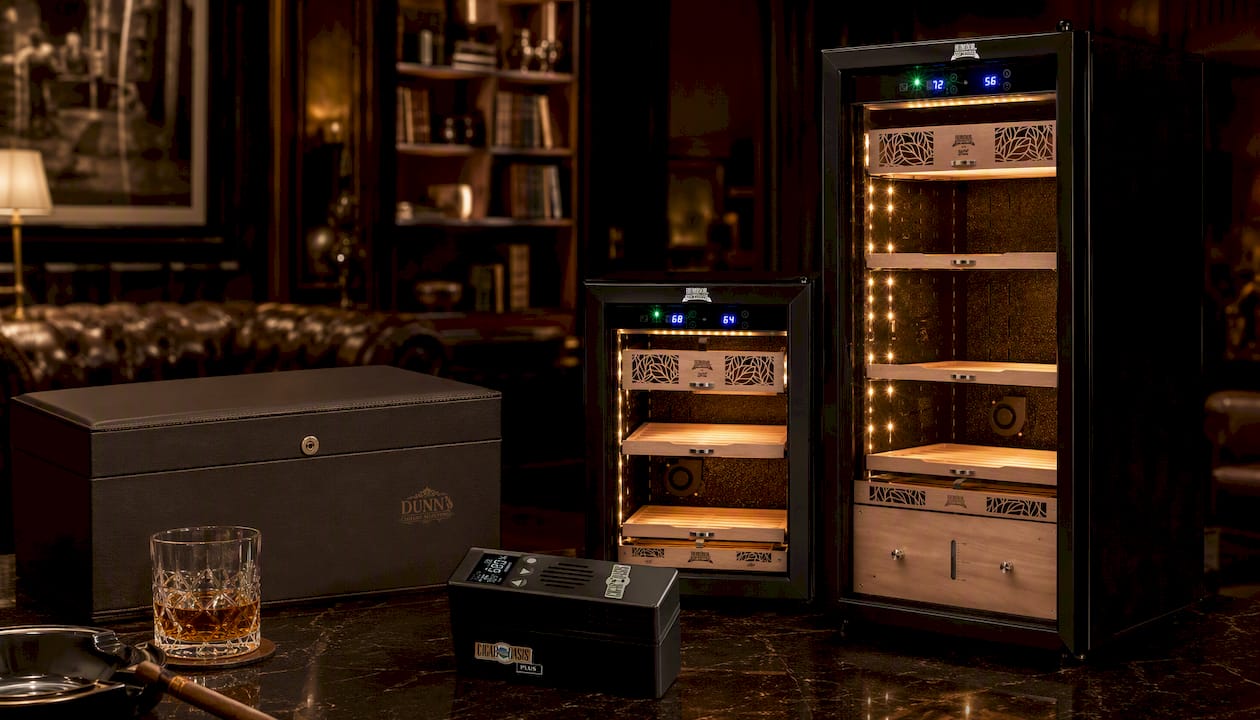
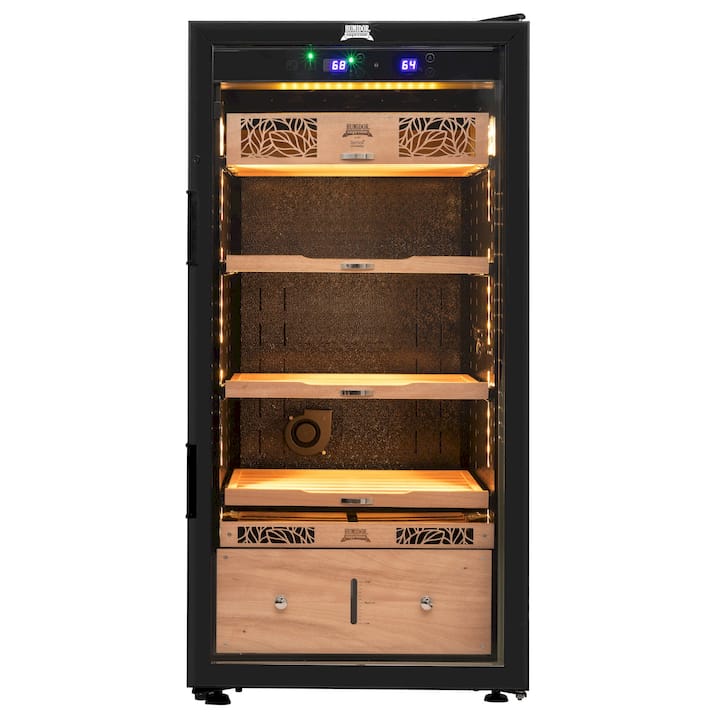
Dunnluxuryselections builds around that problem directly. For a nightstand-sized collection, the Duke desktop humidor delivers precise small-scale control without the footprint of a full cabinet. Collectors who want their cigars visible as well as protected often choose the Milano display humidor, while larger inventories move up to the Bermuda cabinet or the high-capacity Mahogany Cigar Locker. Clubs and shared collections generally land on the 17-locker cabinet, which keeps individual compartments stable independent of how often neighboring lockers get opened. Every model runs on digital controllers set inside genuine Spanish cedar interiors, and every purchase includes white-glove delivery with the same commissioning process described above. Browse the full humidor collection or reach out to schedule a consultation and let us program the right setpoint for what you actually smoke.
Sources
- What Is the Perfect Temperature and Humidity for Cigars? | Teach Me Cigars
- Cigar Humidity Guide: The 70/70 Rule Explained | Cigarro
FAQ
What Temperature Should a Cigar Humidor Be Kept At?
Mid-60s°F is the safest target, and staying below roughly 72°F significantly reduces the risk of tobacco beetle eggs activating.
How Often Should I Check My Humidor’s Humidity?
Check daily for the first week after any controller adjustment, then move to weekly checks once readings stabilize around your setpoint.
Do Cuban Cigars Need Different Humidity Settings?
Yes, Habanos S.A.
Why Does My Cigar Feel Fine but My Hygrometer Reads Wrong?
Sensor placement matters.
Recommended
You May Also Enjoy
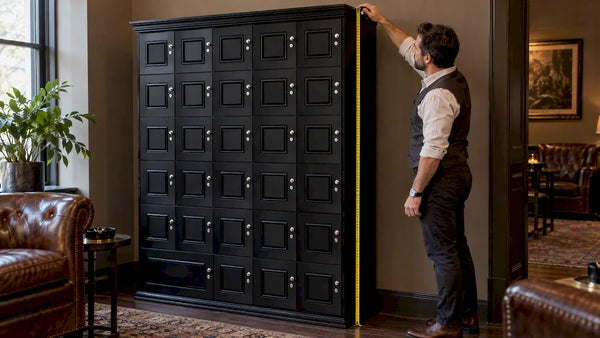
Cigar Locker Dimensions: Sizing Guide for Collectors and Lounges
Cigar locker dimensions explained: compartment sizes, cabinet footprints, capacity math and clearances, so you size a locker bank...
Read Article
Sealing a Walk-In Humidor: Envelope, Door and Penetrations
How to seal a walk-in humidor properly: vapor barrier placement, door gasket, penetrations and the controlled airflow a...
Read Article
Retail Humidor ROI: How to Measure What a Display Earns
What does a retail or lounge humidor really return? A practical framework for cigar shops, lounges and clubs:...
Read Article