

Discover the crucial role of cedar dividers in collections. Enhance cigar flavor, protect investments, and maintain ideal humidity with expert tips.
Cedar dividers are the unsung architecture of a serious cigar collection. In a single sentence: Spanish cedar dividers reduce aroma transfer between cigars, buffer relative humidity swings, deter tobacco beetles, and create organized storage zones that protect your investment over years of aging. Whether you’re curating a desktop humidor or commissioning a walk-in sanctuary, the role of cedar dividers in collections extends far beyond simple organization.
- Aroma isolation: Separates bold and mild cigars so each stick retains its intended flavor profile
- Humidity buffering: Absorbs and releases moisture to smooth RH swings toward the ideal 65–70% RH range
- Pest deterrence: Natural resins in Spanish cedar (Cedrela odorata) passively repel tobacco beetles
- Physical protection: Prevents rolling, crushing, and wrapper abrasion during daily access
Dunnluxuryselections builds every cabinet and walk-in humidor around these principles, pairing bespoke cedar divider systems with precision climate control so your collection ages exactly as the blender intended.
Table of Contents
- 1. How cedar dividers prevent aroma transfer (and when they can’t)
- 2. Cedar’s role in humidity regulation and mold resistance
- 3. Pest deterrence: cedar and tobacco beetles
- 4. How cedar dividers influence aging and flavor development
- 5. Organization and physical protection: using dividers to manage a collection
- 6. Preparing, installing, and maintaining cedar dividers step by step
- 7. What to avoid: materials and mistakes that damage cigars
- 8. Pro-level best practices: organization, inspection, and long-term aging
- Key Takeaways
- Why cedar dividers are the collector’s most overlooked precision tool
- Dunnluxuryselections: bespoke cedar divider systems for serious collectors
- Useful sources and further reading
- FAQ
1. How cedar dividers prevent aroma transfer (and when they can’t)
Cigars communicate. Volatile aromatic compounds migrate through shared airspace, and when a bold Nicaraguan maduro sits against a delicate Connecticut shade for months, the lighter stick absorbs those heavier notes. Cedar dividers reduce this flavor bleed by creating physical separation between brands and strength profiles, acting as an aromatic buffer rather than a hermetic seal.
The mechanism is partial, not absolute. Spanish cedar’s own oils occupy the aromatic space between sections, effectively masking and absorbing competing compounds before they fully migrate. Think of it as a scent corridor that slows transfer rather than stopping it entirely.
- Cellophane-wrapped cigars transfer far less aroma than unwrapped ones; dividers are most critical when storing unwrapped sticks
- Flavored or infused cigars are a different matter entirely: their aromatic compounds are concentrated enough to penetrate cedar over time
- Very strong aromatics (infused, flavored, or heavily oiled wrappers) warrant a separate humidor or sealed cedar box, not just a divider
Pro Tip: If you store infused cigars alongside naturals, place them in a sealed cedar-lined box within the humidor rather than relying on dividers alone. The separation needs to be airtight, not just physical.
2. Cedar’s role in humidity regulation and mold resistance
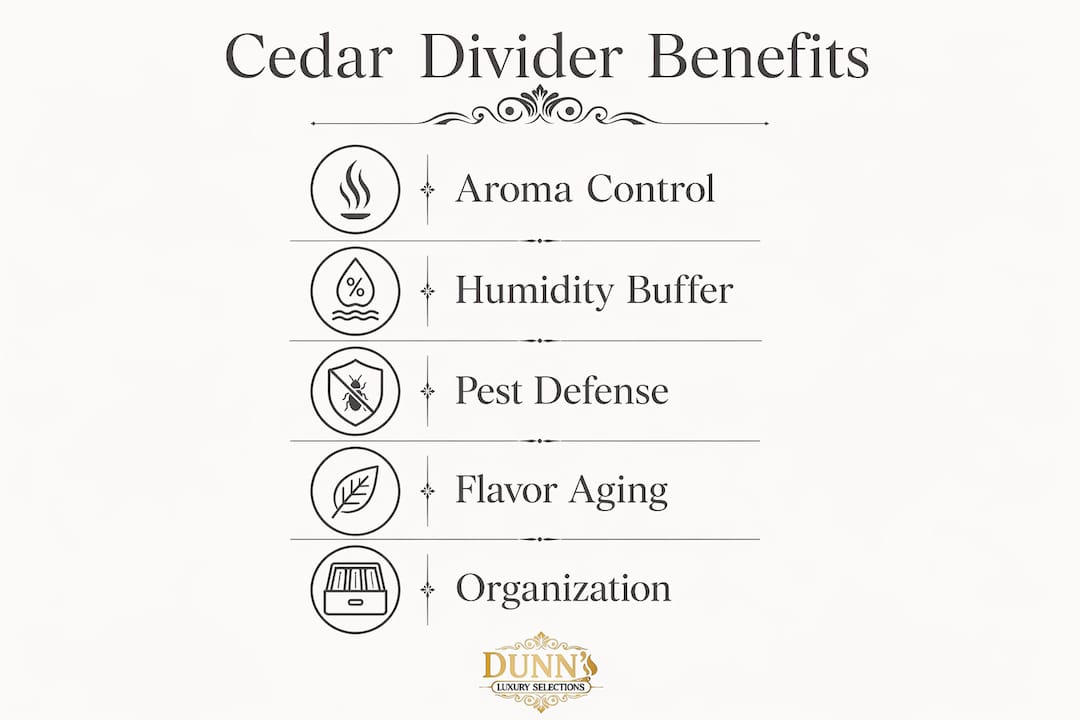
Spanish cedar is hygroscopic: it absorbs excess moisture when RH climbs and releases it when conditions dry out. This behavior makes it an active component in humidification systems, functioning as a biological buffer layer between your humidifier and your cigars.
Dividers amplify this effect by increasing the total surface area of cedar inside the humidor. More cedar means more buffering capacity, which translates to fewer dramatic RH swings that crack wrappers or encourage mold. They also guide airflow, preventing localized pockets of over-humidification near the humidifier and dry zones near the corners.
- Target range: a moderate relative humidity range ideal for most premium long-filler cigars
- Boveda-style two-way packets work synergistically with cedar; the wood handles macro swings while the packets fine-tune the microclimate
- Mold thrives above 75% RH; cedar’s natural resistance to decay adds a passive layer of protection at the wood surface itself
Statistic callout: The recommended storage range of 65–70% RH is widely cited by premium humidor manufacturers and cigar preservation specialists as the sweet spot that balances aging chemistry with wrapper integrity. Cedar dividers help maintain this range by moderating the rate of moisture exchange throughout the interior.
For deeper technical coverage on how cedar sheets interact with humidification systems, Dunnluxuryselections’s guide on cedar sheets in cigar storage covers the science in detail.
3. Pest deterrence: cedar and tobacco beetles
Tobacco beetles (Lasioderma serricorne) are the silent threat in any humidor. They hatch from eggs already present in tobacco leaf and become active when temperatures exceed 72°F. Spanish cedar’s natural resins act as a passive deterrent, making the storage environment less hospitable without any chemical treatment.
- Cedar provides passive resistance, not immunity; it reduces the likelihood of infestation but cannot eliminate it
- New cigars from unknown sources should be quarantined and, if infestation is suspected, frozen before entering your main collection
- Inspect dividers and the humidor floor quarterly for fine tobacco dust or small holes, both early signs of beetle activity
Cedar is your first line of defense against tobacco beetles, not your last. Treat it as a deterrent layer within a broader prevention protocol that includes temperature control, quarantine of new stock, and regular visual inspection.
Over-relying on cedar alone is a collector’s mistake. Keep your humidor below 70°F consistently, and cedar’s aromatic oils will do their job far more effectively.
4. How cedar dividers influence aging and flavor development
The relationship between Spanish cedar and tobacco is chemical, not merely aromatic. Cedar’s oils slowly integrate with tobacco over months to years, mellowing harshness in younger cigars and contributing subtle woody, cedar-forward notes to the overall flavor profile. Collectors call this the “marriage” of the wood and the leaf.
This process requires authentic Cedrela odorata. Inert materials like glass or acrylic can preserve freshness, but they cannot catalyze aging. A cigar stored in a plastic-lined box ages in stasis; one resting against Spanish cedar ages forward.
- Noticeable flavor changes typically emerge after several months of cedar contact; more profound transformation takes multiple years
- Younger, harsher cigars benefit most from cedar proximity; aged premium sticks may need less direct contact to avoid over-cedaring
- The “marriage” works best at stable RH and temperature; fluctuations interrupt the process
Pro Tip: When cedar dividers lose their scent entirely, lightly sand them with 220-grit or higher sandpaper to re-open the wood’s pores and revive the aromatic oils. If sanding no longer restores any cedar fragrance, it’s time to replace the divider.
5. Organization and physical protection: using dividers to manage a collection
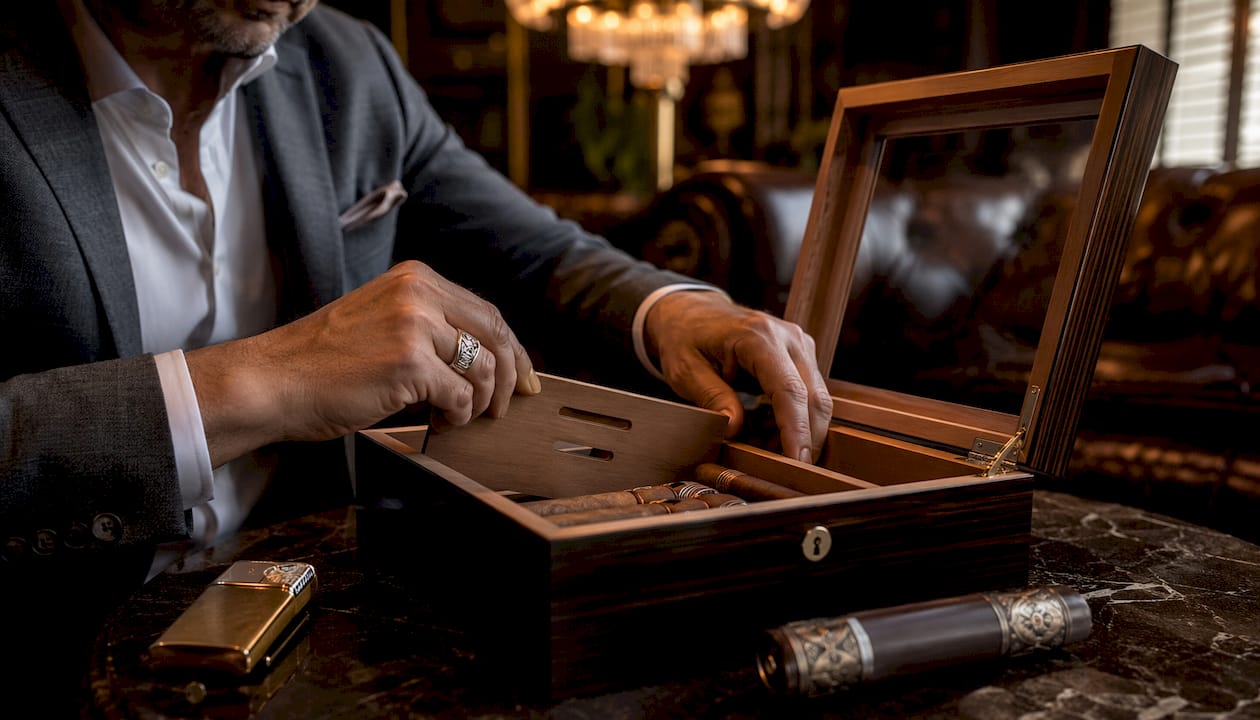
Think of your humidor’s interior as a well-curated cellar. Dividers create functional zones that make inventory visible, prevent crushing, and protect the financial value of every stick. Without them, cigars shift, wrappers abrade against each other, and older sticks get buried under newer arrivals.
Practical zone strategies for collectors:
- By strength: Mild, medium, and full-bodied sections prevent aroma migration and make selection intuitive
- By aging timeline: Separate “ready now” sticks from those still developing; rotate the front row regularly
- By wrapper type: Natural, maduro, and candela wrappers each carry distinct aromatics worth isolating
- Sample rotation zone: A dedicated front section for singles you’re actively evaluating keeps the rest of the collection undisturbed
For physical protection, V-cut slotted cedar supports cradle individual cigars and prevent rolling. Vertical stacking with cedar slats between layers distributes weight evenly. In larger cabinet humidors like the Bermuda Cabinet, a “second-floor” cedar tray system creates distinct aging tiers within a single enclosure.
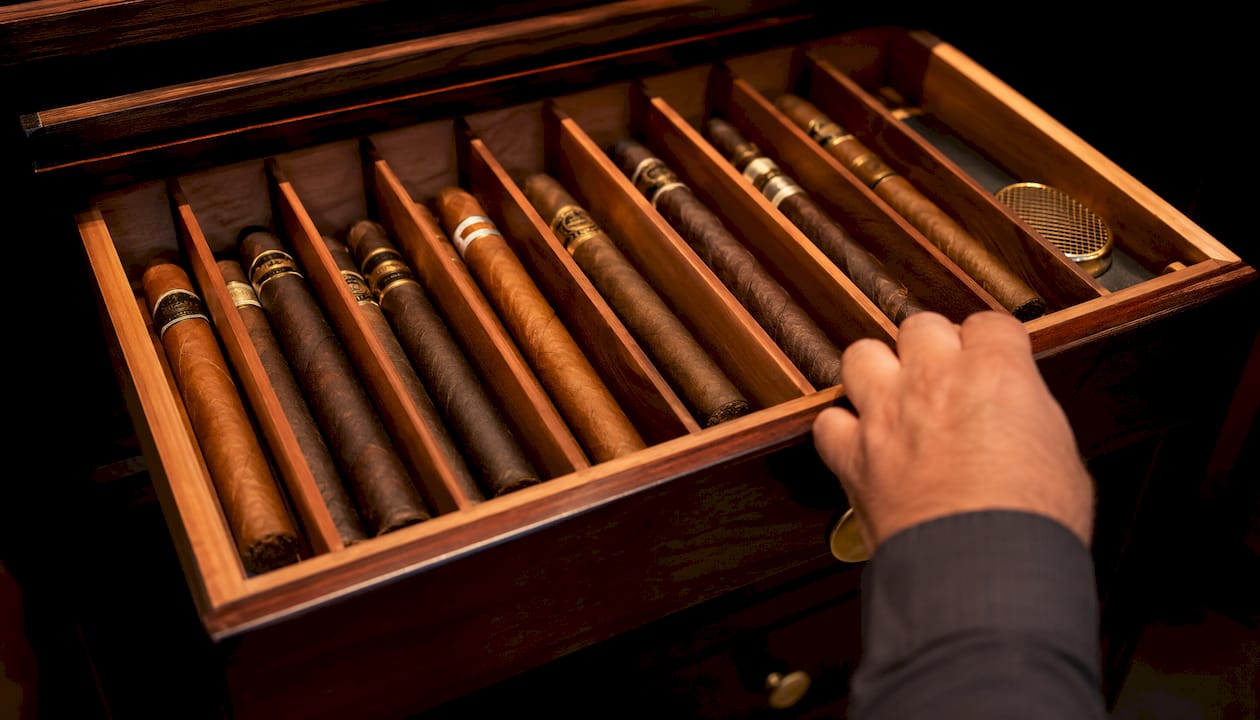
6. Preparing, installing, and maintaining cedar dividers step by step
Proper preparation separates a divider that performs from one that sits inert. Follow this sequence before placing any new cedar inside your humidor.
- Measure precisely. Record width, depth, and height at the exact point of placement. Handcrafted humidors often taper toward the base or lid; a measurement taken at the opening will not match the interior floor.
- Sand lightly. Use 220-grit sandpaper to open the cedar’s pores before first use. This activates aromatic oil release and improves moisture exchange from day one.
- Season new dividers. Wipe with a barely damp, distilled-water cloth and allow to dry inside the closed humidor for 24–48 hours before adding cigars. Do not soak; cedar swells and can warp under excess moisture.
- Install with clearance. Leave a 1/16-inch gap on each side to allow for natural wood expansion and to maintain airflow around the divider’s edges. Never press a divider tightly against the humidor lining.
- Avoid blocking humidifiers or hygrometers. Position dividers so they do not obstruct airflow from your humidification source or the sensor face of your hygrometer.
- Inspect quarterly. Check for warping, mold spots, or aromatic decline. A divider that smells neutral has exhausted its oil reserves.
- Sand or replace on schedule. Light sanding every 12–18 months revives performance. Full replacement is warranted when sanding no longer restores scent, typically after several years of continuous use.
Pro Tip: For desktop humidors like the Duke series, measure twice and cut once. A divider that’s even 1/8 inch too wide will bow the lining and compromise the seal.
7. What to avoid: materials and mistakes that damage cigars
Not every divider material earns a place in a serious collection. The wrong choice can do more harm than no divider at all.
Materials to avoid:
- Cardboard: Absorbs moisture unpredictably, harbors mold, and contributes no aromatic benefit
- Pine: Off-gasses resinous compounds that transfer directly to tobacco and permanently alter flavor
- Painted or lacquered wood: Solvents and VOCs from coatings migrate into the humidor environment and onto wrapper leaves
- Plastics and acrylics: Many off-gas plasticizers, especially at elevated temperatures; they also provide zero humidity buffering
Installation mistakes:
- Ill-fitting dividers that slide freely will shift during access and abrade wrappers
- Dividers pressed too tightly against cedar lining can crack the interior finish and create pressure points that damage the humidor’s seal
- Blocking the humidifier port with a divider creates a moisture gradient that over-humidifies one zone while starving another
Never place a foreign material inside a humidor without confirming it is unfinished, untreated wood or food-safe material. Chemical off-gassing from painted wood or plastic is irreversible: once those compounds absorb into a wrapper, no amount of aging corrects the damage.
8. Pro-level best practices: organization, inspection, and long-term aging
Serious collectors treat their humidors the way a sommelier treats a wine cellar: with documented inventory, disciplined rotation, and scheduled maintenance.
FIFO rotation and inventory management:
Adopt a First-In, First-Out rotation protocol. Divider zones support FIFO by keeping older cigars at the front of each section, visible and accessible. A simple log (even a notes app) recording acquisition date, brand, and zone prevents “forgotten cigar” syndrome, where a premium stick ages past its peak unnoticed.
- Log each new acquisition with date, brand, strength, and target aging window
- Move older sticks forward during every restocking session
- Flag any cigar approaching a 5-year mark for priority evaluation
Inspection routine:
- Quarterly: Visual check for mold, beetle dust, wrapper cracking, and divider warping
- Biannual: Calibrate your hygrometer against a salt test or a calibration kit; cedar’s buffering can mask a drifting sensor
- Annual: Full inventory audit; assess whether divider zones still match your current collection profile
Integrating dividers with humidification technology:
In electronic cabinet humidors, cedar dividers work alongside precision climate control rather than replacing it. The Raching MON800A maintains temperature and RH within tight tolerances; cedar dividers inside such a cabinet handle micro-zone stability and aromatic contribution. For walk-in installations, Dunnluxuryselections’s consultation process includes custom divider layout planning as part of the bespoke design.
Pro Tip: Pair Boveda 69% packets with cedar dividers in each zone rather than relying on a single humidifier for the whole cabinet. Zone-level humidity control is far more precise and protects against localized RH drift.
Key Takeaways
Spanish cedar dividers are the most cost-effective preservation tool in a collector’s humidor, simultaneously buffering humidity, deterring pests, isolating aromas, and catalyzing the aging chemistry that transforms a good cigar into a great one.
| Point | Details |
|---|---|
| Aroma isolation | Cedar dividers separate bold and mild cigars, preserving each stick’s intended flavor profile. |
| RH buffering | Spanish cedar absorbs and releases moisture, helping maintain the ideal 65–70% RH range. |
| Pest deterrence | Natural cedar resins passively repel tobacco beetles; pair with temperature control below 70°F. |
| Maintenance schedule | Sand dividers every 12–18 months; replace when sanding no longer restores cedar fragrance. |
| Dunnluxuryselections | Offers bespoke cedar divider systems, cabinet and walk-in humidors, and white-glove installation consultation. |
Why cedar dividers are the collector’s most overlooked precision tool
Most collectors spend thousands on a premium humidor and then treat the dividers as an afterthought. That’s the gap worth addressing. Cedar dividers aren’t decorative inserts; they’re functional components of the aging environment, as consequential as the humidifier or the hygrometer. The wood’s hygroscopic behavior, aromatic oil chemistry, and passive pest resistance all depend on using authentic Spanish cedar in good condition, installed correctly, and maintained on a real schedule.
What collectors underestimate is the cumulative effect of neglected dividers. A cedar panel that has exhausted its aromatic oils still looks fine. It still separates your cigars physically. But it has stopped buffering humidity at the micro level, stopped contributing to the aging chemistry, and stopped deterring beetles. The humidor appears to be working while one of its most important systems has quietly gone offline. Replacing or reviving dividers on a 12–18 month sanding cycle and a multi-year replacement schedule is the kind of discipline that separates a collection that ages beautifully from one that merely survives.
Dunnluxuryselections: bespoke cedar divider systems for serious collectors
For collectors who want their humidor to function as a precision aging instrument, Dunnluxuryselections offers something most retailers cannot: cedar divider systems sized and configured specifically for your collection’s profile, installed inside cabinets and walk-in humidors built to exacting standards. The Humidor Supreme 9200 Series Double-Door Electronic Humidor arrives ready for custom divider configuration, and the Barbatus Cabinet Humidor accommodates multi-zone cedar tray layouts for collections of 2,000 cigars and beyond.

Every Dunnluxuryselections project includes expert consultation on divider placement, zone planning, and humidification pairing. White-glove delivery and installation guidance mean your collection is protected from the first cigar placed inside. Whether you’re outfitting a desktop humidor or commissioning a walk-in sanctuary, the team at Dunnluxuryselections brings the precision your collection deserves. Visit dunnluxuryselections.com to consult on a custom cedar divider configuration for your humidor.
Useful sources and further reading
- Aging interaction between wood aromatics and organic products — Peer-reviewed research on how wood-derived aromatic compounds interact with organic materials over time; foundational science behind cedar’s aging contribution.
- Why is Spanish Cedar used in humidors? — Covers hygroscopic behavior, pest resistance, and aromatic oil contribution in accessible detail.
- Humidor Divider: No Aroma Transfer — Concise explanation of how dividers prevent flavor bleed between cigar brands and strength profiles.
- Spanish Cedar: Why It’s the Best Wood for Cigar Aging — Detailed breakdown of Cedrela odorata’s properties and why no substitute performs comparably.
- How to organize a humidor — Practical guidance on divider installation, material selection, FIFO rotation, and maintenance schedules.
- What is the best wood to store cigars in? — Compares cedar against alternative woods and explains why organization with cedar dividers protects long-term collection value.
- 7 Best Cedar Dividers for Organizing Cigar Collections — Actionable prep and sanding instructions for new and used cedar dividers.
- Dunnluxuryselections Care Guides — Humidor seasoning, hygrometer calibration, and long-term maintenance routines from Dunnluxuryselections’s expert team.
FAQ
What do cedar dividers actually do for cigars?
Cedar dividers reduce aroma transfer between cigars, buffer relative humidity toward the 65–70% RH range, passively deter tobacco beetles through natural resins, and create organized storage zones that prevent physical damage to wrappers.
How often should cedar dividers be replaced?
Lightly sand dividers periodically to revive aromatic oils; replace them entirely when sanding no longer restores any cedar fragrance after extended use.
Can cedar dividers replace a proper humidifier?
No. Cedar dividers buffer micro-level humidity swings and extend the stability created by a humidifier, but they cannot generate or maintain the moisture level on their own. They work best paired with a calibrated humidification system.
What materials should never be used as humidor dividers?
Avoid cardboard, pine, painted or lacquered wood, and plastics. These materials either off-gas chemicals that damage wrappers, fail to manage moisture correctly, or introduce mold risk into the storage environment.
Do cedar dividers help with tobacco beetle prevention?
Spanish cedar’s natural resins provide passive deterrence against tobacco beetles, but cedar alone is not sufficient. Keep the humidor below 70°F, quarantine new cigars before adding them to your collection, and inspect quarterly for signs of infestation.
Recommended
You May Also Enjoy
Cigar Locker Dimensions: Sizing Guide for Collectors and Lounges
Cigar locker dimensions explained: compartment sizes, cabinet footprints, capacity math and clearances, so you size a locker bank...
Read Article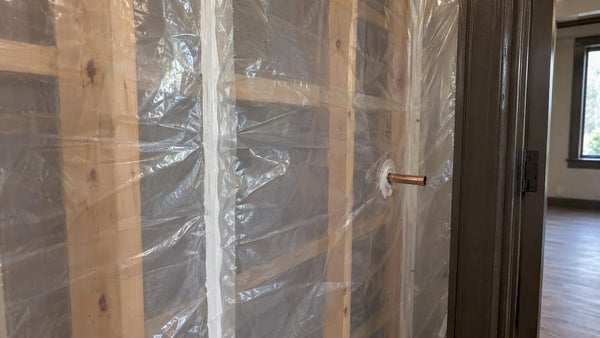
Sealing a Walk-In Humidor: Envelope, Door and Penetrations
How to seal a walk-in humidor properly: vapor barrier placement, door gasket, penetrations and the controlled airflow a...
Read Article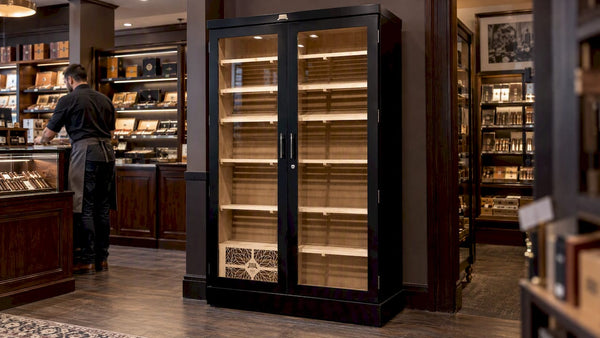
Retail Humidor ROI: How to Measure What a Display Earns
What does a retail or lounge humidor really return? A practical framework for cigar shops, lounges and clubs:...
Read Article