

Discover the role of humidification systems in enhancing health and comfort. Learn how proper humidity levels protect you and your environment.
Humidification systems serve one foundational purpose: adding controlled water vapor to indoor air to maintain relative humidity at levels that protect human health, preserve materials, and sustain comfort. Without that moisture balance, respiratory mucous membranes dry out, airborne pathogens persist longer, and the environments we inhabit become quietly hostile. Whether you are managing a clinical ward, a commercial office, or a sanctuary built to age fine cigars to perfection, the mechanics and consequences of humidity control are the same science, applied with different precision.
The primary functions of a well-designed humidification system include:
- Respiratory protection: Keeping mucous membranes hydrated so the body’s natural defenses against infection remain intact
- Occupant comfort: Preventing dry skin, eye irritation, and static electricity that accompany low relative humidity
- Infection risk management: Maintaining mid-range humidity levels where many airborne pathogens survive less effectively
- Material preservation: Protecting wood, paper, electronics, and organic materials from the destructive effects of dry air
- Indoor environmental stability: Supporting HVAC efficiency and reducing the energy cost of heating dry air
How humidification systems actually work
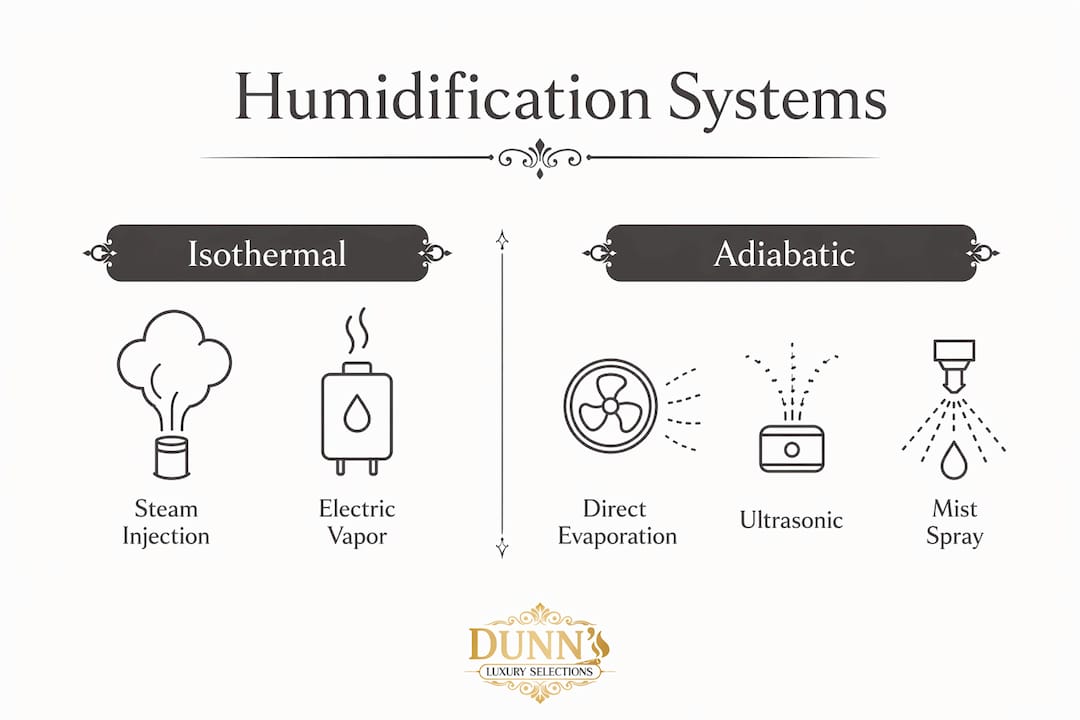
The mechanics of adding moisture to air are straightforward in principle and surprisingly complex in practice. Every humidification system converts liquid water into vapor and introduces that vapor into an airstream, but the method of conversion determines the system’s thermal behavior, energy demand, and suitability for a given environment.
The two fundamental process types
Isothermal humidification uses external energy, typically electricity or steam from a boiler, to vaporize water before it contacts the airstream. Because the steam arrives already converted, the air temperature stays essentially unchanged during the humidification process. ASHRAE guidelines classify direct steam injection units as the clearest example of this category. They are common in hospitals and pharmaceutical facilities where precise, hygienic moisture delivery is non-negotiable.
Adiabatic humidification draws the energy for vaporization directly from the airstream itself, which causes a measurable drop in air temperature. Evaporative systems, atomizing units, and ultrasonic humidifiers all fall into this category. Because they introduce water droplets or fine mist directly into the airstream, atomizing units are considered aerosol-generating, while evaporative units, where air simply passes over a wetted medium, are not.
System types at a glance
| System Type | Process | Temperature Effect | Typical Use |
|---|---|---|---|
| Direct steam injection | Isothermal | Neutral | Hospitals, labs, commercial HVAC |
| Electric steam | Isothermal | Neutral | Offices, precision environments |
| Evaporative (wetted media) | Adiabatic | Cooling | Residential, light commercial |
| Ultrasonic | Adiabatic | Slight cooling | Residential, specialty storage |
| Atomizing (high-pressure) | Adiabatic | Cooling | Industrial, large commercial |
Control strategies and HVAC integration
Humidity sensors and humidistats form the control backbone of any system. Most humidistats deliver an on/off or modulating signal as humidity drifts from the set point, and many include a setback feature that lowers the relative humidity target as outdoor temperatures drop, reducing condensation risk inside the building envelope. High-limit sensors are typically set to a high relative humidity level to prevent duct saturation and protect downstream components.
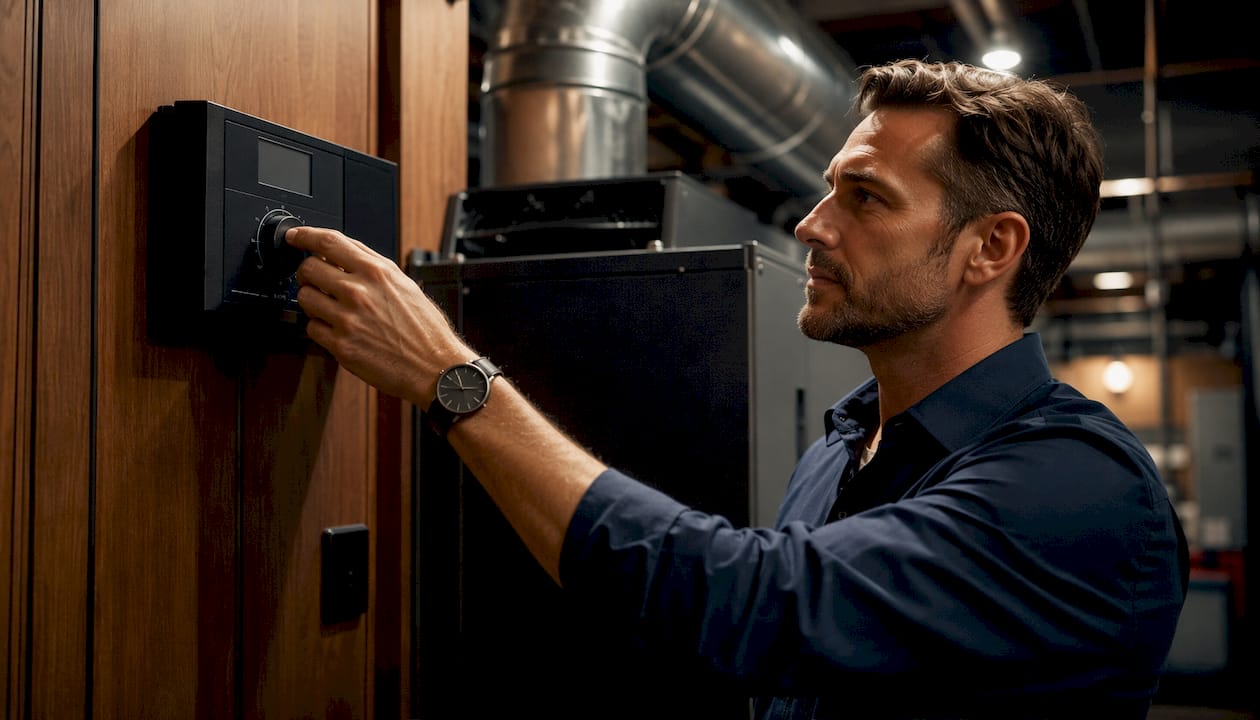
Sensor placement is where many installations fail quietly. The moisture mixing mass in a duct requires adequate distance between the humidifier discharge and the sensor location. Place the sensor too close, and the system short-cycles; place it too far downstream, and the control loop responds too slowly to maintain stable conditions. Airflow sensors should always accompany fan interlocks to prevent humidifier operation when airflow is insufficient to carry vapor without condensation.
Maintenance is not optional. Reservoirs, wetted media, and drain pans are surfaces where microbial growth begins when cleaning schedules slip. The hygiene of the humidification system is inseparable from its function.
Why humidification matters for respiratory health
The human airway is a conditioning system in its own right. Inspired air travels through the nasal passages, where it is warmed, filtered, and humidified before reaching the lower airways. That process depends entirely on intact, hydrated mucous membranes. When those membranes dry out, the consequences cascade quickly.
Humidification therapy restores the physiologic conditions that the upper airway normally provides, particularly when that airway is bypassed by an endotracheal tube, tracheostomy, or high-flow oxygen delivery. Without adequate moisture in inspired gas, secretions thicken, mucociliary clearance slows, and the airway epithelium sustains direct injury. The clinical consequences range from patient discomfort to tube occlusion and ventilator-associated complications.
Clinical evidence for therapeutic humidification
Research on non-invasive ventilation (NIV) has produced some of the clearest data on what happens when humidification is absent or inadequate:
- Nasal mucosa deterioration: Inadequate gas conditioning during NIV causes measurable anatomical and functional deterioration of nasal mucosa, including reduced ciliary activity, altered mucus secretion, and increased nasal airway resistance.
- Patient adherence: Dryness-related symptoms during NIV begin to appear when absolute humidity falls below 15 mgH2O/L, and patients breathing unhumidified air score discomfort significantly higher than those receiving heated humidification.
- Work of breathing: Studies comparing heated humidification to heat and moisture exchangers (HMEs) during acute NIV found that HMEs increase inspiratory effort and are associated with higher arterial carbon dioxide levels, particularly in patients with hypercapnia.
- Oxygen fraction effects: As inspired oxygen fraction rises above 60%, absolute humidity drops proportionally, making supplemental humidification increasingly critical for patients on high-flow oxygen.
- Duct humidity and RH: Without humidification, relative humidity inside an NIV circuit can fall to the 16–26% range, well below ambient levels, and returns to adequate values only when heated humidification is applied.
Beyond the clinical setting, the same principle applies in any environment where people breathe dry air for extended periods. REHVA research confirms that dry indoor air dries mucosal membranes and weakens the body’s first line of defense against airborne infection. The connection between building humidity and occupant respiratory health is not theoretical; it is documented across epidemiological and clinical literature alike.
How humidity control shapes indoor environmental quality
The benefits of a well-calibrated humidification system extend well beyond the respiratory tract. Relative humidity between 30% and 50% represents the range where human comfort, material integrity, and pathogen suppression converge most favorably.
ASHRAE’s indoor climate guidance identifies low relative humidity as a direct cause of eye irritation, skin dryness, and static electricity, all of which affect occupant productivity and comfort. Static discharge damages sensitive electronics and disrupts manufacturing processes. Dry skin and irritated eyes are not trivial complaints; in office environments, they correlate with reduced concentration and increased sick days.
Key environmental benefits of maintaining optimal indoor humidity:
- Pathogen suppression: A systematic review of 24 studies found that increasing relative humidity from low to mid-range levels was associated with decreased persistence, infectivity, and survival of influenza virus. For SARS-CoV-2, increasing from mid to high relative humidity was associated with decreased virus survival.
- Skin and eye comfort: Adequate humidity prevents the transepidermal water loss that causes dry, cracked skin and the tear-film instability that produces eye irritation.
- Static electricity control: Humidity above moderate levels helps dissipate electrostatic charge, protecting both people and electronic equipment.
- Wood and material preservation: Organic materials, including the Spanish cedar lining of a fine humidor, absorb and release moisture in response to ambient humidity. Stable humidity prevents warping, cracking, and dimensional instability.
- HVAC energy efficiency: Properly humidified air feels warmer at lower thermostat settings, reducing heating load during winter months.
Statistic callout: ASHRAE notes that maintaining relative humidity within a moderate range provides favorable conditions for human occupancy, minimizing biological organism growth and chemical interaction rates in the indoor environment.
The benefits are not uniform across all building types. Hospitals require tighter control than offices because immunocompromised patients face greater risk from both under-humidification and over-humidification. Commercial cigar storage environments, like the bespoke walk-in humidors Dunnluxuryselections designs and builds, demand precision that rivals clinical standards. The integrated humidification technology behind a luxury humidor is the same discipline applied to a different, equally exacting purpose.
What goes wrong when humidification is poorly managed
Excess humidity is as damaging as too little. The risks are well-documented, and they share a common origin: water vapor condensing on surfaces that cannot dry quickly enough to prevent microbial colonization.
The primary hazards of excessive or poorly controlled humidity:
- Condensation and structural damage: When indoor dew point exceeds surface temperatures, moisture condenses on walls, windows, and inside building assemblies, leading to material degradation and mold growth.
- Mold and dust mite proliferation: High indoor humidity favors mold colonies and dust mite populations, both of which are established triggers for asthma and allergic rhinitis.
- Bacterial and fungal release from humidifiers: Mayo Clinic warns that dirty humidifiers can release mold or bacteria into the air, triggering flu-like symptoms or lung illness even in otherwise healthy individuals. Evaporative and steam vaporizer systems tend to release fewer airborne allergens than cool-mist ultrasonic units.
- HVAC system contamination: Cooling coils, drain pans, and humidifier reservoirs are surfaces where stagnant water and microbial growth can turn the ventilation system itself into a contamination source.
- Worsened asthma and allergy symptoms: Both the mist from a dirty humidifier and the allergens produced by high-humidity environments can trigger or worsen respiratory conditions.
The dew point threshold matters more than most building managers realize. ASHRAE’s damp building guidance recommends using an indoor dew point temperature of 60°F (15°C) as the threshold of concern, rather than relying on relative humidity readings at the thermostat. Relative humidity at the thermostat is misleading because air and surface temperatures vary widely throughout any building. A space that reads 50% relative humidity at the thermostat may have surfaces cold enough to condense moisture and sustain mold growth. Dew point monitoring catches that risk; a simple RH reading does not.
The balance required is precise. Under-humidify, and you compromise respiratory health and material integrity. Over-humidify, and you invite biological contamination and structural damage. Neither extreme is acceptable in a well-managed environment.
Expert best practices for effective humidification control
Getting humidification right in a building requires more than selecting the correct system type. Control strategy, sensor placement, and integration with the broader HVAC system determine whether a well-specified humidifier actually delivers the environment it promises.
Pro Tip: Use dew point temperature, not relative humidity at the thermostat, as your primary moisture risk indicator. ASHRAE recommends a 60°F (15°C) indoor dew point as the threshold of concern. A building that reads 50% RH at the thermostat can still have surfaces cold enough to condense moisture and support mold growth.
Control strategy recommendations
- Dew point over RH: Monitoring indoor dew point provides a more reliable moisture risk indicator than relative humidity because it reflects the actual mass of water vapor available for condensation, regardless of local temperature variation.
- Sensor placement discipline: Place humidity sensors far enough downstream of the humidifier discharge to allow complete moisture mixing. The exact distance depends on duct geometry and airflow velocity; REHVA guidance specifies that improper sensor location results in poor humidity regulation and system instability.
- High-limit protection: Install high-limit humidistats, typically set to 85–90% relative humidity, in the duct downstream of the humidifier to prevent saturation and protect the system from short cycling.
- Airflow interlocks: Use airflow sensors rather than simple fan interlocks. A fan can run without adequate airflow through the humidifier section, and operating a humidifier under those conditions causes condensation and potential microbial growth.
- Setback control: Program humidity set points to decrease as outdoor temperatures drop. Cold outdoor air carries less moisture, and maintaining high indoor humidity during cold weather increases vapor pressure on the building envelope, raising condensation risk inside wall assemblies.
- Zonal isolation: If the humidified space adjoins an uncontrolled space, isolate them or account for the combined volume. Water vapor equalizes rapidly across connected spaces, and an uncontrolled adjacent zone will absorb moisture intended for the controlled area.
- Maintenance scheduling: Clean reservoirs, replace wetted media, and inspect drain pans on a fixed schedule. Microbial growth in humidification components does not announce itself until it has already compromised air quality.
Integration with HVAC design
Humidification does not operate in isolation. The humidification load depends primarily on the rate of natural infiltration and the volume of outdoor air introduced mechanically. Cold outdoor air in winter carries very little moisture, which is why heating seasons consistently produce the lowest indoor humidity levels and the highest humidification demand. Calculating the true energy requirement for a humidification system requires accounting for the actual humidity level in the building, not a theoretical design value, as ASHRAE notes in its humidifier application guidance.
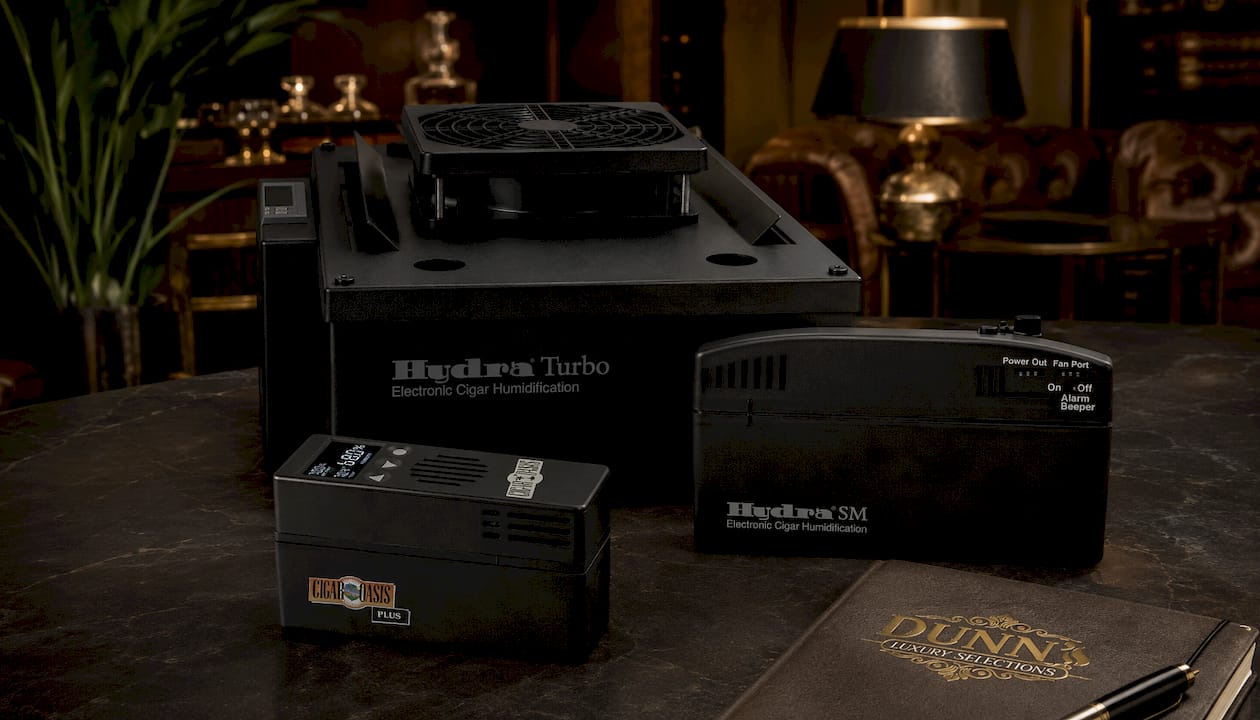
For environments where precision is a point of pride, whether a hospital isolation room or a walk-in cigar humidor housing a collection worth tens of thousands of dollars, the HYDRA TURBO Commercial Electronic Humidifier represents the category of purpose-built, electronically controlled systems that deliver the stability these environments demand. Collectors who store cigars in cabinet or desktop configurations will find the same philosophy of precision control in the HYDRA SM Electronic Cigar Humidifier, a system designed specifically for the exacting humidity requirements of fine tobacco preservation.
Dunnluxuryselections: precision humidification for collectors who demand more
At Dunnluxuryselections, we understand that a cigar collection is not merely an inventory. It is a timeline of memories, a legacy in progress, and an investment that rewards only those who protect it with the same care that went into building it. The role of humidification in that protection is absolute. A humidor without precise moisture control is not a humidor; it is a cabinet.
Our bespoke walk-in humidors and electronic humidor collections are engineered around the same principles that govern clinical and commercial humidification: dew point awareness, sensor-driven control, and materials selected for their hygroscopic stability. Spanish cedar lining is not an aesthetic choice alone; it is a humidity buffer that moderates moisture fluctuations between system cycles. Every element serves the ecosystem.
For collectors seeking a complete humidification solution, the Cigar Oasis Plus delivers electronically regulated humidity with the reliability that a serious collection requires. Explore the full range at Dunnluxuryselections and consult with our team to find the system calibrated to your collection’s scale and ambition.
Key Takeaways
Humidification systems protect respiratory health, preserve materials, and suppress airborne pathogens by maintaining indoor relative humidity in the 30–60% range, with dew point monitoring providing the most reliable moisture risk control.
| Point | Details |
|---|---|
| Primary function | Humidification systems add controlled water vapor to maintain indoor humidity and protect respiratory mucous membranes. |
| Optimal humidity range | ASHRAE identifies 30–60% relative humidity as the range that minimizes biological organism growth and supports occupant health. |
| Dew point over RH | A 60°F (15°C) indoor dew point threshold is a more reliable moisture risk indicator than relative humidity at the thermostat. |
| Clinical respiratory benefit | Absolute humidity below 15 mgH2O/L during NIV causes measurable dryness symptoms and reduces patient adherence to ventilatory treatment. |
| Maintenance is non-negotiable | Dirty humidifiers release mold and bacteria into the air; regular cleaning of reservoirs, media, and drain pans prevents system-generated contamination. |
FAQ
What is the primary purpose of a humidification system?
A humidification system’s primary purpose is to add water vapor to indoor air to maintain relative humidity at levels that protect respiratory health, occupant comfort, and material integrity. ASHRAE identifies the 30–60% relative humidity range as optimal for human occupancy.
What are the downsides of using a humidifier?
Poorly maintained humidifiers can release mold and bacteria into the air, triggering respiratory symptoms and worsening asthma or allergies. Excessive humidity above 60% relative humidity promotes condensation, mold growth, and dust mite proliferation, creating health risks that outweigh the benefits of humidification.
What are the basic principles of humidification?
Humidification works by converting liquid water into vapor through either isothermal processes, which use external energy such as steam, or adiabatic processes, which draw energy from the airstream itself through evaporation or atomization. Control systems use humidity sensors and humidistats to maintain a set point and prevent over-humidification.
How does humidity affect airborne virus transmission?
A systematic review of 24 studies found that increasing relative humidity from low to mid-range levels was associated with decreased persistence, infectivity, and survival of influenza virus indoors. For SARS-CoV-2, increasing from mid to high relative humidity was associated with decreased virus survival, though results vary by virus type, temperature, and exposure time.
Why is dew point monitoring better than relative humidity for moisture control?
Relative humidity at the thermostat is misleading because air and surface temperatures vary widely throughout a building. ASHRAE recommends monitoring indoor dew point temperature, using 60°F (15°C) as the threshold of concern, because dew point reflects the actual mass of water vapor available for condensation regardless of local temperature variation, making it a more reliable early warning of moisture and microbial growth risk.
Recommended
You May Also Enjoy
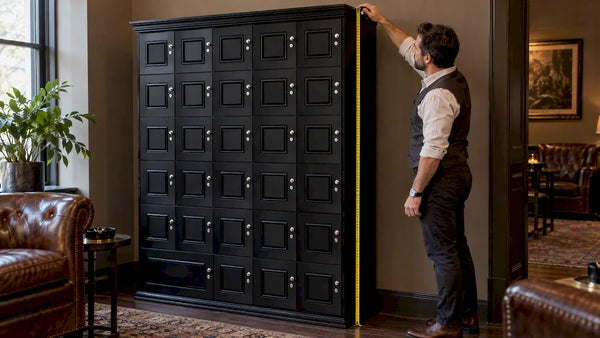
Cigar Locker Dimensions: Sizing Guide for Collectors and Lounges
Cigar locker dimensions explained: compartment sizes, cabinet footprints, capacity math and clearances, so you size a locker bank...
Read Article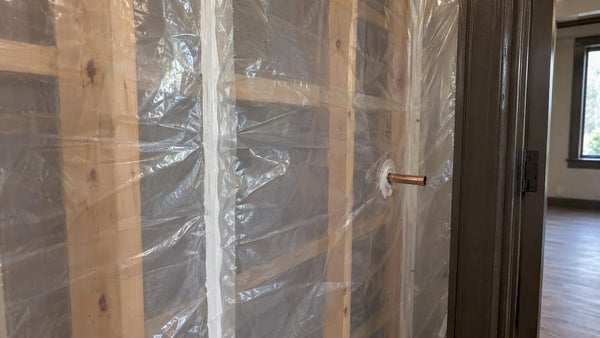
Sealing a Walk-In Humidor: Envelope, Door and Penetrations
How to seal a walk-in humidor properly: vapor barrier placement, door gasket, penetrations and the controlled airflow a...
Read Article
Retail Humidor ROI: How to Measure What a Display Earns
What does a retail or lounge humidor really return? A practical framework for cigar shops, lounges and clubs:...
Read Article