

U.S. walk in humidor cost guide with line item budgets: DIY from $2,000, prefabs $6,000–$25,000, custom from $25,000. When to hire a pro and upkeep costs.
A DIY walk-in humidor runs roughly $2,000 to $5,000 in materials; a prefabricated or modular unit typically lands between $6,000 and $25,000; and a fully custom, professionally built installation starts around $25,000 and climbs well past $100,000 for large commercial builds. If your collection is worth protecting for decades, hire a professional once your budget clears $10,000. Start by measuring your cubic footage, then request a site survey.
TL;DR:
- A small DIY closet conversion with pine or veneer can cost under $4,000, while full professional commercial builds often exceed $25,000, sometimes reaching over $100,000.
- The main cost driver is the size of the space and the quality of materials, with premium features like full Spanish cedar paneling, glass walls, and custom cabinetry significantly increasing price.
- DIY projects often total around $2,000, but hiring professionals generally starts at $5,000 and can go beyond $10,000, especially for complex HVAC and electrical work.
- Maintenance costs are about $400 to $800 annually for residential systems and $800 to $2,000 for commercial setups, with proper calibration and servicing vital for preserving cigar quality.
- Timeframes vary from 1 to 3 weeks for planning and design, 8 to 12 weeks for prefabricated builds, and 6 to 12 weeks for custom projects, with delays increasing overall costs.
Table of Contents
- What Drives Walk-In Humidor Price by Size and Type
- Should You Build It Yourself or Hire a Professional?
- What Materials and Equipment Actually Cost
- Installation and Site-Prep Costs Nobody Budgets For
- Annual Maintenance and Total Cost of Ownership
- How Long Does a Walk-In Humidor Project Take?
- Why Preservation, Not Price, Should Drive Your Decision
- Finding the Right Humidor Supreme® Solution for Your Budget
- Sources
- FAQ
What Drives Walk-In Humidor Price by Size and Type
The single biggest cost driver isn’t the humidor itself. It’s the footprint you’re trying to climate control, because every additional cubic foot means more insulation, more cedar, and a bigger humidification load.
A converted closet (roughly 4 feet by 4 feet by 8 feet, holding a few thousand cigars) sits at the low end of the market. A small residential room, something in the 8 by 10 range with proper insulation and a walk-in door, moves you into mid-tier territory. A medium commercial buildout, the kind a cigar lounge or retail shop needs to showcase inventory and serve walk-in customers, pushes costs toward the top of the range and sometimes beyond it.
Here’s how that typically breaks down:
- Closet conversion (DIY, alternative woods): $2,000–$4,000, using pine or veneer paneling instead of Spanish cedar
- Closet conversion (DIY, Spanish cedar): $4,000–$8,000, since Spanish cedar can roughly double the material cost compared to alternative woods
- Small residential room (prefab/modular): $6,000–$25,000, depending on humidification system and finish level
- Medium commercial installation (custom, professional): $25,000–$120,000+, a range that market analyses attributes to large-format builds with commercial-grade climate systems
What pushes a project from “typical” to “high-end” almost always comes down to the same handful of line items: full Spanish cedar paneling instead of a cedar veneer, glass display walls for retail visibility, and custom cabinetry built around irregular room shapes. None of these are frivolous upgrades. They’re the difference between a humidor that looks like an afterthought and one that functions as a genuine sanctuary for a serious collection.
Should You Build It Yourself or Hire a Professional?
This decision hinges on collection value, how much risk you can tolerate, and whether you’re running a retail operation where downtime costs money.
A realistic DIY budget for a small closet conversion looks something like this: $600 to $1,200 for framing and vapor-barrier insulation, $800 to $2,000 for wood paneling (cedar or alternative), $300 to $800 for a humidification unit, and $200 to $500 for a gasketed door kit. Add your own labor, and you’re often at $2,000 total without cedar, doubling if you go full cedar.
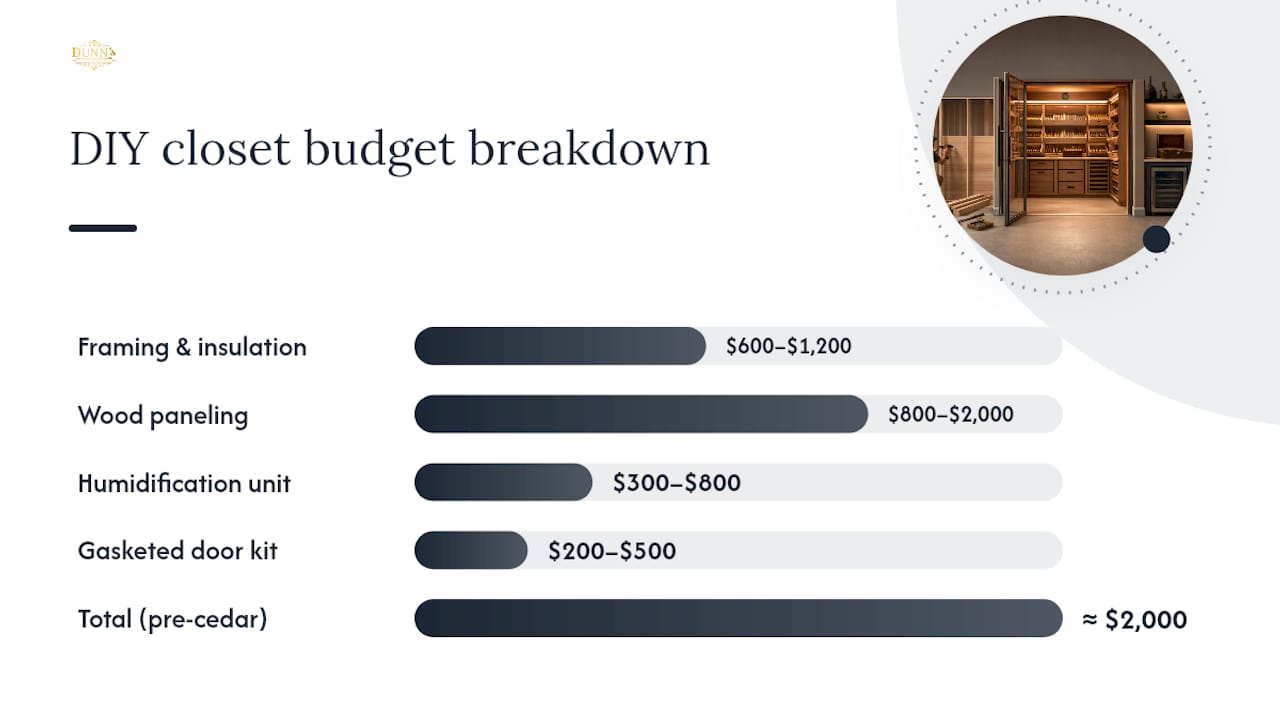
Professional installers typically start around $5,000 and frequently reach $10,000 or more once HVAC integration, electrical work, and finish carpentry enter the picture, according to Holt’s Cigar Company’s build guidance. That price includes design consultation, code-compliant electrical, and a warrantied humidification system, three things a weekend DIY project rarely accounts for.
Before you pick up a saw, run through this checklist:
- Collection value. If you’re storing more than $15,000 in inventory, a sealing failure isn’t a minor inconvenience. It’s a liability.
- Commercial use. Retail and lounge environments face liability and foot-traffic demands that residential closets never see.
- Electrical and HVAC complexity. Older homes often lack the dedicated circuits a commercial-grade humidifier needs.
- Hidden failure points. Door seal failures, uneven humidity distribution, and mold remediation are the three costs DIYers underestimate most often.
What Materials and Equipment Actually Cost
Line-item pricing is where most quote comparisons fall apart, because two contractors can quote wildly different totals for what looks like the same project on paper.
Spanish cedar paneling costs meaningfully more than pine or veneer alternatives, and Holt’s estimates that switching to full cedar can double your material budget on a small build. Collectors pay that premium willingly. Cedar doesn’t just look and smell right; it actively conditions the interior and supports long-term cigar maturation in a way synthetic materials can’t replicate.
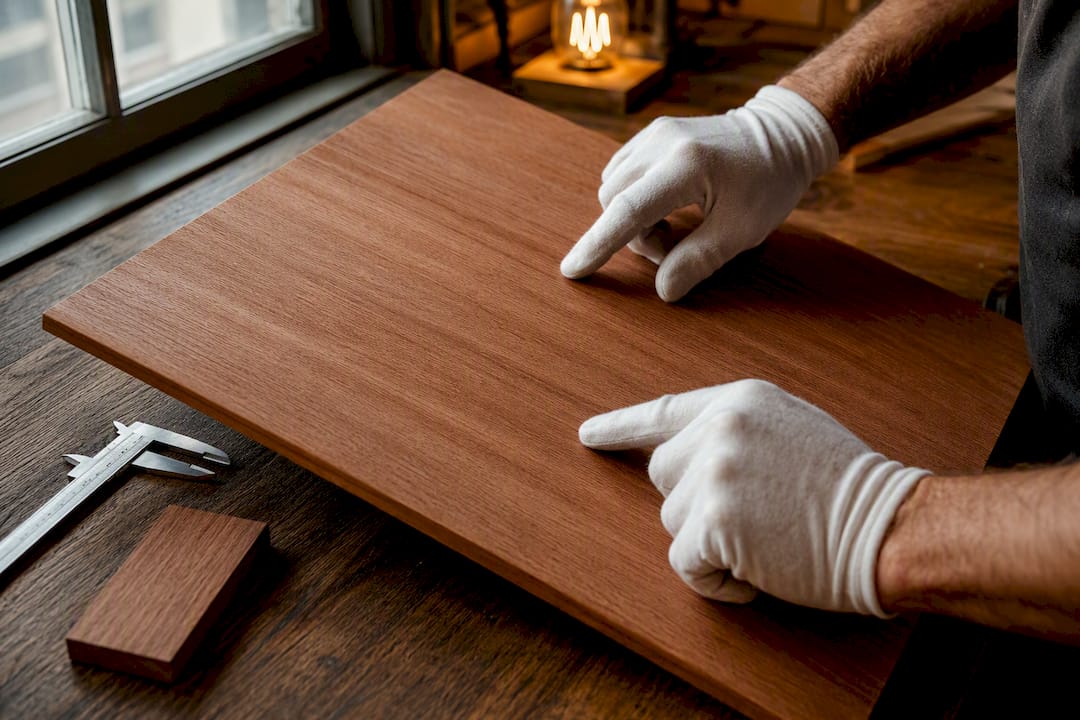
Pro Tip: Ask any contractor for a cedar-versus-alternative-wood breakdown as two separate line items. If they can’t isolate that cost, they probably haven’t sourced it directly and you’re paying a markup you can’t see.
Humidification equipment spans a wide range:
- Residential evaporative units: Several hundred dollars for basic auto-feed systems
- Commercial units with digital climate control: Frequently exceed $1,000, based on pricing data from Holt’s build guide
- RO-fed commercial systems: Often surpass $1,000 and scale up further for large retail spaces
- Remote monitoring add-ons: A few hundred dollars, but they let you catch a humidity swing before it damages inventory
Door and glazing choices matter more than most first-time buyers expect. A gasketed steel door with a basic seal is the budget option; a commercial glass display door, the kind that lets a retail shop show off its inventory while maintaining a tight seal, costs considerably more and demands precise installation to avoid the humidity leaks that ruin an otherwise well-built room.
Installation and Site-Prep Costs Nobody Budgets For
This is where quotes balloon, and it’s rarely the humidor construction itself. It’s everything the room needs before construction even starts.
- HVAC integration. A dedicated mini-split or standalone humidification-compatible unit can add several thousand dollars, but skipping it is the single most common mistake shop owners make, according to Besthumidors. Undersized systems create long-term humidity drift that no amount of cedar can fix.
- Electrical work. Standard 115V circuits handle most residential units, but commercial-grade RO systems and larger climate controls often require dedicated 208-240V service, meaning an electrician visit before your humidor contractor even shows up.
- Moisture-resistant flooring and finishes. Vinyl or sealed concrete keeps ambient moisture from migrating into surrounding walls.
- Permits and code checks. Commercial builds almost always require inspection sign-off. Add a 10 to 15% contingency to any quote to cover code-driven changes.
Annual Maintenance and Total Cost of Ownership
A walk-in humidor isn’t a one-time purchase. It’s an ongoing system, and budgeting only for the build is how collectors get blindsided in year two.
Residential systems typically run $400 to $800 a year in servicing, while commercial installations, with their higher-capacity humidifiers and more frequent inspection needs, commonly land between $800 and $2,000 annually, per market data on walk-in humidor maintenance.
- Consumables: Distilled water, replacement filters, and hygrometer sensors
- Recalibration: Hygrometers should be checked every 3 to 6 months
- Rule of thumb: Budget 5 to 8% of your upfront build cost annually for upkeep
Pro Tip: For retailers, treat maintenance like inventory insurance. One vendor guide puts it plainly: every $1 spent building a humidor requires roughly $2.50 in cigar sales to break even, which makes skipping a $500 annual service call a false economy if it risks the whole room.
How Long Does a Walk-In Humidor Project Take?
Timing affects price more than most buyers realize, since rushed schedules and off-season contractor demand both carry premiums.
- Design and consultation: 1 to 3 weeks
- Ordering materials and equipment: 2 to 4 weeks for prefab components; longer for custom cedar millwork
- Manufacturing and delivery: Prefabricated options typically ship in 8 to 12 weeks, while fully custom projects run 6 to 12 weeks from order to operational
- Installation and calibration: 1 to 2 weeks, including humidity stabilization before you load cigars
Before ordering anything, confirm your electrical and HVAC scope with a contractor. Change orders mid-project are the fastest way to blow past a quote.
Why Preservation, Not Price, Should Drive Your Decision
Collectors ask me constantly whether a $30,000 humidor is worth it when a closet conversion costs a fraction of that. The honest answer: it depends entirely on what you’re protecting. A collection built over fifteen years, full of cigars you can’t simply reorder, isn’t comparable to a starter stash you’re rotating through in a year.
What separates a good build from a great one usually isn’t the visible finish. It’s the humidification engineering behind the walls, the seal integrity nobody sees until it fails, and the calibration discipline that keeps humidity within a tight band month after month. That’s the standard we hold every Dunn’s Luxury Selections project to, and it’s why our white-glove consultations start with a site survey, not a sales pitch.
— Belle Dunn
Finding the Right Humidor Supreme® Solution for Your Budget
Once you know your footprint and budget tier, matching equipment gets a lot simpler. For collectors building toward the mid-tier range, the Humidor Supreme® 9200 Series Double-Door Electronic Humidor delivers commercial-grade double-door construction and electronic climate control without requiring a full custom build.
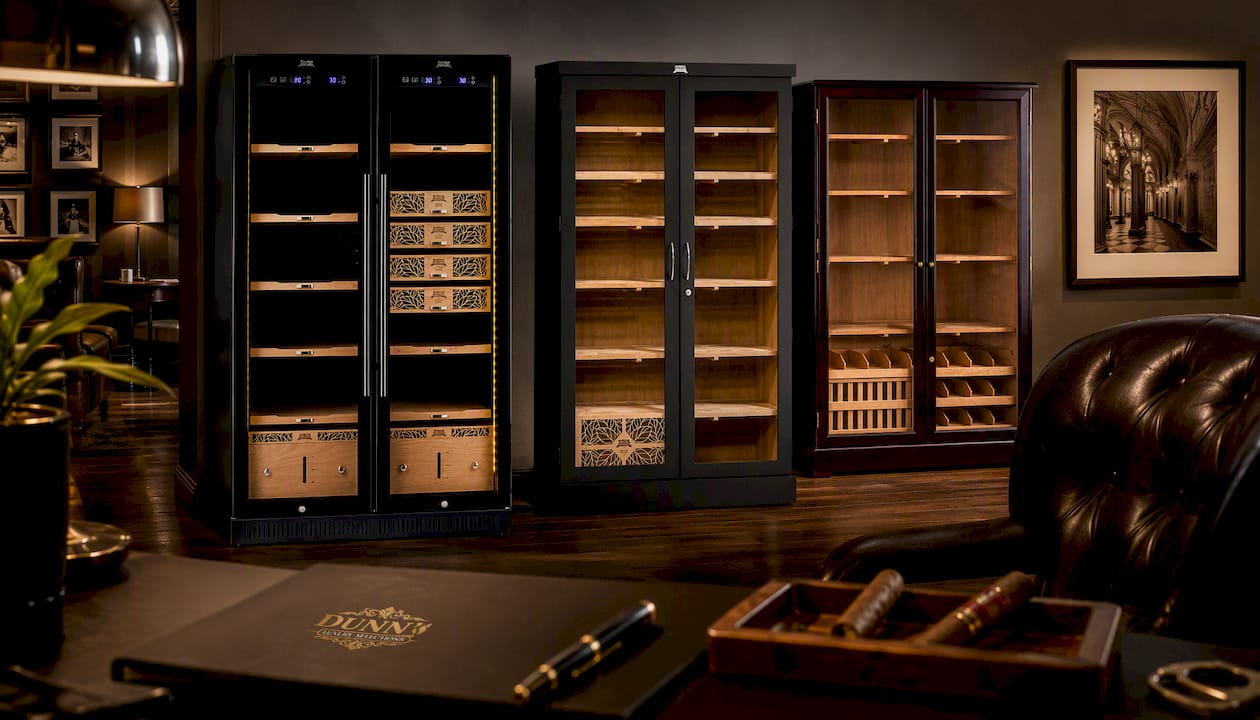
Retailers and lounge owners planning a display-forward space should look at the Humidor Supreme® Commercial Display Humidor 4500, built specifically for retail visibility while maintaining sealed humidity control. If your project needs a faster deployment with lower installation complexity, the Humidor Supreme® Commercial Display 4000 Humidor Kit offers a prefabricated path that still meets commercial standards.
Every Dunn’s project starts the same way: a consultation, a site survey, and a walk-in guide tailored to your space, followed by white-glove installation and financing options for collectors and retailers who’d rather spread the investment over time. If you’re ready to move past guesswork and get real numbers for your space, request a consultation and let’s talk about what your room actually needs.
Sources
Holt’s Cigar Company’s build guide informed DIY and cedar pricing; Dataintelo’s market report supplied commercial pricing and maintenance ranges; Sonic Humidifiers’ guide provided the breakeven budgeting rule.
- How to Build a Walk-In Humidor | Holt’s Cigar Company
- Walk-In Humidor Market Research Report 2033
- How to Build a Walk-In Humidor | Sonic Humidifiers
FAQ
How Much Does a Walk-In Humidor Cost?
Costs range from about $2,000 for a basic DIY closet build to $25,000 or more for a custom, professionally installed commercial unit, with most mid-tier residential projects landing between $6,000 and $25,000.
What Is the 135 Rule for Cigars?
The “135 rule” refers to storing cigars at roughly 70% relative humidity and 70°F, a benchmark widely cited in cigar storage guidance rather than a strict industry standard.
How Much Should a Good Humidor Cost?
A quality small-scale humidor for personal use can cost as little as a few hundred dollars, but a properly built walk-in system for a serious collection typically starts around $5,000 for professional installation.
What Is the Best Affordable Humidor for Getting Started?
Prefabricated commercial kits, like the Humidor Supreme® Commercial Display 4000 Humidor Kit, offer a lower-cost entry point into professional-grade humidity control compared to a fully custom build.
Does a Walk-In Humidor Increase My Cigar Investment’s Value?
Consistent humidity control preserves cigar condition and burn quality over time, which protects the resale and enjoyment value of an aging collection far better than inconsistent home storage.
How Much Does Ongoing Maintenance Cost Each Year?
Residential systems typically run $400 to $800 annually, while commercial installations range from $800 to $2,000 a year depending on system size and service frequency.
Recommended
You May Also Enjoy
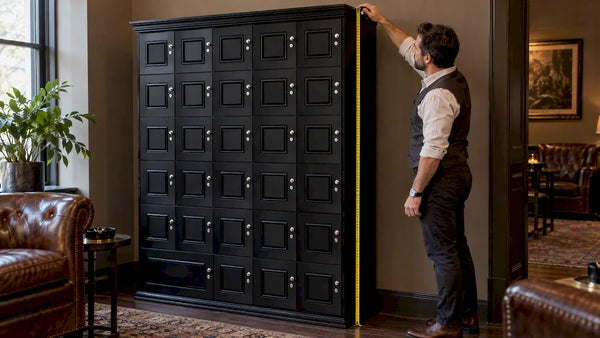
Cigar Locker Dimensions: Sizing Guide for Collectors and Lounges
Cigar locker dimensions explained: compartment sizes, cabinet footprints, capacity math and clearances, so you size a locker bank...
Read Article
Sealing a Walk-In Humidor: Envelope, Door and Penetrations
How to seal a walk-in humidor properly: vapor barrier placement, door gasket, penetrations and the controlled airflow a...
Read Article
Retail Humidor ROI: How to Measure What a Display Earns
What does a retail or lounge humidor really return? A practical framework for cigar shops, lounges and clubs:...
Read Article