

Discover what is commercial cedar shelving and its benefits. Learn how this natural pest-resistant wood enhances your retail and storage spaces.
TL;DR:
- Commercial cedar shelving is made from Aromatic Red Cedar or Spanish Cedar, valued for their pest-repellent oils and warm appearance. Its lifespan in commercial settings ranges from 3 to 8 years unless properly supported and maintained, with heavy loads needing hidden metal brackets. Proper seasoning, humidity control, and structural reinforcement are essential for maximizing longevity and preserving cedar’s natural benefits.
Commercial cedar shelving is defined as shelving constructed from cedar wood, installed in retail, commercial, or personal storage environments to combine natural pest deterrence with warm visual appeal. Cedar’s aromatic oils, specifically cedrol, repel moths and insects without chemical treatments. That biological advantage has made cedar a trusted shelving material for over 100 years, from textile closets to cigar sanctuaries. Whether you manage a boutique retail floor or curate a personal collection, understanding cedar’s properties, types, and limitations shapes every sourcing decision you make.
What is commercial cedar shelving and why does it matter?
Commercial cedar shelving is wooden shelving made from cedar species, most commonly Aromatic Red Cedar or Spanish Cedar, used in settings where pest resistance, humidity buffering, and visual warmth are priorities. The distinction from standard wood shelving lies in cedar’s natural chemistry. Aromatic Red Cedar contains cedrol, an oil that actively repels moths and pests without any added chemicals. That property makes it the preferred lining for closets, textile storage, and cigar humidors alike.

The industry term you will encounter most often is “aromatic cedar shelving” for closet and retail applications, and “Spanish cedar lining” for humidor cabinetry. Both fall under the broader category of cedar wood shelving. Recognizing both terms helps you communicate precisely with suppliers and avoid receiving generic softwood labeled as cedar.
What types of cedar shelving are available for commercial use?
Cedar shelving for businesses comes in several distinct configurations, each suited to different load requirements and display goals.
- Solid cedar shelves: Cut from a single board or edge-glued panels, these deliver the strongest aromatic presence and the cleanest visual line. They work well in boutique retail displays and personal collection cabinets where scent and appearance are priorities.
- Ventilated slat shelves: Constructed with spaced cedar slats, these allow airflow beneath stored items. Airflow matters most in textile storage and cigar humidors, where stagnant air accelerates mold and uneven humidity.
- Aromatic Red Cedar variants: This species is the standard for closet and wardrobe shelving. Its tight grain and pronounced scent make it the go-to for moth deterrence in wool, silk, and natural fiber storage.
- Spanish Cedar variants: A tropical hardwood used almost exclusively in humidor interiors and fine furniture. Spanish Cedar offers strong insect-repellent oils and natural humidity regulation, though it is softer and less load-bearing than hardwoods like Oak or Maple.
- Laminated cedar panels: Thin cedar veneer bonded to a structural substrate like plywood or MDF. These reduce cost while preserving surface aroma and appearance, though the pest-repellent effect diminishes over time as the veneer thins.
Standard cedar shelves run 12 inches deep, with slat widths varying by style. Support hardware includes shelf pegs for adjustable configurations and fixed brackets for permanent installations. Thickness typically ranges from ¾ inch for light display use to 1½ inches for load-bearing retail applications.
Pro Tip: Select kiln-dried, clear-grade cedar for commercial use. Lower grades contain more knots and irregular grain, which increases warping risk under fluctuating humidity and reduces the uniformity of the aromatic oil distribution.
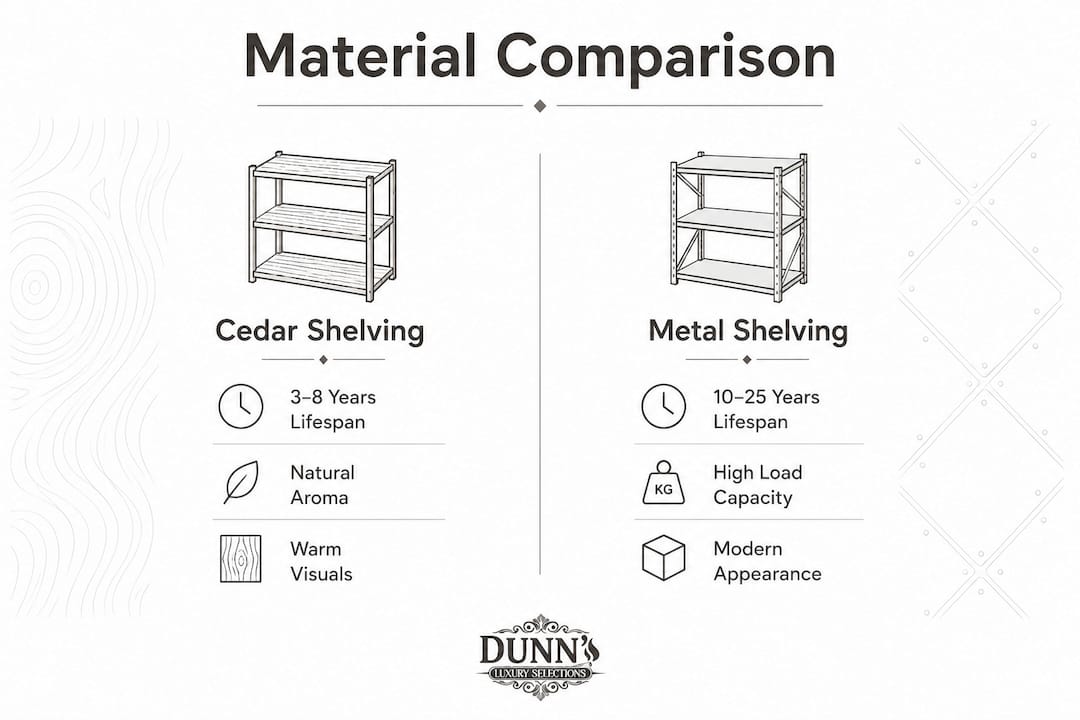
How does cedar shelving compare to other commercial shelving materials?
Cedar’s advantages are real, but so are its trade-offs. A clear-eyed comparison with metal and engineered wood alternatives shapes smarter purchasing decisions.
Wooden retail shelving lasts 3–8 years in high-traffic commercial settings. Metal shelving, by contrast, lasts 10–25 years under the same conditions. That lifespan gap is the single most important number in any cedar-versus-metal decision.
| Feature | Cedar wood shelving | Metal shelving |
|---|---|---|
| Lifespan (commercial) | 3–8 years | 10–25 years |
| Pest resistance | Natural, chemical-free | None |
| Aesthetic warmth | High, biophilic appeal | Low to moderate |
| Maintenance frequency | High (refinishing, inspection) | Low |
| Load capacity | Moderate (requires metal brackets for heavy loads) | High |
| Environmental profile | Carbon-sequestering if FSC-certified | High embodied energy |
| Best application | Boutique retail, textile storage, humidors | High-traffic, hygiene-critical environments |
Wooden shelving suits boutique and low-traffic retail because its visual warmth reinforces premium branding. Metal shelving wins in high-traffic or hygiene-critical environments where durability and ease of cleaning outweigh aesthetics.
Timber shelving aligns with biophilic design trends and FSC-certified sourcing, making it a credible sustainability choice. That environmental story resonates with customers in premium retail settings. Cedar sourced from certified forests carries a carbon-sequestering credential that no metal shelf can claim.
Cedar’s softness requires hidden metal brackets for any load-bearing application. Without structural support, cedar shelves under heavy product loads will bow and eventually fail. This is not a flaw unique to cedar. It is a characteristic of all softwoods, and it is fully manageable with proper engineering.
Pro Tip: Pair cedar shelving panels with powder-coated steel bracket systems. You preserve the aromatic and visual benefits of cedar on the surface while the steel carries the structural load. This hybrid approach extends the functional life of your cedar investment significantly.
How is cedar shelving used in retail and personal organization?
Cedar shelving serves a wider range of applications than most buyers initially realize. The following configurations represent the most effective commercial and personal uses.
-
Retail product display: Cedar shelving in boutique clothing stores, specialty food shops, and luxury goods retailers creates an organic warmth that reinforces premium positioning. The natural grain and color draw the eye and signal quality before a customer touches a single product.
-
Textile and wardrobe storage: Cedar’s natural oils protect wool, silk, and natural fibers from moth damage without chemical sprays. This application has been standard practice for centuries and remains the most widely recognized use of Aromatic Red Cedar in personal storage.
-
Cigar humidor interiors: Spanish Cedar is the definitive lining material for premium cigar humidors. It buffers humidity fluctuations, imparts a subtle complementary aroma to aging tobacco, and repels tobacco beetles. A custom walk-in humidor lined with Spanish Cedar represents the highest expression of cedar shelving in a commercial or personal context.
-
Personal collection display: Collectors of fine spirits, rare books, or artisan goods use cedar shelving to create display environments that feel curated rather than merely functional. The scent, color, and grain of cedar communicate intentionality and care.
-
Commercial cigar lounge fixtures: Cigar lounges rely on cedar-lined display units and tower shelf configurations to organize inventory, maintain presentation standards, and reinforce the sensory experience of the space. A cigar tower shelf unit integrates cedar shelving with commercial display hardware for exactly this purpose.
Integrating cedar shelving with modern retail fixtures works best when cedar panels serve as the visible surface and metal or hardwood provides the structural skeleton. This approach delivers the aesthetic of a full cedar installation at a fraction of the material cost and with superior load performance.
How do you maintain commercial cedar shelving for maximum lifespan?
Maintenance is where most cedar shelving investments either pay off or deteriorate prematurely. The following practices protect both the wood and its functional properties.
- Inspect quarterly for warping and joint separation. Cedar responds to humidity changes more than hardwoods. Early detection of bowing prevents structural failure and costly replacement.
- Sand and re-oil aromatic surfaces every 12–18 months. Light sanding with 220-grit paper reopens the wood’s pores and releases fresh cedrol. This restores the pest-repellent effect and refreshes the scent.
- Maintain ambient relative humidity between 45% and 55%. Cedar swells above 65% RH and cracks below 30% RH. Consistent humidity management is the single most effective maintenance practice for cedar longevity.
- Clean with a dry or lightly dampened cloth only. Chemical cleaners, even mild ones, strip the aromatic oils from the wood surface. Once those oils are gone, the pest-repellent benefit diminishes permanently.
- Season new Spanish Cedar installations before use. Dry Spanish Cedar requires 24–48 hours to stabilize its moisture content after installation. Placing items on unseasoned cedar risks moisture transfer and dimensional distortion. The target equilibrium moisture content is 12–14%.
Pro Tip: Never apply polyurethane or film-forming finishes to aromatic cedar shelving. These coatings seal the wood surface and block the release of cedrol entirely, eliminating the pest-repellent benefit you paid for. Use penetrating oils or leave the surface unfinished.
Key Takeaways
Commercial cedar shelving delivers genuine functional and aesthetic value when matched to the right application, supported structurally, and maintained with discipline.
| Point | Details |
|---|---|
| Cedar species matter | Aromatic Red Cedar suits closets and textiles; Spanish Cedar is the standard for humidor interiors. |
| Lifespan gap is real | Cedar shelving lasts 3–8 years commercially versus 10–25 years for metal. Plan maintenance budgets accordingly. |
| Structural support is non-negotiable | Cedar’s softness requires metal brackets for any load-bearing shelf to prevent bowing and failure. |
| Seasoning prevents damage | New Spanish Cedar installations need 24–48 hours to stabilize before use, targeting 12–14% moisture content. |
| Maintenance preserves the benefit | Quarterly inspections, periodic sanding, and humidity control between 45–55% RH protect the aromatic oils and structural integrity. |
Why I think most buyers underestimate cedar’s structural requirements
Most buyers focus on cedar’s scent and appearance, and then feel let down when shelves bow or warp within a year. The wood did not fail. The installation did.
Cedar is a softwood. That is not a defect. It is a material characteristic that demands respect. Every cedar shelving project I have seen succeed over the long term shares one feature: a metal support system underneath the cedar surface. The cedar provides the sensory and visual experience. The metal carries the weight. When buyers skip the metal framework to cut costs, they are not saving money. They are scheduling an early replacement.
The other mistake I see consistently is sourcing unseasoned or low-grade cedar to hit a budget. Unseasoned cedar warps as it acclimates. Low-grade cedar has irregular grain and fewer aromatic oils, which means it looks worse and works less effectively from day one. The premium for kiln-dried, clear-grade cedar is real, but so is the difference in performance over a three-year commercial cycle.
Cedar shelving earns its place in premium retail and personal storage when it is specified correctly, supported properly, and maintained consistently. Treated as a decorative afterthought, it disappoints. Treated as a precision material with specific requirements, it creates environments that are genuinely difficult to replicate with any other wood.
— Belle Dunn
Cedar shelving and premium humidor cabinetry from Dunnluxuryselections
Cedar shelving reaches its highest expression inside a precision-engineered humidor, where every surface works as part of a climate-controlled ecosystem protecting your cigar collection.

Dunnluxuryselections curates a collection of cedar-lined commercial and personal humidor solutions built to exacting standards. The Humidor Supreme® Commercial Display Humidor 4500 delivers Spanish Cedar shelving in a commercial-grade display format designed for cigar lounges and retail environments. For collectors seeking walk-in scale, the bespoke walk-in humidor program offers fully custom cedar-lined sanctuaries with white-glove installation and expert consultation. Every piece reflects the craftsmanship and precision that serious collectors require.
FAQ
What is commercial cedar shelving made from?
Commercial cedar shelving is made from Aromatic Red Cedar or Spanish Cedar, two species valued for their natural aromatic oils, pest-repellent properties, and warm visual grain. The species chosen depends on the application: Aromatic Red Cedar for closets and textiles, Spanish Cedar for humidor interiors.
How long does cedar shelving last in a commercial setting?
Cedar shelving lasts 3–8 years in high-traffic commercial environments, compared to 10–25 years for metal shelving. Regular maintenance, proper structural support, and humidity control extend cedar’s lifespan toward the upper end of that range.
Does cedar shelving actually repel pests?
Yes. Aromatic Red Cedar contains cedrol, a natural oil that repels moths and insects without chemical treatments. The effect diminishes as the surface ages, but light sanding every 12–18 months restores the oil release and refreshes the pest-repellent benefit.
Can cedar shelving support heavy commercial loads?
Cedar is a softwood with moderate load capacity. Heavy commercial loads require hidden metal brackets or a steel support framework beneath the cedar surface. Without structural reinforcement, cedar shelves will bow under sustained weight.
Where can you buy commercial cedar shelving for cigar storage?
Premium cedar-lined commercial display humidors and walk-in humidor configurations are available through specialty retailers like Dunnluxuryselections, which offers curated cedar shelving solutions designed specifically for cigar lounges, retail environments, and personal collections.
Recommended
You May Also Enjoy
Cigar Locker Dimensions: Sizing Guide for Collectors and Lounges
Cigar locker dimensions explained: compartment sizes, cabinet footprints, capacity math and clearances, so you size a locker bank...
Read Article
Sealing a Walk-In Humidor: Envelope, Door and Penetrations
How to seal a walk-in humidor properly: vapor barrier placement, door gasket, penetrations and the controlled airflow a...
Read Article
Retail Humidor ROI: How to Measure What a Display Earns
What does a retail or lounge humidor really return? A practical framework for cigar shops, lounges and clubs:...
Read Article