

Active or passive humidification: which protects cigars long term? See when ±1–2% precision matters, plus sizing guidance and temperature risk for...
Active electronic humidification is the right call for cabinets, walk-ins, and any collection you plan to age for years; passive systems like Boveda packs, beads, and sponges are the right call for desktop humidors and short-term storage. The dividing line is volume and time horizon. If you’re protecting a slow-turn, high-value collection or running a retail case with constant door traffic, active systems like Dunn’s HYDRA line hold precision that passive methods simply can’t match at scale. Every refillable system, active or passive, lives or dies on distilled water and routine sensor care.
TL;DR:
- Active humidification maintains ±1 to 2% RH accuracy, crucial for aging high-value or vintage cigars over many years.
- Proper sizing and multiple sensors are essential in large cabinets or walk-ins to prevent humidity stratification and ensure uniform conditions.
- Using distilled water and performing routine maintenance on active systems prevent failure modes like mineral buildup and sensor drift.
- Passive systems like Boveda packs are suitable for small, sealed humidors holding about 100 cigars or fewer, but less reliable for long-term aging.
- Temperature regulation is vital, as sustained heat above 75°F can trigger tobacco beetle hatching; active systems with temperature controls address this risk better than passive packs.
Table of Contents
- How Does Active Humidification Work?
- How Does Passive Humidification Work?
- Which Method Fits Your Humidor?
- Maintenance and Seasoning Rules That Actually Matter
- Temperature Control and Beetle Risk
- Why Dunn’s HYDRA Systems Solve the Precision Problem
- Belle Dunn’s Take: Precision Is a Long-Term Bet, Not a Convenience
- Get Precision Humidification Built for Your Collection
- Sources
- FAQ
How Does Active Humidification Work?
Active humidification runs on a feedback loop: a humidistat reads the air, compares it to your target relative humidity, and triggers a reservoir, pump, or evaporative element to release moisture until the setpoint is restored. Fans then distribute that moisture across the cabinet or walk-in, so the top shelf reads the same as the bottom, rather than trusting slow diffusion the way passive methods do.
When sized and installed correctly, active systems hold ±1 to 2% RH, a tolerance that matters enormously once cigars have been resting for three, five, or ten years. Aged wrappers and delicate vintage blends don’t forgive humidity swings the way a fresh box of robustos does. Beyond precision, active units bring capabilities passive methods can’t touch:
- Multi-sensor zoning that catches stratification between shelves or corners
- Integrated temperature regulation alongside humidity control
- Remote monitoring and alarms that flag drift before it damages inventory
The tradeoff is mechanical complexity. Mineral buildup from tap water, worn pumps or wicks, and sensor drift are the three failure modes that take active systems offline, and each one is preventable with a maintenance calendar.
Pro Tip: Test your hygrometer against a calibration kit twice a year. Sensors drift silently, and a unit reporting “68% RH” when the cabinet is actually sitting at 62% will let cigars dry out for months before anyone notices.
How Does Passive Humidification Work?
Passive humidification relies on materials that hold moisture and release it as ambient conditions shift, no electricity or feedback loop involved. Two-way polymer packs, like Boveda, use a saturated salt solution sealed in a membrane that absorbs excess humidity and releases it when the air runs dry, holding a fixed target RH until the pack is spent. Crystal gel beads and foam sponges work more crudely: you soak them, they release moisture as they dry, and you re-wet them on a schedule you set by feel rather than a sensor.
Passive systems are dependable in small, sealed boxes. In larger cabinets, expect variance of roughly ±5 to 10% RH, since there’s no fan pushing moisture into corners or lower shelves. That swing is often fine for cigars you’ll smoke within a year; it’s a real liability for a collection you’re aging a decade.
The practical trade-offs break down like this:
- Two-way packs: low maintenance, predictable RH target, but replaced every two to six months depending on humidor traffic
- Beads and sponges: cheapest upfront, but higher mold risk if oversaturated and no self-regulating ceiling
- Neither method scales cleanly past a modest desktop humidor without adding multiple units and hoping for even distribution
Boveda packs remain an easy, low-maintenance choice for collectors who aren’t chasing walk-in precision, and they standardize RH targets across every box in a lineup.
Which Method Fits Your Humidor?
Sizing the right system starts with three questions: how big is the space, how often does it get opened, and how long will the cigars sit inside it?
- Measure volume and traffic. A desktop humidor holding under roughly 100 cigars is a different problem than a retail case opened forty times a day. Passive humidification is often sufficient for smaller humidors holding roughly 100 cigars or fewer; cabinets and walk-ins benefit from active systems with fans and sensors built in.
- Match precision to cigar value and age. Aging or mixed-vintage collections need the ±1 to 2% RH control active systems deliver. Cigars you’ll smoke within months tolerate passive drift just fine.
- Weigh ambient risk. Rooms that swing in temperature or humidity punish passive systems faster, since there’s no correction mechanism.
- Calculate total cost of ownership. Boveda-style consumables run cheap per pack but add up over years of replacement; active units carry a higher upfront cost but lower ongoing consumable spend, offset by occasional maintenance labor.
- Plan sensor placement for scale. Cabinets and walk-ins should carry multiple sensors, not one mounted near the door, since door-adjacent readings rarely reflect what’s happening on the back wall or top shelf.
Retail cabinets in particular need active circulation. Uneven shelving and constant door traffic create RH stratification that passive packs can’t correct on their own, no matter how many you scatter across the shelves. A lounge or retailer running that kind of traffic is, functionally, choosing between active humidification and inconsistent inventory.
Maintenance and Seasoning Rules That Actually Matter
Distilled water is not a suggestion for refillable systems. Tap water minerals are the leading cause of humidification equipment failure, building scale on wicks and pumps until they stop drawing water efficiently or fail outright. Propylene glycol solutions show up in some professional workflows, but they’re not required for two-way packs and add complexity most collectors don’t need.
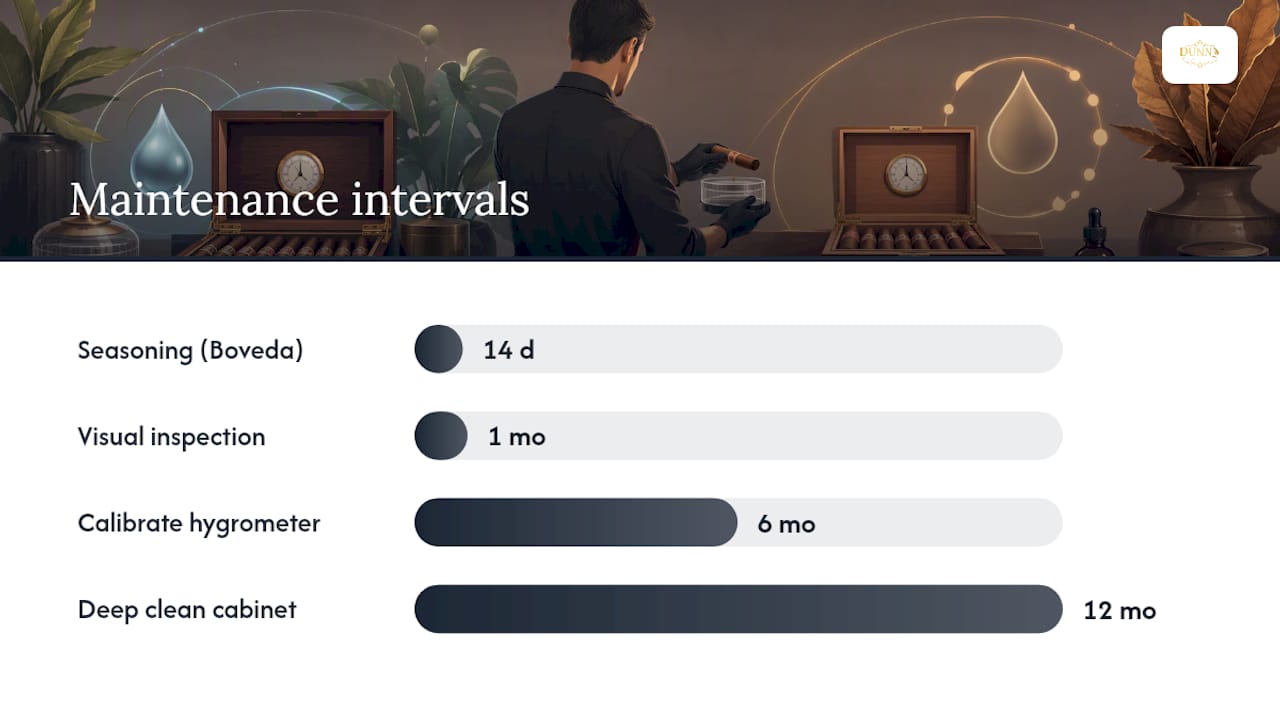
Seasoning a new humidor sets the tone for everything after. If you’re seasoning with Boveda, manufacturer guidance is explicit: keep the humidor closed for 14 days, even if your hygrometer shows odd readings during that window. Opening it early resets the process and prolongs stabilization, sometimes by weeks.
Build a routine around these checkpoints:
- Calibrate hygrometers every six months against a salt-test or calibration kit
- Visually inspect reservoirs, wicks, and beads monthly for discoloration or mold
- Refill active reservoirs on the schedule the unit specifies, not “when it beeps”
- Deep-clean cabinets annually to catch mold before it spreads to cedar or cigars
Pro Tip: If RH reads low on a passive system, don’t add more beads randomly. Check whether the humidor’s seal has degraded first. A leaky seal wastes moisture faster than any pack can replace it. For a deeper walkthrough of water choice and its long-term effect on equipment, see why precise humidity control matters.
Temperature Control and Beetle Risk
Humidity is half the preservation equation. Temperature is the other half, and it’s the one collectors underestimate most. Sustained heat above roughly 75°F (24°C) creates conditions where dormant tobacco beetle eggs can hatch and tunnel through wrappers, a risk that has nothing to do with your RH reading and everything to do with warmth.
Electronic humidifiers with integrated temperature regulation solve both problems at once, which passive packs simply cannot do since they have no mechanism for cooling. If your cabinet sits anywhere near a window, an exterior wall, or an HVAC vent that blasts warm air, that’s a placement problem no amount of Boveda will fix.
Practical siting rules worth following without exception:
- Keep humidors away from direct sunlight and exterior doors
- Avoid HVAC blow patterns that create localized hot or dry spots
- Install temperature and humidity alarms on any cabinet or walk-in above modest desktop size
- Escalate to supplemental cooling or a professional consultation if ambient room temperature regularly climbs past that 75°F threshold
Why Dunn’s HYDRA Systems Solve the Precision Problem
We built our custom walk-ins and cabinets around one premise: the enclosure should do half the work before the humidification system ever turns on. A properly sealed cabinet lined in Spanish cedar with zoned climate control doesn’t fight against leaks and hot spots, so whatever active system sits inside it has a fair fight to hold ±1 to 2% RH instead of chasing a losing battle against a poor seal.
That’s the thinking behind how we match HYDRA electronic humidifiers to different collections:
- The HYDRA TURBO commercial electronic humidifier is built for large cabinets and walk-ins, where fan distribution and reservoir capacity need to cover serious square footage.
- The HYDRA LG electronic humidifier fits medium-to-large cabinets that need single-unit coverage without the footprint of a commercial system.
- The HYDRA SM electronic humidifier handles zoned control in smaller cabinets, or gives a collector upgrading from Boveda packs a first step into active precision.
A collection that took a decade to build deserves a system that doesn’t leave its condition to chance. That’s the standard we design every custom humidor around.
Every white-glove installation includes calibration guidance and a maintenance walkthrough, because a HYDRA unit installed poorly performs no better than the passive packs it’s replacing.
Belle Dunn’s Take: Precision Is a Long-Term Bet, Not a Convenience
The rule of thumb is simple: if you’d be upset losing that box of cigars, put them behind active humidification. Passive packs are a fine short-term tool, but collectors who treat them as a permanent strategy for cabinets and walk-ins are gambling years of aging on a ±5 to 10% swing. Preservation rewards patience and precision over convenience every time. If you’re weighing which system fits your collection, we’re glad to walk through it with you.
— Belle Dunn
Get Precision Humidification Built for Your Collection
Dunn’s Luxury Selections designs the humidification plan around your collection, not the other way around, pairing custom cabinet and walk-in construction with HYDRA electronic systems sized to your actual volume and traffic. That’s the real advantage over piecing together consumer packs and hoping the RH holds: you get a sealed, zoned enclosure and an active system matched to it from day one, plus white-glove installation and maintenance guidance so the unit performs the way it’s rated to.
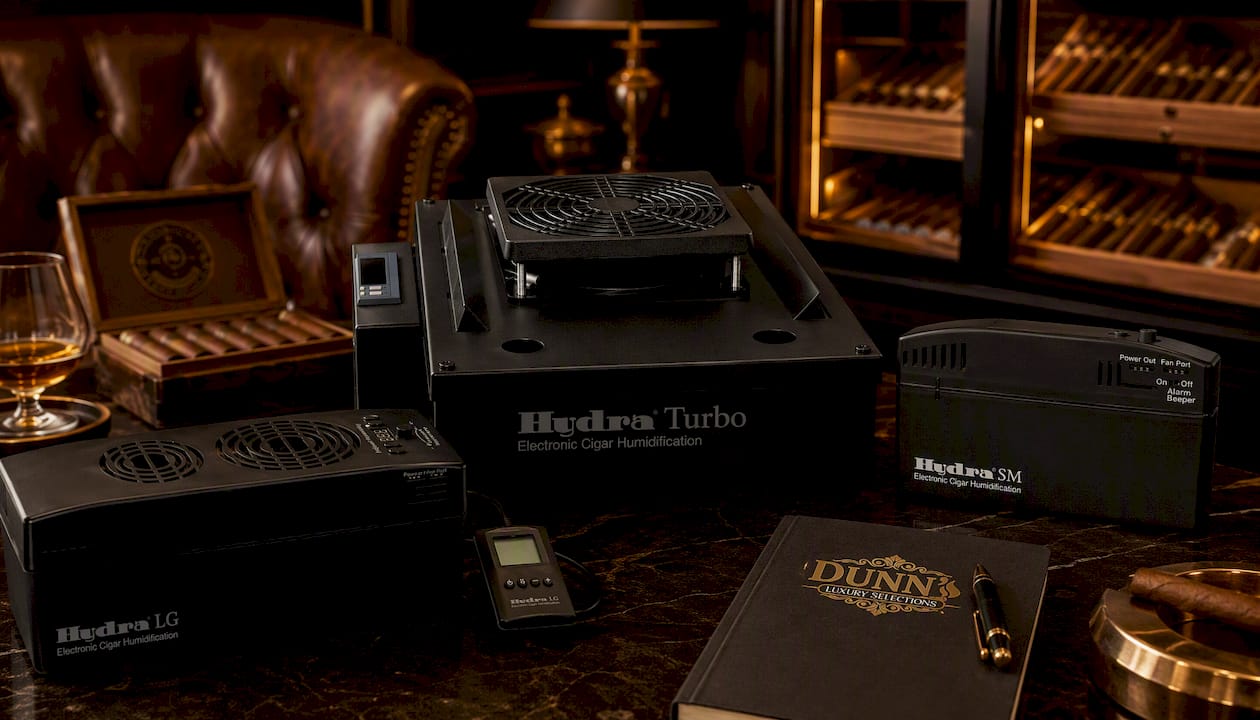
If you’re running a retail case, outfitting a lounge, or protecting a personal collection that’s outgrown passive packs, tell us your cabinet size and traffic pattern and we’ll recommend the right HYDRA configuration, whether that’s the HYDRA SM for a single zone or the HYDRA TURBO for a full walk-in. Request a white-glove consultation at Dunnluxuryselections and we’ll help you size it correctly the first time.
Sources
- Passive vs Electronic Humidification for Cigar Cabinets: A B2B Buyer’s Guide - Creative Packing
- How to Humidify Cigars in a Retail Humidor - MDC Wholesale Cigars
- How Do I Humidify? – Passion For Cigars
FAQ
What Is the Difference Between Active and Passive Humidification?
Active humidification uses electronic sensors and pumps to maintain RH within ±1 to 2%, while passive methods like Boveda packs or beads rely on moisture-holding materials that vary by roughly ±5 to 10% in larger spaces.
Is Passive Humidification Enough for a Desktop Humidor?
Yes, for humidors holding around 100 cigars or fewer, passive humidification is typically sufficient, especially for cigars you plan to smoke within months rather than age for years.
How Often Should I Replace Boveda Packs?
Replacement frequency depends on humidor traffic and seal quality, but most collectors replace two-way packs every two to six months as they lose their ability to regulate moisture.
Why Does My Humidor Need Distilled Water?
Tap water contains minerals that build up on wicks, pumps, and sensors, and that mineral buildup is the leading cause of humidification equipment failure in refillable systems.
How Long Should I Keep a New Humidor Closed When Seasoning?
Boveda’s guidance is to keep the humidor closed for 14 days during initial seasoning, even if hygrometer readings look unusual, since opening it early resets the process.
Can Active Humidifiers Also Control Temperature?
Yes, HYDRA-style electronic humidifiers with integrated temperature regulation address both RH and heat risk, which matters because sustained heat above roughly 75°F increases tobacco beetle risk that passive systems can’t prevent.
Which HYDRA Model Fits a Retail Cabinet?
The HYDRA TURBO is built for large cabinets and walk-ins with constant traffic, while the HYDRA LG suits medium cabinets and the HYDRA SM fits smaller zoned setups.
Recommended
You May Also Enjoy
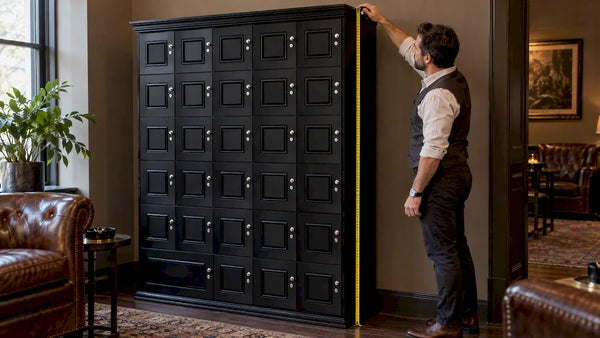
Cigar Locker Dimensions: Sizing Guide for Collectors and Lounges
Cigar locker dimensions explained: compartment sizes, cabinet footprints, capacity math and clearances, so you size a locker bank...
Read Article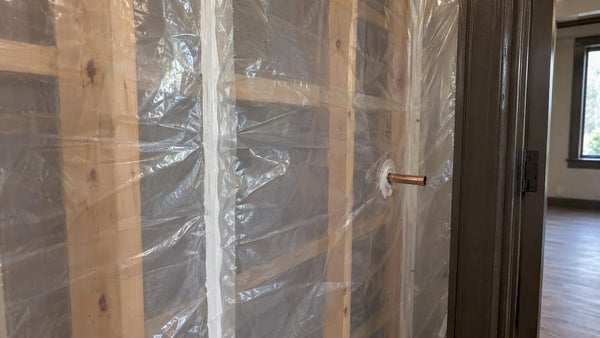
Sealing a Walk-In Humidor: Envelope, Door and Penetrations
How to seal a walk-in humidor properly: vapor barrier placement, door gasket, penetrations and the controlled airflow a...
Read Article
Retail Humidor ROI: How to Measure What a Display Earns
What does a retail or lounge humidor really return? A practical framework for cigar shops, lounges and clubs:...
Read Article