

How to size a high-end custom humidor: real capacity versus rated counts, growth headroom, lounge and locker planning, and the mistakes that cost collectors.
What separates a humidor that serves you for decades from one you outgrow in a year is rarely the finish. It is the arithmetic done before the first board is cut. Capacity planning means matching a cabinet to the cigars you own today, the boxes you will buy in five years, and the room that has to hold it all. Get it right and the humidor disappears into the background. Get it wrong and you are either stacking cigars two deep or paying to climate-control empty shelves.
This guide is written for collectors, lounge owners and club managers who are commissioning or buying at the premium end. It covers how rated capacity really works, how to count your collection, how to leave room for growth, and where custom work earns its place.
TL;DR
- Rated capacity assumes a standard robusto, about 5 inches at a 50 ring gauge, packed with no wasted space. A mixed collection will hold meaningfully fewer.
- Plan for the collection you will have in three to five years, not the one on your shelf now, and never fill a cabinet to its stated limit.
- Stability matters more than a single number. Larger cabinets develop microclimates, so airflow gaps and humidifier placement are part of capacity.
- Lounges should size from guest flow, revenue model and turnover, not from a catalog count.
- When your count, formats or room do not fit a standard cabinet, a bespoke build lets us size the interior to your inventory.
Table of Contents
- Why rated capacity is only a starting point
- Count the collection you actually have
- Build in growth, and decide how much
- Capacity and stability are one decision
- Match the format to the plan
- Planning capacity for a lounge, club or retailer
- When to commission a custom build
- Perspective: why we plan from the room outward
- Capacity planning mistakes collectors make
- Key takeaways and next steps
- FAQ
- Sources
Why rated capacity is only a starting point
Every humidor spec sheet lists a cigar count. That figure is a convention, not a promise. Makers calculate it using a standard robusto stacked with no wasted space, which is not how anyone actually stores a collection. Boxes, trays, dividers, humidification units and the air you need around them all take volume.
Our working rule when we plan with collectors: take the rated count and multiply by roughly 0.75 for a mixed collection, then lower it further if you lean toward Churchills, double coronas, torpedoes or 54-plus ring gauges. A cabinet rated for 1,000 should be treated as a comfortable home for around 750 cigars of mixed format. That is our planning heuristic, not an industry standard, and it errs on the side of the cigars.

The reason is physical. Cigars packed against one another and against the cabinet walls exchange moisture poorly. Air needs to move, and the humidification source needs a path to the far corners.
Count the collection you actually have
Before you look at a single cabinet, do an honest inventory. Most collectors underestimate by a third or more, because singles, gift sampler boxes and the cigars “waiting for the right occasion” never make it into the mental tally.
Sort your cigars into these groups:
- Whole boxes you intend to keep intact. Box storage is the most space-hungry method. Cedar boxes of 20 to 25 cigars have a footprint larger than the cigars alone.
- Loose cigars in trays or drawers. The most efficient use of space, and the most flexible for rotation.
- Long-aging stock. Cigars you plan to lay down for years. These deserve the most stable position in the cabinet.
- Daily rotation. Cigars you will reach for weekly. Place them where access is easy and temperature swings from opening the door are least damaging to the aging stock.
- Oversized formats. Count these separately, since they cut effective capacity most.
Write the numbers down by format. A collection of 400 robustos and 400 Churchills needs a different interior from 800 of the same vitola, even though the total is identical.
Build in growth, and decide how much

Collections do not hold still. Collectors who intend to age cigars buy in boxes, and boxes accumulate. We suggest sizing with 30 to 50 percent headroom over your current usable count, then testing that against your buying habits.
A quick worked example:
- Current inventory: 600 cigars, mixed formats
- Usable-capacity factor: 0.75, so a cabinet needs a rated count of 800 to hold them at a realistic fill
- Growth allowance: 40 percent over three to five years, taking you near 840 cigars
- Rated capacity to shop for: roughly 1,120
The numbers are deliberately generous. Empty shelf space costs you little in a well-built cabinet. A cabinet that is too small costs you in cigars, because crowding is where uneven humidity and mold begin.
Capacity and stability are one decision
Bigger boxes behave differently. The larger the interior, the more likely it is to develop microclimates, with the shelves nearest the humidification source running more humid than the far side. Practitioners manage this by placing long-aging cigars farthest from the active humidifier and leaving gaps in the center of shelves for air circulation. Treat those gaps as lost capacity from the start.
Where the humidifier sits matters as much as how many you buy. We cover the placement logic in our guide to the lower shelf corner and humidifier location, and the room itself, covered in cigar cabinet placement for collectors, changes how well any cabinet holds its numbers.
The target range
The conventional range for cigar storage is 65 to 72 percent relative humidity at 65 to 70°F. Within it, 65 to 69 percent suits most mixed collections, while 70 to 72 percent is typically reserved for drafty rooms or long-term aging projects. The same source notes that mold risk climbs once humidity passes 70 percent where temperatures fluctuate.
Those numbers explain why we pay attention to the cabinet, the insulation and the room together. A stable 68 percent beats a nervous 70. For a deeper treatment, read why stability beats the 70/70 convention and how insulation shapes stable RH.
For very serious collections, one guideline sets the bar higher: the 135 rule asks for no more than 1°F of temperature drift per month, 3°F of daily variation and 5 percent variation in relative humidity. Treat it as the stability yardstick a high-end build should be measured against.
Temperature moves your humidity
A warm cabinet holds more moisture at the same reading. Practitioners adjust their target RH downward by a few points in summer, because 65 percent at 75°F carries more water than 65 percent at 65°F. A large cabinet in a sunlit room will therefore need either a lower setpoint or a better location.
Humidity control is not unique to cigars, and the logic of keeping a plant-based product below the mold threshold is shared across storage categories. If you want a parallel look at how another product category handles it, this piece on keeping stored flower fresh and mold free compares suitable humidity ranges for a different product.
Match the format to the plan
Capacity bands tend to sort into three formats. These are our working guidelines, not rigid limits.
| Format | Typical use | Planning notes |
|---|---|---|
| Desktop | Daily rotation, a few boxes of singles | Fills quickly. Treat as a working humidor, not a collection home. |
| Cabinet | Serious collections from hundreds to thousands of cigars | Best balance of capacity, presentation and stable control. |
| Walk-in | Large private collections, lounges, clubs, retail | Design-led. Needs HVAC, insulation and airflow planned together. |
Desktop units are useful as a rotation companion to a cabinet, and our desktop humidors suit that role. For the main collection, our cabinet humidors cover the middle of the range, from furniture-grade pieces to larger locker-style units. If you want to see the scale on offer, the Bermuda cabinet is a good reference for a collection that has outgrown a countertop. Collectors who want a personal, lockable space can look at the 17-locker cherry cabinet, and the standing mahogany locker humidor is listed in the 2,000 to 5,000 count class.

Planning capacity for a lounge, club or retailer
Commercial capacity is a business question first. Specialists in lounge design stress that capacity must follow guest flow, revenue model and inventory turnover before any equipment is chosen. A private locker program, a retail floor and a members’ club all want different cabinets, even at the same cigar count.
A few questions to answer before you specify anything:
- How many members or guests hold storage, and how many cigars does each keep?
- How fast does inventory turn? Fast-moving stock can sit in display cases. Slow stock and aging reserves need quieter, more stable space.
- Will guests open doors constantly? Heavy traffic is the enemy of stability, so separate the sales stock from the reserve.
- Does the room’s HVAC support the target range? Our notes on cigar room HVAC and commercial humidor HVAC integration explain what the building has to deliver.
- Are lockers part of the revenue plan? We work through a $7,752 locker revenue example for operators, and our guide to lounge storage without stratification covers keeping a large volume at an even 65 to 72 percent.
For collectors with lockers, humidity settings differ slightly again, and we cover them in how collectors keep cigar lockers stable.
When to commission a custom build
Standard cabinets are designed around standard rooms and standard collections. Yours may not be. Custom work earns its place when:
- Your collection is dominated by one or two large formats, so the interior needs shelf heights and drawer depths that suit them.
- The room has an alcove, a sloped ceiling or a wall you want to use fully.
- You are building a walk-in and need the interior, climate control and finish to be designed as one system.
- A club or lounge needs a specific locker count with matching branding and finish.
Our Dunn’s Bespoke service begins with consultation, which is where we run exactly the capacity work described above: your inventory by format, the growth you expect, the room and the climate plan. We do not publish a bespoke price, because it depends on those answers.
Perspective: why we plan from the room outward
We have found that collectors ask about capacity in one number, and the better question is about margin. A humidor is an instrument, and an instrument performs best when it is not pushed to its limit. We would rather you own a cabinet that feels a little generous than one that demands compromises with every new box.
We also believe the sanctuary has to be designed as a whole: cedar, seals, insulation, airflow and the room around it. That is why our consultations begin with your cigars and your space, not our catalog. Whether you choose a cabinet from our collections or a bespoke walk-in, the plan is the same: protect the collection, leave room for the legacy you are building.
— Belle Dunn
Capacity planning mistakes collectors make
- Trusting the rated count. Rated capacity assumes robustos and no wasted space. Apply a realistic factor.
- Sizing for today. The collector who buys “just enough” tends to buy again within a year or two.
- Ignoring format mix. Large ring gauges consume space faster than anyone expects.
- Filling shelves wall to wall. Leave gaps in the center of shelves so air can move.
- Loading before the cedar is ready. New Spanish cedar is dry and pulls moisture from cigars. Season the interior before introducing inventory, and follow the maker’s guidance for the process.
- Placing the cabinet by the window. Heat sources and sun push temperature, and temperature moves humidity. Position it away from radiators, windows and heat-generating electronics.
- Chasing 70/70. Pick a target for your collection, then focus on holding it steadily. A humidity-stable setup at the right RH for your cigars beats a number copied from a forum.
- Skipping accessories. Quality hygrometers and humidification are part of capacity, since they decide how much of the cabinet is usable. Our accessories cover the essentials.
Key takeaways and next steps
Count by format, apply a realistic factor to rated capacity, add generous growth headroom and leave airflow in the plan. Then match the format to how you use your cigars: desktop for rotation, cabinet for the collection, walk-in for the largest ambitions. If you are weighing a build or a purchase, begin a conversation with us at Dunn’s Luxury Selections, or explore the full cabinet collection.
FAQ
How many cigars can my humidor really hold?
Usually fewer than the rating. Makers rate capacity using a standard robusto packed with no wasted space, so a mixed collection with larger formats will hold less. We plan at roughly 75 percent of the rated count and lower it for big ring gauges.
Is 75% humidity too high for a humidor?
For most collections, yes. The accepted storage range runs from 65 to 72 percent, and mold risk rises as humidity climbs, especially where temperature fluctuates. Most mixed collections sit best at 65 to 69 percent.
What RH should I choose for my cigars?
For most environments and first-time buyers, Boveda recommends 69 percent. Drier preferences and summer conditions may call for a lower setpoint, while drafty rooms and long aging projects sometimes justify the upper end.
How much growth room should I plan for?
We suggest 30 to 50 percent over your current usable count, adjusted for how often you buy boxes. It is a planning guideline rather than a rule, and a consultation can refine it to your buying history.
When does a lounge need a custom walk-in?
When your guest flow, locker count or room shape cannot be met by a standard cabinet, or when the climate system, interior and finish need to be designed together. Our bespoke service starts with a consultation on exactly those questions.
Sources
- Ideal Humidity Levels for Different Cigars
- What is the 135 Rule for Cigars?
- Cigar Lounge Design & Consulting, Cigar Prof
- What Boveda RH do I need for cigars?
- Humidity, Honesty & Humidors, Boveda
- adorini Humidor Guide
Recommended
You May Also Enjoy
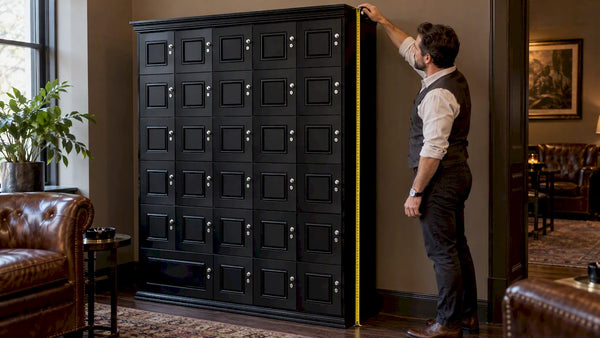
Cigar Locker Dimensions: Sizing Guide for Collectors and Lounges
Cigar locker dimensions explained: compartment sizes, cabinet footprints, capacity math and clearances, so you size a locker bank...
Read Article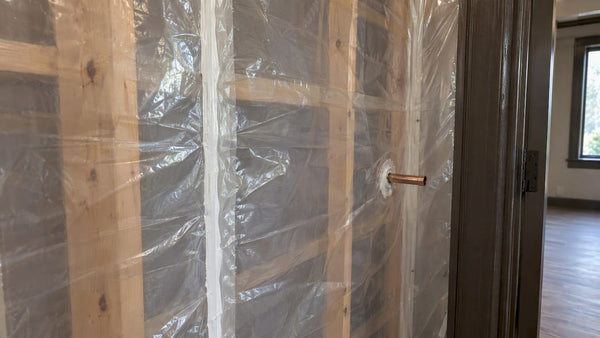
Sealing a Walk-In Humidor: Envelope, Door and Penetrations
How to seal a walk-in humidor properly: vapor barrier placement, door gasket, penetrations and the controlled airflow a...
Read Article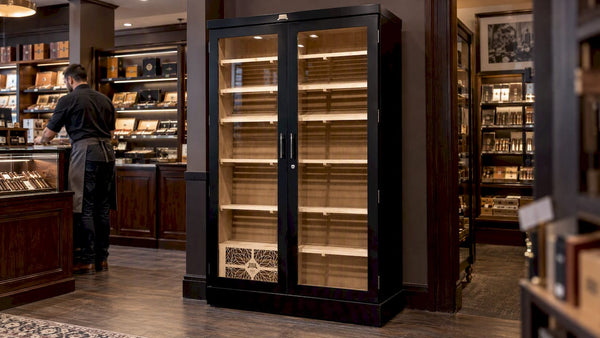
Retail Humidor ROI: How to Measure What a Display Earns
What does a retail or lounge humidor really return? A practical framework for cigar shops, lounges and clubs:...
Read Article