

Learn the essential guest humidor access procedure for secure, hygienic entry. Protect your cigars and ensure quality with this complete guide.
A guest humidor access procedure is the controlled protocol for granting visitors temporary, secure, and hygienic entry to a cigar humidor while protecting product quality and respecting established etiquette. Lounge owners and serious collectors alike recognize that a humidor is not simply a storage box. It is a precision sanctuary where relative humidity, temperature, and Spanish Cedar work in concert to preserve a living product. Getting guest access wrong costs more than a few damaged cigars. It disrupts the entire microclimate, exposes inventory to contamination, and in regulated markets like Belgium, where a 2025 display ban now prohibits free customer access to visible tobacco products, it can carry legal penalties. The core components of any sound procedure are guest registration, hygiene protocols, security controls, and active humidor maintenance.
What prerequisites and tools are needed before guest humidor access?
Every successful guest humidor access procedure begins before the guest walks through the door. The humidor itself must be in verified condition: a calibrated digital hygrometer reading a stable 65–72% relative humidity, a functioning humidification device, and Spanish Cedar shelving free of mold or debris. These are not optional refinements. They are the baseline.
Security infrastructure matters just as much as the environment. Smart locks with scheduled guest codes limit access to preset windows and expire automatically, which is far more reliable than issuing permanent codes to rotating guests. Private locker arrangements typically require managers to hold backup keys and maintain inspection registries, with rental fees ranging $800–$2,500 per year as of 2026. That fee structure reflects the real cost of secure, managed access.
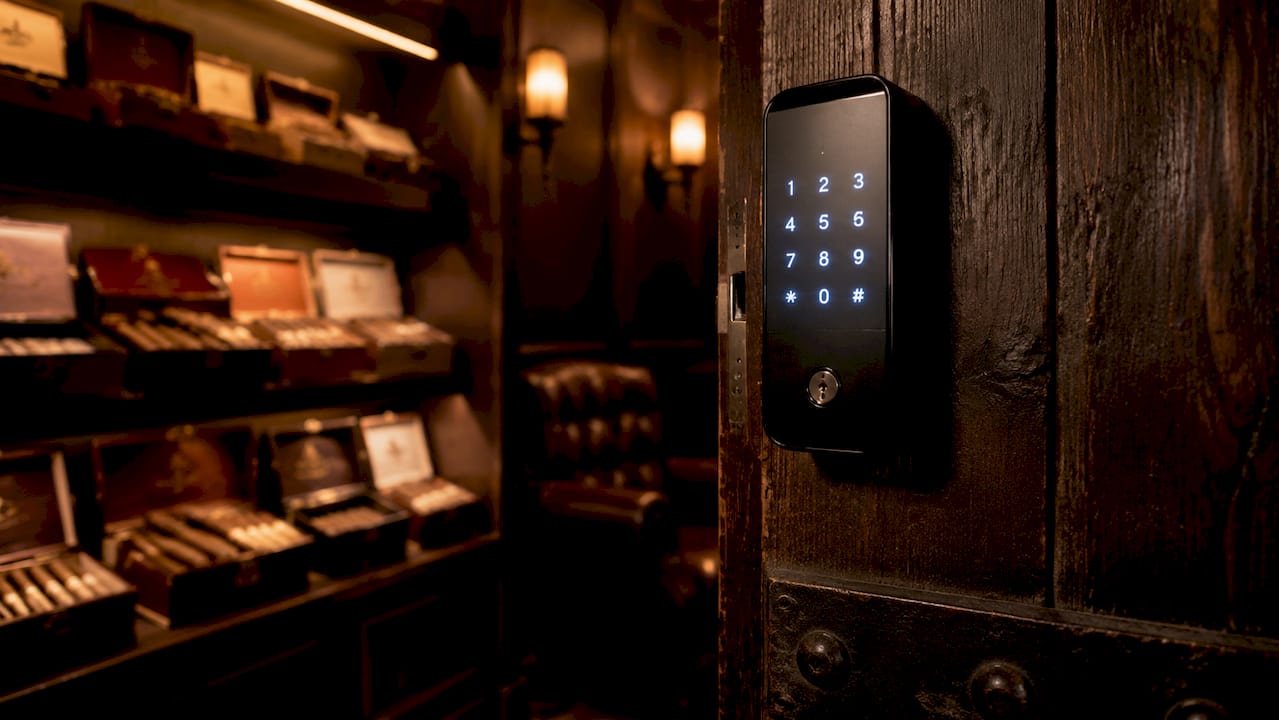
Hygiene preparation is the third pillar. Hand sanitizer dispensers at the entrance, clean floor mats, and a staff sanitation protocol are non-negotiable. The table below summarizes the tools and documents every lounge should have in place before any guest enters.
| Tool or Document | Description | Purpose |
|---|---|---|
| Calibrated digital hygrometer | Measures relative humidity in real time | Confirms stable environment before entry |
| Humidification device | Active or passive humidifier | Maintains and recovers moisture levels |
| Guest registry | Physical or digital sign-in log | Creates an access record for accountability |
| Photo ID requirement | Government-issued identification | Verifies guest identity and age compliance |
| Smart lock with guest codes | Scheduled or one-time access codes | Controls entry windows and prevents unauthorized access |
| Hand sanitizer dispenser | Placed at humidor entrance | Reduces contamination risk before handling |
| Floor mat | Positioned at threshold | Limits debris and contaminants entering the space |
Pro Tip: Use one-time or duration-limited smart lock codes for first-time guests rather than recurring codes. This gives you full control over access frequency without requiring a staff member to physically manage every entry.
How to manage guest access step by step
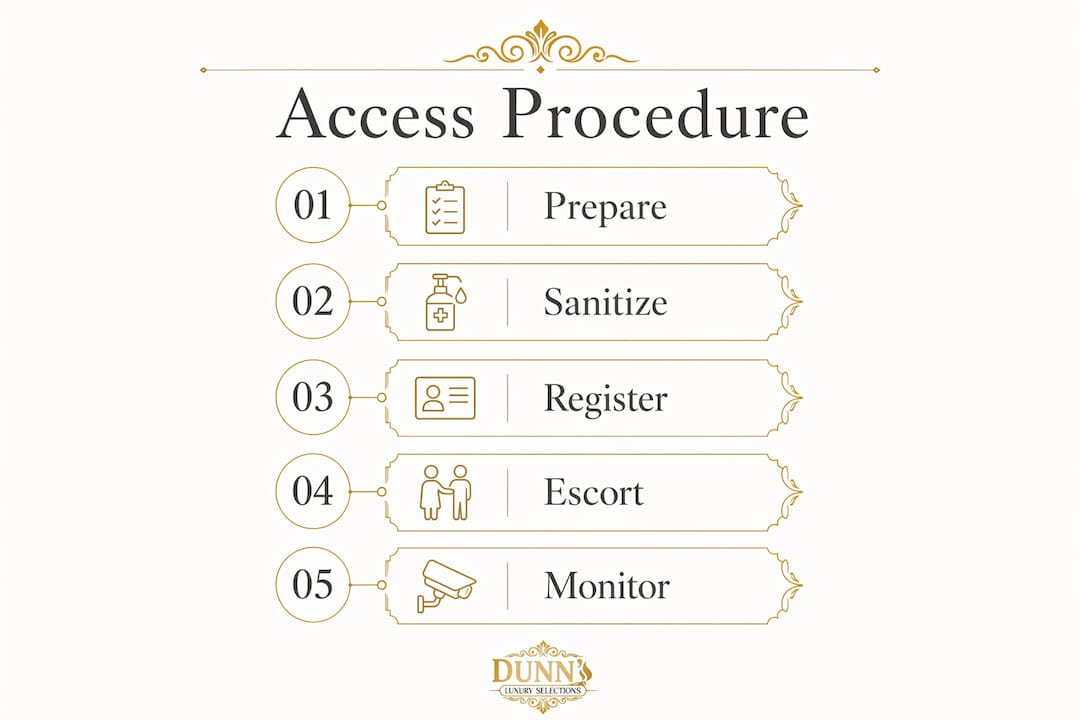
A clear, ordered sequence protects both the cigars and the guest experience. Improvised access creates inconsistent results and exposes your inventory to unnecessary risk. The following steps reflect best practices drawn from professional tobacconist standards and club management protocols.
-
Guest sign-in with photo ID. Clubs require photo ID and a signed registry entry before any guest enters a restricted area. The member or host countersigns the record. This creates a traceable log for every access event.
-
Brief the guest on access rules. Before opening the door, explain the core rules: no touching cigars above the band, no smoking inside the humidor, and hands must be sanitized. A 30-second verbal briefing prevents most etiquette violations.
-
Escort the guest using the two-person rule. A staff member or host accompanies the guest at all times. The two-person rule serves two functions: it deters theft and it guides the guest toward selections without unnecessary browsing that prolongs door-open time.
-
Limit door-open time. Every second the humidor door stays open, moisture escapes. Keep the visit focused and purposeful. Staff should know the inventory well enough to direct guests efficiently.
-
Handle cigars correctly. Guests should only touch cigars at or below the band. Touching the cap or foot is a hygiene breach because cigars are oral products. Staff should demonstrate proper handling if the guest is unfamiliar.
-
Comply with regional display regulations. In markets where tobacco display bans apply, such as Belgium since april 1, 2025, staff must retrieve cigars on the guest’s behalf. Free browsing where cigars are visible is prohibited.
-
Record the visit and inspect contents. After the guest exits, log the visit, note any cigars removed, and conduct a quick visual inspection of the humidor’s condition. This closes the access loop and flags any irregularities immediately.
Pro Tip: Set a soft time limit of five minutes for guest visits inside the humidor. Post a small sign at the entrance. Most guests will respect it, and it gives staff a natural reason to gently close the session without awkwardness.
What are the best hygiene and etiquette practices during guest visits?
Walk-in humidors are sacred microclimates that demand strict sanitation from both staff and guests. A single contamination event, whether from unwashed hands, outside smoke residue, or debris tracked in on shoes, can affect the flavor profile of every cigar in the space. The standard is not excessive. It is proportionate to the value of what is being protected.
Cigar humidor etiquette centers on one foundational principle: treat every cigar as if it belongs to someone else, because in a shared or lounge environment, it often does. Guests who understand this principle naturally adopt the right behaviors. Staff who explain it clearly create a better experience than those who simply enforce rules without context.
The following dos and don’ts give your team a quick reference for enforcing humidor access guidelines consistently.
Dos:
- Sanitize hands before entering, every time, without exception
- Touch cigars only at or below the band
- Move through the humidor deliberately and with minimal lingering
- Ask staff for assistance rather than handling multiple cigars to compare
- Replace any cigar you pick up in the exact position you found it
Don’ts:
- Smoke inside the humidor or carry a lit cigar near the entrance
- Bring food, beverages, or outside tobacco products into the space
- Touch the cap or foot of any cigar, as this is a direct hygiene breach
- Open drawers or boxes without staff permission
- Allow the door to remain open while you browse or make a decision outside
Staff presence is the single most effective enforcement mechanism. A knowledgeable team member who guides the guest’s selection actively reduces handling time, contamination risk, and humidity loss simultaneously.
How to monitor and maintain humidor conditions during and after guest access?
Opening a walk-in humidor for a guest causes measurable moisture loss and requires several hours to return to stable humidity levels. This is not a minor inconvenience. Repeated access events without proper recovery protocols compound over time and degrade the entire collection.
Digital hygrometers with data logging capabilities are the right tool for this job. Log humidity readings before each access event, immediately after, and again two hours later. This three-point record reveals how quickly your humidor recovers and whether your humidification device is adequate for your access frequency.
Recovery strategy matters as much as monitoring. Gradual humidification over multiple days is the correct response to humidity loss. Rapid over-humidifying, sometimes called “panic humidification,” can trigger mold spikes that damage your entire inventory. Patience is the discipline that separates serious collectors from casual ones.
| Condition | Optimal Range | Recovery Time After Access | Warning Sign |
|---|---|---|---|
| Relative humidity | 65–72% | 2–6 hours for minor loss | Readings below 60% or above 75% |
| Temperature | 65–70°F | Stabilizes within 1–2 hours | Condensation on interior walls |
| Humidor capacity | 60–75% full | Not applicable | Overpacking restricts airflow |
| Airflow | Even distribution | Restored when door closes | Uneven aging across shelves |
Airflow management is often overlooked. Cigars stored at 60–75% of humidor capacity allow air to circulate freely, which distributes humidity evenly and prevents localized mold pockets. Overpacking is one of the most common mistakes in high-traffic lounge environments.
Pro Tip: Store your most frequently accessed cigars in a dedicated front drawer or lower shelf. This limits how deep into the humidor guests need to reach, reducing door-open time and minimizing disruption to the cigars stored further back.
Key Takeaways
A sound guest humidor access procedure combines security controls, hygiene enforcement, and active climate monitoring to protect both your inventory and your guests’ experience.
| Point | Details |
|---|---|
| Verify conditions before entry | Confirm stable humidity and clean surfaces before any guest accesses the humidor. |
| Use the two-person rule | Always escort guests to prevent theft, limit handling, and reduce door-open time. |
| Enforce hygiene at the threshold | Require hand sanitization and brief guests on the no-touching-above-the-band rule before entry. |
| Monitor and recover humidity | Log readings before and after each visit; use gradual humidification to restore lost moisture. |
| Comply with local regulations | In markets with tobacco display bans, staff must retrieve cigars on the guest’s behalf. |
Why most lounges get guest access wrong, and what I’ve learned from it
Most lounge owners treat guest humidor access as a hospitality gesture rather than a preservation protocol. That framing is where the problems start. I’ve seen beautifully appointed walk-in humidors with $40,000 worth of aged inventory managed with nothing more than an honor system and a handshake. Within six months, the microclimate was inconsistent, the Spanish Cedar had absorbed foreign odors, and two boxes of aged Cohiba Behike had developed surface mold.
The fix is not expensive. It is disciplined. A guest registry, a smart lock, a posted etiquette card, and a staff member who knows the two-person rule costs almost nothing to implement. What it buys you is accountability, consistency, and a humidor that still performs five years from now.
Technology helps, but it does not replace training. An electronic humidor with automated climate control, like the Raching MON800A, will recover from a door-open event faster than a passive system. But if your staff does not understand why door-open time matters, the technology is compensating for a process failure rather than supporting a sound one.
The lounges that get this right share one trait: they treat the humidor as the most important room in the building. Every procedure, from sign-in to recovery monitoring, reflects that belief. Guests notice. They return. And the cigars age exactly as they should.
— Brian
Discover premium humidors built for serious collectors

Protecting your collection starts with the right vessel. Dunnluxuryselections carries a curated range of cabinet humidors, electronic humidors, desktop models, and travel humidors designed to maintain the precise microclimates your cigars deserve. Each piece is selected for its climate control performance, Spanish Cedar construction, and the kind of presence that reflects the seriousness of your collection. For lounge owners managing guest access at scale, the Barbatus cabinet humidor and the Raching precision line offer the capacity and stability that high-traffic environments demand. Explore the full collection at Dunnluxuryselections and find the humidor that matches your standard.
FAQ
What is a guest humidor access procedure?
A guest humidor access procedure is the formal protocol for granting visitors temporary, controlled entry to a cigar humidor. It covers guest registration, hygiene requirements, staff escort rules, and post-visit humidity recovery.
Why must guests sanitize hands before entering a humidor?
Cigars are oral products, so hand contamination transfers directly to the product. Touching cigars above the band without clean hands is a serious hygiene breach that affects flavor and safety.
How long does humidity take to recover after a guest visit?
Humidity typically takes 2–6 hours to stabilize after a brief access event. Gradual humidification over multiple days is advised after significant moisture loss to avoid mold from rapid over-humidification.
What is the two-person rule in humidor access?
The two-person rule requires a staff member to accompany every guest inside the humidor at all times. This deters theft, limits unnecessary handling, and reduces the time the door stays open.
Do tobacco display bans affect how lounges grant humidor access?
Yes. Since april 1, 2025, Belgium prohibits free guest access to humidors where cigars are visible. Staff must retrieve cigars on the guest’s behalf, and lounges that ignore this face regulatory penalties.
Recommended
You May Also Enjoy
Cigar Locker Dimensions: Sizing Guide for Collectors and Lounges
Cigar locker dimensions explained: compartment sizes, cabinet footprints, capacity math and clearances, so you size a locker bank...
Read Article
Sealing a Walk-In Humidor: Envelope, Door and Penetrations
How to seal a walk-in humidor properly: vapor barrier placement, door gasket, penetrations and the controlled airflow a...
Read Article
Retail Humidor ROI: How to Measure What a Display Earns
What does a retail or lounge humidor really return? A practical framework for cigar shops, lounges and clubs:...
Read Article