

Learn how to monitor cigar freshness effectively to protect your prized collection. Preserve flavor and aroma with expert tips and tools!
There is a particular sting that every serious collector knows: reaching for a prized Robusto, only to find the wrapper cracked, the aroma flat, and the draw ruined by weeks of improper storage. Your cigars represent more than a financial investment. They are a curated timeline of experiences, each stick chosen with intention and preserved with care. When freshness monitoring fails, that legacy crumbles. This guide gives you a precise, proven framework to protect every cigar in your collection, from the tools you need to the daily habits that separate true aficionados from casual smokers.
Table of Contents
- Understanding cigar freshness and why it matters
- Tools and materials you need for effective monitoring
- Step-by-step: How to monitor cigar freshness like a pro
- Troubleshooting common problems and mistakes
- Summary table: Monitoring method quick-reference
- Why consistency beats perfection in cigar freshness monitoring
- Upgrade your monitoring with premium humidor solutions
- Frequently asked questions
Key Takeaways
| Point | Details |
|---|---|
| Monitor both humidity and temperature | Checking both factors is essential to avoid mold and pest problems in your humidor. |
| Consistency outperforms spot checks | Regular, routine monitoring yields better results than occasional checks. |
| Invest in trusted monitoring tools | Quality hygrometers and thermometers make maintaining optimal cigar freshness far easier. |
| Troubleshoot early to prevent loss | Quickly addressing changes in humidity or temperature prevents costly spoilage or infestations. |
| Premium storage amplifies results | Pairing sound monitoring methods with quality humidor solutions protects your cigar investment long term. |
Understanding cigar freshness and why it matters
Cigar freshness is not simply about moisture. It is the delicate, perfectly balanced ecosystem of relative humidity (RH), temperature, airflow, and time that keeps a cigar’s tobacco oils intact, its wrapper supple, and its flavor profile fully expressed. A fresh cigar yields slightly under gentle pressure, releases a rich, complex aroma before it is even lit, and draws evenly from first puff to final third. Anything less is a compromise.
The enemies of freshness are well-documented among serious collectors. Here are the primary environmental threats you must guard against:
- Low humidity: Causes wrappers to dry, crack, and flake. Essential oils evaporate, stripping the cigar of its complexity and nuance.
- High humidity: Encourages mold growth, swells the tobacco, and creates a tight, unpleasant draw. It can also accelerate tobacco beetle activity.
- Temperature fluctuations: Rapid swings stress the tobacco, causing expansion and contraction that physically damages the cigar’s structure.
- Tobacco beetles: Perhaps the most catastrophic threat. These microscopic pests lay eggs within tobacco leaves, and those eggs hatch when temperatures rise. As tobacco beetle eggs die below 65°F, maintaining a cool, stable storage environment is the single most effective prevention strategy.
- Light exposure: Ultraviolet light degrades tobacco oils and bleaches wrappers over time.
The consequences of ignoring these threats range from mildly disappointing to catastrophically expensive. A beetle infestation, for example, can spread from one cigar to an entire humidor in days, destroying hundreds or even thousands of dollars worth of aged tobacco. Mold, once established, is equally difficult to contain and can render an entire collection unsalvageable.
| Threat | Ideal Range | Risk Below Range | Risk Above Range |
|---|---|---|---|
| Relative humidity | 65% to 70% RH | Dryness, cracking, flavor loss | Mold, tight draw, beetle activity |
| Temperature | 60°F to 65°F | Slowed aging | Beetle hatching, rapid mold growth |
| Airflow | Gentle circulation | Stagnant pockets, uneven humidity | Excessive drying |
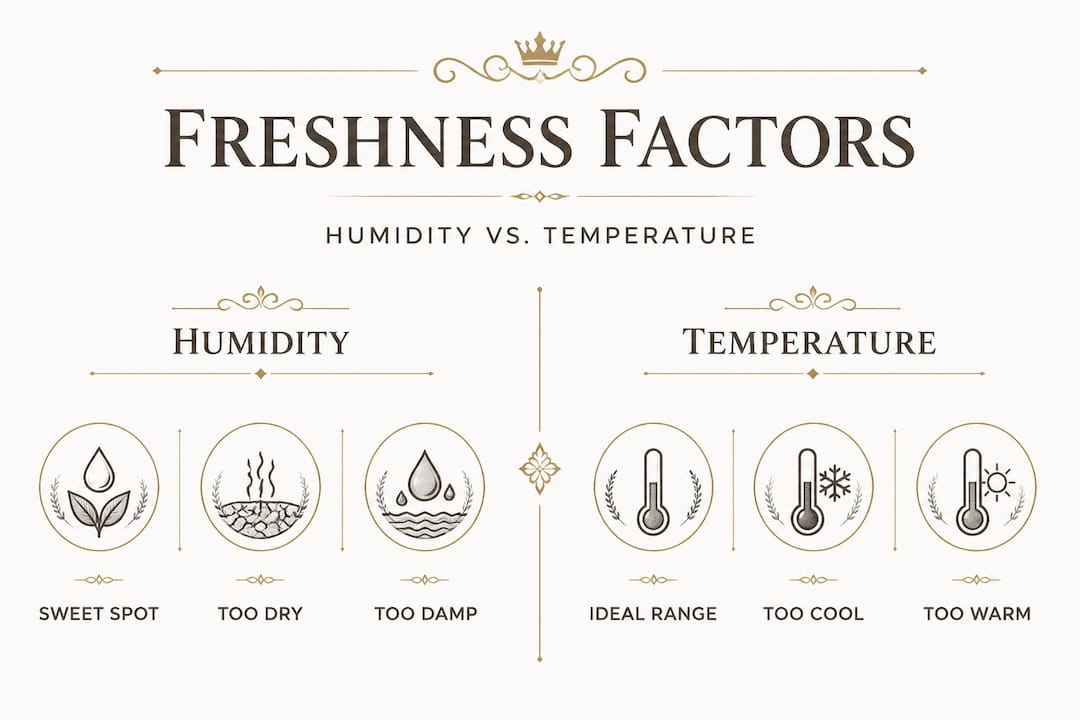
We recommend visiting our cigar care guides for deeper reading on how each of these variables interacts within your specific humidor setup.
Tools and materials you need for effective monitoring
With an understanding of the importance of freshness, you are ready to equip yourself with the right tools for the job. Precision monitoring demands precision instruments. The days of guessing or relying on a single, uncalibrated analog hygrometer are behind any collector who takes their craft seriously.
Digital vs. analog hygrometers
Digital hygrometers offer accuracy within plus or minus 1% to 2% RH, real-time readouts, and often include built-in temperature displays. Analog hygrometers, while aesthetically pleasing and fitting for traditional humidor aesthetics, can drift by as much as 5% to 10% without regular calibration. For a collection of any significant value, digital is the professional standard.
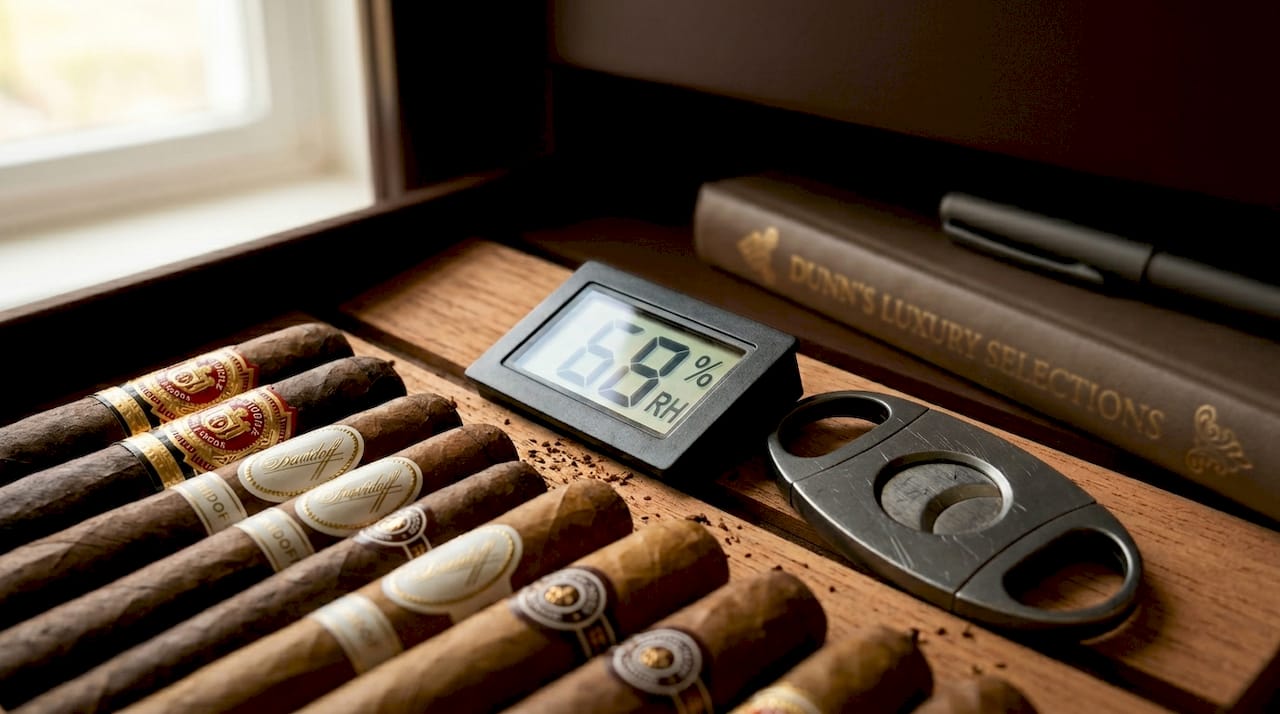
Thermometers
Many collectors make the mistake of relying solely on humidity readings. Temperature is equally critical. A dedicated thermometer, separate from your hygrometer if necessary, allows you to monitor for the conditions that trigger beetle hatching above 70°F. Combination units that display both RH and temperature simultaneously are ideal.
Humidor types and their monitoring needs
- Desktop humidors: Compact, elegant, and suitable for collections of 25 to 150 cigars. Single-zone monitoring is typically sufficient. Explore desktop humidor options crafted from premium Spanish Cedar.
- Cabinet humidors: Larger sanctuaries for serious collectors. Multi-zone monitoring is essential, as temperature and humidity can vary significantly between shelves.
- Travel humidors: Designed for portability, these require attention to external temperature changes during transit.
- Electronic humidors: The pinnacle of precision storage. These units feature integrated sensors, automated humidity control, and often Bluetooth connectivity for remote monitoring.
Humidity packs and passive solutions
Boveda and similar two-way humidity packs are excellent supplemental tools. They absorb or release moisture as needed, acting as a buffer between your active humidification system and your cigars. They do not replace active monitoring, but they add a meaningful layer of stability.
| Tool | Accuracy | Best For | Price Range |
|---|---|---|---|
| Digital hygrometer | ±1% to 2% RH | All collection sizes | $15 to $80 |
| Analog hygrometer | ±5% to 10% RH | Aesthetic preference only | $10 to $50 |
| Combination digital unit | ±1% RH / ±0.5°F | Professional monitoring | $25 to $120 |
| Bluetooth sensor | ±1% RH | Remote, large collections | $40 to $200 |
| Humidity packs | Passive buffer | All collection sizes | $5 to $30 per pack |
Pro Tip: Never store your cigars in a room where ambient temperature regularly exceeds 70°F. Even the finest humidor cannot fully compensate for an environment that is actively encouraging beetle activity.
Step-by-step: How to monitor cigar freshness like a pro
Now that you are set up with the right gear, here is your professional, proven monitoring routine, from setup to ongoing vigilance.
-
Calibrate your hygrometer before first use. Use the salt test method: place a small dish of saturated salt water and your hygrometer in a sealed bag for 8 to 12 hours. A properly functioning unit should read 75% RH. Adjust accordingly, or note the offset for future readings.
-
Season your humidor before loading cigars. Wipe the interior Spanish Cedar lining with distilled water, place a small dish of distilled water inside, and allow the wood to absorb moisture for 24 to 72 hours. This prevents the wood from drawing humidity away from your cigars.
-
Place monitoring devices in multiple zones. In a desktop humidor, position your hygrometer near the center. In a cabinet humidor, place sensors on the top shelf, middle shelf, and bottom shelf. Temperature and humidity stratify, and a single reading gives you an incomplete picture.
-
Check and log your readings at least once per week. Record the date, RH percentage, and temperature. A simple spreadsheet or dedicated app creates a data trail that reveals trends before they become crises.
-
Inspect your cigars physically during each check. Gently squeeze a cigar between your thumb and forefinger. It should yield slightly and spring back. A cigar that feels hard and unyielding is too dry. One that feels spongy or leaves an indentation is over-humidified.
-
Assess aroma as a freshness indicator. Open your humidor and inhale. You should detect rich, earthy, or sweet tobacco notes depending on your collection’s profile. A musty, ammonia-like, or sour odor signals a problem requiring immediate attention.
-
Look for visual red flags. Examine wrappers for cracks, white powdery spots (mold), small pinholes (beetle exit holes), or discoloration. Any of these demands immediate action.
“The difference between a great smoke and a ruined one is often measured in days of neglect. A weekly inspection ritual is not optional for a serious collector. It is the foundation of preservation.”
Pro Tip: Use a mobile app like Humistat or a simple digital log to track readings over time. Spotting a slow upward creep in RH over three weeks is far easier when you have data to review, rather than relying on memory alone.
As beetle prevention requires cool stable storage above all else, your temperature log is often more valuable than your humidity log. Explore electronic humidor devices that automate this vigilance with integrated climate control.
Troubleshooting common problems and mistakes
Even the best setups hit snags. Here is how to spot and fix issues before they ruin your cigars.
Humidity too high (above 72% RH)
Remove the active humidification source temporarily. Leave the humidor lid slightly ajar for one to two hours in a climate-controlled room. Introduce a dry humidity pack to absorb excess moisture. Recheck after 24 hours.
Humidity too low (below 62% RH)
Recharge your humidification device with distilled water. Add a fresh Boveda pack at your target RH level. Avoid using tap water, which introduces minerals and bacteria that degrade your humidor’s interior. Check the seal on your humidor lid, as a failing seal is the most common cause of persistent low humidity.
Mold vs. beetle damage: knowing the difference
- Mold appears as white, blue, or green fuzzy patches on the wrapper or in the humidor interior. It thrives in high humidity and poor airflow.
- Beetle damage appears as small, round pinholes in the wrapper, often accompanied by fine tobacco dust beneath the cigar.
Both require immediate quarantine of affected cigars. For mold, reduce humidity and improve airflow. For beetles, freeze unaffected cigars at 0°F for 72 hours before returning them to storage. As tobacco beetle eggs cannot survive below 65°F, sustained cold is your most reliable eradication tool.
Hygrometer calibration errors
A hygrometer that has never been calibrated is essentially decorative. Recalibrate every six months using the salt test. If your unit cannot be adjusted and shows a consistent offset, simply apply that offset to every reading. Precision matters here.
“Over-humidification is not kindness. It is as destructive as neglect. The cigar’s tobacco needs room to breathe, not to drown.”
Pro Tip: Consistent temperature is often more critical than chasing 70% RH. A humidor held steadily at 65% RH and 63°F will produce far better results than one that swings between 60% and 75% RH while hitting 72°F on warm afternoons.
Our humidity and freshness care guides offer detailed protocols for each of these scenarios, tailored to collectors at every level.
Summary table: Monitoring method quick-reference
Wrap up your routine with a visual guide you can refer to again and again.
| Check type | Frequency | Target range | Visual/aroma cue | Corrective action |
|---|---|---|---|---|
| RH reading | Weekly | 65% to 70% | N/A | Adjust humidification source |
| Temperature reading | Weekly | 60°F to 65°F | N/A | Relocate humidor or adjust room climate |
| Physical inspection | Weekly | Slight give, no cracks | Supple wrapper, no discoloration | Remove and assess affected cigars |
| Aroma check | Weekly | Rich, earthy tobacco | No mustiness or ammonia | Investigate for mold or over-humidification |
| Visual scan for pests | Monthly | No pinholes or dust | Clean wrappers | Quarantine and freeze protocol |
| Hygrometer calibration | Every 6 months | Reads 75% in salt test | N/A | Adjust or replace unit |
| Humidor seal inspection | Every 6 months | Lid closes with resistance | N/A | Replace seal or refinish lid edge |
As consistent cool storage prevents beetle hatching more reliably than any other single measure, temperature belongs at the top of every monitoring checklist, not as an afterthought.
Why consistency beats perfection in cigar freshness monitoring
We have seen it countless times among passionate collectors: an obsessive focus on achieving the mythical “perfect” 70% RH, while the temperature in the storage room quietly climbs to 74°F on a summer afternoon. The numbers on the hygrometer look pristine. The cigars, meanwhile, are quietly hosting a beetle nursery.
The uncomfortable truth about cigar freshness monitoring is that the routine matters far more than the precise reading on any given day. A collector who checks their humidor every Tuesday, logs the readings, inspects three or four cigars by hand, and makes small, measured adjustments will always outperform the enthusiast who checks obsessively for two weeks and then forgets for a month. Consistency is the discipline that separates a well-preserved collection from a cautionary tale.
We also believe that many aficionados undervalue the role of temperature in favor of humidity, partly because RH is the metric most prominently displayed on monitoring devices and discussed in beginner guides. Temperature, however, is the variable that determines whether your collection survives a warm season intact. Beetles do not care about your RH percentage. They care about warmth.
There is also a subtler point worth making: aging cigars do not need maximum humidity. They need stable humidity. A cigar resting at a consistent 65% RH over two years will develop more nuance, more complexity, and more character than one that bounces between 65% and 72% while its oils are repeatedly stressed. Stability is the true luxury that a well-maintained humidor provides, and it is the quality that our expert cigar care guides are designed to help you achieve with confidence.
Upgrade your monitoring with premium humidor solutions
When you are ready to take your monitoring and storage game to the highest level, start here.

The knowledge you now carry is only as powerful as the vessel that houses your collection. At Dunn’s Luxury Selections, we pair proven monitoring principles with storage solutions engineered for the serious aficionado. Our cabinet humidor collections offer multi-zone climate control within architecturally stunning cabinetry, while our desktop humidor selections bring precision and elegance to any setting. For collectors who demand the ultimate in automated freshness control, our advanced electronic humidors integrate seamlessly with your monitoring routine, removing guesswork entirely. Your collection deserves a sanctuary worthy of its legacy.
Frequently asked questions
What is the ideal humidity for storing cigars?
Most cigars store best at a relative humidity between 65% and 70% for optimal freshness, though some aged or premium blends benefit from the lower end of that range.
How do I know if my cigars have dried out or become too moist?
Check for brittle wrappers or mold: dry cigars crack and flake, while over-humidification produces a musty odor, spongy texture, or visible mold growth on the wrapper.
How often should I check my humidor readings?
Regular weekly monitoring prevents spoilage and infestations; larger collections or warmer storage environments may warrant checks every two to three days.
Why is temperature control important in addition to humidity?
Stable, cooler temperatures prevent pests like tobacco beetles, which die below 65°F, making temperature the most critical variable for protecting a collection during warmer months.
Recommended
You May Also Enjoy
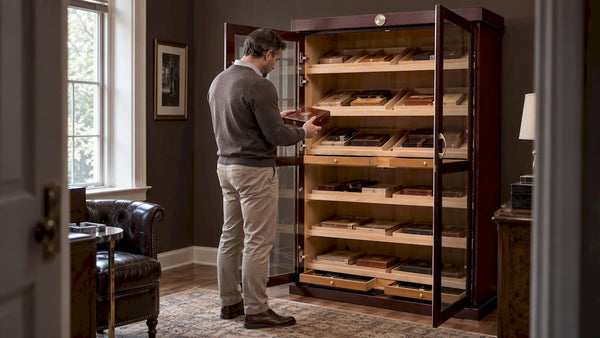
Cigar Collection Insurance: How to Protect Your Humidor
Home policies often cap or exclude cigars. Learn how floaters, agreed value, appraisals and inventories protect a serious...
Read Article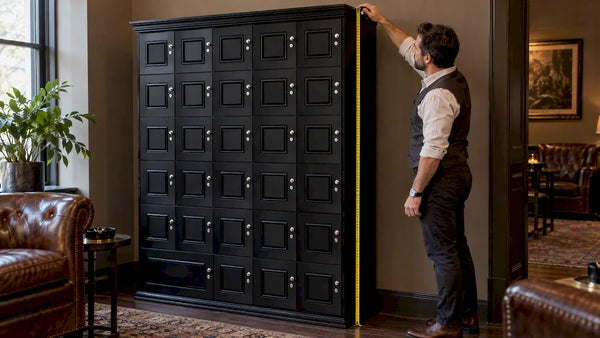
Cigar Locker Dimensions: Sizing Guide for Collectors and Lounges
Cigar locker dimensions explained: compartment sizes, cabinet footprints, capacity math and clearances, so you size a locker bank...
Read Article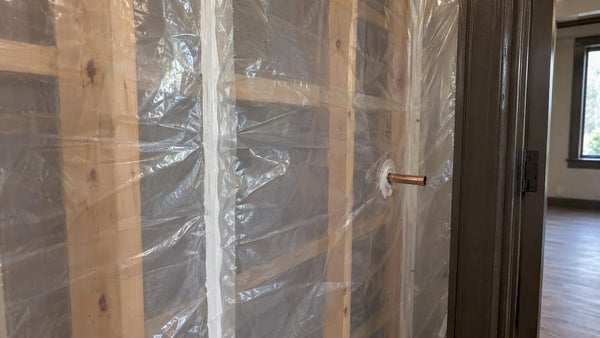
Sealing a Walk-In Humidor: Envelope, Door and Penetrations
How to seal a walk-in humidor properly: vapor barrier placement, door gasket, penetrations and the controlled airflow a...
Read Article