

Learn how to store cigars properly to keep them fresh and flavorful. Discover essential tips for maintaining your collection's quality!
A cigar improperly stored is a cigar quietly dying. The oils dry out, the wrapper cracks, and the complex flavors that a master blender spent years refining simply vanish. Knowing how to store cigars is not a detail reserved for serious collectors. It is the foundation of every meaningful smoking experience. Whether you own three cigars or three hundred, the same principles govern freshness, aroma, and burn quality. This guide covers everything from essential tools and humidor setup to alternative storage methods and troubleshooting, so your collection is always in perfect condition.
Table of Contents
- Key takeaways
- How to store cigars: essential requirements
- Seasoning your humidor the right way
- Maintaining your humidor over time
- Storing cigars without a humidor
- Recognizing and fixing storage problems
- My honest perspective on cigar storage
- Elevate your collection with Dunnluxuryselections
- FAQ
Key takeaways
| Point | Details |
|---|---|
| Maintain the right environment | Keep cigars at 65%–70% relative humidity and 65°F–70°F for optimal preservation. |
| Season your humidor first | A new humidor must be seasoned for 3–14 days before introducing cigars, or it will draw moisture from them. |
| Use only distilled water | Tap water introduces mineral deposits that damage humidification devices and alter cigar flavor over time. |
| Non-humidor options exist | Airtight containers with two-way humidity packs work for short-term storage when a humidor is not available. |
| Monitor consistently, not obsessively | Checking humidity once or twice a week is sufficient. Over-opening your humidor disrupts the climate you worked to build. |
How to store cigars: essential requirements
Before you place a single cigar anywhere, you need to understand what conditions keep tobacco alive. Cigars are organic. They breathe, respond to their environment, and deteriorate when that environment is wrong.
The target range most experienced aficionados trust is 65%–70% relative humidity paired with a temperature between 65°F and 70°F. Some collectors aim precisely for 70% RH as a reliable buffer, particularly in situations where a humidor is opened frequently. Both humidity and temperature matter, but temperature stability is often more critical than hitting an exact number. Swings in temperature invite tobacco beetles and wrapper damage, two problems that can devastate an entire collection without warning.
Here is what you need to create and maintain that environment:
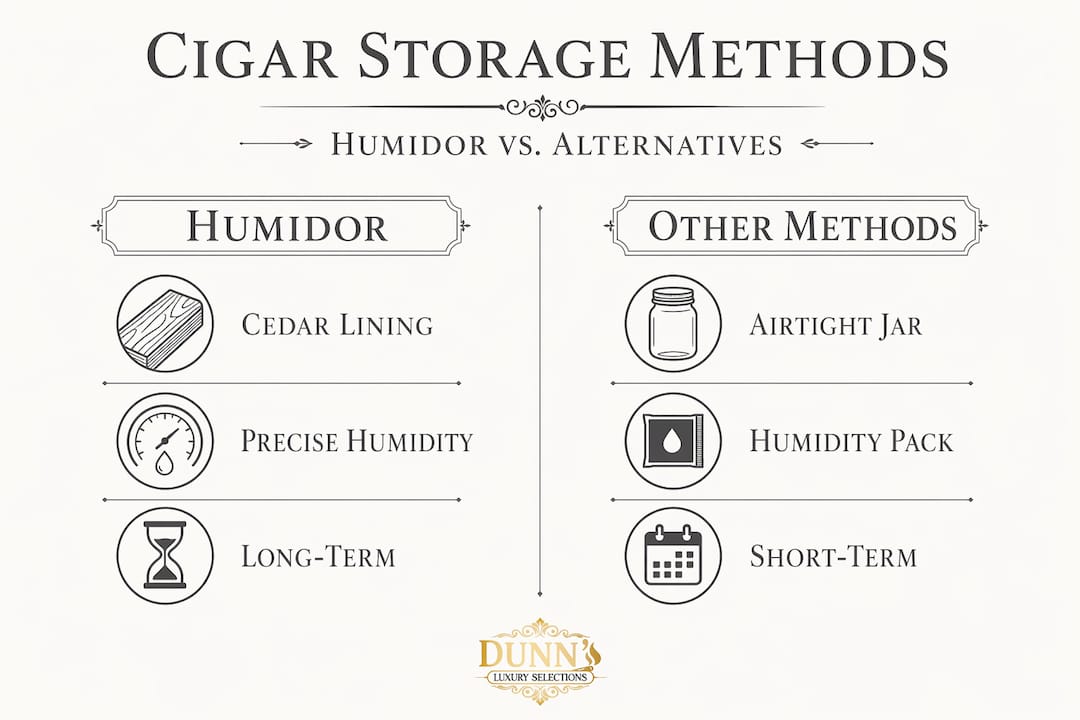
- A quality humidor. The interior should be lined with Spanish cedar, which naturally regulates moisture, mildly complements tobacco aromas, and deters pests. Desktop humidors suit collections of 25–150 cigars. Cabinet humidors accommodate larger collections with zonal airflow control.
- A reliable hygrometer. A digital hygrometer gives you precise readings of relative humidity and temperature inside the box. Analog versions are fine but require calibration.
- Distilled water or a propylene glycol solution. Using distilled water exclusively prevents mineral buildup in your humidification device, which would otherwise compromise both the device and your cigars.
- Two-way humidity packs. Brands like Boveda offer packs calibrated to specific RH levels. They absorb excess moisture when humidity climbs and release it when humidity drops, providing a safety net between manual refills.
| Storage method | Best for | Humidity control | Ideal duration |
|---|---|---|---|
| Spanish cedar humidor | Serious collectors | Precise, stable | Long-term (years) |
| Electronic humidor | Large or valuable collections | Automated | Long-term |
| Airtight container (tupperdor) | Budget-conscious enthusiasts | Manual (humidity packs) | Short to medium term |
| Ziplock bag with humidity pack | Emergency or travel | Basic | Days to weeks |
Pro Tip: When choosing a humidor, avoid models with synthetic foam humidifiers. Foam degrades over time, grows mold, and releases contaminants into your cigars. Opt for crystal or floral foam alternatives, or better yet, rely on Boveda packs from day one.
Seasoning your humidor the right way
A brand-new humidor is, in practice, a humidity thief. The raw Spanish cedar lining is dry and hungry for moisture. If you load it with cigars immediately, the wood will pull moisture from your collection rather than from the humidification device. Seasoning solves this by saturating the cedar before a single cigar touches the interior.
Follow these steps with precision:
- Wipe the interior with distilled water. Use a clean, lint-free cloth lightly dampened with distilled water. Wipe all interior wood surfaces, including the trays and dividers. Do not soak the wood. You are conditioning it, not flooding it.
- Fill your humidification device. Whether you use a crystal gel jar, a foam humidifier, or humidity packs, load it according to the manufacturer’s instructions using distilled water or propylene glycol solution.
- Place a small cup of distilled water inside. Set a shot glass or small dish with distilled water on the tray. This accelerates the seasoning process by introducing additional ambient moisture.
- Close the humidor and leave it undisturbed. Resist the urge to check it every few hours. Seasoning takes 3–14 days depending on the size and dryness of the humidor. Larger cabinet pieces need more time.
- Monitor with your hygrometer. Check the reading after 24 hours, then every day or two. You are waiting for the humidity to stabilize consistently between 65% and 70%. Spikes above 80% are normal in the first 48 hours as the cedar absorbs moisture. The goal is a steady reading, not a single high one.
- Remove the water cup and introduce your cigars. Once the hygrometer shows stable readings in your target range for at least two consecutive days, remove the standing water dish and begin loading your cigars.
Pro Tip: Never use tap water at any point during seasoning. Minerals in tap water leave deposits inside humidification devices, reducing their effectiveness and potentially transferring unwanted flavors to your cigars. Distilled water is non-negotiable.
Maintaining your humidor over time
Setting up a perfect environment is only the beginning. Preserving that environment over weeks, months, and years requires a consistent maintenance routine. The good news is that once a humidor is seasoned and loaded properly, the work is minimal.
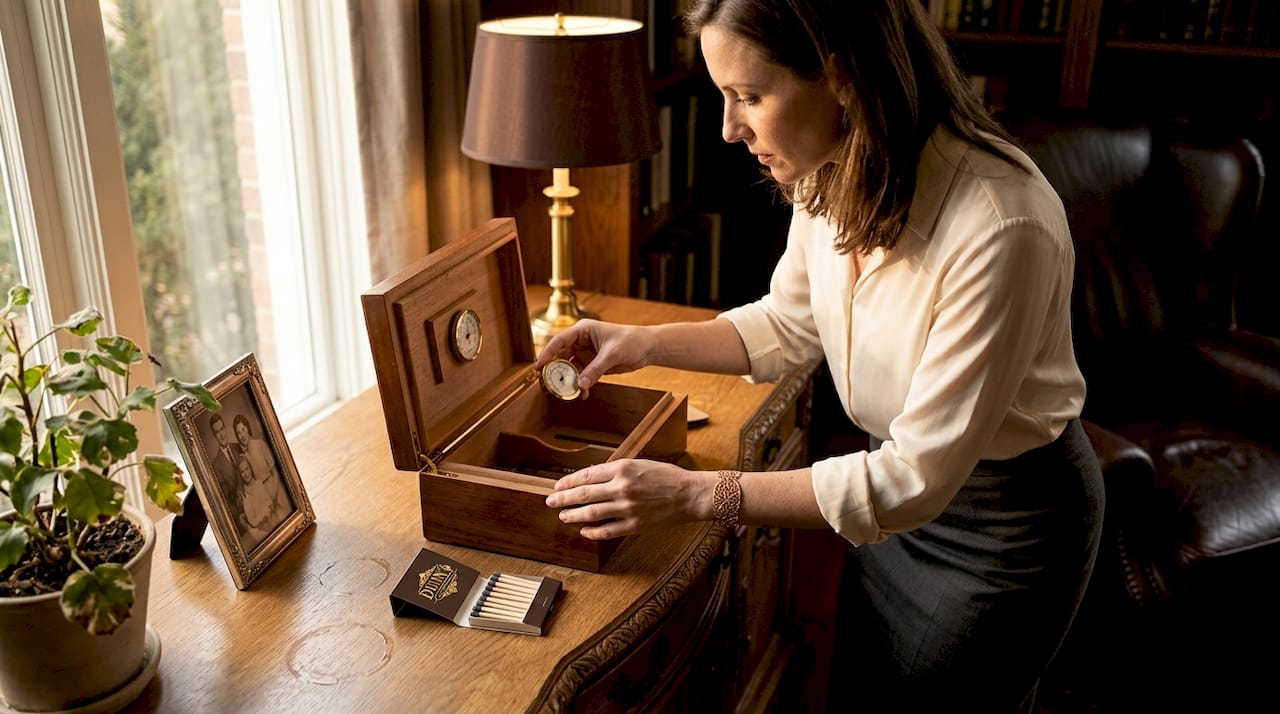
Check humidity once or twice per week. That frequency gives you early warning of any drift without unnecessarily disturbing the internal climate. Every time you open the lid, conditioned air escapes and ambient air enters. Opening the humidor fifteen times a day to admire your collection is one of the most common ways aficionados unknowingly undermine their own storage.
Best practices for long-term humidor care include:
- Refill humidification devices before they run dry. A crystal gel device that has fully dried out takes time to recharge and leaves your cigars vulnerable during that gap. Refill when the device feels noticeably lighter or your hygrometer shows a downward trend.
- Keep the humidor away from sunlight, heaters, and vents. Direct sunlight and heat sources cause temperature fluctuations that crack wrappers and create conditions where mold can thrive. A stable, shaded surface in a climate-controlled room is ideal.
- Rotate your cigars every few weeks. Cigars resting closest to the humidification device receive slightly more moisture than those on the far side of the tray. Rotating them periodically delivers more even conditioning throughout the collection.
- Organize by flavor profile. Strong full-bodied cigars can impart their aroma to milder cigars over time. Grouping similar profiles together, or using cedar dividers between them, preserves the character of each blend.
“The single most damaging thing most collectors do is treat the humidor like a display case. Every unnecessary opening is a small act of sabotage. Discipline in maintenance protects everything you have invested.”
Storing cigars without a humidor
Not every aficionado owns a humidor, and not every situation calls for one. If you need to preserve cigars for days or a few weeks, there are dependable alternatives that require nothing more than an airtight container and the right humidity pack.
The most practical solution is the “tupperdor,” a food-grade airtight container, like a Tupperware bin or a glass jar with a rubber seal, combined with Boveda two-way humidity packs. These packs maintain stable conditions by absorbing or releasing moisture as needed. Replace them every two to three months, or when they feel hard and fully saturated. Minimizing airspace inside the container also helps. Less air volume means faster stabilization and less humidity drift when you open the lid.
A few important rules for non-humidor storage:
- Use a 65% or 69% RH pack matched to your target. Do not guess.
- Store the container in a cool, stable room away from sunlight and heat.
- Avoid stacking heavy objects on top, which can deform the seal.
What you should never do is store cigars in a refrigerator. Despite the appeal of cold, stable temperatures, refrigerators absorb foreign odors through packaging and can strip moisture from tobacco in ways that are difficult to reverse. A cedar-lined humidor filters ambient aromas while regulating climate. A refrigerator does neither.
Pro Tip: If you are traveling and cannot bring a humidor, place your cigars in a ziplock bag with a Boveda pack, press out as much air as possible, and seal it. This buys you reliable short-term protection for up to two weeks without specialized equipment.
Recognizing and fixing storage problems
Even a well-maintained humidor occasionally drifts. Knowing what warning signs look like keeps small problems from becoming permanent losses.
Watch for these indicators:
- Cracked or flaking wrappers. This signals that humidity has dropped too low and the tobacco has dried out. If caught early, gradual re-humidification in a properly seasoned humidor over one to two weeks can restore some pliability.
- Soft or spongy feel with a musty smell. Excess humidity above 75% RH encourages mold growth. Remove affected cigars immediately, let the humidor dry slightly, and recalibrate your humidification setup.
- Small round holes in the wrapper or filler. This is tobacco beetle damage. Beetles hatch when temperatures exceed 72°F. Quarantine affected cigars, freeze the entire collection for 72 hours in a sealed bag, then gradually return them to humidor temperature.
- Humidity consistently outside the 65%–70% range. Recalibrate your hygrometer first using the salt test, then reassess your humidification device.
“A cigar that is slightly too dry is salvageable. A cigar destroyed by mold or beetles is gone. Preventive vigilance costs minutes. Recovery costs collections.”
My honest perspective on cigar storage
I’ve seen collectors spend thousands on rare Cubans and then store them in a cedar box they never seasoned, next to a kitchen window that gets afternoon sun. The cigars were damaged within weeks. The humidor was not the problem. The habits were.
What I’ve learned after years of handling and advising on cigar collections is that consistency is worth far more than perfection. You do not need to hit exactly 70% RH every day. You need to avoid wild swings. A collection sitting at a steady 67% outperforms one that bounces between 62% and 78% by a wide margin. Stability is the actual goal.
The other mistake I see constantly is over-investing in the wrong direction. People buy ornate wooden boxes with no Spanish cedar lining and assume the craftsmanship signals quality storage. The interior is where all the functional work happens. A plain, well-lined humidor beats a beautiful one with a synthetic foam humidifier every time. Spend on the inside, not the outside. And if you are serious about growing a collection worth protecting, move to an electronic humidor before you think you need one. Automated climate control removes nearly all human error from the equation, and that peace of mind has genuine value.
— Belle
Elevate your collection with Dunnluxuryselections
At Dunnluxuryselections, we believe a cigar collection is a timeline of memories, and every piece deserves a sanctuary worthy of its craft.

Our humidor collections are built for aficionados who refuse to compromise. Whether you are curating your first desktop humidor for a focused selection of 50 to 100 cigars, or you are ready for a full cabinet humidor that anchors your collection with Spanish cedar and precision humidification, Dunnluxuryselections has the instrument for you. We also carry travel humidors for collectors who never leave their standards at home. Explore our care guides for expert advice on long-term cigar preservation, humidity calibration, and everything in between. Your collection deserves this level of care.
FAQ
What is the ideal humidity for storing cigars?
The ideal humidity for storing cigars is 65%–70% relative humidity, paired with a temperature between 65°F and 70°F. Many collectors target 70% RH as a reliable buffer, especially when the humidor is opened regularly.
How long does it take to season a new humidor?
Seasoning a new humidor typically takes 3–14 days, depending on the size and dryness of the wood. The humidor is ready when the hygrometer shows stable readings in the target humidity range for at least two consecutive days.
Can you store cigars without a humidor?
Yes, short-term storage in an airtight container with a two-way humidity pack is a reliable alternative. Replace packs every 2–3 months and keep the container away from sunlight and heat for best results.
Why should you never refrigerate cigars?
Refrigerators expose cigars to foreign odors and inconsistent moisture, which damages flavor and texture. A cedar-lined humidor provides far superior odor filtering and climate control than any refrigeration unit.
How often should you check humidity inside a humidor?
Once or twice per week is the recommended monitoring frequency. Checking more often introduces unnecessary air exchange and humidity disruption without adding meaningful information.
Recommended
You May Also Enjoy
Cigar Collection Insurance: How to Protect Your Humidor
Home policies often cap or exclude cigars. Learn how floaters, agreed value, appraisals and inventories protect a serious...
Read Article
Cigar Locker Dimensions: Sizing Guide for Collectors and Lounges
Cigar locker dimensions explained: compartment sizes, cabinet footprints, capacity math and clearances, so you size a locker bank...
Read Article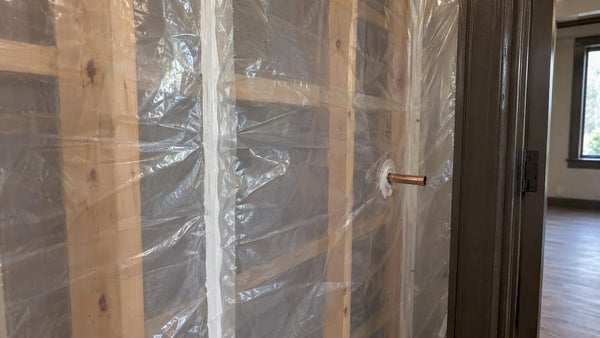
Sealing a Walk-In Humidor: Envelope, Door and Penetrations
How to seal a walk-in humidor properly: vapor barrier placement, door gasket, penetrations and the controlled airflow a...
Read Article