

Explore our comprehensive humidification methods list to protect your cigars. Ensure optimal flavor and freshness with expert tips and choices!
Every cigar in your collection represents a commitment. It deserves an environment as deliberate as the hands that rolled it. Yet selecting from the full humidification methods list available today is not as straightforward as it might seem. The wrong choice means fluctuating relative humidity, cracked wrappers, mold, and a diminished smoking experience. The right choice preserves the oils, flavor compounds, and construction that make a premium cigar worth savoring. This guide cuts through the options with precision, covering every method from classic sponge devices to automated electronic systems, so you can make an informed decision for your collection.
Table of Contents
- Key takeaways
- Humidification methods list: how to evaluate your options
- 1. Two-way humidity control packs
- 2. Traditional sponge-based humidifiers
- 3. Gel crystal humidifiers
- 4. Propylene glycol solution humidifiers
- 5. Electronic humidifiers and digital control systems
- 6. Beaded humidifiers
- 7. Emergency and travel humidification methods
- 8. Summary comparison of humidification methods
- My honest perspective on choosing a humidification method
- The Dunnluxuryselections difference in cigar preservation
- FAQ
Key takeaways
| Point | Details |
|---|---|
| Stability beats perfection | A consistent 67% RH protects cigars better than humidity that swings between 60% and 72%. |
| Two-way packs offer the least maintenance | Boveda-style packs maintain ±1% accuracy for two to four months without any intervention. |
| Electronic systems suit large collections | Automated humidifiers with sensors are ideal for cabinet or walk-in humidors holding hundreds of cigars. |
| Hygrometers need calibration | Factory calibration is rarely reliable; perform a salt test every six months for accurate readings. |
| Seal quality shapes every method’s success | Even the finest humidification device cannot fully compensate for a poorly sealed humidor. |
Humidification methods list: how to evaluate your options
Before working through the individual methods, you need a framework for comparison. Not every solution suits every collector, and the best humidification techniques are always chosen in relation to your specific setup, not in isolation.
The industry standard environment for premium cigars sits at 65%–72% relative humidity and 64°F–70°F. Many experienced aficionados actually prefer the lower end of that spectrum, around 65–68% RH, because it produces a more consistent burn and better flavor expression.
When evaluating any method from this humidifying methods guide, measure it against these criteria:
- Accuracy: How precisely does the method maintain your target RH?
- Consistency: Does it hold RH steady over days and weeks, or does it swing?
- Maintenance demand: How often does it need refilling, replacing, or recalibrating?
- Cost: What is the upfront investment versus ongoing expense?
- Compatibility: Does it suit your humidor’s size and seal quality?
Stability matters more than hitting an exact number. Humidity swings are the true enemy: they cause wrapper cracks, promote mold, and degrade the construction of your cigars far faster than holding at a stable 66% ever would.
Pro Tip: Before investing in any humidification device, test your humidor’s seal by placing a dollar bill in the lid crease and closing it. If you can slide the bill out with ease, your seal is compromised, and no humidification method will perform at its best until that is addressed.
1. Two-way humidity control packs
Two-way packs represent the most significant shift in home moisture control methods for cigars over the past two decades. They are the preferred choice for collectors who prize precision without the burden of constant management.
These packs work through a saturated salt solution sealed within a permeable membrane. The membrane allows the pack to both release and absorb moisture, automatically pushing toward a preset RH. When your humidor runs dry, the pack releases. When it gets too humid, the pack absorbs. The system requires no programming, no refilling, and no intervention.
Boveda packs maintain ±1% accuracy and last two to four months under normal conditions. The recommended ratio is one pack per 25 cigars, though you should add packs if your humidor has a weaker seal.
Key considerations:
- Pros: Maintenance-free operation, laboratory-grade precision, available in multiple RH levels (62%, 65%, 69%, 72%), no risk of over-humidification
- Cons: Recurring cost as packs expire, cannot be refilled, pack count must scale with humidor size
Pro Tip: When a Boveda pack becomes completely rigid and crystallized, it has reached the end of its life. Replace it promptly rather than waiting for your RH to visibly drop, because degraded packs can behave unpredictably in their final weeks.
2. Traditional sponge-based humidifiers
The sponge humidifier is where most collectors begin. It is a simple device: a porous foam or sponge element is soaked in distilled water or a propylene glycol solution, then placed inside the humidor lid or along the interior wall. Moisture evaporates gradually from the sponge and raises the ambient RH.
Traditional sponge and gel humidifiers require regular refilling and careful upkeep to prevent mold growth and uneven humidity distribution. They work best in smaller humidors for occasional smokers who do not require laboratory-level consistency.
- Pros: Low upfront cost, widely available, simple to use
- Cons: Requires distilled water refills every one to two weeks, prone to mold if overfilled, humidity levels can fluctuate significantly, no absorption capability when RH rises
Always use distilled water, never tap water. Minerals in tap water leave deposits on the sponge and introduce contaminants into your humidor’s microenvironment. A propylene glycol solution is preferable because it provides a natural ceiling effect around 70% RH, reducing the risk of over-humidification.
3. Gel crystal humidifiers
Gel crystal humidifiers represent an upgrade from the traditional sponge without the complexity or cost of electronic systems. The crystals absorb water and release it slowly, providing a somewhat more controlled output than foam elements.
The gel format holds significantly more water by weight than foam, which extends the time between refills. Many models are designed for tabletop or lid placement inside desktop humidors, making them a practical mid-range option for collectors with small to medium collections.
- Pros: Longer intervals between refills than sponge models, less mold risk than raw foam, visually easy to monitor water saturation
- Cons: Still relies on passive evaporation, cannot absorb excess humidity, requires distilled water, may need supplemental hygrometer monitoring
The gel crystals turn clear when fully saturated and begin to shrink as they release moisture. This visual indicator simplifies maintenance, though it does not replace regular RH monitoring with a calibrated hygrometer.
4. Propylene glycol solution humidifiers
Propylene glycol (PG) solution humidifiers deserve specific mention as a step above basic sponge devices. A 50/50 mixture of propylene glycol and distilled water, when used in a foam or bead-based device, produces a natural humidity ceiling of approximately 70% RH. This is one of the most practical natural humidification solutions available for cigar storage because it provides a built-in safeguard against over-humidification.
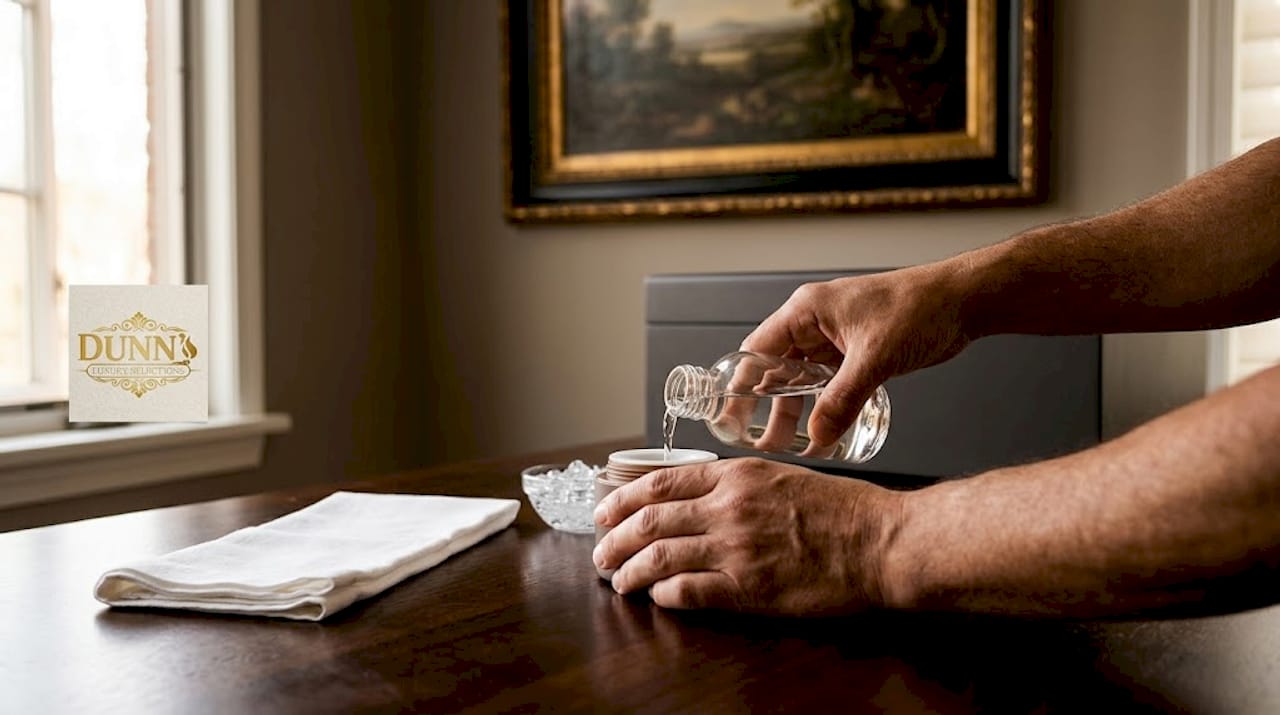
This method suits collectors who understand the chemistry and want an affordable, semi-passive solution. The PG solution is available pre-mixed from most cigar supply retailers. Refill every two to three weeks depending on your humidor’s volume and ambient temperature.
The limitation is the same as all passive systems: PG solution releases but does not absorb. If external humidity spikes, your humidor has no defense without a two-way system as a complement.
5. Electronic humidifiers and digital control systems
Electronic humidifiers with integrated sensors represent the apex of automated humidity regulation. These units use a sensor to monitor real-time RH, a fan to circulate humidified air, and a heating element or ultrasonic technology to generate moisture on demand. When RH drops below your set threshold, the unit activates. When it reaches the target, it stops.
The precision is genuinely impressive. Where a sponge humidifier might drift by five to ten percentage points over a week, a quality electronic unit holds within one to two percentage points consistently. This makes electronic systems ideal for cabinet humidors or walk-in setups holding hundreds of cigars.
| Feature | Passive methods (sponge/gel) | Electronic humidifiers |
|---|---|---|
| Accuracy | ±5–10% RH | ±1–2% RH |
| Maintenance frequency | Weekly to biweekly | Monthly to quarterly |
| Upfront cost | $5–$30 | $80–$500+ |
| Absorption capability | None | Yes (with two-way sensors) |
| Best for | Small humidors | Large or walk-in humidors |
The trade-off is cost and complexity. Electronic units require a power source, occasional cleaning to prevent mineral buildup in water reservoirs, and periodic sensor calibration. For a serious collection, the investment pays for itself in protection.
6. Beaded humidifiers
Humidity bead systems use silica gel beads, a material widely recognized in industrial humidification options for its stability. The beads are charged with distilled water and release moisture at a consistent rate, far more predictable than organic foam. Some formulations offer two-way absorption, similar in principle to chemical packs.
The advantage over standard gel crystals lies in the surface area. More surface area means finer, more even moisture distribution throughout the humidor’s interior. This is particularly useful in larger desktop humidors where one-sided moisture release can create humidity gradients, meaning some cigars sit at 68% while others at the back of the box sit at 63%.
Recharging beads requires soaking in distilled water and patting them dry, which is a more hands-on process than simply replacing a pack. For collectors who enjoy the ritual of humidor maintenance, beads offer a satisfying, sustainable alternative to disposable packs.
7. Emergency and travel humidification methods
Life does not always permit access to a properly equipped humidor. These solutions are temporary by design. They are not ideal for long-term storage but are genuinely useful in a pinch.
Resealable plastic bags with humidity packs or airtight containers with a moistened sponge provide short-term protection during travel or while waiting on a replacement humidor. A 69% Boveda pack inside a zip-lock bag can hold a few cigars in acceptable condition for several days.
Options to know:
- Travel humidors: Compact cases with a built-in humidification element. Quality travel humidors seal tightly and hold three to ten cigars reliably for short trips
- Airtight containers: A Tupperware or food-safe container with a small humidity pack works surprisingly well for up to a week
- Coolidors: An ice chest or foam cooler lined with Spanish Cedar and loaded with humidity packs, useful for temporarily housing a large collection during moves
Avoid refrigerators entirely. The cold temperature suppresses the oils in your cigars and the dry, recirculated air strips moisture faster than almost any other environment.
8. Summary comparison of humidification methods
| Method | Maintenance | Cost | Accuracy | Best humidor size |
|---|---|---|---|---|
| Two-way packs | Very low | Medium (recurring) | ±1% RH | Small to large |
| Sponge/foam | High | Very low | ±5–10% RH | Small |
| Gel crystals | Medium | Low | ±3–5% RH | Small to medium |
| PG solution | Medium | Low | ~70% ceiling | Small to medium |
| Silica beads | Medium | Low to medium | ±2–3% RH | Medium |
| Electronic | Low | High (upfront) | ±1–2% RH | Large to walk-in |
| Emergency methods | N/A | Varies | Variable | Temporary only |
My honest perspective on choosing a humidification method
In my experience, the conversation about humidification methods almost always gets distorted by one mistake: people obsess over the target RH number and completely neglect the stability of that number. I’ve seen collections of rare Cuban cigars deteriorate inside a humidor that supposedly held 69% RH, because it was swinging between 62% and 74% over the course of each week. Meanwhile, a modest collection stored in a tight desktop humidor with a couple of two-way packs at 66% was aging beautifully.
Consistent humidity is the real metric. That principle should anchor every decision you make from this humidification methods list.
I also want to address hygrometer trust. Most collectors accept factory-calibrated hygrometers at face value, and that is a mistake I made myself early on. Hygrometers require calibration every six months using a salt test. Without that, you may believe your humidor is at 68% when it is actually at 61%.
One more thing that rarely gets discussed: acclimate new cigars separately before adding them to your main collection. A box of dry cigars placed directly into a well-maintained humidor will draw moisture aggressively and temporarily destabilize the RH for every cigar already in residence. Give new arrivals a week in a smaller, separate container first. It is a small step that protects an entire collection.
The best method is always the one you will actually maintain. Choose accordingly.
— Belle
The Dunnluxuryselections difference in cigar preservation
At Dunnluxuryselections, we understand that a humidor is more than a box. It is the sanctuary that safeguards your legacy, your collection, and the experiences attached to every cigar within it. Our curated range of humidors is designed to support every humidification method discussed in this guide, from precision-built desktop humidors with superior Spanish Cedar lining to grand cabinet humidors engineered for serious collectors.

We also carry a full selection of humidity control accessories, including calibrated hygrometers and two-way humidity packs, so your setup is complete from day one. Whether you are building your first collection or expanding a decades-long passion, Dunnluxuryselections is the partner you deserve. Explore our collections and discover the instruments worthy of your finest cigars.
FAQ
What is the ideal humidity for storing cigars?
The ideal range is 65%–72% RH at 64°F–70°F, though many aficionados prefer 65–68% for a more consistent burn. Stability within that range matters more than hitting any single number.
How often should I replace two-way humidity packs?
Two-way packs last two to four months under normal conditions and should be replaced when they become completely rigid. Plan for replacement roughly every three months as standard practice.
Can I use tap water in my humidifier?
No. Tap water introduces minerals and contaminants that degrade your humidification device and can introduce off-flavors to your cigars. Always use distilled water or a premixed propylene glycol solution.
Do electronic humidifiers work for small desktop humidors?
Electronic humidifiers are best suited to large cabinet or walk-in setups. For small to medium desktop humidors, two-way packs or gel crystal systems deliver excellent results at a fraction of the cost and complexity.
Why is my hygrometer reading inaccurate?
Most hygrometers drift from their factory calibration over time. Calibrate your hygrometer every six months using a salt test kit. Place the hygrometer in a sealed bag with a small dish of saturated salt solution for eight hours; a calibrated reading should sit at exactly 75% RH.
Recommended
You May Also Enjoy
Cigar Locker Dimensions: Sizing Guide for Collectors and Lounges
Cigar locker dimensions explained: compartment sizes, cabinet footprints, capacity math and clearances, so you size a locker bank...
Read Article
Sealing a Walk-In Humidor: Envelope, Door and Penetrations
How to seal a walk-in humidor properly: vapor barrier placement, door gasket, penetrations and the controlled airflow a...
Read Article
Retail Humidor ROI: How to Measure What a Display Earns
What does a retail or lounge humidor really return? A practical framework for cigar shops, lounges and clubs:...
Read Article