

Discover the ultimate guide to humidor authentication. Protect your cigar collection with essential verification steps to ensure quality and longevity.
Humidor authentication is the systematic process of verifying that a cigar storage vessel is constructed from genuine materials, sealed to specification, and calibrated to maintain precise relative humidity for long-term preservation. For serious collectors, a counterfeit or substandard humidor is not a minor inconvenience. It is a direct threat to cigars that may represent years of acquisition and significant financial investment. This guide to humidor authentication walks you through every critical verification step, from hygrometer calibration using the salt test to identifying authentic Spanish cedar by aroma and grain, so you can protect your collection with confidence.
What does a guide to humidor authentication actually cover?
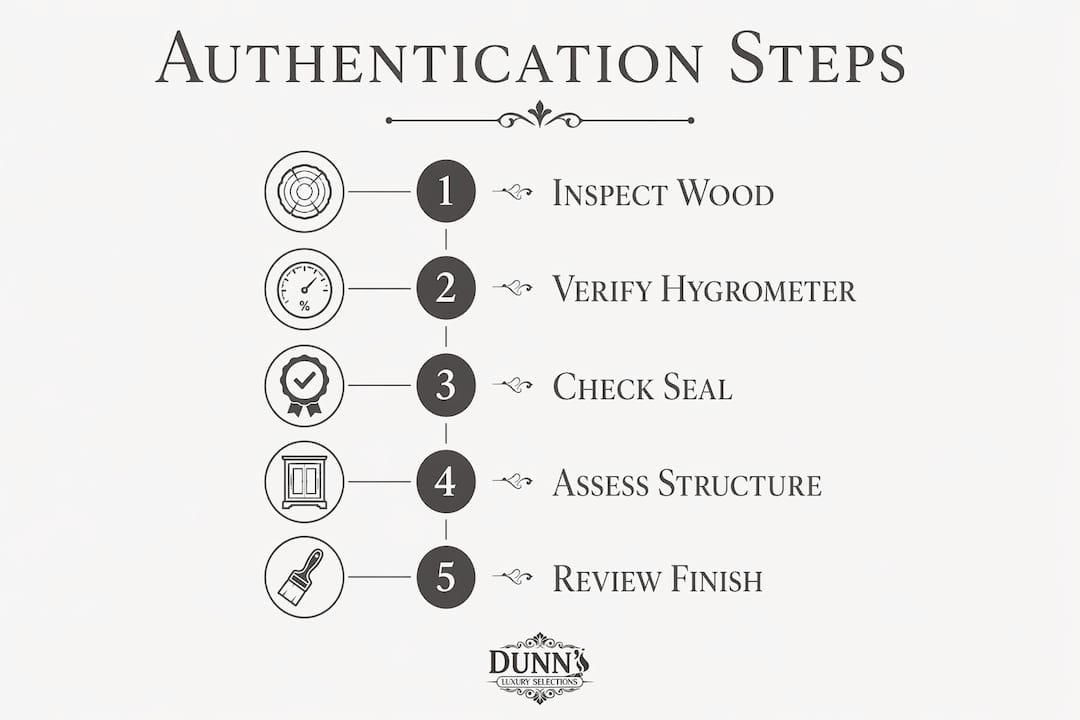
Authentication is not a single test. It is a layered inspection protocol that examines four distinct systems: the humidity measurement instrument (hygrometer), the interior lining material (typically Spanish cedar), the structural seal, and the overall build quality. Each system can fail independently, and a humidor that passes one check can still compromise your cigars if another element is counterfeit or defective. The most rigorous collectors treat authentication the way a watchmaker treats movement inspection: methodical, sequential, and unforgiving of shortcuts.
The market for premium humidors has grown alongside the global cigar renaissance, and with that growth has come a corresponding rise in low-quality imitations presented as collector-grade pieces. Dunnluxuryselections has observed this pattern directly, which is why a structured authentication framework matters more now than it did a decade ago.
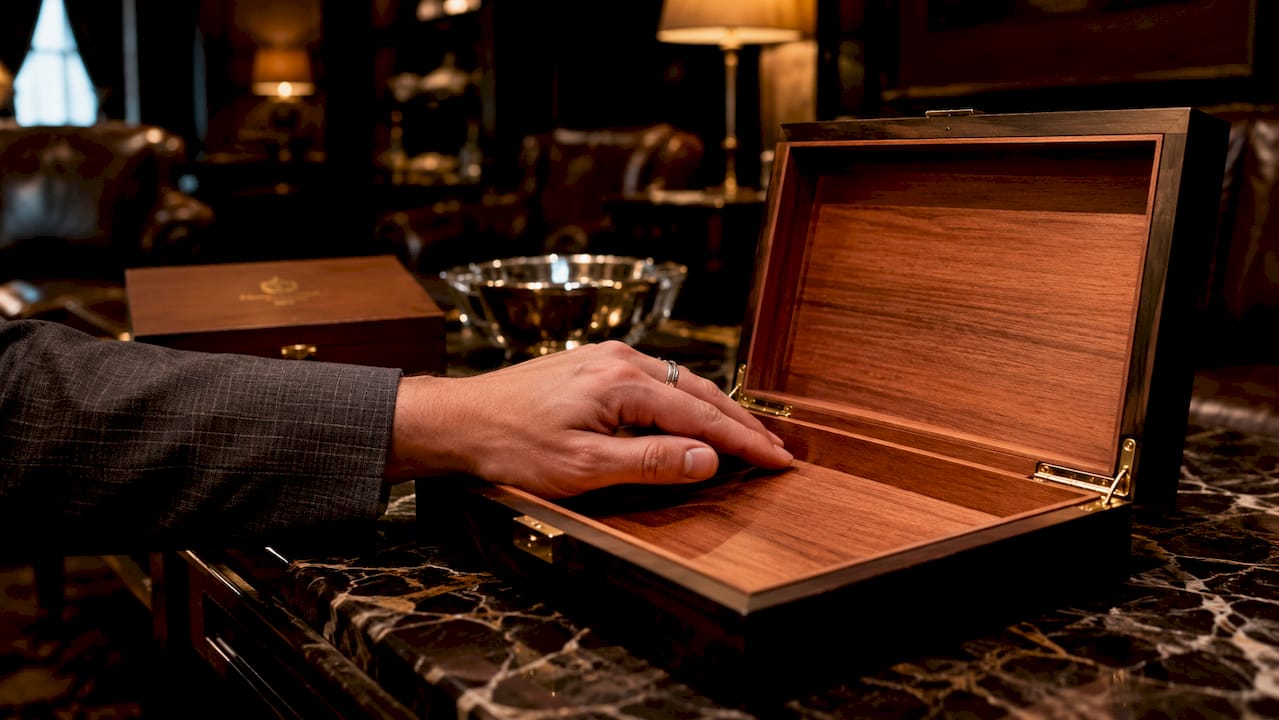
How do you verify hygrometer accuracy in a humidor?
A hygrometer measures relative humidity inside the humidor, and an uncalibrated instrument is worse than no instrument at all because it creates false confidence. Hygrometers should be calibrated every three months using the salt test for reliable accuracy. That interval matters because both analog and digital sensors drift over time, particularly when exposed to temperature fluctuations.
The salt test procedure runs as follows:
- Mix non-iodized table salt with just enough distilled water to create a damp paste, not a liquid solution.
- Place the paste in a small, open container inside a sealed, airtight bag or container alongside the hygrometer.
- Leave the assembly undisturbed for 24 hours at room temperature.
- After 24 hours, the hygrometer should read exactly 75% relative humidity. Any deviation indicates the instrument needs adjustment.
For analog hygrometers, calibration screws allow needle adjustments confirmed by blowing through the calibration port on the back of the unit. Digital models typically use plus and minus buttons to offset the reading. If your device has no adjustment mechanism, replace it rather than compensate mentally. Boveda’s One-Step Hygrometer Calibration Kit offers a pre-packaged alternative to the salt test for collectors who prefer a controlled, single-use solution.
Pro Tip: Always calibrate a new hygrometer before placing it inside your humidor. Factory settings are rarely accurate out of the box, and even a 5% error in relative humidity reading can mean the difference between a perfectly aged cigar and a dried-out one.
How do you identify authentic Spanish cedar lining?
Spanish cedar is the gold standard for humidor interiors because it regulates moisture, repels tobacco beetles, and imparts a subtle aromatic complexity to aging cigars. Authentic Spanish cedar emits a distinct cinnamon-spice aroma and shows uniform pale to reddish-brown coloration. That aroma is your first and most immediate authentication signal. Open the humidor, lean in, and breathe. Genuine Spanish cedar smells like a spice cabinet. Anything chemical, plasticky, or odorless is a red flag.
Beyond the nose test, examine these physical characteristics:
- Grain pattern: Authentic Spanish cedar displays a straight, fine grain with occasional subtle figuring. Veneers often show grain that is too uniform or printed-looking.
- Color consistency: Real wood shows natural tonal variation across the surface. Perfectly uniform color, especially in a bright orange-brown, often indicates staining over a lesser wood.
- Water absorption: Place a single drop of distilled water on an inconspicuous interior surface. Genuine Spanish cedar absorbs the drop slowly and evenly within 30 to 60 seconds. A veneer over MDF or particleboard will either bead the water or absorb it almost instantly.
- Surface texture: Run your fingertip across the grain. Authentic cedar feels slightly porous and warm. Synthetic linings feel smooth, cool, and uniform in a way that real wood never does.
Inconsistent coloring or chemical odors indicate lower-quality substitutes or veneers. This is the most common deception in counterfeit humidors at mid-range price points.
Pro Tip: If you are assessing a humidor in a retail environment where the scent may be masked by ambient fragrances, ask to take the unit to a neutral space before making a judgment. A single minute of undistracted olfactory assessment is worth more than an hour of visual inspection.
How do you check humidor seal and structural quality?
The seal is the humidor’s primary defense against humidity loss. A humidor that looks flawless but seals poorly will fail to maintain the 65 to 72 percent relative humidity range that premium cigars require. A precise seal is vital, and the light test is the most direct method to assess it.
Follow these steps to conduct a thorough structural inspection:
- Perform the light test. In a darkened room, place a small flashlight or phone torch inside the closed humidor. Look around every seam and corner from the outside. Any visible light indicates a gap in the seal. Humidors failing this test will not maintain humidity reliably.
- Test the hinge resistance. Open and close the lid slowly. A quality hinge provides consistent, smooth resistance throughout the arc of motion. Loose, wobbly, or grinding hinges suggest inferior hardware that will degrade further with use.
- Inspect the lid gasket or wood-to-wood contact. Premium humidors seal through precision-fitted Spanish cedar surfaces or a foam gasket. Press the lid closed and listen for a soft, cushioned sound. A sharp clap indicates hard contact without proper sealing material.
- Look for manufacturing inconsistencies. Many counterfeit humidors have manufacturing defects such as loose hinges, uneven finishes, or poor-quality sealing mechanisms. Run your eye along every edge and corner. Gaps, misaligned panels, or finish inconsistencies are disqualifying.
A humidor that passes all four steps has the structural foundation to function as a genuine preservation instrument. One that fails even the light test should be rejected regardless of how attractive its exterior appears.
Authentic humidor types vs. common counterfeits: a comparison
Understanding the defining characteristics of each humidor category is one of the most practical humidor authenticity tips a collector can carry. Cabinet humidors typically feature high-quality wood and larger volume, while travel humidors prioritize portability. Knowing what authentic features look like in each category makes fakes far easier to spot.
| Humidor type | Authentic markers | Common counterfeit flags |
|---|---|---|
| Cabinet humidor | Solid hardwood exterior, Spanish cedar interior, precision hygrometer, lockable doors | Veneer over particleboard, plastic hygrometer, hollow sound when tapped |
| Desktop humidor | Dovetail or mortise-and-tenon joinery, tight lid seal, cedar tray dividers | Stapled corners, acrylic lining, lid that rattles or gaps |
| Electronic humidor | Digital zonal climate control, calibrated sensor, whisper-quiet fan | Uncalibrated factory sensor, loud fan, no adjustment mechanism |
| Travel humidor | Crush-resistant shell, foam or cedar insert, airtight latch | Thin plastic shell, no humidity regulation, loose latch |
For cabinet-grade storage, the tap test is particularly useful. Knock gently on the exterior panels. Solid hardwood returns a dense, resonant sound. Particleboard or hollow construction sounds thin and flat. This single test eliminates a significant portion of counterfeit cabinet humidors before you even open the door.
Travel humidors present a different authentication challenge. Portability requirements mean materials are lighter, but genuine travel humidors still incorporate cedar inserts or Boveda-compatible humidity packs rather than relying on a passive plastic interior.
Common authentication mistakes and how to avoid them
Even experienced collectors make errors in humidor quality assessment, particularly when evaluating pieces under time pressure or in suboptimal conditions. The most frequent mistake is trusting a hygrometer reading without first verifying calibration. An instrument reading 70% RH when the actual humidity is 58% will allow a collection to desiccate silently over weeks.
A second common error is misidentifying cedar aroma in a recently seasoned or freshly lacquered humidor. New finishes can temporarily mask the wood’s natural scent. If you are assessing a brand-new unit, allow it to air out for 24 hours before conducting the smell test. Conversely, an older humidor that has absorbed tobacco oils may present a richer, more complex aroma that can obscure the cedar baseline.
Routine maintenance is the foundation of long-term cigar storage authenticity:
- Recalibrate your hygrometer every three months, or immediately after any significant temperature change in the storage environment.
- Clean the interior with a lightly dampened cloth every six months to remove tobacco residue and prevent mold.
- Use distilled water or a 50/50 blend with food-grade propylene glycol in your humidifier for better stability and to extend the humidor’s functional lifespan.
- Inspect hinges and seals annually and address any loosening before it compromises humidity retention.
Neglecting seasonal recalibration can skew humidity levels and damage cigars irreversibly. When in doubt about a humidor’s authenticity or condition, seek appraisal from a certified tobacconist or a specialist retailer with documented provenance standards.
Pro Tip: Keep a simple authentication log for each humidor in your collection. Record calibration dates, hygrometer readings, and any structural observations. This practice not only protects your investment but also creates documented provenance that adds value if you ever sell or transfer pieces from your collection.
Key takeaways
Authentic humidor verification requires calibrated instruments, genuine Spanish cedar, a proven seal, and consistent maintenance. No single test is sufficient on its own.
| Point | Details |
|---|---|
| Calibrate every 3 months | Use the salt test or Boveda kit to confirm 75% RH accuracy before trusting any reading. |
| Verify cedar by aroma and absorption | Genuine Spanish cedar smells of cinnamon-spice and absorbs a water drop slowly and evenly. |
| Conduct the light test | Close the humidor in a dark room with a light source inside to expose any sealing gaps. |
| Know your humidor type | Each category has distinct authentic markers; cabinet units should sound dense when tapped. |
| Maintain a calibration log | Documented records protect your investment and establish provenance for your collection. |
Why I consider authentication the most underrated skill in cigar collecting
Most collectors spend considerable time and money selecting cigars and almost no time verifying the vessel that protects them. I have personally examined humidors presented as premium collector pieces that failed the light test within thirty seconds and showed cedar veneer that peeled at the corner seams. The cigars stored inside were aging in conditions closer to a cardboard box than a precision sanctuary.
The uncomfortable truth is that counterfeit and substandard humidors are not confined to discount retailers. They appear at estate sales, online auctions, and even some specialty shops where staff lack the technical knowledge to authenticate what they are selling. The authentication skills in this guide are not academic exercises. They are the practical tools that separate a collector who is genuinely curating a legacy from one who is simply accumulating boxes.
What I have found is that the collectors who invest thirty minutes in authentication at the point of acquisition never regret it. Those who skip the process often discover the problem only after irreplaceable cigars have dried out or developed mold. The salt test costs nothing. The light test costs nothing. The cedar smell test costs nothing. The cost of getting it wrong is measured in cigars you can never replace.
Adopt these practices as ritual, not as chore. Your collection deserves that precision.
— Brian
Protect your collection with Dunnluxuryselections

Dunnluxuryselections is America’s premier destination for luxury cigar humidors, and every piece in the collection is built to pass every authentication test in this guide. From premium cabinet humidors crafted from solid hardwood with genuine Spanish cedar interiors to precision electronic humidors with calibrated digital climate control, each unit reflects the standard that serious collectors demand. Explore the full range of desktop and travel options, and consult the care guides to maintain your humidor’s authenticity and performance for decades. When provenance and precision matter, Dunnluxuryselections is the partner your collection deserves.
FAQ
What is the salt test for humidor hygrometers?
The salt test places a damp salt paste and your hygrometer in an airtight container for 24 hours. A correctly calibrated hygrometer reads exactly 75% relative humidity after this period.
How can I tell if my humidor has real Spanish cedar?
Genuine Spanish cedar emits a distinct cinnamon-spice aroma and absorbs a drop of distilled water slowly and evenly. Chemical odors or instant water absorption indicate a veneer or substitute material.
What does the light test reveal about a humidor?
The light test detects sealing gaps by placing a light source inside a closed humidor in a dark room. Visible light around the seams means the humidor will not maintain reliable humidity levels.
How often should I recalibrate my humidor hygrometer?
Hygrometers should be recalibrated every three months using the salt test or a Boveda One-Step Calibration Kit. Recalibrate immediately after any significant change in the storage environment’s temperature.
What are the most common signs of a counterfeit humidor?
Counterfeit humidors typically show loose hinges, uneven exterior finishes, veneer interiors that lack cedar aroma, and lids that fail the light test. A hollow sound when tapping the exterior panels is also a reliable indicator of inferior construction.
Recommended
You May Also Enjoy
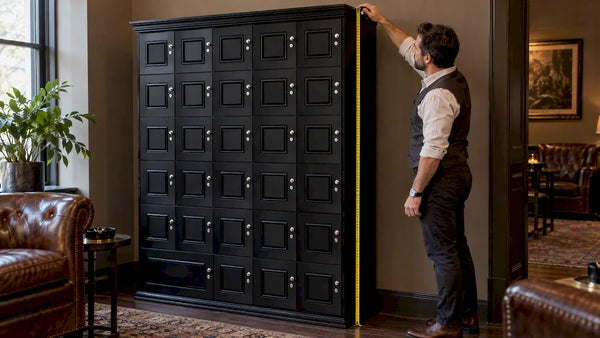
Cigar Locker Dimensions: Sizing Guide for Collectors and Lounges
Cigar locker dimensions explained: compartment sizes, cabinet footprints, capacity math and clearances, so you size a locker bank...
Read Article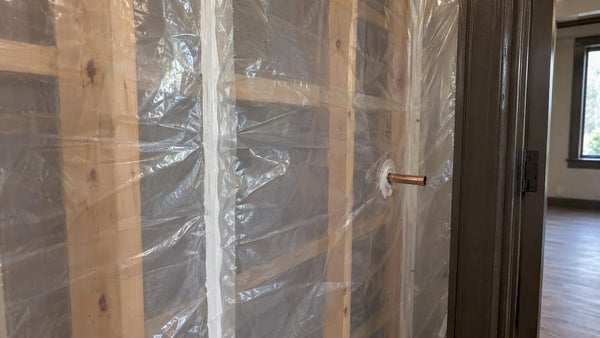
Sealing a Walk-In Humidor: Envelope, Door and Penetrations
How to seal a walk-in humidor properly: vapor barrier placement, door gasket, penetrations and the controlled airflow a...
Read Article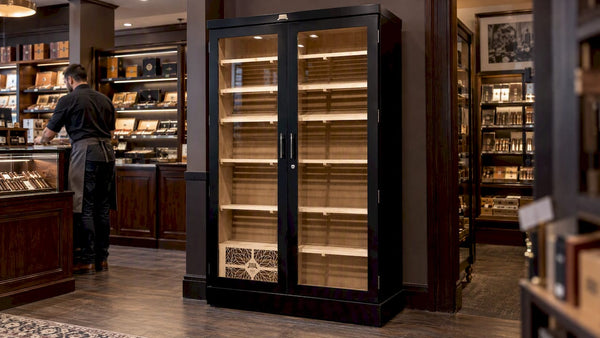
Retail Humidor ROI: How to Measure What a Display Earns
What does a retail or lounge humidor really return? A practical framework for cigar shops, lounges and clubs:...
Read Article