

Discover essential tips for explaining seasonal humidor care. Adjust humidity and temperature to keep your cigars flavorful and preserved year-round!
Seasonal humidor care is the practice of actively adjusting relative humidity and temperature inside your humidor in response to changing outdoor and indoor climate conditions. Without these adjustments, your cigars absorb or release moisture unevenly, degrading flavor, draw, and wrapper integrity. The target range most experts, including Boveda and Treasure Coast Cigars, recommend sits between 65% and 72% relative humidity (RH) at 65–70°F. Hygrometers, Boveda two-way humidity packs, and distilled water humidifiers are the core tools that make these adjustments possible. Neglect during seasonal transitions is the riskiest period for any collection.
How do seasonal changes affect your humidor?
Every season shifts the environment around your humidor, and those shifts work their way inside. Winter heating systems strip moisture from indoor air, pulling RH down sharply. Summer heat and humidity push it in the opposite direction, raising both temperature and moisture to levels that can trigger tobacco beetle activity and mold.
The consequences are real and measurable. Temperature above 72°F creates conditions where tobacco beetles hatch and destroy cigars from the inside out. Humidity above 72% causes muted flavor, uneven burn, and mold growth, while humidity below 65% dries wrappers until they crack.
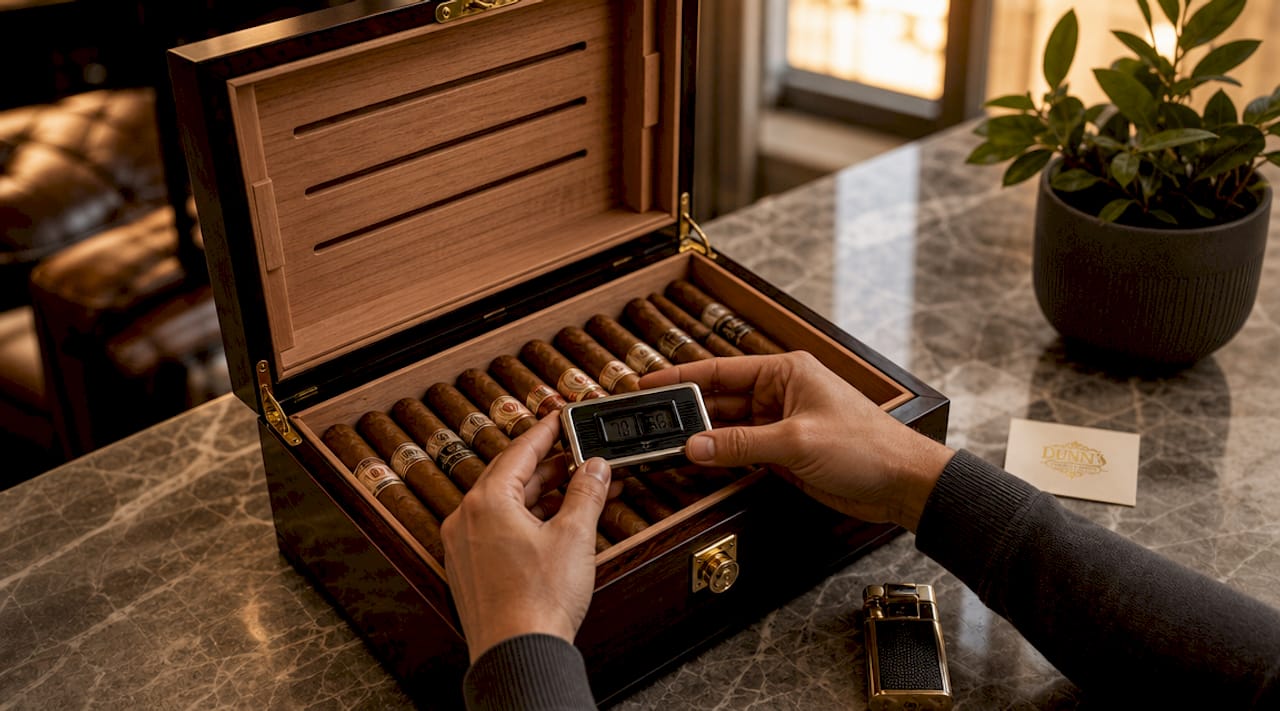
Treasure Coast Cigars recommends using the 135 Rule as a practical framework: your temperature in °F plus your RH percentage should equal approximately 135. At 70°F, that means targeting 65% RH. At 65°F, you can comfortably hold 70% RH. This rule gives collectors a flexible but disciplined way to balance two variables that constantly shift with the seasons.
Key seasonal threats to watch for:
- Winter: Forced-air heating drops indoor RH below 50%, starving cigars of moisture
- Spring: Rising outdoor humidity can push internal RH above your target before you notice
- Summer: Heat accelerates moisture exchange and raises beetle risk above 72°F
- Fall: Cooling air dries out faster than most collectors anticipate, mimicking winter conditions early
What are the seasonal humidor adjustment steps?
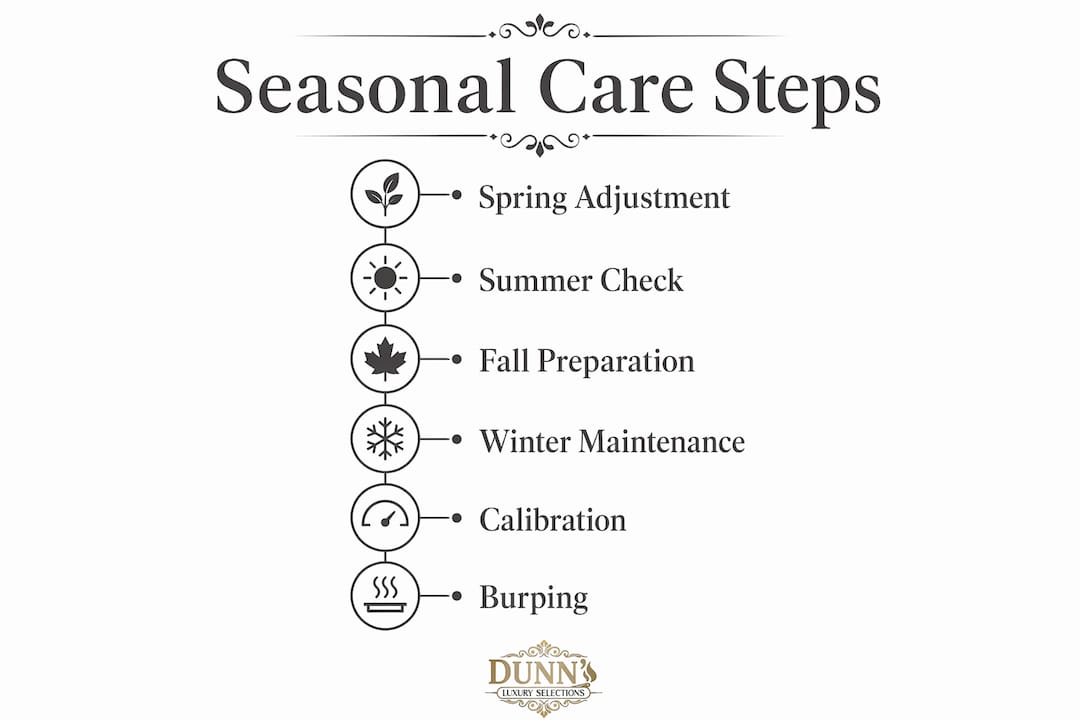
The most effective approach to seasonal cigar care is a proactive, season-by-season protocol rather than reactive fixes after damage appears. Each transition requires specific actions.
-
Spring: Lower your RH target from 72% down to 65–69% and reduce distilled water input by 25–50%. Switch from higher-percentage Boveda packs to 65% or 69% versions. Rising ambient humidity means your humidor needs less help maintaining moisture.
-
Spring burping: The “burping” technique involves opening the lid weekly for 10–15 minutes to release excess humidity naturally. This non-invasive method lowers RH by a few percentage points without disturbing your humidification media.
-
Summer: Keep humidity stable and prioritize temperature control. Move your humidor away from windows, exterior walls, and heat-generating appliances. Check your hygrometer calibration, since heat stress causes digital units to drift.
-
Fall: Begin increasing your RH target gradually as ambient air dries. Swap 65% Boveda packs for 69% or 72% versions. Fall is when collectors most often get caught off guard, assuming summer conditions will hold longer than they do.
-
Winter: Maintain 70–72% RH and refill humidifiers more frequently. Indoor heating systems are relentless at pulling moisture from the air. Check your humidor every two weeks rather than monthly during peak heating season.
-
Hygrometer calibration: Calibrate your hygrometer before each seasonal transition using a 24-hour salt test or a calibration kit. Environmental stress causes digital hygrometers to drift, and a reading that is off by 5% can mean the difference between a perfect cigar and a ruined one.
Pro Tip: Set a calendar reminder on the first of March, June, September, and December. Treat each reminder as your seasonal humidor audit: calibrate the hygrometer, swap Boveda packs if needed, and assess whether your RH target needs adjusting.
Which tools best support year-round humidor stability?
The right tools reduce the margin for error across all four seasons. The choice between analog and digital hygrometers, and between traditional sponge humidifiers and two-way packs, has a direct impact on how much active management your humidor demands.
Analog vs. digital hygrometers
| Feature | Analog Hygrometer | Digital Hygrometer |
|---|---|---|
| Accuracy | ±5–7% without calibration | ±1–2% when calibrated |
| Calibration frequency | Every 3–6 months | Before each season change |
| Drift risk | High over time | Moderate under heat stress |
| Best use | Secondary backup | Primary monitoring tool |
Digital hygrometers from brands like Xikar and Western Humidor deliver tighter accuracy and are worth the modest investment. Analog units serve well as a secondary check but should never be your sole source of truth.
Boveda packs vs. traditional sponge humidifiers
Two-way humidity packs like Boveda self-regulate by both absorbing and releasing moisture as needed. Traditional sponge or gel jar humidifiers only release moisture, which means they can over-humidify during humid seasons without any self-correcting mechanism. For collectors who want to reduce the frequency of manual adjustments, Boveda packs are the more reliable choice.
Key maintenance habits that protect your collection year-round:
- Inspect humidity levels, mold presence, and humidifier condition every month without exception
- Rotate cigars every 30–60 days to promote even moisture distribution across all levels
- Use only distilled water or propylene glycol solutions in traditional humidifiers; tap water introduces minerals that clog media and promote mold
- Position your humidor away from direct sunlight, heating vents, and exterior walls
Pro Tip: Place a small digital thermometer/hygrometer combo unit inside your humidor rather than relying solely on an external display. Internal readings are more accurate than surface measurements, especially in larger cabinet humidors.
What are the risks of improper seasonal care?
Improper seasonal care produces two categories of damage: over-humidification and under-humidification. Both are preventable, and both can be partially reversed if caught early.
Over-humidification above 72–75% RH causes:
- Mold growth on wrappers and inside the humidor’s Spanish Cedar lining
- Wrapper splits from tobacco swelling beyond its capacity
- Muted, flat flavors from excess moisture suppressing volatile aromatic compounds
- Uneven burn caused by inconsistent moisture distribution through the filler
Under-humidification below 62% RH causes:
- Brittle, cracking wrappers that split during cutting or lighting
- Dry, harsh smoke with diminished complexity
- Loss of essential oils that carry a cigar’s signature flavor profile
Recovery from over-humidification requires removing affected cigars, wiping the humidor interior with a dry cloth, and allowing it to air out before reintroducing properly calibrated humidity. Mold-affected cigars should be discarded if the mold has penetrated the wrapper.
Recovery from under-humidification requires patience. Rehydrating dried cigars must begin at 40–50% RH and increase by 2–3% every few days over one to two weeks. Rushing this process causes wrapper splits that cannot be repaired. Collectors who try to jump straight to 70% RH destroy the very cigars they are trying to save.
Pro Tip: Never place dried cigars directly into a fully humidified humidor. Start them in a separate container at low RH and raise it gradually. Think of it as acclimatization, not restoration.
Boveda’s guidance reinforces that frequent humidity swings are more damaging than a slightly off-target but stable environment. A humidor holding steady at 67% RH is far safer than one oscillating between 60% and 75%.
Key takeaways
Seasonal humidor care requires proactive, season-specific adjustments to RH and temperature, supported by calibrated tools and consistent monthly routines.
| Point | Details |
|---|---|
| Use the 135 Rule | Add temperature °F and RH percentage to target approximately 135 for balanced cigar storage. |
| Adjust by season | Lower RH targets in spring and summer; raise them in fall and winter to match ambient conditions. |
| Calibrate before transitions | Run a 24-hour salt test on your hygrometer before each seasonal change to correct drift. |
| Choose Boveda over sponges | Two-way packs self-regulate and reduce over-humidification risk across all seasons. |
| Rehydrate slowly | Restore dried cigars by starting at 40–50% RH and increasing by 2–3% every few days. |
Why consistency matters more than perfection
I have been managing cigar collections through every season for years, and the single most common mistake I see is chasing a perfect RH number instead of maintaining a stable one. Collectors will obsess over hitting exactly 70% and end up adjusting their humidors every few days, creating the very swings that damage tobacco.
The truth is that a humidor holding steady at 67% will preserve a cigar better than one bouncing between 65% and 73%. Stability is the goal. Perfection is the enemy of it.
The two practices most collectors overlook are burping and hygrometer calibration. Burping takes five minutes and costs nothing. Calibration takes 24 hours and requires only a salt test kit. Both are skipped constantly, and both failures show up in ruined cigars months later.
I also think the vehicle maintenance analogy holds up better than most collectors want to admit. You would not skip an oil change on a car you love. Your humidor deserves the same discipline. Set the calendar reminders. Do the quarterly audits. Treat your collection like the investment it is, because it is one.
The seasonal care guides at Dunnluxuryselections reflect this philosophy. Precision is not about obsession. It is about building habits that protect what you have spent years curating.
— Brian
How Dunnluxuryselections supports your seasonal care routine
Dunnluxuryselections designs humidors with the demands of seasonal maintenance built into the construction itself. Spanish Cedar linings regulate moisture naturally, tight seals prevent uncontrolled humidity exchange, and compatibility with Boveda pack systems means your humidor works with your seasonal adjustment routine rather than against it.

Whether you prefer a desktop humidor for a focused personal collection or a cabinet humidor built for serious collectors with hundreds of cigars, Dunnluxuryselections offers precision-engineered options that hold stable conditions across all four seasons. For collectors who want to remove manual guesswork entirely, the electronic humidor collection delivers automated climate control with digital precision. Explore the full range at Dunnluxuryselections and find the sanctuary your collection deserves.
FAQ
What is the ideal humidity range for cigar storage?
The ideal range is 65–72% relative humidity at 65–70°F. The 135 Rule, where temperature plus RH equals approximately 135, provides a practical framework for balancing both variables.
How often should i calibrate my hygrometer?
Calibrate your hygrometer before each seasonal transition using a 24-hour salt test. Digital hygrometers drift under environmental stress and can read 3–5% off without visible signs of malfunction.
What is the burping technique in humidor care?
Burping involves opening your humidor lid for 10–15 minutes weekly to release excess humidity naturally. It is most useful during spring and summer when ambient moisture pushes internal RH above your target.
How do i rehydrate cigars that have dried out?
Start dried cigars at 40–50% RH and increase by 2–3% every few days over one to two weeks. Rushing the process causes irreversible wrapper splits and ruins the smoking experience.
Does a new humidor need special preparation before use?
Yes. Seasoning a new humidor takes 2–4 weeks using 84% RH packs to bring the Spanish Cedar wood up to proper moisture levels before storing any cigars.
Recommended
You May Also Enjoy
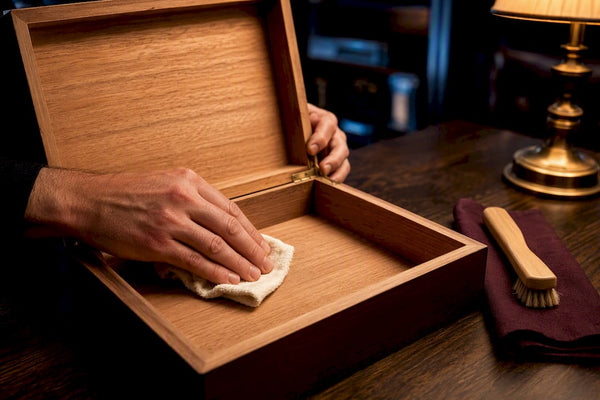
Save Flavor in 14 Days: Cleaning a Humidor for Collectors
For collectors: clean mold or plume without tainting cedar. Keep or toss decision rules, 14 days reseasoning, hygrometer...
Read Article
6 to 26 Weeks: Custom Humidor Timeline for Collectors & Gift Buyers
Plan a bespoke humidor with a realistic production calendar. See stage-by-stage timings, what typically adds weeks, and how...
Read Article
50/50 Propylene Glycol Ratio + 90/10 Flush for Collectors & Installers
Use a 50/50 propylene glycol ratio to hold passive humidors near 70% RH. Installer tested: occasional 90/10 water...
Read Article