

Discover what cigar trays are and their essential role in humidor organization. Learn about types and materials for optimal cigar storage.
Cigar trays are defined as structured storage components placed inside humidors to organize, separate, and preserve cigars by maintaining proper airflow and consistent relative humidity. They serve two primary functions: organizing collections larger than 30 cigars within a humidor, and providing a stable resting surface during the smoking ritual as a cigar ashtray. Spanish cedar is the industry standard material for humidor trays, valued for its natural oils, moisture regulation, and resistance to mold. Understanding what cigar trays are and how they work is the foundation of any serious cigar storage strategy.
What are cigar trays and why do they matter?
Cigar trays are the organizational backbone of any well-maintained humidor. Without them, cigars pile on top of each other, airflow becomes uneven, and humidity distribution turns inconsistent. The result is uneven aging, wrapper damage, and a collection that is difficult to manage.
The cigar trays purpose extends beyond simple storage. Slotted and perforated tray designs allow air to circulate freely around each cigar, which keeps humidity uniform from the top of the humidor to the bottom. That circulation is what separates a tray-equipped humidor from a box where cigars simply sit in a pile.

Cigar ashtrays represent the second category of cigar trays. These are not humidor components. They are purpose-built resting surfaces used during smoking, featuring wider and deeper grooves than standard ashtrays to hold thick ring-gauge cigars securely. A well-designed cigar ashtray prevents rolling, keeps the smoking area clean, and encourages meaningful pauses that allow flavor to develop between draws.
The distinction matters because collectors often need both: storage trays for the humidor and a quality ashtray for the ritual itself.
Pro Tip: If you are new to cigar collecting, start with a removable Spanish cedar tray inside your humidor before investing in a full tray system. One well-placed tray immediately improves airflow and gives you a framework for organizing your first 30 to 50 cigars.
Key benefits of using cigar trays include:
- Consistent humidity distribution across all cigars in the humidor
- Reduced wrapper damage from handling and stacking
- Faster access to specific cigars without disturbing the entire collection
- Clear separation between aging stock and smoking stock
- A stable, dignified resting surface during the smoking experience
What are the common types of cigar trays?
Cigar tray designs fall into five main categories, each suited to a different storage need and humidor size.
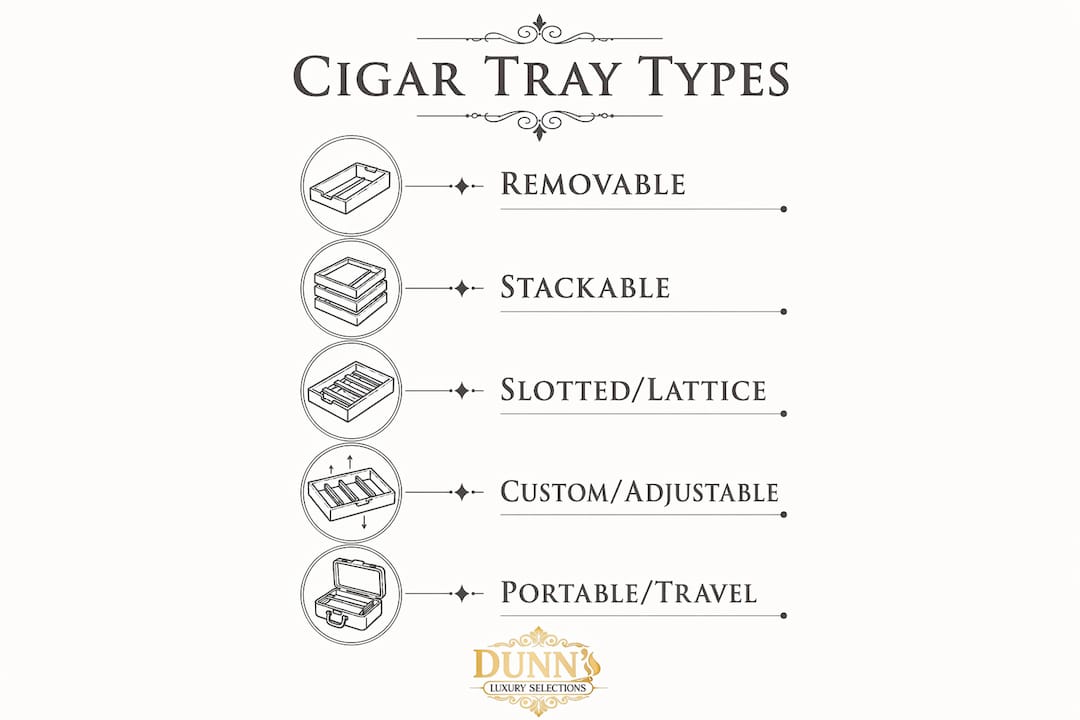
Removable trays
Removable trays are the most common type found in desktop and cabinet humidors. They lift out cleanly, giving you full access to cigars stored beneath them. This design makes rotation simple and reduces the handling that causes wrapper cracks.
Stackable trays
Stackable trays multiply storage capacity inside a single humidor cabinet. Each tray sits on top of the previous one, creating tiered levels. Experienced collectors use the bottom tier for resting stock and the top tier for cigars ready to smoke, keeping aging phases clearly separated.
Slotted and lattice trays
Slotted trays feature individual channels cut into the wood, cradling each cigar separately. Lattice trays use an open grid pattern that maximizes air movement around every cigar. Both designs prevent mold in unventilated zones by ensuring humidity reaches every surface of every cigar.
Custom fit and adjustable trays
Custom fit trays are sized precisely for a specific humidor model. Adjustable trays use removable dividers that reconfigure to accommodate different ring gauges, from a slender 38 to a thick 60. This flexibility makes them the preferred choice for collectors who smoke across multiple vitola formats.
Portable and travel trays
Portable cigar trays offer organized storage on the go, protecting cigars during travel without requiring a full humidor. Compact designs maintain cigar condition away from home and fit neatly inside travel humidor cases.
Pro Tip: For cabinet humidors holding 200 or more cigars, combine stackable trays with a lattice base layer. The lattice at the bottom maximizes airflow, while the stackable trays above create a library-style system you can read at a glance.
| Tray type | Best use case | Key advantage |
|---|---|---|
| Removable | Desktop humidors | Easy access and rotation |
| Stackable | Cabinet humidors | Tiered aging and smoking separation |
| Slotted | Mixed collections | Individual cigar protection |
| Lattice | Large collections | Maximum airflow |
| Portable | Travel humidors | On-the-go organization |
How does Spanish cedar make cigar trays perform better?
Spanish cedar is the industry standard for cigar tray materials, and the reason is chemistry, not tradition. The wood contains natural oils that interact with tobacco, contributing to the conditioning process that softens and mellows a cigar over time. No synthetic material or veneered alternative replicates this effect.
Spanish cedar’s moisture absorption properties allow the tray itself to act as a secondary humidity buffer. When relative humidity inside the humidor rises, the wood absorbs excess moisture. When humidity drops, the wood releases it. This buffering effect reduces the swings that damage wrappers and dry out fillers.
The wood also resists warping and mold in the consistently humid environment of a humidor. Veneered trays, which use a thin cedar surface over a cheaper wood core, lose this resistance quickly. The core absorbs moisture unevenly, causing the tray to bow and crack. Non-cedar materials like pine or MDF provide no humidity buffering at all and can introduce off-aromas that contaminate the cigars stored above them.
Key properties that make Spanish cedar the right choice:
- Natural oils that condition tobacco during long-term aging
- Moisture absorption and release that stabilizes relative humidity
- Resistance to mold and warping in humid conditions
- A neutral, pleasant aroma that complements rather than masks tobacco character
- Durability that allows trays to last decades with minimal maintenance
What practical steps optimize the use of cigar trays?
Using cigar trays well is a practice, not a one-time setup. The way you arrange, rotate, and maintain your trays determines whether your humidor functions as a precision aging environment or simply a box where cigars happen to sit.
-
Organize by aging status first. Place new arrivals in the bottom tray and let them rest for at least 90 days before moving them to the top tray. This systematic rotation ensures every cigar is properly acclimated before you smoke it.
-
Sort by wrapper, origin, or size within each tray. Grouping cigars by wrapper color or country of origin reduces handling time and prevents you from disturbing aging stock when you reach for a smoke. Labeled trays by category avoid wrapper damage and speed up access.
-
Position trays away from humidity sensors. Trays placed directly in front of a sensor block airflow and produce inaccurate humidity readings. Sensor placement inside the humidor must account for tray arrangement to maintain accurate monitoring of temperature and relative humidity.
-
Clean trays every three to six months. Wipe Spanish cedar trays with a dry cloth. Never use water or cleaning agents, as moisture saturation warps the wood and disrupts the humidity balance the tray is designed to maintain.
-
Use your cigar ashtray deliberately. Rest the cigar in the groove between draws rather than holding it continuously. A stable ashtray rest controls the pace of the smoke and allows the tobacco to cool slightly, which sharpens flavor perception on the next draw.
Pro Tip: Use a small strip of masking tape on the front edge of each tray as a label. Write the origin and date of entry. This turns your humidor into a dated archive and makes stock rotation effortless.
Key Takeaways
Cigar trays are the single most effective tool for maintaining cigar quality, because they control airflow, separate aging phases, and protect wrappers from handling damage.
| Point | Details |
|---|---|
| Dual function | Cigar trays serve both humidor organization and smoking ritual roles as ashtrays. |
| Spanish cedar standard | Solid Spanish cedar regulates humidity naturally and resists mold better than any alternative material. |
| Tray type selection | Match the tray type to your humidor size: removable for desktops, stackable for cabinets. |
| Aging phase separation | Use bottom trays for resting stock and top trays for smoking stock, with a minimum 90-day rest. |
| Sensor placement | Never position trays to block humidity sensors, as obstructed airflow produces inaccurate readings. |
Why I think most collectors underestimate their trays
Most aficionados spend considerable time selecting the right cigars and the right humidor. The tray inside that humidor rarely gets the same attention. That is a mistake I have seen cost collectors dearly.
I have managed collections ranging from a single desktop humidor to a large cabinet humidor holding several hundred cigars. In every case, the quality of the tray system determined how well the collection aged. A poorly fitted tray in a premium humidor produces worse results than a well-fitted Spanish cedar tray in a modest one. The tray is the interface between the humidor’s climate and the cigar itself.
The 90-day resting rule changed how I think about stock management. New arrivals go directly to the bottom tray, no exceptions. Moving a cigar to the smoking tray before it has acclimated is the most common mistake I see. The cigar smokes rough, burns unevenly, and the collector blames the blend when the real issue was impatience.
Cigar ashtrays deserve equal respect. A thick Robusto or Churchill rested in a shallow, narrow groove will roll, fall, and crack the wrapper. A proper ashtray with a deep, wide groove holds the cigar at the right angle and lets the ash form naturally. That ash acts as a heat insulator, slowing the burn and concentrating flavor. The ashtray is not decoration. It is part of the smoking instrument.
The collectors I respect most treat their tray system as a living archive. They know what is resting, what is ready, and what is exceptional. That knowledge comes from a disciplined tray organization system, not from memory.
— Brian
Dunnluxuryselections: precision-built trays for serious collectors

Dunnluxuryselections designs humidors with tray systems built to the same standard as the cabinets themselves. Every cabinet humidor collection features solid Spanish cedar trays with slotted and perforated designs that maintain consistent airflow across the full storage capacity. For collectors who prefer a refined desktop presence, the Florence desktop humidor delivers precision tray organization in a compact, elegant form. Whether you are curating a 50-cigar personal collection or managing a 2,000-cigar archive, Dunnluxuryselections offers the tray architecture your cigars deserve. Precision, prestige, and presence, built into every layer.
FAQ
What are cigar trays used for?
Cigar trays organize cigars inside a humidor to maintain airflow and consistent humidity, and they also serve as ashtrays during smoking. Both functions protect cigar quality and enhance the overall experience.
What material is best for cigar trays?
Solid Spanish cedar is the industry standard for humidor trays. Its natural oils condition tobacco, its moisture absorption stabilizes relative humidity, and it resists mold and warping in humid environments.
How many cigars can a humidor tray hold?
Tray capacity depends on cigar ring gauge and tray size, but most standard desktop trays hold 20–40 cigars. Stackable cabinet tray systems can organize collections well above 30 cigars per tier.
How do I clean a Spanish cedar cigar tray?
Wipe the tray with a dry cloth every three to six months. Never use water or cleaning products, as moisture saturation warps the wood and disrupts the humidity balance the tray provides.
Do cigar trays affect humidor humidity readings?
Yes. Trays placed in front of humidity sensors block airflow and produce inaccurate readings. Position trays to allow free air movement around sensors for reliable humidity and temperature monitoring.
Recommended
You May Also Enjoy
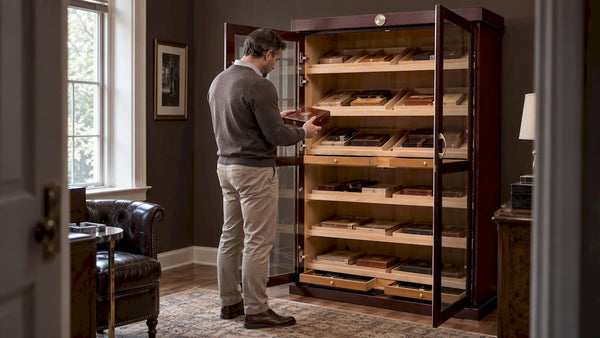
Cigar Collection Insurance: How to Protect Your Humidor
Home policies often cap or exclude cigars. Learn how floaters, agreed value, appraisals and inventories protect a serious...
Read Article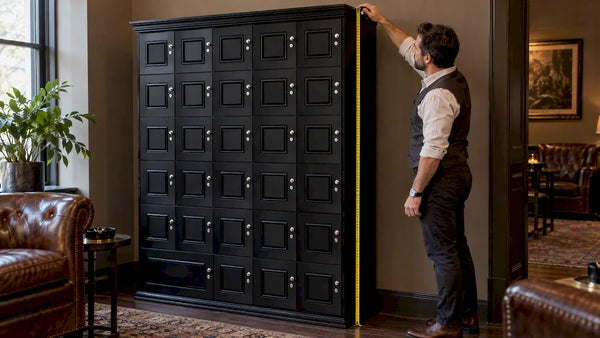
Cigar Locker Dimensions: Sizing Guide for Collectors and Lounges
Cigar locker dimensions explained: compartment sizes, cabinet footprints, capacity math and clearances, so you size a locker bank...
Read Article
Sealing a Walk-In Humidor: Envelope, Door and Penetrations
How to seal a walk-in humidor properly: vapor barrier placement, door gasket, penetrations and the controlled airflow a...
Read Article