

Discover what a pre-seasoned humidor is and why it matters. Ensure your cigars stay fresh and flavorful with this essential 2026 guide!
A brand-new humidor arriving at your door holds tremendous promise. But without proper preparation, it becomes a liability rather than a sanctuary for your prized collection. What is a pre-seasoned humidor, exactly, and why does it matter to serious aficionados? The answer speaks directly to the gap between a cigar that smokes with silk-smooth complexity and one that burns harsh and dry. Understanding pre-seasoned humidors, how they work, and how they compare to traditional seasoning is knowledge every collector deserves before placing a single cigar inside.
Table of Contents
- Key takeaways
- What is a pre-seasoned humidor and how does it work
- The role of traditional seasoning in a new humidor
- Benefits and drawbacks of pre-seasoned humidors
- Maintaining your pre-seasoned humidor long-term
- My take on seasoning as a collector’s discipline
- Discover Dunnluxuryselections’ curated humidor collection
- FAQ
Key takeaways
| Point | Details |
|---|---|
| Pre-seasoned means ready-to-use | The wood interior has been conditioned before delivery, eliminating the standard 14-day waiting period. |
| Wood saturation is the goal | Effective seasoning penetrates the cellular structure of Spanish Cedar, not just the surface. |
| Pre-seasoned reduces common errors | Warping, over-seasoning, and moisture imbalances are far less likely with a factory-conditioned humidor. |
| Maintenance is still required | A pre-seasoned humidor needs compatible humidity packs to sustain ideal relative humidity long-term. |
| Verification matters | Not all “pre-seasoned” marketing claims reflect true deep-wood conditioning. Confirm before trusting. |
What is a pre-seasoned humidor and how does it work
A pre-seasoned humidor is a cigar storage instrument whose interior wood has been carefully conditioned by the manufacturer before it reaches you. Rather than arriving as a dry vessel that aggressively pulls moisture from your cigars, it arrives with its Spanish Cedar lining already equilibrated to an appropriate relative humidity level. You can introduce your collection almost immediately, without the traditional waiting period that standard humidors require.
The science behind this matters. Spanish Cedar is a porous material. When dry, its cellular structure acts like a sponge, drawing moisture from the surrounding environment. The purpose of pre-seasoning is to saturate those wood cells before any cigar is placed inside. Manufacturers typically achieve this using passive humidity solutions such as Boveda seasoning packets, which release moisture gradually and gently into the wood rather than saturating only the surface. True seasoning requires deep wood saturation over days to weeks, not mere surface wetting, to prevent the humidor from stealing cigar moisture later.
Here is what a proper pre-seasoning process typically involves:
- Placing 84% relative humidity Boveda seasoning packets inside the closed humidor
- Allowing moisture to absorb into the wood’s cellular structure across a minimum 14-day conditioning period
- Monitoring internal RH levels only after the wood is fully saturated, since hygrometer readings during seasoning measure air humidity, not wood moisture content
- Confirming stabilization around 65% to 70% RH before sealing and shipping
Pro Tip: When you receive a pre-seasoned humidor, open it briefly, confirm it carries a faint cedar fragrance and feels slightly cool to the touch inside. These are indicators of genuine moisture saturation, not just clever labeling.
A well-executed pre-seasoning process delivers a humidor that is ready to protect your cigars from the moment of first use. That is a significant advantage for collectors who prefer precision without delay.
The role of traditional seasoning in a new humidor
To truly appreciate the value of a pre-seasoned humidor, you must understand what it replaces. What is seasoning a new humidor at its core? It is the deliberate process of introducing controlled moisture into dry wood so that the humidor becomes a stable climate rather than a moisture thief.
Failure to season a new humidor causes dry Spanish Cedar to draw moisture from your cigars, leaving them dry, brittle, and harsh on the palate. A 100-count humidor requires approximately 100 grams of moisture for complete conditioning. This is not a trivial amount, and achieving it correctly demands patience and precision.
The traditional how-to-season-a-humidor process typically unfolds as follows:
- Wipe the interior lightly with a clean cloth dampened with distilled water. Never use tap water, as mineral deposits degrade the wood over time.
- Place a small dish or sponge soaked in distilled water inside the closed humidor. This raises ambient humidity inside the box.
- Add your humidification device charged with propylene glycol solution or a calibrated humidity pack.
- Wait 24 to 48 hours, then check. If the wood has absorbed most of the moisture and the interior feels dry again, repeat the process.
- Repeat the cycle for up to 14 days until readings stabilize and the wood no longer draws moisture aggressively.
The critical mistake most beginners make is confusing surface moisture for deep saturation. Simply wiping the wood with a sponge provides only surface moisture insufficient to season the wood deeply, which can result in continued moisture loss from cigars even after the box appears conditioned. True seasoning saturates the cellular structure of the wood, and that takes time.
“Skipping seasoning or rushing it doesn’t just affect your cigars today. It depletes your humidity packs faster and compounds into a chronic storage problem that frustrates collectors for months.” A properly conditioned humidor is the foundation on which every great collection is built.
The limitations of manual seasoning are real. Hygrometer readings during the process are misleading. Wood absorbs moisture differently based on ambient temperature. And most collectors do not have the controlled environment that manufacturers do. These are the exact gaps that pre-seasoned humidors eliminate.
Benefits and drawbacks of pre-seasoned humidors
The comparison between a pre-seasoned humidor and a regular humidor is not simply about convenience. It is about reliability, preservation, and the integrity of your collection.

| Feature | Pre-seasoned humidor | Regular humidor |
|---|---|---|
| Ready to use | Yes, immediately upon arrival | No, requires 14-day seasoning period |
| Risk of warping | Very low (controlled conditioning) | Moderate to high if over-watered |
| Moisture stability | Manufacturer-verified | Dependent on collector’s technique |
| Cost | Typically higher | Lower upfront cost |
| Ideal user | Collectors who want immediate precision | Purists and experienced hobbyists |
| Long-term flexibility | High, with proper maintenance | High, once correctly seasoned |
The benefits of a pre-seasoned humidor include eliminating messy sponge seasoning, requiring no active maintenance during conditioning, and gently hydrating wood to prevent warping or mold. For a collector receiving a gift humidor, purchasing their first cabinet, or simply unwilling to risk an uneven conditioning job, these advantages are substantive.
That said, there are legitimate considerations on the other side. Pre-seasoned models typically carry a premium price. Some manufacturers apply the term loosely, conditioning wood for fewer days than the 14-day standard demands. And for aficionados who find meaning in the ritual of personally conditioning their humidor, the pre-seasoned model removes a rite of passage they genuinely value.
Acrylic humidors and electronic humidification reduce or remove the need for traditional seasoning entirely, but traditional wood humidors require seasoning to maintain quality. If you prefer the warmth of Spanish Cedar, the aromatic depth it lends to long-aged cigars, and the visual elegance of a wood cabinet, a pre-seasoned model gives you all of that without the technical risk of a DIY conditioning process gone wrong.
Pro Tip: Before purchasing any humidor marketed as pre-seasoned, ask the retailer to confirm the conditioning method and duration. A reputable provider will cite the specific seasoning solution used and the number of days the unit was conditioned.
Maintaining your pre-seasoned humidor long-term
Receiving a pre-seasoned humidor is the beginning, not the end, of your humidity management practice. How you use a pre-seasoned humidor after delivery determines whether that initial conditioning holds or gradually degrades.
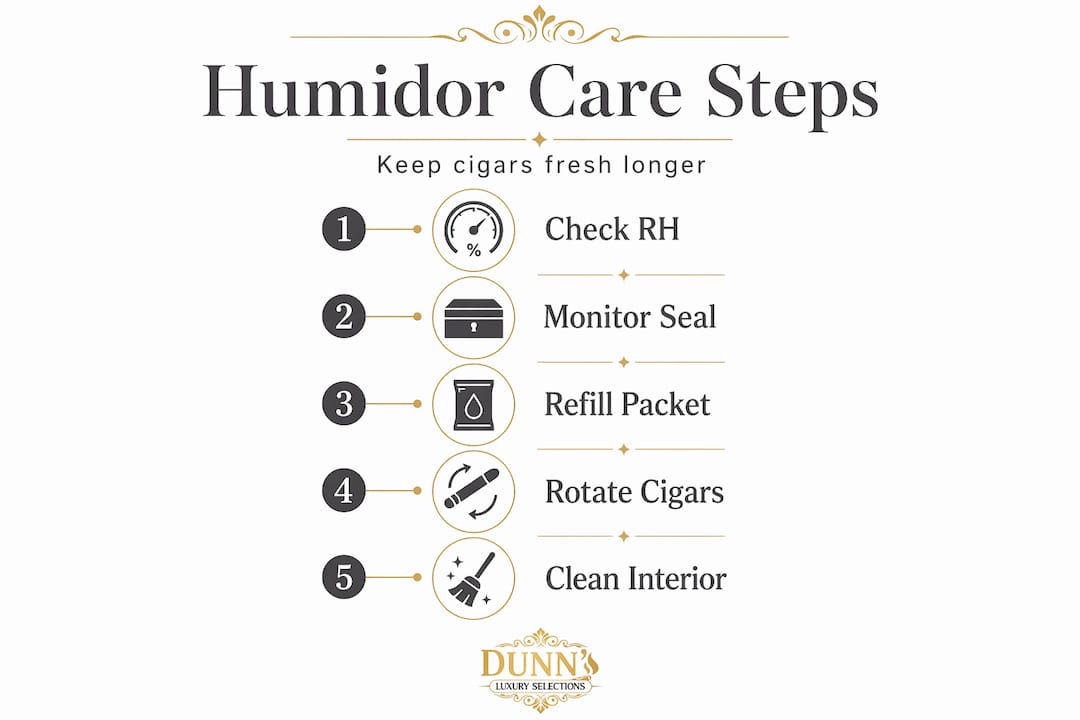
The following principles represent the standard of care at the highest level of the craft:
- Maintain relative humidity between 65% and 72%. Most aficionados favor 69% RH as the ideal balance between preservation and combustion quality. Two-way humidity packs calibrated to 69% RH are widely used to maintain these conditions after initial seasoning.
- Limit unnecessary access. Every time you open the humidor, conditioned air escapes and dry ambient air enters. Open with purpose, not habit.
- Rotate your cigars quarterly. Cigars near the humidification source receive slightly more moisture than those stored at the far end. Rotating evens out exposure and prevents any single cigar from over-humidifying.
- Inspect humidity packs monthly. When a pack becomes fully rigid with no give, replace it. A depleted pack can no longer buffer humidity effectively and the wood will begin drawing moisture from your cigars again.
- Avoid direct sunlight and heat sources. Temperature swings cause wood expansion and contraction. The same Spanish Cedar that was meticulously conditioned before delivery will crack or warp if subjected to extreme temperature cycling.
For collectors managing larger cabinet humidors, zonal climate control becomes relevant. A cabinet holding 500 or more cigars may need multiple humidity sources placed strategically to avoid dry pockets at the edges.
Electronic humidors deserve separate mention here. Their active humidification systems maintain RH levels automatically, significantly reducing the risk of humidity drift. They are particularly suited to collectors in climates with extreme seasonal variation, where passive humidity management demands constant adjustment.
Re-seasoning is rarely necessary if maintenance is consistent. If you store the humidor empty for an extended period or notice your cigars drying despite fresh humidity packs, place seasoning packets inside for seven days before reintroducing your collection.
My take on seasoning as a collector’s discipline
I’ve spent years watching collectors obsess over the tobacco inside their humidors while neglecting the instrument holding it. In my experience, the humidor is not secondary to the cigar. It is the first decision that determines the fate of everything inside it.
What I’ve learned is that pre-seasoned humidors are genuinely valuable, particularly for collectors who are newer to the craft or purchasing a luxury cabinet as an investment in aesthetics and preservation simultaneously. The controlled factory conditioning is more precise than most home setups. The risk of warping from an enthusiastic first-time sponge wipe is real, and I’ve seen it ruin beautiful pieces.
That said, I believe traditional wood humidors remain the preference for collectors who value the full ritual of cigar culture. There is something deeply satisfying about personally conditioning a humidor, watching it respond over two weeks, and knowing you built that climate yourself. It is knowledge that transfers to every humidor you will ever own.
The uncomfortable truth is this: the word “pre-seasoned” on a label means very little without verification. I always recommend asking specifically whether the manufacturer used a calibrated passive solution across a full 14-day cycle. If they cannot tell you, the humidor may have received only a cursory surface treatment. Don’t let a label substitute for diligence. Buy from providers who can demonstrate their process, not just their packaging.
— Belle
Discover Dunnluxuryselections’ curated humidor collection
At Dunnluxuryselections, we understand that a humidor is not merely a purchase. It is a commitment to the preservation of flavor, legacy, and craft. Every humidor in our collection meets the standard of precision care that serious collectors demand.

Whether you are seeking a desktop humidor for a personal collection or a grand cabinet to house a legacy built over decades, Dunnluxuryselections offers selections conditioned and curated to the highest standard. Our humidor collections include pre-seasoned models verified through proper multi-day conditioning, giving you the confidence to place your finest cigars inside from day one. Explore our care guides for expert maintenance advice designed to protect your investment season after season.
FAQ
What does pre-seasoned mean on a humidor?
A pre-seasoned humidor has had its interior wood conditioned by the manufacturer using controlled humidity before delivery, so the wood’s cellular structure is already saturated and will not draw moisture from your cigars upon first use.
How long does humidor seasoning usually take?
Traditional seasoning requires approximately 14 days to fully saturate the Spanish Cedar interior. Rushing this process leads to incomplete conditioning, which causes dry cigars and rapid depletion of humidity packs.
Can I skip seasoning if my humidor is labeled pre-seasoned?
Yes, if the manufacturer used a verified 14-day conditioning process with calibrated seasoning packets. However, always confirm the specific method used, since some “pre-seasoned” claims reflect only a brief surface treatment.
What humidity level should I maintain after seasoning?
Most collectors maintain relative humidity between 65% and 72%, with 69% RH being the widely accepted standard for balanced cigar preservation and optimal combustion quality.
Do electronic humidors need seasoning?
Electronic humidors with active humidification systems significantly reduce or eliminate the need for traditional seasoning. Wood-lined electronic models may still benefit from an initial light conditioning, but the active system compensates for moisture drift automatically.
Recommended
You May Also Enjoy
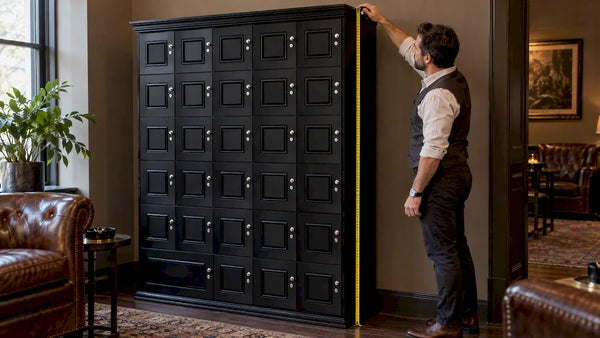
Cigar Locker Dimensions: Sizing Guide for Collectors and Lounges
Cigar locker dimensions explained: compartment sizes, cabinet footprints, capacity math and clearances, so you size a locker bank...
Read Article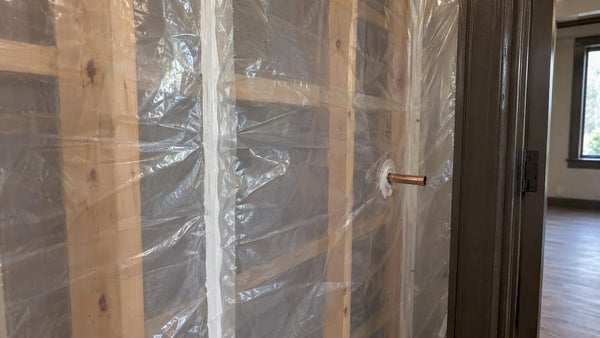
Sealing a Walk-In Humidor: Envelope, Door and Penetrations
How to seal a walk-in humidor properly: vapor barrier placement, door gasket, penetrations and the controlled airflow a...
Read Article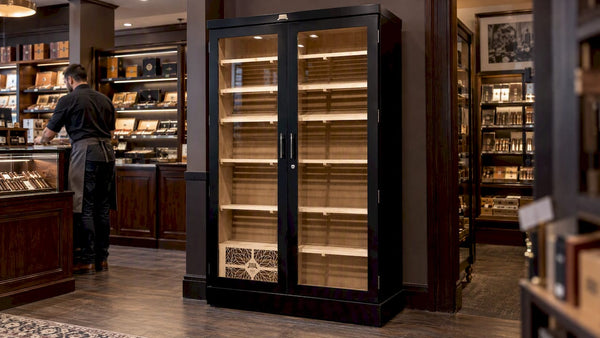
Retail Humidor ROI: How to Measure What a Display Earns
What does a retail or lounge humidor really return? A practical framework for cigar shops, lounges and clubs:...
Read Article