

Discover what is humidor craftsmanship and how it elevates cigar preservation. Learn key techniques to select and care for your humidor.
Most cigar enthusiasts understand that humidity matters. Far fewer realize that the humidor itself, its joinery, its wood selection, its internal geometry, is either working for your cigars or quietly working against them. What is humidor craftsmanship? It is the precision discipline of building a climate sanctuary so exacting that your cigars age on their own terms, undisturbed by fluctuation, contamination, or neglect. As luxury humidors earn their keep in the unglamorous details of preservation, understanding those details transforms how you select, season, and care for every humidor you own.
Table of Contents
- The essentials of humidor craftsmanship
- Wood selection and joinery: the heart of craftsmanship
- Seasoning and seasoning’s impact on humidor performance
- Comparing humidor types: from desktop to cabinet and beyond
- Maintaining your humidor to preserve craftsmanship benefits
- Why humidor craftsmanship is an art and a science worth mastering
- Explore premium humidors crafted for the discerning cigar enthusiast
- Frequently asked questions
Key Takeaways
| Point | Details |
|---|---|
| Craftsmanship matters | High-quality humidor construction ensures consistent humidity and better cigar aging. |
| Material choice is critical | Spanish cedar lining and strong joints form the foundation for optimal cigar preservation. |
| Seasoning is essential | Properly seasoning your humidor before use maximizes its humidity buffering capability. |
| Humidor types vary | Desktop, cabinet, and travel humidors offer different craftsmanship features for different needs. |
| Maintenance prolongs benefits | Regular humidity monitoring and device care protect your investment and cigar quality. |
The essentials of humidor craftsmanship
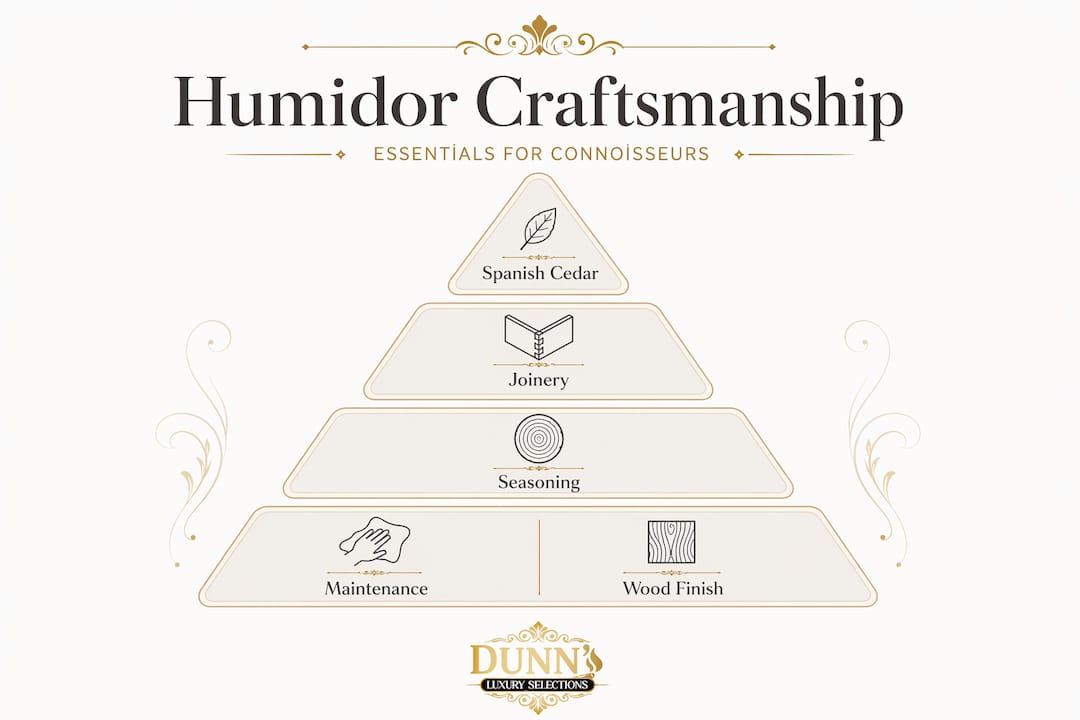
Having understood the value of craftsmanship, let’s explore the specific materials and woodworking techniques that make a humidor exceptional. At its core, what is luxury humidor craftsmanship if not the marriage of form and function at an uncompromising standard? Every element of a well-built humidor serves the same goal: a stable, consistent microclimate that protects the integrity of your cigars across months or even decades of aging.
High-end humidors feature tighter tolerances, heavier construction, better seals, and interior layouts that let air circulate freely. These are not cosmetic distinctions. They are the difference between a cigar that develops nuanced secondary flavors over two years and one that dries out, cracks, or molds before it ever reaches its potential.
The foundational elements of superior craftsmanship include:
- Precise joinery and airtight seals: A lid that closes with a satisfying, controlled resistance is not a luxury flourish. It is evidence of tight tolerances that prevent unplanned humidity exchange with the outside environment.
- Heavy, stable construction: Thicker walls and denser materials reduce thermal conductivity, meaning external temperature swings produce smaller internal fluctuations. Microclimates form when heat and cold enter unevenly through thin walls.
- Thoughtful interior layout: Dividers, trays, and drawer configurations should allow air to circulate across all stored cigars. A cramped, poorly organized interior creates humidity variance between the top tray and the bottom drawer.
- Quality humidification and monitoring devices: Even a masterfully built box performs poorly if paired with an inaccurate hygrometer or an insufficient humidification system. Precision instrumentation completes the craftsmanship equation.
Investing in luxury cabinet humidors built to these standards is not indulgence. It is the rational choice for anyone serious about long-term cigar preservation. Our humidor care guides can walk you through the finer points of setup and ongoing management.
Wood selection and joinery: the heart of craftsmanship
With the right wood and joinery in place, the next step is understanding the seasoning process that prepares your humidor for use. Wood is not a passive component in humidor construction. It is an active participant in humidity regulation, and the species chosen for each surface of a humidor determines how well it performs over a lifetime of use.
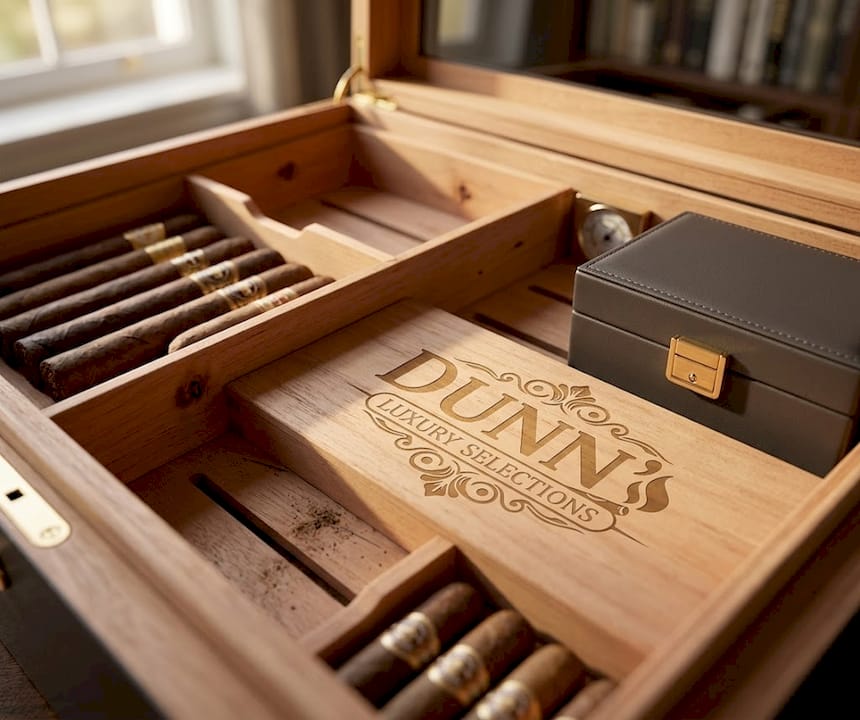
Spanish cedar is the gold standard for interior linings, offering humidity buffering, insect repellent properties, and aroma enhancement that no synthetic material replicates. Kiln-dried Spanish cedar with low residual moisture content is particularly critical: wood that enters construction already holding excess moisture will distort the break-in period and compromise the interior’s long-term buffering capacity.
| Wood | Application | Key benefit |
|---|---|---|
| Spanish cedar | Interior lining, trays, dividers | Humidity buffering, beetle deterrence, aroma |
| Walnut | Exterior cabinetry | Dense, stable, visually striking grain |
| Mahogany | Exterior and framing | Dimensional stability, resistance to warping |
| Maple | Accent joinery, inlays | Fine grain, takes finish evenly |
| Ebony | Decorative exteriors | Exceptional hardness, prestige finish |
Joinery methods are equally telling. Rabbet joints and box joints distribute stress across a wider glue surface, resisting the seasonal expansion and contraction that humidity changes impose on wood. Finger joints, when cut with precision, create interlocking connections that remain airtight under fluctuating conditions. Poorly cut joinery, regardless of the wood species used, allows moisture to seep at the seams and creates instability in the seal over time.
The choice of exterior wood also speaks to what makes a luxury humidor: it should be visually worthy of the ritual it supports. Walnut and mahogany bring a gravitas to the exterior that cheap veneers simply cannot replicate, and their dimensional stability means the piece holds its geometry across decades of use.
For desktop humidors where every cubic inch of wood matters, the quality of joinery becomes even more pronounced since there is less mass to absorb structural stress.
Pro Tip: Never finish or seal the interior wood of your humidor with lacquer, oil, or varnish. The wood’s natural porosity is its most valuable quality. A sealed interior cannot buffer humidity and becomes nothing more than a decorative liner.
Seasoning and seasoning’s impact on humidor performance
Once your humidor is conditioned, understanding different humidor types will help you choose or appreciate how craftsmanship varies by design. Seasoning, sometimes called conditioning, is the process of introducing moisture to a new humidor’s interior wood before storing any cigars. Skip this step, and you introduce your prized collection into a desiccant environment. The dry wood will pull moisture directly from your cigars before the humidification system can compensate.
The process is straightforward, but patience is non-negotiable:
- Place a shallow dish of distilled water (never tap water, which carries minerals that clog humidification devices) inside the empty humidor.
- Wipe interior cedar surfaces with a clean cloth very lightly dampened with distilled water.
- Close the humidor and leave it undisturbed for 24 to 48 hours.
- Check interior humidity using a calibrated digital hygrometer. If it reads below 65%, repeat the process.
- Once the interior stabilizes between 65 and 72 percent relative humidity, activate your humidification system.
- Wait for the hygrometer reading to hold steady across several days before introducing any cigars.
Seasoning the humidor for 2 to 4 weeks before adding cigars ensures hygrometer stabilization and equilibrium in the buffering system.
The reason why unseasoned cedar undermines performance is straightforward. Dry wood has a lower equilibrium moisture content than the target environment, so it actively competes with the humidification system for available moisture. A well-built humidor from a quality builder will season more reliably because the joinery holds tighter, preventing the moisture introduced during seasoning from escaping at the seams.
For practical guidance on monitoring cigar freshness throughout the seasoning period and beyond, expert resources make the process far less speculative.
Comparing humidor types: from desktop to cabinet and beyond
Understanding the types allows you to match craftsmanship with your cigar storage needs and preferences, leading to better care and enjoyment. Each humidor format presents distinct craftsmanship challenges and opportunities, and the right choice depends on collection size, storage goals, and the lifestyle you want your cigars to support.
| Type | Capacity | Craftsmanship focus | Best for |
|---|---|---|---|
| Desktop | 25 to 150 cigars | Tight joinery, precise seal, quality hygrometer | Personal collections, gifting |
| Cabinet | 300 to 5,000+ cigars | Structural mass, zonal climate control, circulation | Serious collectors, lounges |
| Travel | 5 to 20 cigars | Impact resistance, seal durability, portability | On-the-go aficionados |
| Electronic | 100 to 1,000+ cigars | Active temperature and humidity regulation | Aging, mixed storage environments |
Cabinet humidors offer superior humidity stability, better sealing, and circulation compared to desktop models, allowing advanced storage control for serious collectors. Their larger mass and thicker construction create a thermal buffer that smaller units cannot replicate. When a room temperature shifts by ten degrees, a well-built cabinet humidor registers a fraction of that change inside.
Key distinctions between types worth noting:
- Desktop humidors require the most precise joinery relative to their size. There is less wood mass to compensate for any gap in the seal.
- Travel humidors prioritize impact-resistant construction, often using aluminum or carbon fiber shells over cedar linings.
- Electronic humidors add active climate management, which is invaluable in environments with significant seasonal temperature changes.
- Cabinet humidors are the benchmark for what is a luxury humidor in its most complete expression, combining all craftsmanship elements at scale.
Choosing the right type is not about prestige alone. It is about matching the instrument to the collection it serves.
Maintaining your humidor to preserve craftsmanship benefits
Proper care unlocks the full potential of your humidor’s craftsmanship, keeping your collection at peak condition. Even the finest humidor, built from kiln-dried Spanish cedar with hand-cut finger joints and an airtight lid, will underperform without consistent, attentive maintenance. Think of maintenance not as effort, but as the ongoing ceremony of respecting what the craftsmanship was designed to deliver.
Consistent storage preserves wrapper appearance, band integrity, and overall smoking performance while reducing the reactive maintenance burden when things drift out of range.
Practical maintenance habits that protect your investment:
- Check humidity levels weekly. Relative humidity should remain between 65 and 72 percent. Cigars stored below 62 percent will begin to dry out noticeably within weeks.
- Refill humidification devices with distilled water or propylene glycol solution. Tap water introduces mineral deposits that clog polymer-crystal humidifiers and degrade performance over time.
- Rotate cigar placement periodically. Cigars closer to the humidification source experience slightly higher humidity. Rotating them ensures even aging across your collection.
- Keep the humidor away from direct sunlight and heat sources. UV exposure degrades wrapper integrity and introduces temperature variance that stresses the wood joinery.
- Clean the interior gently. An occasional wipe with a lightly dampened cloth removes debris without saturating the cedar.
Pro Tip: Calibrate your hygrometer every three to six months using the salt test method. Place the hygrometer in a sealed bag with a small dish of saturated salt solution for 8 to 12 hours. It should read 75 percent. Adjust your readings accordingly if it does not.
Our humidor maintenance guides provide detailed seasonal protocols for keeping your humidor performing at its intended standard year after year.
Why humidor craftsmanship is an art and a science worth mastering
We have worked with hundreds of cigar enthusiasts, and a consistent pattern emerges: those who invest in craftsmanship stop worrying about their cigars. That shift, from anxious monitoring to quiet confidence, is one of the most underappreciated returns on a quality humidor.
Here is the perspective most articles skip: humidor craftsmanship is not primarily about aesthetics. The walnut grain and the hand-rubbed exterior finish are expressions of the same discipline that produces a seamless seal and a precisely calibrated interior volume. When you understand craftsmanship at the structural level, you see that beauty and function are not separate priorities. They are the same priority expressed in different directions.
A luxury humidor ritualizes the care of cigars, turning preservation into a ceremony. That framing resonates with us, because a humidor that demands your attention and rewards your care becomes part of the cigar experience itself. It is not background storage. It is the opening act.
The subtler truth is that moisture buffering by quality Spanish cedar creates an effect that is invisible until it is absent. A poorly built humidor exposes you to that absence: cigars that burn unevenly, wrappers that crack, flavors that peak too early or never develop at all. What is humidor craftsmanship, ultimately? It is the accumulated intelligence of material selection, woodworking precision, and climate science applied to the single purpose of honoring your cigars.
We also observe that a well-crafted humidor becomes an heirloom. It holds not just cigars, but a timeline of memories, of celebratory smokes, of cigars set aside for milestones yet to come. That kind of legacy is only possible when the instrument was built to last. Understanding humidity control methods keeps that instrument performing as intended through every season.
Explore premium humidors crafted for the discerning cigar enthusiast
With a solid understanding of humidor craftsmanship, you are ready to select your perfect humidor and elevate your cigar experience from storage to sanctuary. We have curated a collection that reflects every principle covered in this guide, from Spanish cedar interiors and precision joinery to active climate control and bespoke exterior finishes worthy of the collection they protect.

At Dunn Luxury Selections, every humidor we carry is selected for its craftsmanship integrity, not simply its appearance. Browse our desktop humidors for personal collections that demand precision in a compact form, explore our cabinet humidors for collectors who think in decades rather than days, or consider our electronic humidors for active climate management that eliminates uncertainty. Your collection deserves an instrument built to the same standard as the cigars inside it.
Frequently asked questions
What wood is best for humidor interiors?
Spanish cedar is the preferred wood for humidor interiors because it buffers humidity, repels tobacco beetles, and contributes a subtle aromatic quality that complements rather than masks cigar character.
Why is seasoning a humidor necessary before use?
Seasoning stabilizes the interior wood’s moisture content so it stops competing with your humidification system and begins working with it. Seasoning for 2 to 4 weeks ensures the buffering system reaches equilibrium before any cigars are introduced.
How does craftsmanship affect cigar aging?
Craftsmanship creates the stable, uniform environment that allows cigars to age predictably. Luxury humidors earn their keep precisely because their unglamorous structural details prevent the humidity swings that stall or ruin the aging process.
What are the benefits of a cabinet humidor over a desktop model?
Cabinet humidors offer superior stability, better sealing, and more refined airflow management than desktop models, making them the preferred choice for collectors aging large quantities over extended periods.
How often should I maintain my humidor for optimal performance?
Check humidity weekly, refill humidification devices as needed, and calibrate your hygrometer every three to six months. Consistent storage conditions preserve wrapper integrity, band condition, and the full smoking performance your cigars were built to deliver.
Recommended
You May Also Enjoy
Cigar Locker Dimensions: Sizing Guide for Collectors and Lounges
Cigar locker dimensions explained: compartment sizes, cabinet footprints, capacity math and clearances, so you size a locker bank...
Read Article
Sealing a Walk-In Humidor: Envelope, Door and Penetrations
How to seal a walk-in humidor properly: vapor barrier placement, door gasket, penetrations and the controlled airflow a...
Read Article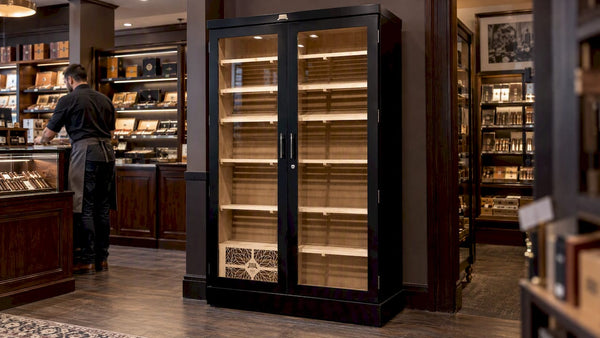
Retail Humidor ROI: How to Measure What a Display Earns
What does a retail or lounge humidor really return? A practical framework for cigar shops, lounges and clubs:...
Read Article