

Discover what is humidor lining and why it’s crucial for maintaining your cigars. Learn how it protects your collection and enhances flavor.
Humidor lining is defined as the solid, unfinished interior wood layer inside a cigar humidor, and Spanish cedar is the recognized industry standard for this purpose. This interior wood layer is not decorative. It is the functional core of your humidor’s climate system, responsible for maintaining relative humidity between 65% and 72%, repelling tobacco beetles, and creating the stable aromatic environment that allows cigars to age with precision. Without a properly constructed lining, even the most beautifully crafted exterior becomes little more than an ornate box. For any serious collector, understanding humidor lining is the first step toward protecting a collection that represents years of investment and passion.
What is humidor lining made of and why Spanish cedar is the standard
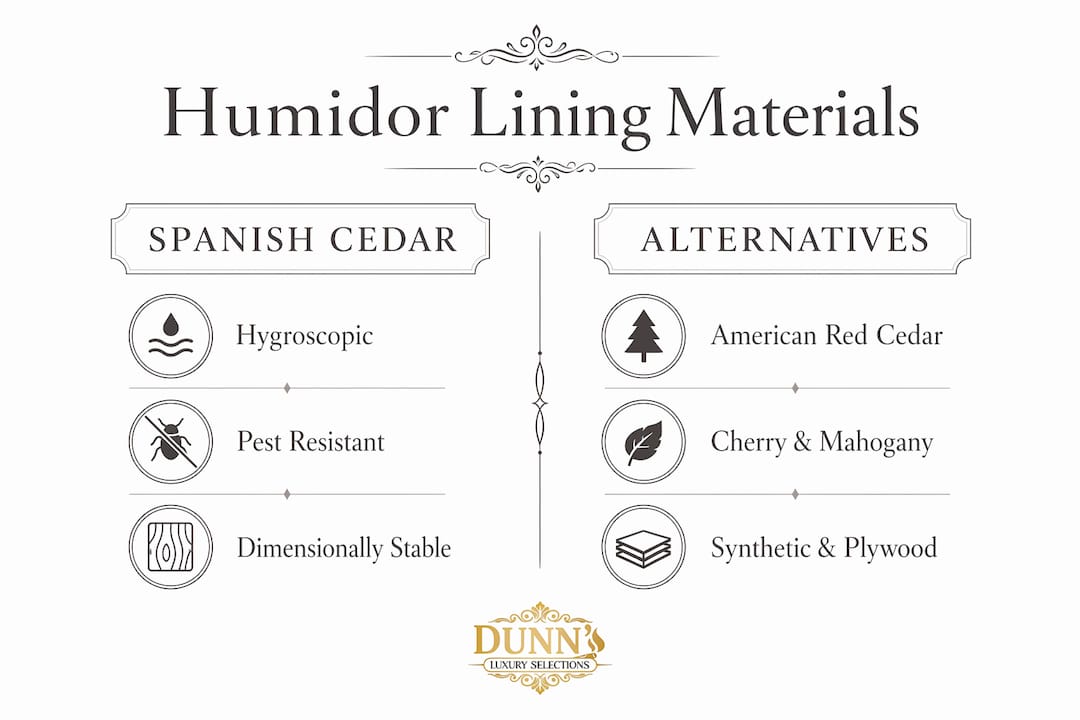
Spanish cedar, known botanically as Cedrela odorata, is the definitive material for humidor interior construction. Its dominance in premium cigar humidor construction is not tradition for tradition’s sake. It is the result of a specific combination of physical and chemical properties that no other commercially available wood replicates.
The most critical of those properties is hygroscopicity. Spanish cedar absorbs and releases moisture in direct response to changes in ambient humidity, functioning as a natural buffer that smooths out fluctuations before they reach your cigars. Proper humidity regulation between 65% and 72% relative humidity depends on this capacity. A wood that cannot perform this exchange leaves your humidification device doing all the work alone, which produces spikes and drops rather than stability.
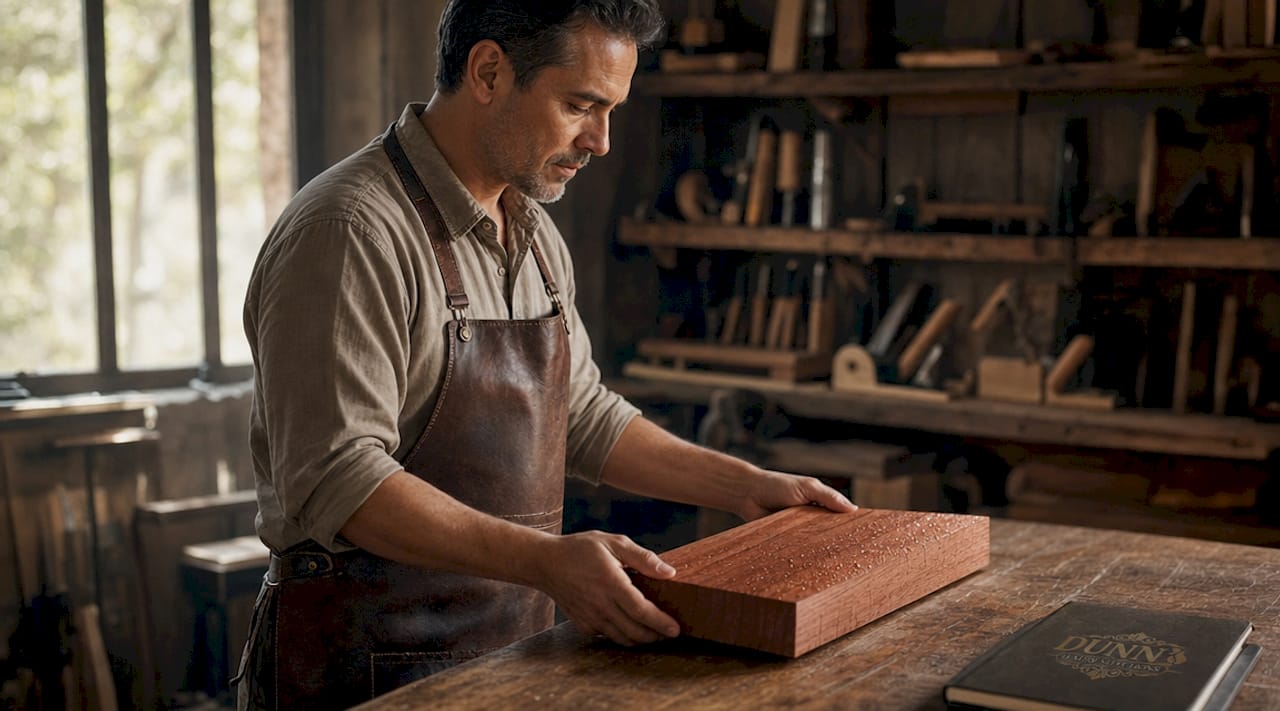
Beyond moisture management, Spanish cedar emits volatile aromatic oils that repel tobacco beetles and other pests without any chemical intervention. Tobacco beetles are the single most destructive threat to a cigar collection, capable of destroying an entire humidor’s contents in days. The wood’s natural oils create an environment those pests find hostile, providing passive, continuous protection.
Dimensional stability is the third pillar. Spanish cedar expands and contracts minimally under the humidity swings that are inherent to humidor operation. This means the lining maintains a tight seal over years of use, whereas less stable woods warp, gap, and compromise the enclosure.
| Material | Hygroscopic capacity | Pest deterrence | Dimensional stability | Aroma compatibility |
|---|---|---|---|---|
| Solid Spanish cedar | Excellent | Natural oil repellent | High | Enhances cigar aroma |
| American red cedar | Moderate | Mild | Moderate | Can overpower cigars |
| Cherry wood | Low | None | Moderate | Neutral |
| Plywood or MDF | Negligible | None | Poor | Off-gassing risk |
| Synthetic liners | None | None | High | Chemically inert |
Pro Tip: When evaluating a humidor, run your hand along the interior. Solid Spanish cedar has a distinctive, warm, slightly resinous scent and a fine, even grain. If the interior smells of lacquer or feels glassy, the wood has been sealed and its functional properties are compromised.
How thick should humidor lining be and why thickness matters
Thickness is not an aesthetic consideration. It is a performance specification. Solid Spanish cedar between 3mm and 6.35mm is the industry standard for effective humidity buffering. Below that threshold, the wood lacks the mass to absorb and release meaningful quantities of moisture, and the lining becomes functionally decorative rather than climate-regulating.
Thin cedar veneers, which are common in lower-priced humidors, present a specific problem. Veneer under 0.250 inches offers almost zero meaningful humidity regulation compared to solid wood. The veneer may look identical to solid cedar from the inside, but it behaves like a painted surface when it comes to moisture exchange.
Signs that a lining has failed or is failing include:
- Cracks wider than 1mm in the cedar surface, indicating the wood has dried out and lost structural integrity
- Visible mold growth, which signals that humidity has been chronically too high and the wood can no longer manage the excess
- Loss of cedar aroma, meaning the aromatic oils have been depleted and pest deterrence is no longer active
- Warping or gaps at the corners and seams, which compromise the humidor’s seal and allow humidity to escape
- Persistent humidity instability despite a functioning humidification device, which points to a lining that can no longer buffer effectively
Neglected cedar lining leads to humidor failure within one to two years, whereas properly maintained solid cedar extends humidor lifespan to five to ten years. That gap represents the difference between a collection that ages beautifully and one that deteriorates silently.
Pro Tip: Purchase a digital hygrometer calibrated to within 1% accuracy and place it at the center of your humidor, away from the humidification device. If readings fluctuate by more than 3% to 4% within a 24-hour period, your lining may be too thin or compromised.
How humidor lining regulates humidity and deters pests
The relationship between Spanish cedar lining and humidity is a continuous, dynamic exchange. Understanding this process explains why proper humidor setup and lining quality are inseparable.
-
Absorption phase. When ambient humidity inside the humidor rises above the target range, the cedar lining absorbs excess moisture vapor from the air. This prevents the relative humidity from spiking and protects cigars from becoming oversaturated, which causes wrapper cracking and mold.
-
Release phase. When humidity drops below the target range, the cedar releases stored moisture back into the air. This passive release sustains the internal climate even when the humidification device is temporarily depleted or between refill cycles.
-
Equilibrium maintenance. Over time, a well-seasoned cedar lining reaches an equilibrium point where it requires less intervention from the humidification device. The wood itself becomes a reservoir, and full interior coverage of all surfaces is what makes this possible. Partial linings or decorative insets reduce this capacity significantly.
-
Pest deterrence. Spanish cedar’s volatile oils are not a one-time treatment. The wood continuously emits these compounds as long as it remains unfinished and healthy. This sustained emission is what makes the protection reliable over years rather than weeks.
-
Flavor environment. The cedar’s aroma is compatible with tobacco at the molecular level. It does not overpower or contaminate cigar flavor. Instead, it contributes a subtle, clean aromatic backdrop that many aficionados describe as part of the character of a well-aged cigar. This is why cigar aging and flavor maturation are so closely tied to the quality of the lining.
How to care for and maintain humidor lining for optimal performance
Cedar lining care is straightforward, but the most common mistakes are acts of misguided maintenance rather than neglect. The single most damaging thing you can do to a Spanish cedar interior is apply any finish, oil, wax, or sealer to it.
Finishing or sealing cedar lining reduces its hygroscopic capacity and introduces off-gassing compounds that can alter cigar flavor. This is a widespread misconception among new collectors who assume that treating the wood will protect it. The opposite is true. The raw, unfinished surface is the functional surface. Protecting it with a coating destroys what makes it work.
Practical maintenance guidelines for your cedar interior:
- Season before first use. Wipe the interior lightly with a clean cloth dampened with distilled water, then place a small dish of distilled water inside and close the lid for 24 to 48 hours. Repeat once. This brings the cedar to its working moisture content without shocking the wood.
- Use only distilled water. Tap water introduces minerals and chlorine that deposit on the cedar surface and can promote mold over time.
- Inspect quarterly. Look for early signs of mold (white or gray fuzzy patches), cracking, or unusual odors. Catching these early prevents full lining failure.
- Clean mold immediately. Wipe affected areas with a cloth lightly dampened with distilled water and allow the interior to air out for several hours before resealing. Do not use any cleaning agents.
- Monitor with precision instruments. A calibrated digital hygrometer from brands like Boveda or Xikar gives you the data to intervene before problems develop.
- Replace the lining when necessary. A lining that has cracked extensively, lost its aroma, or developed persistent mold is no longer functional. Replacement is preferable to continued use of a compromised interior.
Dunnluxuryselections provides detailed cedar care guidance for collectors who want to extend the life of their humidor’s interior across decades of use.
What are the alternatives to Spanish cedar lining and their limitations
Several alternative materials appear in humidor construction, particularly in lower-priced or mass-produced units. Each has specific limitations that explain why Spanish cedar retains its position as the preferred choice for serious collectors.
American red cedar is the most common substitute. It shares some aromatic properties with Spanish cedar but delivers a stronger, more assertive scent that can transfer to cigars and alter their flavor profile over time. Its hygroscopic capacity is moderate but inconsistent compared to Spanish cedar, and it is less dimensionally stable under humidity cycling.
Cherry wood and mahogany appear in decorative humidors where aesthetics take priority over function. Both are beautiful woods with negligible hygroscopic capacity and no pest-deterrent properties. They function as decoration, not climate management.
Plywood and MDF are the most problematic options. These engineered materials off-gas adhesives and formaldehyde compounds that contaminate cigar flavor. They also absorb moisture unevenly and are prone to delamination under the humidity conditions a humidor requires.
Synthetic liners made from acrylic or other polymers are chemically inert and dimensionally stable, but they provide zero moisture buffering and no pest deterrence. They are sometimes used in travel humidors where weight and durability take priority, but they require the humidification device to do all the regulatory work without any passive support from the lining itself.
The impact of humidor lining on preservation quality is consistent across storage contexts: materials that cannot buffer moisture and deter pests simply cannot replicate what solid Spanish cedar delivers. For a collection of any real value, the lining material is not a place to compromise.
Key takeaways
The best lining for a humidor is solid, unfinished Spanish cedar between 3mm and 6.35mm thick, covering all interior surfaces, maintained without any coatings or finishes.
| Point | Details |
|---|---|
| Spanish cedar is the standard | Its hygroscopic properties and pest-deterrent oils make it functionally irreplaceable in premium humidors. |
| Thickness determines performance | Solid cedar between 3mm and 6.35mm is required; veneers under 0.250 inches provide negligible humidity buffering. |
| Never seal or finish the interior | Any coating blocks moisture exchange and introduces compounds that alter cigar flavor. |
| Proper care extends lifespan significantly | Well-maintained cedar lining supports five to ten years of reliable performance versus one to two years when neglected. |
| Alternatives carry real trade-offs | Red cedar, cherry, plywood, and synthetics each fail to match Spanish cedar’s combination of moisture regulation, pest deterrence, and aroma compatibility. |
Why I stopped tolerating anything less than solid Spanish cedar
I have handled hundreds of humidors over the years, from entry-level desktop boxes to bespoke cabinet pieces built for serious collectors. The single most consistent predictor of long-term performance is not the humidification device, not the seal, and not the hygrometer. It is the lining.
Early in my experience, I made the mistake that many collectors make: I assumed that any cedar-colored interior was performing as advertised. It was not until I opened a humidor after six months of careful humidity management and found my cigars drying unevenly that I started measuring lining thickness. The interior was a 1mm veneer over MDF. The cedar was there in name only.
What changed my collection entirely was insisting on solid Spanish cedar at full specification thickness, covering every interior surface without exception. The difference in humidity stability was measurable within weeks. The cigars I had been aging for two years began to develop the complexity I had expected from them all along.
The other mistake I see constantly is collectors who treat their cedar interior like furniture. They oil it, wax it, or apply wood conditioners because it looks dry. This is the fastest way to destroy the lining’s function. The cedar is supposed to look raw. That surface is doing its job. Leave it alone, season it correctly, and monitor it with precision instruments. The lining will reward you with decades of stable, aromatic performance.
Invest in the interior first. The exterior is the presentation. The lining is the instrument.
— Brian
Discover Dunnluxuryselections humidors built on authentic Spanish cedar
For collectors who refuse to compromise on the interior that protects their collection, Dunnluxuryselections offers a curated range of humidors constructed to the standards this guide describes.

Every piece in the Dunnluxuryselections collection features authentic, full-thickness solid Spanish cedar lining across all interior surfaces, precision-fitted to deliver the humidity stability and pest deterrence your cigars deserve. From the cabinet humidor collections designed for serious aging to the desktop humidor range built for the discerning enthusiast, each humidor reflects the construction standards that separate a true sanctuary for cigars from an ornate storage box. Browse the collections and find the instrument your collection has been waiting for.
FAQ
What is humidor lining exactly?
Humidor lining is the solid interior wood layer of a cigar humidor, with Spanish cedar being the industry standard material. It regulates internal humidity, repels pests, and creates the aromatic environment necessary for proper cigar aging.
Why is Spanish cedar used instead of other woods?
Spanish cedar combines hygroscopic moisture buffering, natural pest-deterrent oils, and dimensional stability in a way no other commercially available wood matches. Alternatives like red cedar or cherry wood lack one or more of these properties.
Can I seal or oil the cedar lining to protect it?
No. Sealing or finishing cedar blocks moisture exchange and introduces off-gassing compounds that alter cigar flavor. The raw, unfinished surface is what makes the lining functional.
How thick should the cedar lining be?
Solid Spanish cedar between 3mm and 6.35mm is the accepted performance standard. Veneers thinner than 0.250 inches provide negligible humidity regulation and should not be considered functional lining.
How long does a cedar lining last?
Properly maintained cedar lining supports five to ten years of reliable performance. Neglected linings fail within one to two years, showing symptoms like cracking, mold, and persistent humidity instability.
Recommended
You May Also Enjoy
Save Flavor in 14 Days: Cleaning a Humidor for Collectors
For collectors: clean mold or plume without tainting cedar. Keep or toss decision rules, 14 days reseasoning, hygrometer...
Read Article
6 to 26 Weeks: Custom Humidor Timeline for Collectors & Gift Buyers
Plan a bespoke humidor with a realistic production calendar. See stage-by-stage timings, what typically adds weeks, and how...
Read Article
50/50 Propylene Glycol Ratio + 90/10 Flush for Collectors & Installers
Use a 50/50 propylene glycol ratio to hold passive humidors near 70% RH. Installer tested: occasional 90/10 water...
Read Article