

Discover what Spanish cedar is, its unique properties, and how it benefits woodworkers and cigar enthusiasts. Learn more now!
Spanish cedar is defined as Cedrela odorata, a tropical hardwood native to the Neotropics and a member of the mahogany family (Meliaceae), not a true cedar at all. That distinction matters far more than most woodworkers realize. The aromatic, insect-resistant wood earns its cedar name purely from scent, not from botanical lineage. For cigar aficionados, craftsmen, and anyone serious about working with premium lumber, understanding what Spanish cedar actually is shapes every decision from wood selection to finishing technique. Dunnluxuryselections has built its humidor philosophy around this singular material, and the reasons run deep.
What is Spanish cedar and how is it classified?
Spanish cedar is Cedrela odorata, a tropical tree native to the Neotropics that belongs to the mahogany family, Meliaceae. That family connection is not incidental. It means Spanish cedar shares structural and aromatic qualities with genuine mahogany, not with the Cedrus genus that defines true cedars. The name “Spanish cedar” persists because the wood’s scent closely mimics that of true cedar, a quality prized across centuries of woodworking and cigar culture.
The tree itself is a remarkable specimen. Largest trees reach nearly 135 feet tall, and the species grows at a pace of up to one inch in diameter per year, flowering at the start of the rainy season and dispersing winged seeds during the dry season. That growth rate makes plantation cultivation viable, which matters considerably for conservation. The heartwood transitions from a soft pinkish-brown in youth to a rich reddish-gold with age, adding visual depth that makes it desirable for fine woodworking and decorative applications alike.
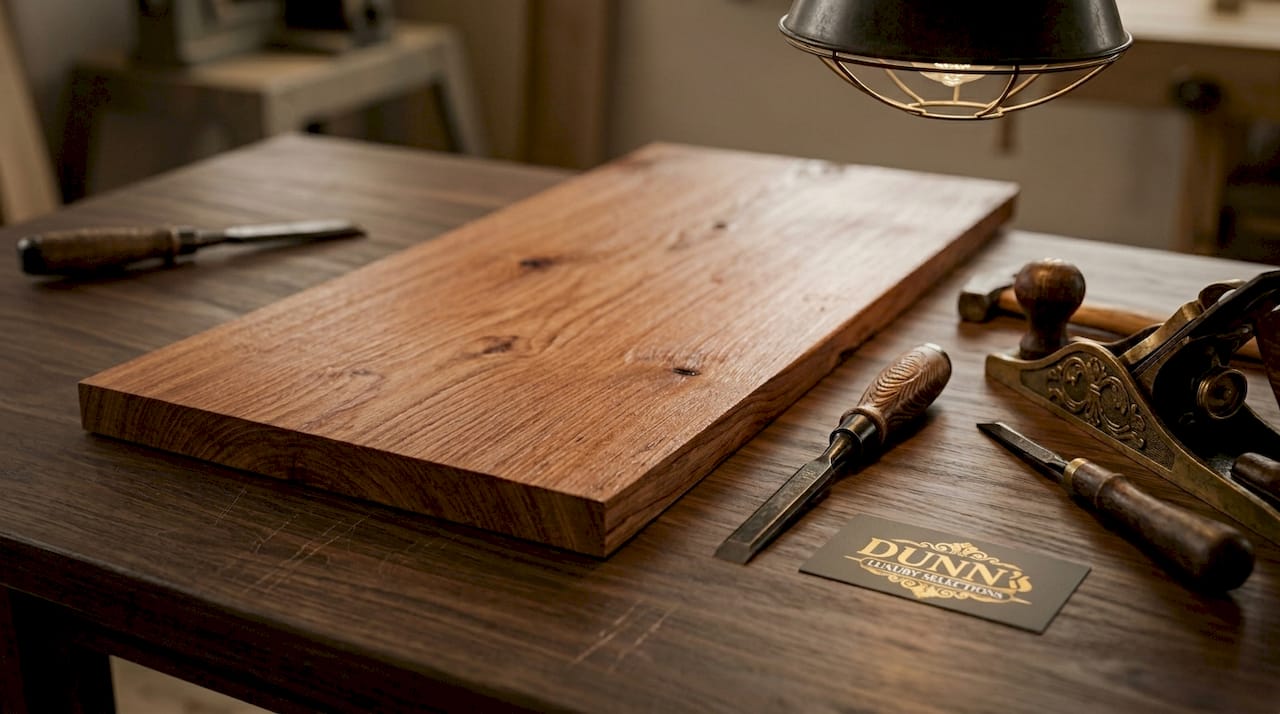
What are the physical characteristics of Spanish cedar?
Spanish cedar is a lightweight, moderately soft hardwood with a reddish-brown color, a straight grain, and a natural oiliness that defines both its strengths and its challenges in the workshop. These properties work together to create a wood that rewards patience and preparation.
The key physical and working characteristics include:
- Color and aging: Heartwood begins pinkish-brown and deepens to a warm reddish-gold over time, enhancing the visual appeal of finished pieces.
- Grain and texture: Straight grain is typical, though occasional interlocked fibers appear. This can cause fuzziness during sanding, requiring finer grits and careful technique.
- Weight: Lighter than mahogany, making it practical for large-format pieces like cabinet humidors and instrument bodies where mass matters.
- Natural oils: The heartwood contains aromatic oils that repel moths and termites, giving the wood its signature scent and pest-deterrent properties.
- Finish compatibility: Those same oils interfere with adhesion. Tung oil or boiled linseed oil produce the best results, delivering a warm, aged appearance that works harmoniously with the wood’s chemistry. Polyurethane is far less effective.
Pro Tip: Before gluing any Spanish cedar joint, wipe the bond surface with acetone to dissolve surface oils. This single step dramatically improves adhesion and prevents joint failure down the line.
The wood’s aroma is not merely pleasant. It is functional. The oils that produce that distinctive scent are the same compounds that deter insects and regulate moisture exchange, making Spanish cedar one of the few materials where fragrance and performance are inseparable.

What are the primary uses of Spanish cedar?
Spanish cedar is the primary wood in cigar humidors and boxes because its oils complement cigar flavor and its low expansion and contraction stabilizes humidity levels with exceptional consistency. That single application has defined the wood’s reputation in luxury goods, but its utility extends well beyond the humidor.
The most significant uses span several categories:
- Cigar humidors and boxes: Spanish cedar lines the interior of premium humidors because it absorbs and releases moisture gradually, maintaining the 65 to 72 percent relative humidity that preserves cigars. The aroma also complements tobacco rather than competing with it.
- Musical instruments: Guitar builders prize Spanish cedar for necks and veneers. Its light weight and tonal resonance make it a preferred alternative to mahogany in classical and acoustic guitar construction.
- Closet and wardrobe lining: Spanish cedar repels moths as effectively as true cedar, making it a premium choice for lining closets, wardrobes, and storage chests where natural pest deterrence is preferred over chemical treatments.
- Boat building and cabinetry: The wood’s natural decay resistance and dimensional stability make it suitable for marine applications, exterior cabinetry, and any environment where moisture exposure is a concern.
- Exterior millwork: Windows, doors, and siding benefit from Spanish cedar’s resistance to rot and insects, particularly in humid climates where lesser woods deteriorate quickly.
The breadth of these applications reflects a material that performs across environments. Whether you are curating a sanctuary for your finest cigars or building a guitar neck that must endure years of handling, Spanish cedar delivers consistency that few alternatives match.
What are the best practices when working with Spanish cedar?
Working with Spanish cedar rewards preparation. The wood’s natural oils are its greatest asset and its most persistent challenge, requiring specific techniques at every stage from rough milling to final finishing.
Managing the oils during assembly
The acetone wiping technique before gluing is non-negotiable for structural joints. Apply acetone to both mating surfaces, allow it to flash off completely, then apply your adhesive immediately. Waiting too long after cleaning allows fresh oils to migrate back to the surface.
Finishing for longevity
Oil-based finishes work with the wood’s chemistry rather than against it. Tung oil and boiled linseed oil penetrate the grain and cure within the existing oil matrix, producing a finish that ages gracefully. Film-forming finishes like polyurethane sit on top of the wood and are eventually undermined by oil migration from below. Experienced woodworkers plan for ongoing oil seepage after finishing, scheduling periodic solvent cleaning to maintain finish quality over years of use.
Health and safety considerations
- Dust from Spanish cedar can irritate skin and respiratory systems. Fine particles generated during machining require eye protection, an N95 respirator or better, and active dust collection.
- Work in well-ventilated spaces, particularly when routing or sanding, where dust concentration peaks.
- Wash exposed skin promptly after handling raw lumber.
Pro Tip: If you notice finish lifting or cloudiness on a Spanish cedar piece months after completion, the cause is almost always oil migration. A light wipe with mineral spirits followed by a fresh coat of tung oil typically restores the surface without stripping the entire finish.
Sourcing responsibly
Spanish cedar is listed on CITES Appendix III due to overharvesting across its native range. Sourcing certified plantation-grown lumber is the responsible choice, and it also tends to produce more consistent grain and color than wild-harvested material. Ask your supplier for documentation before purchasing.
How does Spanish cedar compare to true cedar and mahogany?
Spanish cedar is not botanically related to true cedars but shares a family with mahogany. That distinction has direct consequences for how the wood behaves in the workshop and how it performs in finished pieces.
| Property | Spanish cedar | True cedar (Cedrus) | Mahogany |
|---|---|---|---|
| Botanical family | Meliaceae | Pinaceae | Meliaceae |
| Weight | Light to medium | Light to medium | Medium to heavy |
| Aroma | Strong, cedar-like | Moderate, resinous | Mild to none |
| Pest resistance | High (natural oils) | Moderate | Low to moderate |
| Finish compatibility | Requires oil prep | Standard | Standard |
| Primary uses | Humidors, instruments, exterior | Outdoor furniture, decking | Cabinetry, furniture |
True cedars belong to the Cedrus genus and are coniferous softwoods. Their scent is resinous rather than sweet, their grain is coarser, and they lack the insect-repelling oil profile that makes Spanish cedar so valuable for enclosed storage applications. Mahogany, as a family relative, shares Spanish cedar’s workability and grain character but is denser, heavier, and lacks the aromatic oils that define Spanish cedar’s specialty applications. For humidor construction specifically, neither true cedar nor mahogany replicates what Spanish cedar delivers.
Key takeaways
Spanish cedar is the definitive wood for cigar humidors, musical instruments, and pest-resistant storage because its aromatic oils regulate humidity, deter insects, and deepen in character with age.
| Point | Details |
|---|---|
| Botanical identity | Spanish cedar is Cedrela odorata, a mahogany-family hardwood, not a true cedar. |
| Oil management | Wipe glue surfaces with acetone before bonding; use tung or boiled linseed oil for finishing. |
| Humidor performance | Low expansion and contraction stabilizes relative humidity, making it the premier humidor lining material. |
| Safety and sourcing | Dust requires respiratory protection; source only CITES-compliant, plantation-grown lumber. |
| Aging and aesthetics | Heartwood deepens from pinkish-brown to reddish-gold over time, increasing visual value. |
Why Spanish cedar earns its reputation, from someone who has worked with it
I have worked with a lot of aromatic woods over the years, and Spanish cedar occupies a category of its own. The first time you mill a fresh board, the scent is genuinely arresting. It is not the sharp, almost medicinal smell of true cedar. It is warmer, richer, and more complex. That aroma is not incidental. It tells you the oils are present and active, which means the wood is doing exactly what you need it to do.
The challenge most woodworkers underestimate is the oil migration timeline. You can prep a surface perfectly, apply a beautiful finish, and then watch it cloud six months later as oils continue to work their way out of the wood. I learned this the hard way on an early humidor build. The fix is not to avoid finishing. It is to accept that Spanish cedar is a living material in the most practical sense, one that requires periodic attention rather than a single finishing session.
What I find most compelling about this wood is the alignment between its functional properties and its aesthetic ones. The same oils that protect your cigars from insects and regulate humidity are the ones that produce that signature scent and deepen the color over decades. You are not trading beauty for performance. You are getting both from the same source. For anyone serious about building a humidor that functions as both a precision instrument and a legacy piece, there is no substitute.
— Belle
Discover Spanish cedar humidors crafted for the serious collector

At Dunnluxuryselections, Spanish cedar is not a material choice. It is a commitment to the art of preservation. Every humidor in the collection is built around the wood’s natural capacity to maintain precise relative humidity, protect your cigars from pests, and deepen in character alongside the collection it houses. Whether you are drawn to the intimacy of a desktop humidor for your most-reached-for cigars or the commanding presence of a cabinet humidor that anchors a room, each piece reflects the same philosophy: that the finest cigars deserve a sanctuary built from the finest materials. Explore the full Dunnluxuryselections humidor collection and find the piece that honors your collection.
FAQ
What is Spanish cedar used for most often?
Spanish cedar is used most often as the interior lining of cigar humidors because its natural oils regulate humidity and complement tobacco aroma. It is also widely used for guitar necks, closet lining, and exterior millwork.
Is Spanish cedar a real cedar?
Spanish cedar is not a true cedar. It belongs to the mahogany family (Meliaceae) and is botanically classified as Cedrela odorata. The “cedar” name comes from its similar scent, not its botanical lineage.
Why is Spanish cedar good for humidors?
Spanish cedar’s low expansion and contraction rate stabilizes relative humidity inside a humidor, while its aromatic oils deter insects and enhance the aging environment for cigars. No other widely available wood replicates this combination of properties.
How do you finish Spanish cedar properly?
Tung oil or boiled linseed oil produces the best results on Spanish cedar because these penetrating finishes work with the wood’s natural oils rather than forming a surface film that oil migration will eventually undermine. Wipe glue surfaces with acetone before any bonding step.
Where is Spanish cedar found?
Spanish cedar is native to the Neotropics, ranging from Mexico through Central America and into South America. Due to overharvesting, it is listed on CITES Appendix III, and plantation-grown sources are now the preferred and most responsible supply option.
Recommended
You May Also Enjoy
Cigar Locker Dimensions: Sizing Guide for Collectors and Lounges
Cigar locker dimensions explained: compartment sizes, cabinet footprints, capacity math and clearances, so you size a locker bank...
Read Article
Sealing a Walk-In Humidor: Envelope, Door and Penetrations
How to seal a walk-in humidor properly: vapor barrier placement, door gasket, penetrations and the controlled airflow a...
Read Article
Retail Humidor ROI: How to Measure What a Display Earns
What does a retail or lounge humidor really return? A practical framework for cigar shops, lounges and clubs:...
Read Article