

Discover why consistency in humidors is crucial for preserving your cigars' quality, flavor, and integrity. Master humidity control today!
Consistent humidity in humidors is the single most important factor in preserving cigar quality, flavor, and physical integrity over time. Without stable relative humidity (RH), even the finest Nicaraguan or Dominican cigars deteriorate rapidly. Tobacco leaves are hygroscopic by nature, meaning they absorb and release moisture from the surrounding air constantly. Tools like Boveda two-way humidity packs and calibrated digital hygrometers exist precisely because maintaining that steady environment is harder than it looks. The aficionado who masters humidity control protects not just a collection, but a legacy.
Why consistency in humidors matters more than exact RH numbers
Stability outweighs perfection when it comes to humidity control for cigars. A humidor held at a steady 67% RH performs far better than one that swings between 60% and 75% on alternating days. Big humidity swings damage cigars’ physical structure and flavor quality in ways that no amount of recovery time can fully reverse.
Tobacco leaves expand when they absorb moisture and contract when they release it. Repeated expansion and contraction stresses the wrapper leaf, the outermost and most delicate layer of any cigar. The consequences are predictable and costly:
- Wrapper cracking: Dry conditions cause the wrapper to shrink and split along the seam.
- Split seams: Rapid rehydration after a dry spell forces the binder and filler to expand faster than the wrapper can accommodate.
- Uneven burn: Inconsistent moisture distribution across the cigar creates hot spots and tunneling during the smoke.
- Flavor degradation: Essential oils in the tobacco, which carry the majority of a cigar’s flavor complexity, evaporate or oxidize when moisture levels fluctuate wildly.
The old “70/70 rule” (70% RH at 70°F) is widely cited but increasingly considered outdated by serious collectors. Many experts now tailor humidity targets to the tobacco type and local climate rather than chasing a universal number. A Maduro wrapper, for example, tolerates slightly higher humidity than a Connecticut shade leaf. The principle that never changes: keep conditions steady, whatever your target.
Pro Tip: Resist the urge to open your humidor every day to check conditions. Each opening introduces ambient air and disrupts the internal climate. Check weekly at most, and let your humidity control system do its work.
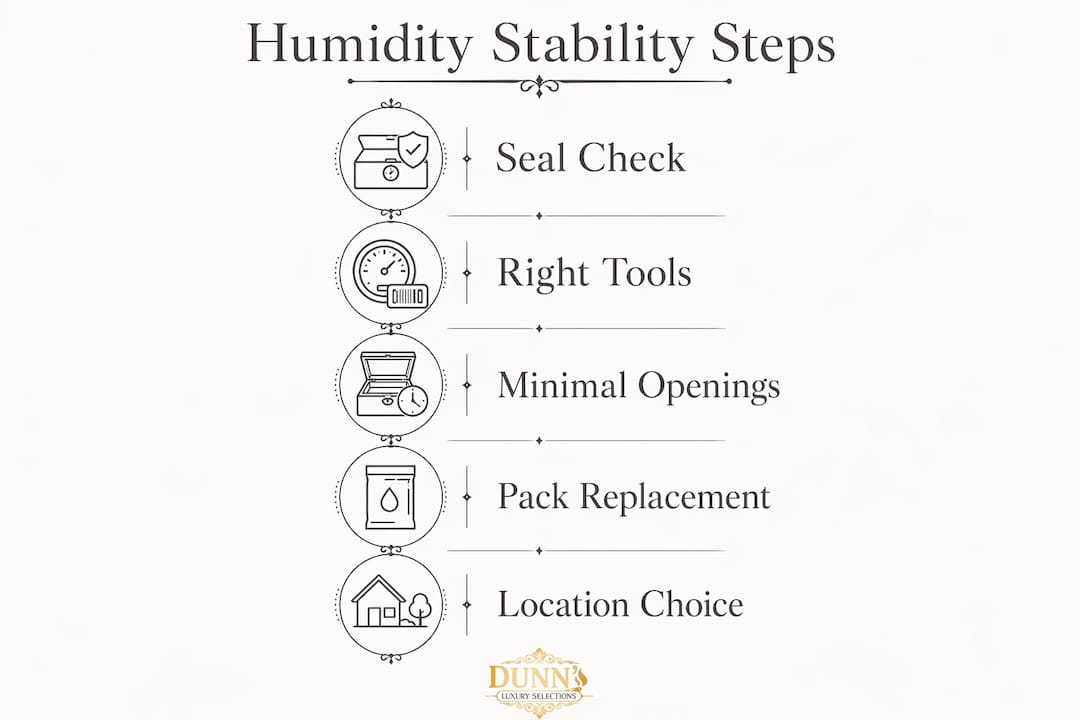
What causes inconsistency in humidor humidity and temperature?
Most humidity problems trace back to a handful of preventable causes. Identifying them is the first step toward a stable storage environment.
- Poor seal or gaps: A lid that does not close flush allows moisture to escape continuously. Seals critically impact a humidor’s ability to hold stable humidity, and even a hairline gap can drain a humidor in dry winter months.
- Overcorrection: Frequent adjustments based on daily readings create moisture spikes that harm cigars as much as dryness does. Adding a new humidity source every time the gauge dips two points is one of the most common mistakes collectors make.
- Inaccurate hygrometers: Analog hygrometers are notoriously unreliable. Digital hygrometers provide more accurate readings and reduce the temptation to overcorrect based on faulty data.
- Temperature swings: Temperature influences relative humidity measurements without directly controlling moisture content. A humidor placed near a heating vent will show RH drops in winter simply because warmer air holds more moisture in suspension, not because the cigars are actually drying out.
- Mixing humidity sources: Combining Boveda packs with gel jars or sponge-based humidifiers creates competing moisture environments. Choose one system and commit to it.
- Overfilling: Packing a humidor beyond its rated capacity restricts airflow and creates humidity hotspots where cigars nearest the humidification source absorb more moisture than those at the far end.
Understanding these causes transforms reactive panic into calm, methodical stewardship of your collection.
How to maintain humidor humidity with the right tools and techniques
Achieving stable conditions requires the right tools, properly deployed. The following sequence works for both new collectors and experienced aficionados upgrading their setup.
-
Season the humidor before use. New humidors have dry Spanish cedar interiors that will absorb moisture aggressively, robbing your cigars of humidity. Use Boveda 84% seasoning packs for 14–21 days to saturate the wood before placing a single cigar inside.
-
Switch to two-way humidity packs. Boveda packs maintain a set humidity level by releasing or absorbing moisture as needed, without any manual intervention. They are the closest thing to a set-it-and-forget-it solution available for humidity control for cigars.
-
Match pack quantity to humidor size. One Boveda 60-gram pack covers roughly 25 cigars. A 100-count desktop humidor needs at least four packs for even coverage. Under-supplying packs forces each one to work harder and shortens its effective lifespan.
-
Calibrate your digital hygrometer. Place the hygrometer in a sealed bag with a Boveda 75% calibration pack for 24 hours. If the reading deviates from 75%, note the offset and apply it to all future readings. Recalibrate every six months.
-
Check conditions weekly, not daily. Limiting how often you open the humidor stabilizes humidity by reducing moisture exchange with outside air. Discipline here pays dividends in consistency.
-
Replace packs when they harden. A Boveda pack that feels stiff and rigid has exhausted its salt-water membrane. Replace it immediately. Do not wait for the hygrometer to signal a problem.
Pro Tip: If your humidor has a persistent leak, doubling the number of Boveda packs compensates for air loss and maintains stable humidity without requiring a full replacement of the unit.
Which humidor type offers the best humidity consistency?
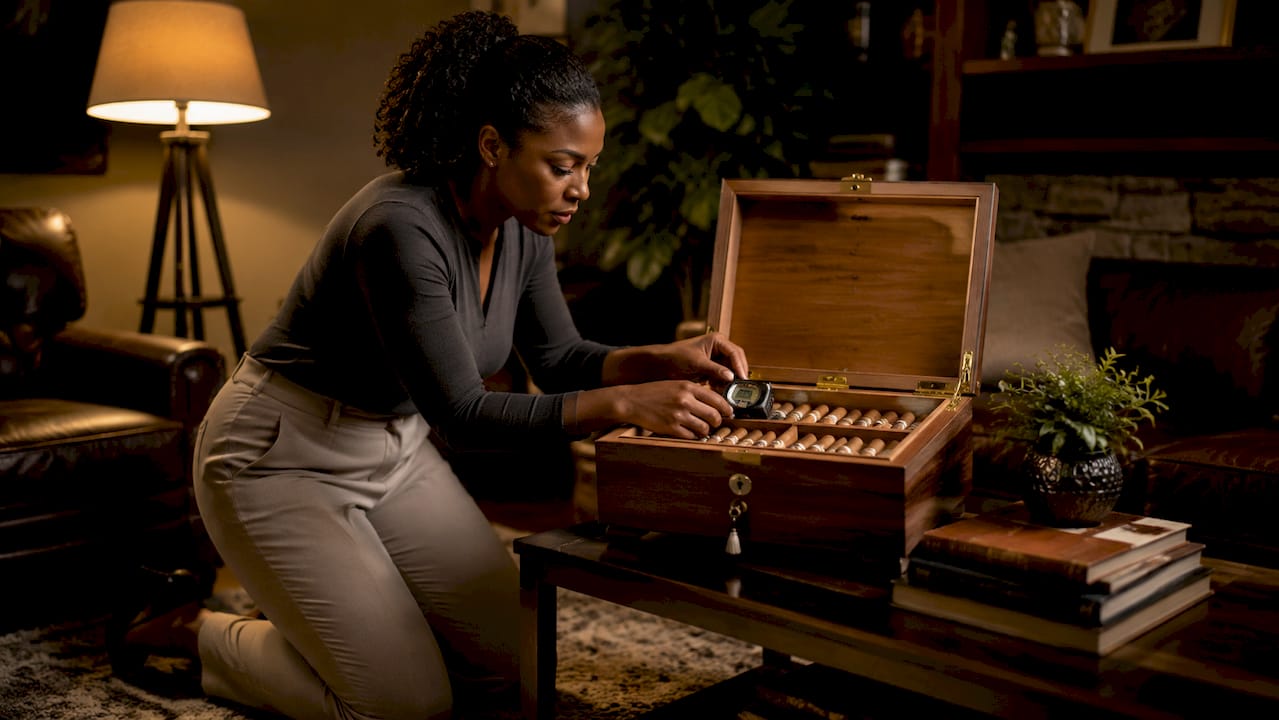
The humidor you choose shapes every humidity decision that follows. Not all designs perform equally.
| Humidor type | Humidity consistency | Best for | Key limitation |
|---|---|---|---|
| Desktop (Spanish cedar lined) | Good | Collections of 25–150 cigars | Requires manual pack management |
| Cabinet (wood, sealed) | Very good | Collections of 150–500 cigars | Larger volume needs more packs |
| Electronic (digital climate control) | Excellent | Large or long-term collections | Higher cost; requires power |
| Glass-top desktop | Fair | Display purposes | Glass disrupts insulation |
| Portable/travel | Variable | Short trips | Frequent opening destabilizes RH |
Spanish cedar lining absorbs and releases moisture naturally, acting as a buffer against rapid swings. It also provides antimicrobial protection that suppresses mold growth in high-humidity environments. This is why Spanish cedar remains the gold standard for interior lining across every price point.
Electronic humidors use digital sensors and airflow systems to maintain precise, consistent temperature and humidity simultaneously. For collectors with 300 or more cigars, or those aging rare sticks over five or more years, the investment in electronic climate control pays for itself in preservation quality. The Raching MON800A, for example, offers water-cooled precision climate control for up to 600 cigars, a level of consistency no passive system can match.
Glass-top humidors sacrifice insulation for aesthetics. The glass panel conducts heat from ambient light and room temperature changes, creating micro-fluctuations that accumulate over weeks. They work adequately for display pieces you plan to smoke within a few months, but they are not suited for long-term aging.
Practical habits that protect humidity stability over time
The best humidor and the best tools still fail without consistent behavioral habits. These practices protect your collection between maintenance sessions.
- Limit lid openings to once per week. Every opening introduces ambient air. In a dry climate or during winter heating season, that exchange can drop internal RH by several points within hours.
- Arrange cigars with airflow in mind. Leave small gaps between rows so air circulates evenly. Cigars stacked tightly against each other create humidity dead zones.
- Store the humidor away from direct sunlight and heat sources. UV light degrades wrapper leaves and raises internal temperature, which shifts RH readings. A stable room temperature between 65°F and 70°F is the target.
- Inspect for mold monthly. A white, powdery bloom on the wrapper is usually plume (crystallized oils) and is harmless. A fuzzy, blue-green growth is mold and signals excessive humidity. Remove affected cigars immediately and reduce RH by 3–5 points.
- Calibrate your hygrometer every six months. Drift is normal in digital sensors. A hygrometer reading 2–3 points high will lead you to under-humidify your collection without realizing it.
- Rotate cigars quarterly. Move cigars from the top tray to the bottom and vice versa. This equalizes exposure to the humidity source and prevents any single area from becoming chronically drier than the rest.
These habits require minimal time but deliver maximum protection for a collection built over years of careful curation.
Key Takeaways
Consistent humidity in humidors is the foundation of cigar preservation, and stability always matters more than chasing a specific RH number.
| Point | Details |
|---|---|
| Stability over perfection | A steady 65–70% RH protects cigars better than a perfect number that fluctuates daily. |
| Season before storing | Use Boveda 84% packs for 14–21 days to prepare new humidor wood before adding cigars. |
| Use two-way humidity packs | Boveda packs release and absorb moisture automatically, eliminating the need for constant adjustment. |
| Calibrate your hygrometer | Verify digital hygrometer accuracy every six months to avoid overcorrection based on faulty readings. |
| Limit lid openings | Opening the humidor less frequently reduces moisture exchange and preserves internal climate stability. |
What I have learned after years of watching collectors get this wrong
The most common mistake I see among new collectors is treating the humidor like a patient in intensive care. They check the hygrometer twice a day, add distilled water to a sponge humidifier every time the gauge dips, and then wonder why their wrappers are cracking. The problem is not neglect. The problem is overcorrection.
Cigars are hygroscopic, and that means they respond to every moisture change in their environment. When you constantly add humidity, then let it spike, then scramble to reduce it, you are putting the tobacco through a cycle of expansion and contraction that does real structural damage. I switched to Boveda two-way packs years ago and the difference was immediate. The hygrometer stopped swinging. The wrappers stayed intact. The draw on every cigar became more predictable.
The other overlooked detail is placement. A humidor sitting on top of a refrigerator, near a window, or above a heating vent will fight you constantly. Move it to an interior shelf or a dedicated cabinet away from heat and light, and half your humidity problems disappear without touching a single pack or gauge.
My honest recommendation: buy a humidor with Spanish cedar lining, season it properly, load it with the right number of Boveda packs, and then leave it alone. Check it once a week. Replace packs when they harden. That is the entire system. The collectors who age the best cigars are not the ones who obsess over every decimal point. They are the ones who build a stable environment and trust it.
— Brian
Dunnluxuryselections: built for collectors who demand stability
Dunnluxuryselections curates America’s finest selection of luxury humidors, from desktop models built with Spanish cedar interiors to precision electronic cabinets engineered for large, long-term collections. Every humidor in the collection is selected for its ability to hold consistent humidity, not just its appearance.

For collectors who take preservation seriously, the cabinet humidor collection includes models like the Raching MON800A, a water-cooled climate-controlled unit that holds up to 600 cigars at precise, stable conditions. Whether you are protecting a 50-count starter collection or a curated library of aged rarities, Dunnluxuryselections has the right instrument for your collection.
FAQ
What is the ideal humidity level for storing cigars?
Most collectors target 65–70% relative humidity for long-term storage. Storing around 65% RH often solves tight draw problems caused by over-humidification.
How often should I check my humidor’s humidity?
Check your humidor once per week at most. Opening it more frequently introduces ambient air and disrupts internal humidity stability.
Do Boveda packs really replace traditional humidifiers?
Yes. Boveda two-way packs maintain a set humidity level by releasing or absorbing moisture automatically, making them a reliable replacement for sponge-based or gel humidifiers.
Why does my humidor humidity keep dropping?
A persistent humidity drop usually signals a poor seal or gaps in the lid. Doubling the number of humidity packs compensates for air loss while you address the seal.
Does temperature affect cigar storage?
Temperature influences relative humidity readings but does not directly control moisture content. Keep your humidor between 65°F and 70°F to prevent RH fluctuations caused by heat changes.
Recommended
You May Also Enjoy
Cigar Locker Dimensions: Sizing Guide for Collectors and Lounges
Cigar locker dimensions explained: compartment sizes, cabinet footprints, capacity math and clearances, so you size a locker bank...
Read Article
Sealing a Walk-In Humidor: Envelope, Door and Penetrations
How to seal a walk-in humidor properly: vapor barrier placement, door gasket, penetrations and the controlled airflow a...
Read Article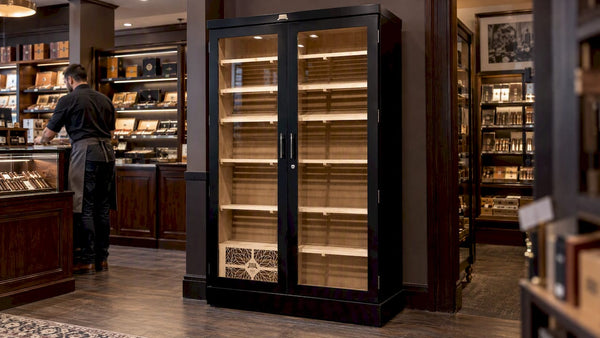
Retail Humidor ROI: How to Measure What a Display Earns
What does a retail or lounge humidor really return? A practical framework for cigar shops, lounges and clubs:...
Read Article