

Discover why humidors prevent cigar mold by controlling humidity and temperature. Protect your cigar collection and ensure optimal storage.
A humidor prevents cigar mold by maintaining a controlled environment where temperature and relative humidity stay within the narrow range that mold spores cannot colonize. Cigar mold, the living fungal growth that penetrates tobacco leaves and destroys a collection, thrives when humidity climbs above 70% RH or when temperature fluctuates and creates condensation. The industry term for this environmental discipline is “controlled humidification,” and it is the foundation of every serious cigar storage practice. Understanding why humidors prevent cigar mold means understanding the precise conditions that separate a preserved, aging cigar from a ruined one.
Why humidors prevent cigar mold through humidity control
The single most effective defense against mold is keeping relative humidity between 65–70% RH. Below 65%, cigars dry out and crack. Above 70%, mold spores find the moisture they need to germinate and spread. A well-built humidor holds that narrow window consistently, day after day, which is something a drawer, a zip-lock bag, or a wine cooler simply cannot replicate.
Spanish cedar, the lining material found in quality humidors, is the unsung hero of this process. Spanish cedar buffers moisture by absorbing excess humidity and releasing it when the air dries, acting as a natural regulator between the humidification device and your cigars. This buffering effect smooths out the spikes and dips that would otherwise stress the tobacco and invite mold.
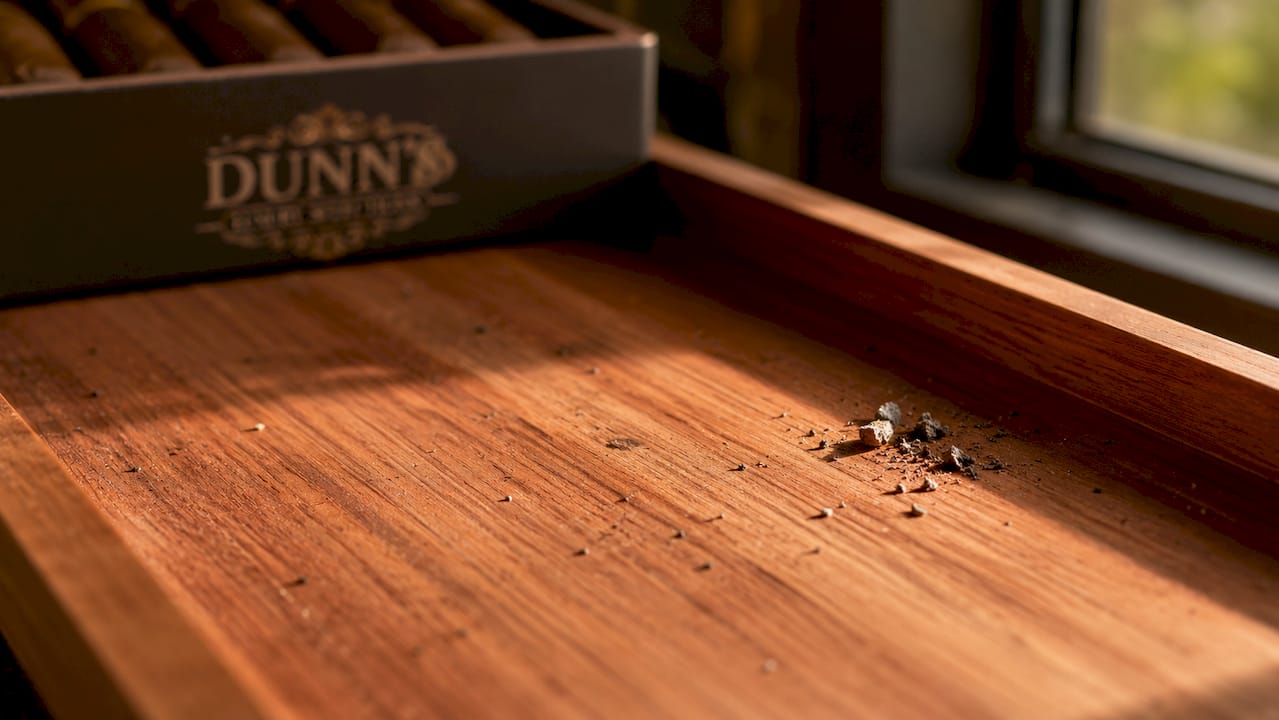
The humidification source matters just as much as the wood. Tap water introduces minerals and lacks antimicrobial properties, making it a primary cause of mold inside humidors. Distilled water eliminates that mineral contamination. Propylene glycol solutions go one step further by maintaining a natural RH ceiling around 70%, which means even an overfilled humidification device will not push humidity into mold territory.
| Humidity Level | Effect on Cigars | Mold Risk |
|---|---|---|
| Below 60% RH | Drying, cracking, flavor loss | Low mold, high damage |
| 65–70% RH | Ideal aging and preservation | Minimal |
| 71–75% RH | Wrapper softening, beetle risk | Moderate to high |
| Above 75% RH | Rapid mold colonization | Severe |
- Use only distilled water or propylene glycol solutions in your humidification device.
- Check humidity readings weekly, not monthly.
- Allow the humidor to stabilize for 24 hours after refilling before reading levels.
Pro Tip: Propylene glycol solution is a passive safety net. Even if you forget to check your humidor for two weeks, the solution resists pushing humidity past 70%, buying you time without sacrificing your collection.
How does temperature affect mold growth inside a humidor?
Temperature is the second variable that determines whether mold grows, and most aficionados underestimate its power. Temperatures above 70°F accelerate tobacco respiration and create the warm, moist conditions that mold spores prefer. Stable temperature around 70°F, paired with proper RH control, is the combination that keeps a humidor truly mold resistant.
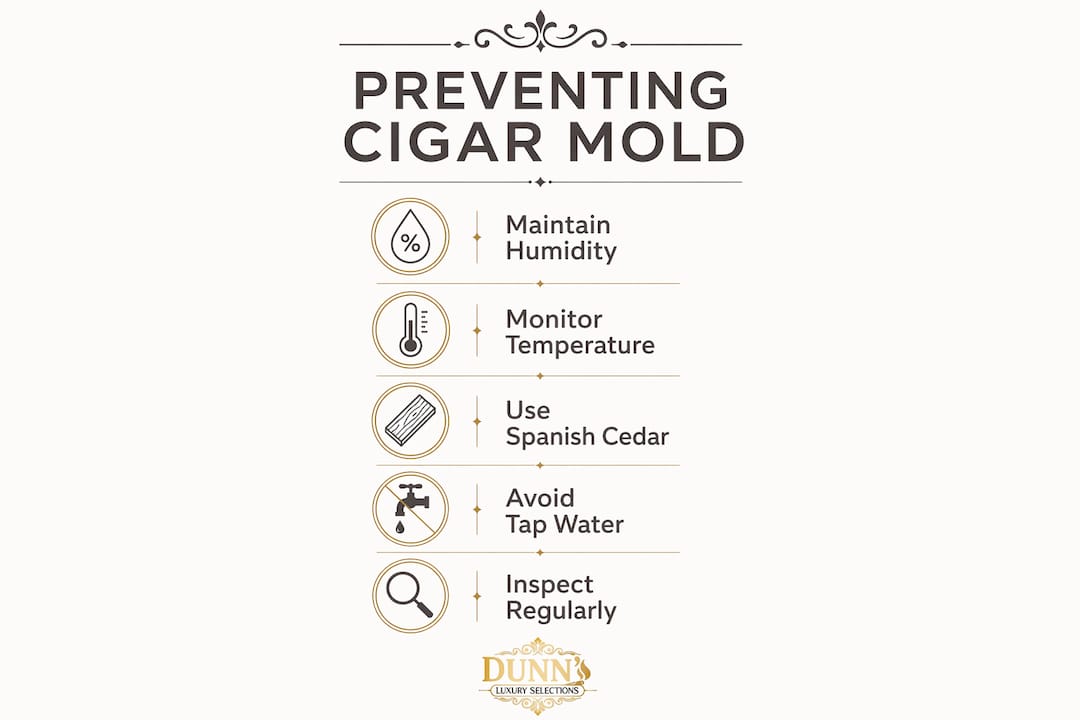
Temperature fluctuations are particularly dangerous because they cause condensation. When warm, humid air inside a humidor meets a cooler surface, water droplets form on the wood and on cigar wrappers. Those droplets are concentrated moisture points where mold can take hold within days, even if your average RH reading looks acceptable.
Airflow compounds the temperature problem when it is absent. Overstuffing a humidor reduces circulation and creates localized moisture pockets between tightly packed cigars. Those pockets can reach 80% RH or higher even when the hygrometer reads 68%, because the sensor is measuring the open air, not the compressed space between your Maduros.
- Keep your humidor away from windows, heating vents, and air conditioning units.
- Never place a humidor in direct sunlight, which drives surface temperatures well above ambient room temperature.
- Leave visible gaps between cigars, especially in the lower trays where airflow is weakest.
- If you store more than 100 cigars, consider a cabinet humidor with a built-in fan for active circulation.
Pro Tip: Place a digital thermometer probe inside your humidor for one week before trusting your setup. The internal temperature often runs 3–5°F warmer than the room, especially in summer months.
What causes mold in humidors even when you use one correctly?
A humidor is a precision instrument, not a set-and-forget appliance. The most common mold outbreaks happen not from ignoring a humidor, but from making small, consistent errors that compound over time.
Using tap water is the leading culprit. The minerals in tap water feed mold colonies and leave deposits on Spanish cedar that permanently alter its moisture-buffering capacity. Switching to distilled water after months of tap water use does not undo that damage. The wood retains mineral residue, and mold spores already embedded in the grain have a ready food source.
Over-seasoning is the second most common mistake. New aficionados often wipe the interior with a soaking wet sponge, believing more moisture means better preparation. That approach saturates the wood beyond its capacity, creates standing water in corners, and triggers mold within the first week of use. Seasoning the humidor carefully rather than soaking it preserves wood quality and maintains consistent RH without mold risk.
| Common Mold Cause | Preventive Action |
|---|---|
| Tap water in humidification device | Use only distilled water or propylene glycol solution |
| Over-seasoning with wet sponge | Season with a damp cloth or humidity pack, never standing water |
| Poor humidor seal or warped lid | Test seal with a dollar bill; replace gasket if it slides out easily |
| Overpacking with no airflow | Fill to 75% capacity maximum; rotate cigars every few weeks |
| Uncalibrated hygrometer | Calibrate with a salt test every 3–6 months |
- Inspect the humidor seal every time you open it. A lid that closes with no resistance has likely lost its seal.
- Never store a humidor in a basement without a dehumidifier running in the room.
- Rotate cigars from bottom trays to top trays monthly to expose all surfaces to consistent airflow.
How do you tell the difference between mold and plume on a cigar?
Mold and plume look similar to the untrained eye, and that resemblance has cost many collectors their finest cigars. Mold is a living, fuzzy organism that penetrates tobacco leaves. Plume, also called bloom, is a crystalline formation of natural oils that rises to the surface of a well-aged cigar. Plume is harmless and actually signals quality aging. Mold is a threat that spreads.
The tactile test is the most reliable field method. Wipe the white spot gently with a dry finger. Plume wipes away cleanly and leaves no residue or discoloration. Mold smears, leaves a faint stain, and often reveals a slightly discolored patch on the wrapper beneath. The smell confirms the diagnosis: plume has no odor, while mold carries a musty, earthy scent that is unmistakable once you have encountered it.
Many enthusiasts mistake plume for mold, but the safer assumption runs in the opposite direction. If you are uncertain, treat the spot as mold. Remove the affected cigar, wipe it with a dry cloth, and quarantine it away from the rest of your collection. A false alarm costs you nothing. A missed mold outbreak can destroy every cigar in the humidor within two weeks.
- Inspect every cigar when you open the humidor, not just the ones on top.
- Use a small flashlight to check the undersides of cigars resting in trays.
- Routine inspections every few weeks allow prompt mold response and reinforce humidification balance.
Pro Tip: When in doubt, quarantine first and research second. A cigar isolated for 48 hours loses nothing. A cigar left in an infected humidor for 48 hours may be unsalvageable.
Best practices for maintaining your humidor to prevent mold long-term
Consistent maintenance is what separates a humidor that performs for decades from one that becomes a mold incubator. The following practices, applied in sequence, build a mold-resistant environment from day one.
- Season the humidor before first use. Wipe the interior Spanish cedar with a lightly dampened cloth, place a small dish of distilled water inside, and close the lid for 24–48 hours. Repeat once if the hygrometer reads below 65% after the first cycle. Never use a soaking wet sponge.
- Calibrate your hygrometer before trusting it. Uncalibrated hygrometers are a common source of improper humidity readings, leading to over- or under-humidifying. Use the salt test method: seal a bottle cap of salt and a few drops of distilled water in a zip-lock bag with the hygrometer for 8 hours. It should read 75% RH. Adjust accordingly.
- Fill your humidification device with distilled water or propylene glycol solution only. Refill when the device feels light, typically every 2–4 weeks depending on climate and humidor size.
- Avoid overstuffing. Fill your humidor to a maximum of 75% capacity. Cigars need breathing room, and the humidification device needs open air to distribute moisture evenly.
- Clean the interior every 6 months. Wipe Spanish cedar with a barely damp cloth. Never use soap, alcohol, or commercial sprays. Those products strip the natural oils from the wood and permanently damage its moisture-buffering capacity.
- Use a dedicated humidification device. Passive foam-based devices degrade over time and can harbor mold themselves. Purpose-built electronic humidification devices deliver consistent output without the contamination risk of aging foam.
What I’ve learned after years of watching humidors succeed and fail
The most expensive lesson I’ve seen aficionados learn is that a humidor does not manage itself. The instrument is only as reliable as the person maintaining it. I’ve watched collectors invest in beautiful, well-crafted humidors and then fill them with tap water, skip calibration for a year, and wonder why a gray fuzz appeared on their prized Nicaraguan Coronas.
The mold-versus-plume confusion is the other recurring mistake. Collectors see a white crystalline shimmer on a well-aged cigar and panic, scrubbing it off and disrupting a beautiful aging process. Then the same collector sees actual mold on a newer cigar, assumes it is plume, and does nothing. The pattern is almost always backward. Plume appears on older, well-stored cigars. Mold appears on newer cigars stored in unstable conditions.
What I respect most about the aficionados who never lose a cigar to mold is their patience with the setup process. They season slowly. They calibrate before they trust. They check the humidor weekly for the first month, then settle into a rhythm. That patience is not obsessive. It is the same respect for craft that goes into selecting a fine cigar in the first place. The humidor is the sanctuary your collection deserves. Treat it accordingly, and mold simply has no foothold.
— Brian
Dunnluxuryselections: precision storage for a collection worth protecting
Every principle covered in this guide, from controlled RH to Spanish cedar buffering to active humidification, is built into the humidors Dunnluxuryselections curates for discerning collectors.

Dunnluxuryselections carries cabinet and desktop humidors lined with genuine Spanish cedar, engineered to hold 65–70% RH without constant intervention. For aficionados who want the highest level of environmental control, the Raching MON800A delivers precision climate management for up to 600 cigars, with digital monitoring that eliminates the guesswork of analog hygrometers. Every piece in the collection reflects the same philosophy: your cigars represent years of investment and taste. The storage they live in should honor that.
FAQ
What humidity level prevents mold in a humidor?
Keeping relative humidity between 65–70% RH prevents mold while preserving cigar quality. Levels above 70% RH create conditions where mold spores can germinate and spread.
Can you use tap water in a humidor humidifier?
Tap water introduces minerals and lacks antimicrobial properties, making it a primary cause of cigar mold. Use only distilled water or a propylene glycol solution.
How do you tell mold from plume on a cigar?
Mold is fuzzy, smears when touched, and carries a musty odor. Plume is crystalline, wipes away cleanly, and has no scent. When uncertain, treat the spot as mold and quarantine the cigar immediately.
How often should you inspect your humidor for mold?
Inspect every few weeks, rotating cigars to expose all surfaces and check for early mold signs. Early detection allows prompt response before mold spreads to the full collection.
Does temperature affect mold growth in a humidor?
Temperatures above 70°F accelerate mold risk by increasing tobacco respiration and promoting condensation. Stable temperature around 70°F, combined with proper RH control, is the standard for mold prevention.
Key takeaways
A humidor prevents cigar mold by holding relative humidity between 65–70% RH and temperature at a stable 70°F, creating conditions where mold spores cannot survive.
| Point | Details |
|---|---|
| Optimal humidity range | Keep RH between 65–70% using distilled water or propylene glycol solution. |
| Spanish cedar buffering | Cedar lining absorbs and releases moisture to smooth out humidity spikes that invite mold. |
| Temperature stability | Hold temperature at 70°F and avoid fluctuations that cause condensation on wrappers. |
| Mold vs. plume detection | Mold smears and smells musty; plume wipes clean. Assume mold when uncertain. |
| Hygrometer calibration | Calibrate every 3–6 months using the salt test to prevent inaccurate humidity readings. |
Recommended
You May Also Enjoy
Cigar Locker Dimensions: Sizing Guide for Collectors and Lounges
Cigar locker dimensions explained: compartment sizes, cabinet footprints, capacity math and clearances, so you size a locker bank...
Read Article
Sealing a Walk-In Humidor: Envelope, Door and Penetrations
How to seal a walk-in humidor properly: vapor barrier placement, door gasket, penetrations and the controlled airflow a...
Read Article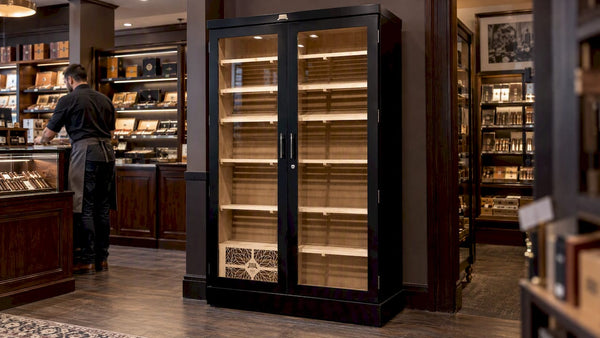
Retail Humidor ROI: How to Measure What a Display Earns
What does a retail or lounge humidor really return? A practical framework for cigar shops, lounges and clubs:...
Read Article