

Discover why humidity fluctuates in humidors and learn effective fixes to keep your cigars fresh. Master your cigar storage today!
Humidity fluctuates in humidors because of three converging forces: physical seal integrity, ambient temperature shifts, and the hygroscopic nature of the cigars themselves. Relative humidity, or RH, is the measure of moisture in air relative to the maximum that air can hold at a given temperature. For cigar collectors, ideal storage sits between 65-72% RH, a range where tobacco stays supple, flavors remain intact, and the risk of mold or tobacco beetles stays minimal. Understanding why that number moves is the foundation of every sound preservation strategy.
Why humidity fluctuates in humidors: the core causes
Humidity control in humidors is not a set-and-forget proposition. Three distinct mechanisms drive RH instability, and each demands a different response. The first is structural: how well your humidor is built and sealed. The second is environmental: how temperature in the surrounding room affects RH readings inside the box. The third is biological: how your cigars actively participate in the moisture balance of their own sanctuary.
Most collectors focus exclusively on their humidifier, adding distilled water or swapping Boveda packs when readings drop. That instinct is understandable but incomplete. A hygrometer reading of 68% RH on Monday and 63% RH on Friday is not always a humidifier failure. It may be a seal problem, a temperature swing in the room, or a batch of dry cigars pulling moisture from the air as they rehydrate. Knowing which cause is at work determines the correct fix.
How does humidor construction quality affect humidity stability?
The physical architecture of a humidor is its first line of defense against RH variance. A well-constructed humidor, lined with Spanish Cedar and fitted with a tight-sealing lid, creates a near-closed system where moisture loss is minimal and predictable. A poorly constructed one leaks continuously, forcing the humidification system to work against an open loop.
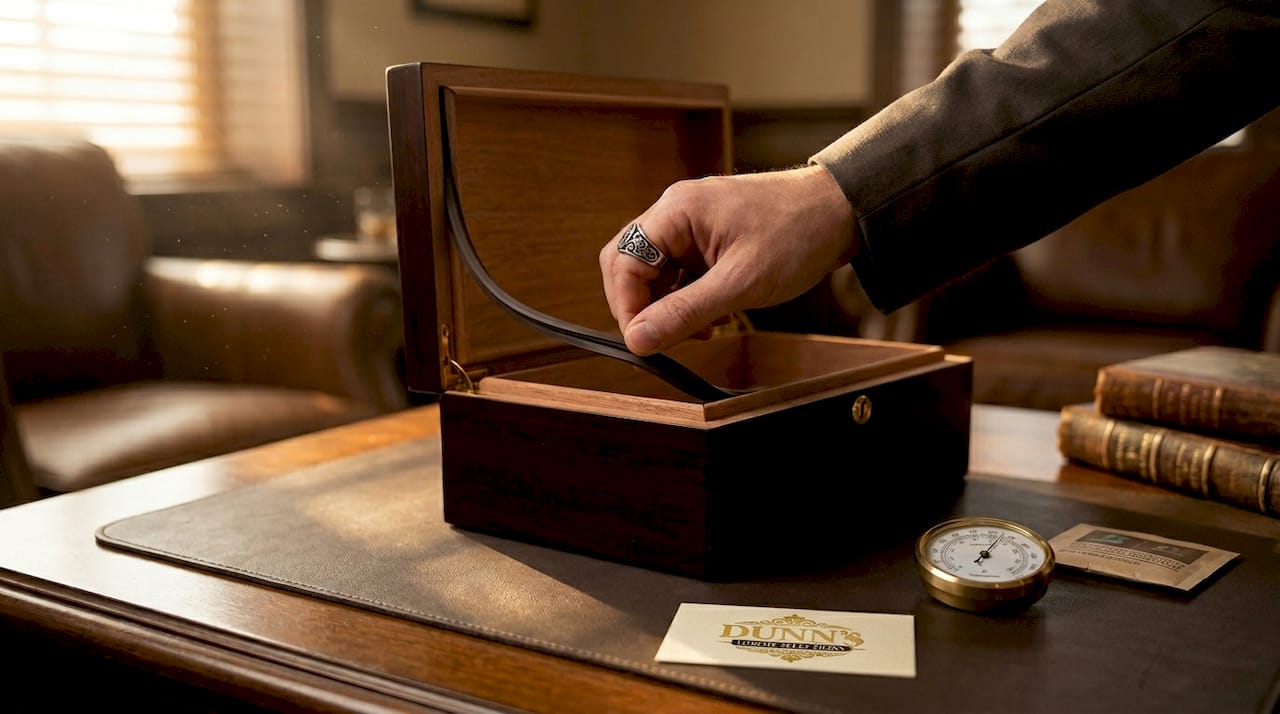
Poor humidor seals cause 2-5% RH variance, a swing wide enough to push cigars toward brittleness at the low end or toward mold risk at the high end. That variance compounds over days, meaning a humidor that reads 70% on Sunday morning may read 65% by Wednesday without any change in ambient conditions. Glass-top humidors and entry-level wooden boxes are the most common offenders, as their seals degrade faster and their construction tolerances are looser.
Several construction factors directly influence how much RH variance you will experience:
- Seal quality: A tight Spanish Cedar or mahogany seal limits moisture exchange with outside air. Test yours by closing the lid on a piece of paper. If the paper slides out easily, the seal is insufficient.
- Lining material: Spanish Cedar is the industry standard because it absorbs and releases moisture slowly, acting as a secondary buffer alongside your cigars. Cheaper linings like plywood or MDF absorb moisture erratically.
- Humidor size: Larger cabinet humidors maintain more stable RH because the greater air volume dampens the effect of any single moisture fluctuation.
- Humidification system placement: A humidifier placed in one corner of a large humidor creates moisture gradients. Cigars near the humidifier read higher RH than those on the opposite side.
Pro Tip: If your humidor seal is compromised, doubling your humidification packs is a short-term fix, but it is not a substitute for a properly sealed box. Invest in a quality humidor before investing in premium cigars.
What is the impact of temperature on humidity readings inside a humidor?
Temperature is the most misunderstood cause of RH fluctuation, because it changes your hygrometer reading without changing the actual amount of moisture in the air. This distinction matters enormously for collectors who react to every reading shift by adjusting their humidification.
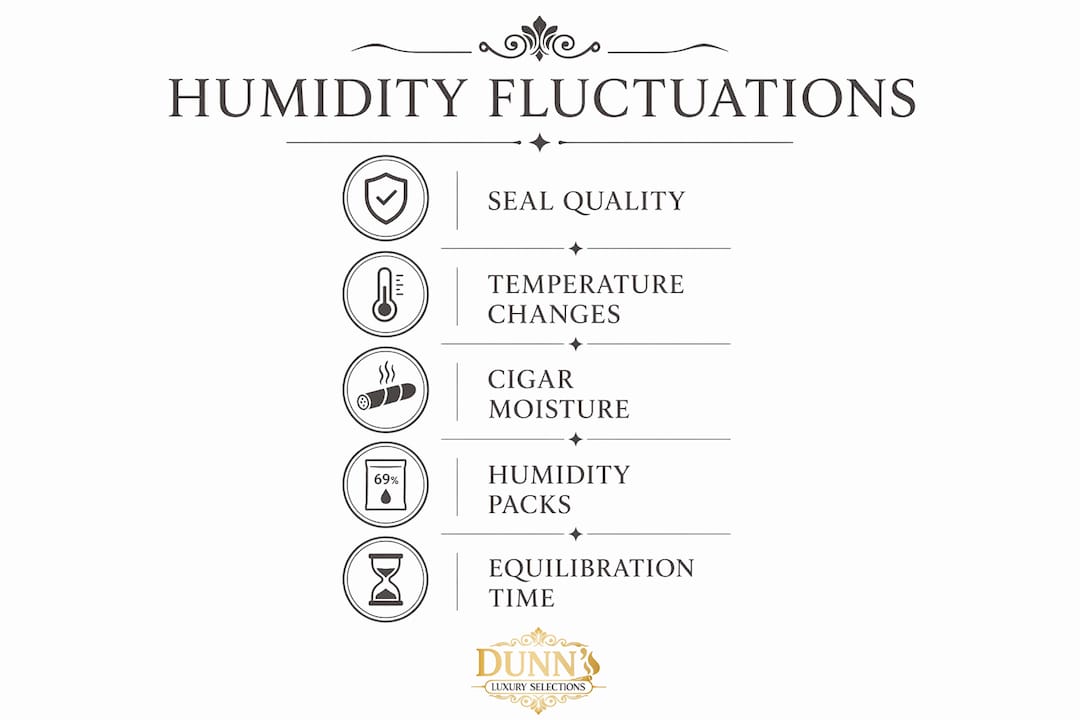
Relative humidity reflects the capacity of air to hold moisture, and that capacity rises with temperature. When the room warms up, the air inside your humidor can hold more moisture, so the RH percentage drops even though the absolute moisture content is unchanged. When the room cools, the opposite occurs: the same moisture content now represents a higher percentage of a reduced capacity, so RH climbs. This is why collectors who store humidors near windows or in rooms without climate control see RH readings that track the weather outside.
The practical consequences of temperature-driven RH swings include:
- False low readings in summer: A humidor in a room that warms from 68°F to 78°F can show a 4-6% RH drop with no actual moisture loss. Overcorrecting by adding more humidification leads to excess moisture when temperatures normalize.
- False high readings in winter: Cooler ambient temperatures push RH readings up, potentially triggering unnecessary concern about mold when the environment is actually fine.
- Compounded variance: When temperature swings coincide with seal leakage, the two effects stack. A 3% swing from temperature and a 3% swing from leakage combine to produce a 6% variance that looks alarming on a hygrometer.
Temperature control alone cannot solve RH instability, but it removes one of the three variables. Storing your humidor in a climate-controlled room, away from direct sunlight and heating or cooling vents, eliminates the most unpredictable driver of humidity changes in cigar storage. For collectors with large collections, electronic humidors with integrated zonal climate control remove this variable entirely by regulating both temperature and RH simultaneously.
Why do cigars themselves cause humidity fluctuations?
Cigars are not passive objects sitting in a stable environment. They are active participants in the moisture balance of every humidor, and understanding this changes how you interpret short-term RH readings.
Cigars are hygroscopic, meaning they absorb moisture from the surrounding air when RH is high and release moisture back into the air when RH drops. This behavior is the same principle that makes Spanish Cedar lining so effective: both the wood and the tobacco act as moisture buffers, smoothing out spikes and dips in the humidor’s microclimate. The difference is that cigars respond faster and more dramatically than wood, especially when large quantities are involved.
The hygroscopic buffering process creates predictable, temporary fluctuations in four stages:
- Initial introduction: When you add a batch of dry cigars to a humidor, they immediately begin drawing moisture from the air. RH drops noticeably, sometimes by 5-8%, within the first 24-48 hours.
- Equilibration period: Over the following week, the cigars absorb moisture until they reach equilibrium with the humidor’s RH. Readings stabilize as the tobacco’s moisture content matches the ambient environment.
- Seasonal adjustment: As ambient temperature shifts seasonally, cigars release or absorb small amounts of moisture to stay in equilibrium, creating minor ongoing fluctuations that are normal and expected.
- Overcrowding effect: When a humidor is packed beyond its capacity, uneven humidity distribution develops. Cigars in the center of a dense stack experience lower RH than those near the humidifier, leading to inconsistent aging across your collection.
Pro Tip: When adding new cigars, especially dry ones from a retailer that does not store in a humidified environment, place them in a separate tray or a smaller travel humidor for 48-72 hours before integrating them into your main collection. This prevents a sharp RH dip that could stress your existing cigars.
Best practices for maintaining stable humidity in your humidor
Stabilizing RH in a humidor requires addressing all three causes simultaneously: construction, temperature, and the hygroscopic behavior of your cigars. No single adjustment produces lasting results if the other two variables remain unmanaged.
The following practices, applied consistently, produce the most stable humidity control in humidors of any size or style:
- Calibrate your hygrometer regularly. An uncalibrated hygrometer is worse than no hygrometer at all, because it gives you false confidence. Use a calibration kit like Boveda’s One-Step to verify accuracy every 3-6 months.
- Minimize lid openings. Frequent lid openings disrupt equilibrium, causing RH swings that take hours to recover. Batch your access sessions rather than opening the humidor multiple times daily.
- Maintain proper airflow inside the box. Avoid over-packing, which blocks air circulation and creates uneven RH distribution. Leave at least 20% of interior space open.
- Shield from direct sunlight and heat sources. UV exposure and radiant heat drive temperature spikes that cascade into RH fluctuations. Position your humidor on an interior wall, away from windows and vents.
- Match your humidification system to your humidor size. A single Boveda 69% pack is appropriate for a 25-count desktop humidor. A 150-count cabinet requires multiple packs or an active electronic humidification system.
| Humidor type | Best humidification approach |
|---|---|
| Desktop (25-50 count) | 1-2 Boveda packs, replaced every 2-3 months |
| Cabinet (100-500 count) | Multiple Boveda packs or active humidifier with reservoir |
| Electronic | Integrated climate control, minimal manual intervention |
| Travel | Single Boveda pack, sealed case construction critical |
For collectors who want expert guidance on dialing in their specific setup, the expert humidity control guide from Dunnluxuryselections covers calibration, humidification system selection, and seasonal adjustment in precise detail.
Key takeaways
Humidity fluctuates in humidors because of seal integrity, temperature-driven RH shifts, and the hygroscopic moisture exchange of the cigars themselves. All three causes must be addressed together for lasting stability.
| Point | Details |
|---|---|
| Seal integrity is foundational | Poor seals cause 2-5% RH variance; upgrade your humidor before upgrading your humidification. |
| Temperature changes RH without changing moisture | A 10°F room temperature swing can shift RH by 4-6% with no actual moisture gain or loss. |
| Cigars actively buffer moisture | New dry cigars can drop RH by 5-8% within 48 hours as they rehydrate and equilibrate. |
| Calibration is non-negotiable | An uncalibrated hygrometer produces false readings that lead to overcorrection and instability. |
| Airflow prevents uneven distribution | Over-packing blocks circulation, creating RH gradients that age cigars inconsistently. |
What I’ve learned about humidor humidity that most guides skip
Most humidity guides treat RH as a number to chase. My experience tells a different story. The collectors who maintain the most stable humidors are not the ones constantly adjusting their humidification. They are the ones who built a stable physical environment first and then left it alone.
The single most underrated practice is patience during the equilibration period after adding new cigars. I have seen collectors panic at a 6% RH drop, add extra humidification packs, and then watch their humidor spike to 78% two weeks later when the cigars finished absorbing moisture and the extra packs kept releasing. The overcorrection caused more damage than the original dip would have. Patience and a calibrated hygrometer are the two tools that separate experienced collectors from anxious ones.
Quality materials matter more than most people admit. A humidor lined with genuine Spanish Cedar from a reputable maker holds RH with a steadiness that no amount of Boveda packs can replicate in a poorly constructed box. The wood itself is doing meaningful work, and that work is invisible until you compare two humidors side by side over a six-month period.
My honest recommendation: invest in the best humidor your collection warrants before spending on premium cigars. A $40 humidor housing a $500 collection is a false economy. The cigars will degrade faster than you expect, and the RH readings will never settle into the stability that fine tobacco deserves.
— Belle
Preserve your collection with the right humidor

At Dunnluxuryselections, we understand that a cigar collection is more than an inventory. It is a timeline of memories, a curated legacy that deserves a sanctuary built to protect it. Every humidor in our collection is selected for seal integrity, material quality, and the precision climate control that serious collectors require. Whether you are curating a 25-count personal selection or a 500-count cabinet that anchors a private lounge, our desktop humidor and cabinet humidor collections offer the construction standards that make stable RH achievable from day one. Explore Dunnluxuryselections and find the instrument your collection has been waiting for.
FAQ
What causes humidity to fluctuate in a humidor?
Humidity fluctuates in humidors due to three primary causes: seal leakage that allows moisture to escape, ambient temperature changes that alter RH readings without changing actual moisture content, and the hygroscopic behavior of cigars absorbing or releasing moisture as they equilibrate.
What is the ideal humidity level for storing cigars?
The ideal storage range is 65-72% RH. Below this range, wrappers become brittle and cigars burn too hot. Above 80% RH, the risk of mold growth and tobacco beetle activity increases significantly.
How do I stabilize humidity in my humidor?
Stabilizing RH requires calibrating your hygrometer with a tool like Boveda’s One-Step kit, minimizing lid openings, maintaining proper airflow by avoiding over-packing, and positioning the humidor away from direct sunlight and heat sources.
Why does my humidor humidity drop when I add new cigars?
New cigars, particularly those stored without humidity control at a retailer, are drier than your target RH. As they rehydrate, they absorb moisture from the air, causing a temporary RH dip of 5-8% that resolves within one to two weeks as the tobacco reaches equilibrium.
Does room temperature affect my humidor’s humidity reading?
Yes. Because relative humidity measures moisture as a percentage of air’s maximum capacity, a temperature increase lowers the RH reading even when no moisture has left the humidor. Storing your humidor in a climate-controlled room eliminates this variable and produces more consistent readings.
Recommended
You May Also Enjoy
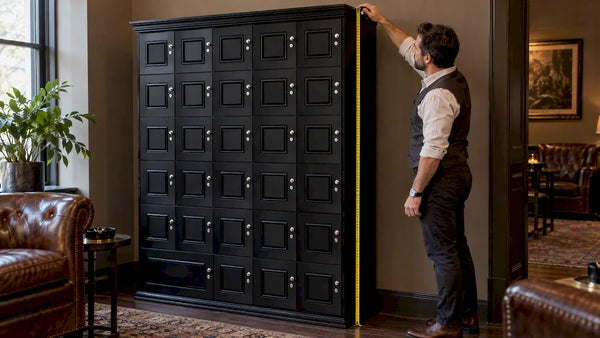
Cigar Locker Dimensions: Sizing Guide for Collectors and Lounges
Cigar locker dimensions explained: compartment sizes, cabinet footprints, capacity math and clearances, so you size a locker bank...
Read Article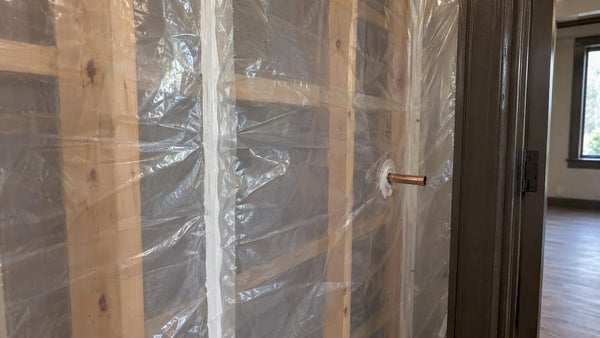
Sealing a Walk-In Humidor: Envelope, Door and Penetrations
How to seal a walk-in humidor properly: vapor barrier placement, door gasket, penetrations and the controlled airflow a...
Read Article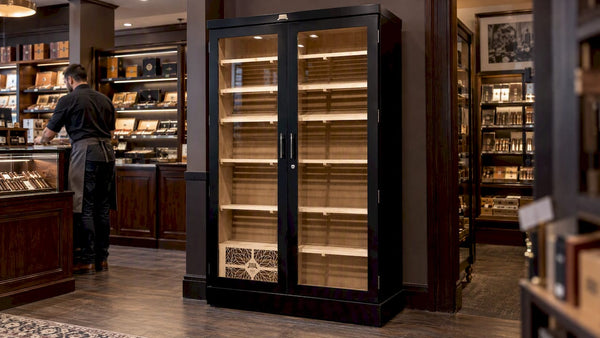
Retail Humidor ROI: How to Measure What a Display Earns
What does a retail or lounge humidor really return? A practical framework for cigar shops, lounges and clubs:...
Read Article