

Unlock the full potential of your cigars with our cigar aging checklist. Follow expert tips for optimal flavor and perfect aging!
A cigar aging checklist is a disciplined, step-by-step protocol for maintaining the precise environmental conditions, organization, and monitoring routines that transform a good cigar into an extraordinary one. Serious collectors rely on tools like Boveda humidity packs, calibrated hygrometers, and Spanish cedar humidors to protect their investment and coax deeper complexity from every blend. Without a structured approach, even premium cigars suffer from wrapper cracking, uneven burns, and flavor loss. This guide walks you through every item on that checklist, from setting ideal humidity targets to labeling your collection with the precision it deserves.
1. The cigar aging checklist: start with your core goals
Before you place a single cigar in your humidor, define what you are aging toward. A cigar aging checklist without a clear objective is just a list of tasks. Are you smoothing out a harsh new blend over three to six months, or are you developing the deep, layered complexity that only two to five years of patient aging can produce? According to aging timelines, shorter aging mellows sharp edges while longer aging builds aroma and richness. Not every cigar benefits equally from extended aging, so knowing your blend is the first checkpoint on any serious collector’s list.
2. What are the ideal environmental conditions for aging cigars?
The foundation of the cigar aging process guide is environmental control. Stable relative humidity around 65% to 69% and a temperature between 65°F and 70°F defines the target zone for most aging scenarios. Stability matters more than chasing a precise number. A humidor that holds a steady 64% RH outperforms one that swings between 60% and 70% every week.
For long-term aging, the target tightens. Howard Environmental recommends 62% to 65% RH for multi-year storage, a slightly drier range that slows maturation and reduces mold risk. The classic “70/70 rule” (70°F and 70% RH) applies mainly to cigars you plan to smoke within a year. For anything beyond that, cooler and drier conditions are the standard among serious aficionados.
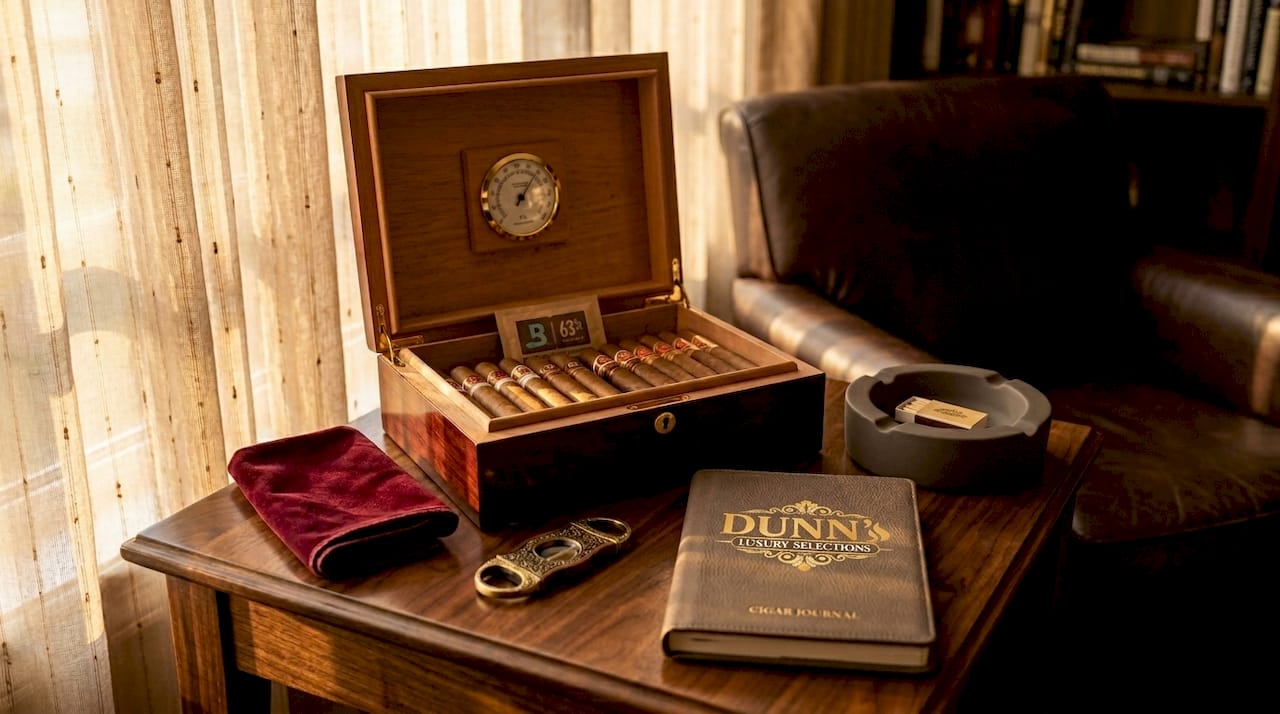
Temperature control carries its own urgency. Temperatures above 72°F create conditions where tobacco beetles can hatch and devastate an entire collection. Keeping your humidor below 70°F is not optional for long-term aging. It is the single most effective safeguard against catastrophic loss.
Key environmental targets at a glance:
- Daily storage: 65%–69% RH, 65°F–70°F
- Long-term aging: 62%–65% RH, 65°F–68°F
- Temperature ceiling: Never exceed 70°F for aging collections
- Humidity swings: Keep fluctuations within a 3% band
Pro Tip: Place a Boveda 62 or Boveda 65 pack inside your humidor rather than a sponge-based humidifier. Boveda packs regulate two-way moisture exchange, which means they add and absorb humidity automatically, eliminating the guesswork that causes most aging failures.
3. How to prepare and maintain your humidor for aging
A humidor that has not been properly seasoned will steal moisture from your cigars the moment you place them inside. Seasoning takes 7 to 14 days of slow, controlled moisture absorption by the Spanish cedar lining. Rush this process and the wood will draw humidity away from your cigars, dropping RH and stressing the wrappers before aging even begins.
Follow this preparation sequence before loading your humidor:
- Wipe the interior lightly with a cloth dampened in distilled water. Never use tap water, which introduces minerals and bacteria.
- Place a small dish of distilled water or a Boveda seasoning pack inside and close the lid.
- Wait 48 hours, then check the RH reading. Repeat the process until the humidor holds your target RH without assistance for 24 hours.
- Calibrate your hygrometer using the salt test method: seal the hygrometer in a bag with a small dish of salt and distilled water for 8 hours. An accurate hygrometer reads 75% RH in that environment. Analog units can drift 10% to 20%, making calibration every 6 to 12 months a non-negotiable maintenance task.
- Position the hygrometer at mid-height, away from walls and the humidification source, to avoid false readings that misguide your moisture management.
- Check the seal by placing a dollar bill in the lid seam and closing it. Resistance when pulling the bill out confirms an airtight seal.
- Load cigars only after the humidor holds target RH for a full 24-hour cycle without adjustment.
Pro Tip: Season a new humidor twice before trusting it with aged stock. The first seasoning cycle reveals any seal weaknesses or wood irregularities. The second confirms stability. This two-cycle approach is standard practice among collectors who store five-figure collections.
Routine maintenance is equally non-negotiable. Inspect the interior every 30 days for mold, which appears as white or gray fuzzy spots and spreads rapidly. Clean affected areas with a cloth lightly dampened in distilled water and allow the humidor to dry before reloading. Review the care guides from Dunnluxuryselections for a detailed maintenance schedule tailored to different humidor types.
4. Organization and labeling best practices
A well-organized humidor is the mark of a disciplined collector. Labeling cigars with acquisition and aging dates using tape or small tags prevents reliance on memory and makes rotation scheduling precise. Without dates, you are guessing, and guessing is the enemy of consistent aging.
The table below outlines the core organization principles every cigar collector checklist should include:
| Practice | Why it matters |
|---|---|
| Date and label every cigar or box | Tracks aging progress without relying on memory |
| Separate flavored from natural cigars | Prevents aromatic cross-contamination that alters flavor profiles |
| Age in original sealed boxes when possible | Creates a stable micro-environment for more uniform maturation |
| Space cigars for airflow | Prevents moisture pockets and uneven humidity distribution |
| Rotate position every 30 to 60 days | Exposes all cigars equally to the humidor’s humidity field |
Keeping cigars in original sealed boxes is one of the most underappreciated practices in the cigar collector checklist. Many collectors treat a sealed box as a self-contained aging system, opening it only for periodic inspection. This approach produces more uniform maturation than loose storage, where individual cigars experience varying humidity exposure. For guidance on maximizing space and airflow inside your humidor, the humidor tray guide from Dunnluxuryselections offers practical layout strategies.
Mixing flavored or infused cigars with natural blends is a mistake that permanently alters the character of your aged collection. Flavored cigars release aromatic compounds that absorb into neighboring tobacco. Dedicate a separate humidor or sealed container to any infused stock.
5. What common mistakes should you avoid on your cigar aging checklist?
The cigar aging benefits you are working toward can be undone quickly by a handful of predictable errors. Recognizing them before they occur is the purpose of a disciplined checklist.
- Chasing humidity too aggressively. Constantly adjusting your humidification source in response to minor RH fluctuations creates the very instability you are trying to prevent. Set your Boveda pack, close the lid, and let the system stabilize over 48 hours before making any changes.
- Opening the humidor too frequently. Frequent lid openings destabilize humidity and introduce ambient air. Many serious collectors maintain two humidors: one for daily access and one sealed exclusively for long-term aging.
- Ignoring temperature. Humidity gets most of the attention, but temperature is equally critical. A humidor at 73°F with perfect RH is still a beetle incubator. Treat relative humidity and temperature as a tag-team: balancing both reduces mold risk and optimizes flavor maturation.
- Rehydrating dried cigars too quickly. A cigar that has dried out should be reintroduced to humidity gradually over one to two weeks. Rapid rehydration causes the wrapper to expand faster than the filler, resulting in cracking and structural damage that cannot be reversed.
- Skipping the hygrometer calibration. An uncalibrated analog hygrometer reading 68% RH may actually be measuring 55% or 78%. Either extreme damages your collection. Calibrate every six months without exception.
Key takeaways
A successful cigar aging checklist depends on environmental stability, disciplined organization, and consistent monitoring rather than any single perfect number.
| Point | Details |
|---|---|
| Stability over precision | A steady 64% RH outperforms a humidor swinging between 60% and 70% weekly. |
| Season before loading | Allow 7 to 14 days of seasoning before placing any cigars in a new humidor. |
| Calibrate your hygrometer | Analog units drift 10% to 20%; calibrate every 6 to 12 months using the salt test. |
| Label and date everything | Acquisition dates on every box or cigar make rotation and tracking precise. |
| Separate flavored cigars | Infused cigars contaminate natural blends; always store them in a dedicated space. |
What I have learned from years of disciplined aging
The single most common mistake I see among enthusiastic collectors is treating the cigar aging process guide as a set of targets to hit rather than conditions to protect. Early on, I obsessed over getting to exactly 65% RH, adjusting my humidification source every few days and inadvertently creating the humidity swings I was trying to prevent. The cigars I left alone in a properly seasoned, well-sealed humidor consistently outperformed the ones I monitored obsessively.
The habit that changed everything for me was simple log-keeping. A small notebook with the date, RH reading, temperature, and any adjustments made takes less than two minutes per week. Six months later, that log reveals patterns: a seasonal RH drop in winter, a temperature spike in summer near a window. Those patterns let you make one deliberate adjustment rather than ten reactive ones.
I also learned the hard way that labeling is not optional. I once aged a box of Nicaraguan puros for 18 months without marking the date, convinced I would remember. I did not. The cigars were excellent, but I had no baseline to compare against, no way to replicate the result, and no record to guide future aging decisions. A piece of masking tape and a marker would have preserved that knowledge permanently.
My advice: start two aging experiments simultaneously with the same blend, one at 62% RH and one at 65% RH. Taste one cigar from each group at six months and again at twelve. The difference will teach you more about your personal preference than any article ever could.
— Belle
How Dunnluxuryselections supports your aging collection
Every element of a serious cigar aging checklist depends on the quality of the vessel holding your collection.

Dunnluxuryselections builds humidors around the principles that make aging possible: Spanish cedar linings that regulate moisture naturally, precision seals that hold RH within a tight band, and interior dimensions designed for proper airflow and organization. The cabinet humidors are engineered specifically for long-term aging, offering the volume and stability that serious collectors require. For those who need precise digital control over temperature and humidity, the electronic humidor collection delivers zonal climate management that removes the guesswork entirely. Whether you are building a legacy collection or protecting a curated selection of premium blends, Dunnluxuryselections offers the sanctuary your cigars deserve.
FAQ
What humidity level is best for aging cigars?
For long-term aging, 62% to 65% RH at 65°F to 70°F is the recommended range. This is slightly drier than daily storage targets and reduces mold risk while slowing maturation for deeper flavor development.
How long does it take to age cigars properly?
Three to six months smooths out harsh edges in most blends, while two to five years develops significant complexity and depth. The right timeline depends on the specific blend and your personal flavor preference.
Why should I keep a separate humidor for aging?
Frequent access to a daily-use humidor creates humidity swings that disrupt the stable environment aging requires. A dedicated aging humidor stays sealed and undisturbed, producing more consistent results.
Do all cigars benefit from aging?
No. Full-bodied, high-ligero blends tend to benefit most from extended aging. Lighter, more delicate cigars can lose their defining character if aged too long. Tasting samples at regular intervals is the most reliable way to judge progress.
How do I know if my hygrometer is accurate?
Use the salt test: seal the hygrometer in a bag with a small dish of salt and distilled water for eight hours. An accurate reading is 75% RH. If your unit reads differently, adjust your target accordingly or replace the unit.
Recommended
You May Also Enjoy
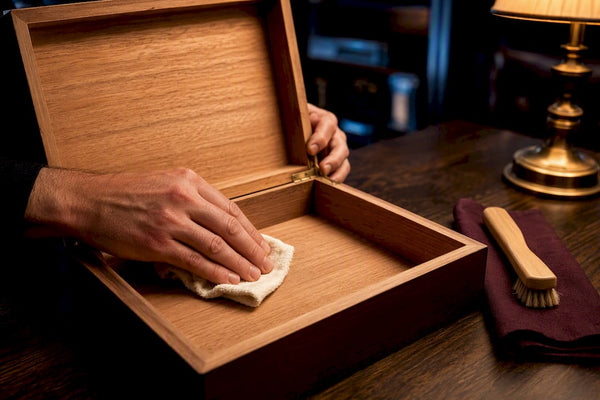
Save Flavor in 14 Days: Cleaning a Humidor for Collectors
For collectors: clean mold or plume without tainting cedar. Keep or toss decision rules, 14 days reseasoning, hygrometer...
Read Article
6 to 26 Weeks: Custom Humidor Timeline for Collectors & Gift Buyers
Plan a bespoke humidor with a realistic production calendar. See stage-by-stage timings, what typically adds weeks, and how...
Read Article
50/50 Propylene Glycol Ratio + 90/10 Flush for Collectors & Installers
Use a 50/50 propylene glycol ratio to hold passive humidors near 70% RH. Installer tested: occasional 90/10 water...
Read Article