

Discover the pivotal role of cedar in humidors for cigar preservation. Learn how this essential wood protects your valuable cigars expertly.
There is a persistent belief among casual collectors that any quality hardwood will serve equally well inside a cigar humidor. That assumption quietly undermines collections worth thousands of dollars. Spanish Cedar, the wood that has lined the interiors of the finest humidors for generations, is not simply a tradition. It is a precision instrument, engineered by nature and refined by centuries of cigar culture to create the ideal sanctuary for your most prized smokes. What follows is the definitive guide to understanding why cedar matters, how it works, and how to protect that investment.
Table of Contents
- Why cedar is the gold standard for humidors
- How cedar preserves cigar quality: The science explained
- Comparing cedar with other humidor materials
- Types of cedar used in humidors and what collectors should know
- Care and maintenance tips for cedar-lined humidors
- The overlooked nuances of cedar in luxury humidors
- Upgrade your cigar experience with the world’s finest cedar humidors
- Frequently asked questions
Key Takeaways
| Point | Details |
|---|---|
| Cedar ensures stable humidity | Cedar’s moisture-buffering properties help keep cigars fresh and prevent spoilage. |
| Spanish cedar offers unique protection | The specific aroma and natural compounds deter pests and mold, safeguarding expensive collections. |
| Material choice impacts cigar flavor | Only true Spanish cedar enhances aging and aroma without compromising the cigar’s essence. |
| Regular maintenance is vital | Proper seasoning and upkeep maintain cedar’s protective and aromatic benefits in your humidor. |
| Understanding nuances prevents costly mistakes | Knowing how to choose, care for, and spot issues in cedar linings keeps your humidor investment sound. |
Why cedar is the gold standard for humidors
With misconceptions swirling, it is crucial to understand why cedar has stood the test of time as the material of choice for serious collectors.
Spanish Cedar, known botanically as Cedrela odorata, has served as the backbone of premium cigar storage since Cuban cigar makers first began lining their export boxes in the 19th century. Its dominance is not accidental. Cedar possesses a rare combination of physical and chemical properties that no other commercially available wood fully replicates. Consider what it actually delivers:
- Moisture buffering: Cedar absorbs and releases moisture slowly, acting as a natural regulator that smooths out humidity spikes and drops inside the humidor.
- Pest deterrence: The aromatic oils naturally present in cedar repel tobacco beetles (Lasioderma serricorne), the most destructive pest a cigar collection can face.
- Mold resistance: Cedar’s natural tannins create an environment that discourages mold and fungal growth, protecting the delicate wrappers of aged cigars.
- Aroma enhancement: Over time, cedar imparts a subtle, complementary fragrance that integrates with the tobacco’s own oils, enriching the overall smoking experience.
- Structural stability: Cedar expands and contracts minimally with humidity changes, maintaining a tight seal and consistent interior environment.
“The humidor is not merely a box. It is a living ecosystem, and cedar is the organism that keeps it in balance.”
Luxury cigar brands, from Cohiba to Arturo Fuente, have long recognized this. Their factory aging rooms and shipping boxes are lined with Spanish Cedar for precisely these reasons. When you choose a humidor with a genuine cedar interior, you are aligning your collection with the same standard of care applied at the source.
Pro Tip: When purchasing a new humidor, open it and breathe in. Authentic Spanish Cedar carries a warm, slightly sweet, resinous scent. If the interior smells faintly of chemicals or nothing at all, the lining may be a lesser wood or a cedar veneer over MDF.
Pairing this natural material with humidity control methods that complement cedar’s buffering capacity is how serious collectors maintain the kind of stability that transforms a good cigar into a transcendent one.
How cedar preserves cigar quality: The science explained
Now that we know why cedar is prized, let us examine what actually happens inside a humidor lined with this extraordinary wood.
Cedar’s cellular structure is the foundation of its performance. The wood contains large, open cells that function like microscopic sponges, absorbing ambient moisture when relative humidity climbs and releasing it when the environment dries. This process, known as hygroscopic buffering, means the cedar itself participates actively in maintaining the 65 to 72 percent relative humidity range that most premium cigars require for optimal aging.
- Hygroscopic action: Cedar’s open grain absorbs excess moisture during humid conditions and releases it during dry periods, reducing the burden on electronic or passive humidification devices.
- Tannin protection: Tannins in cedar create a mildly acidic surface environment that inhibits the growth of mold spores and bacteria, both of which can devastate a collection.
- Oil-based pest deterrence: Cedrol and thujopsene, the primary aromatic compounds in Spanish Cedar, are scientifically documented as repellents for tobacco beetles, which can destroy a cigar in its wrapper without any visible external damage.
- Flavor integration: Cedar’s volatile aromatic compounds slowly migrate into the outermost layers of the cigar’s wrapper leaf, contributing a nuanced woodsy note that experienced aficionados recognize and prize.
- Equilibrium maintenance: A properly seasoned cedar interior reaches a state of equilibrium with the cigars stored inside it, creating a stable microclimate that resists external temperature and humidity fluctuations.
Studies on wood hygroscopicity confirm that cedar maintains moisture exchange rates that are significantly more gradual than most hardwoods, which means the cigars experience fewer stress cycles. Repeated expansion and contraction of a cigar’s wrapper and binder is what causes cracking, unraveling, and uneven burns. Cedar reduces that stress considerably.
Pro Tip: Place a cedar spill (a thin strip of Spanish Cedar) between rows of cigars in a large humidor. This extends the cedar’s buffering surface area and ensures even humidity distribution throughout the entire cabinet.
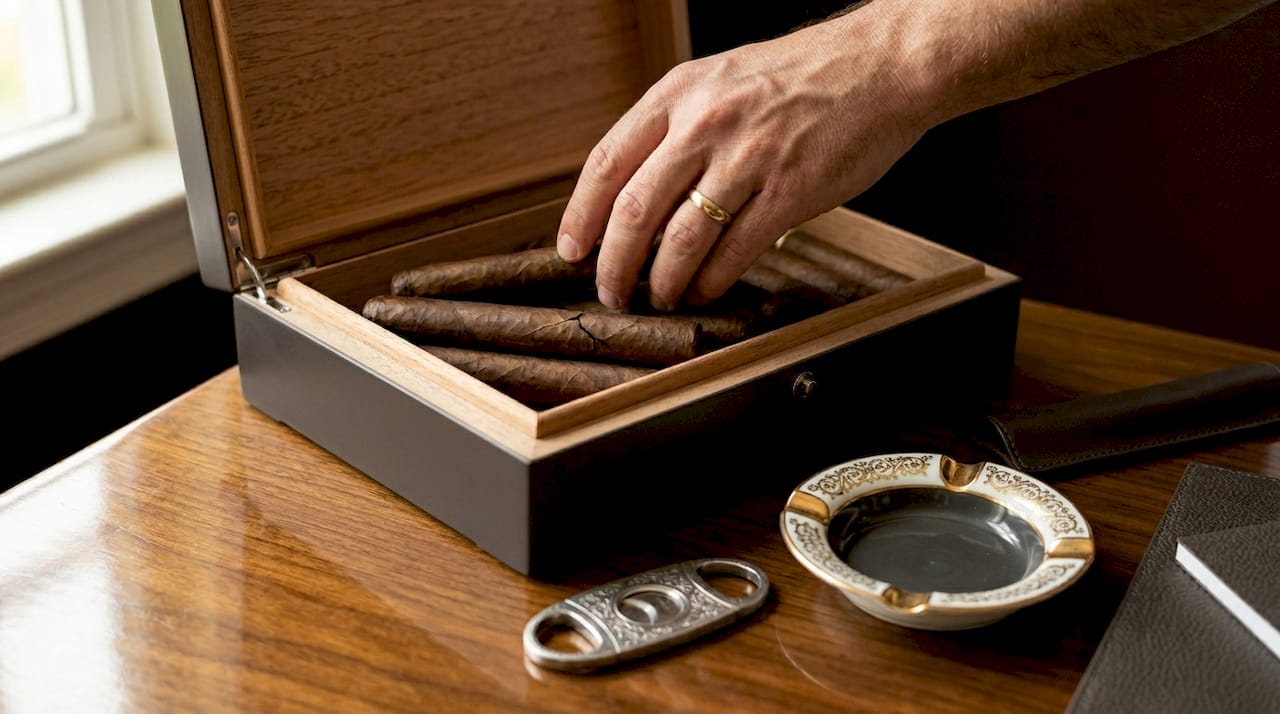
Referencing quality humidor care guides alongside your understanding of cedar science will help you build a maintenance routine that honors both the wood and the cigars it protects.
Comparing cedar with other humidor materials
Given cedar’s praised abilities, it is only natural to wonder how it compares with other woods used in humidors.
| Material | Humidity buffering | Pest resistance | Aroma impact | Structural stability | Common use |
|---|---|---|---|---|---|
| Spanish Cedar | Excellent | Excellent | Positive, subtle | Very good | Premium interior lining |
| Mahogany | Moderate | Low | Neutral | Excellent | Exterior cabinetry |
| Oak | Low | Low | Can be overpowering | Good | Occasional lining |
| American Red Cedar | Good | Good | Strong, can overpower | Good | Budget humidors |
| Acrylic/Composite | None | None | None | Excellent | Travel cases |
The comparison is revealing. Mahogany, a beloved material for the exterior cabinetry of luxury humidors, performs beautifully as a structural wood but contributes almost nothing to humidity regulation or pest control. Oak, while durable, contains tannins that can impart harsh, bitter notes to cigars stored over extended periods. American Red Cedar offers some of cedar’s benefits but carries a far more aggressive aromatic profile that risks overwhelming delicate wrapper leaves.
“Choosing the wrong interior lining is like storing a fine Bordeaux in a pine cabinet. The vessel may look beautiful, but the contents will suffer.”
Here is why luxury humidors consistently favor Spanish Cedar for their inner lining:
- Flavor neutrality with benefit: Spanish Cedar enhances without dominating. Its aromatic contribution complements tobacco rather than competing with it.
- Proven pest control: No other common humidor material offers documented resistance to tobacco beetles.
- Long-term stability: Cedar’s dimensional stability under humidity cycling outperforms most alternatives over a multi-year aging timeline.
- Industry consensus: Every major cigar manufacturer and premium humidor maker recognizes Spanish Cedar as the definitive interior material.
Pairing a cedar interior with thoughtfully chosen humidor accessories, such as precision hygrometers and calibrated humidification devices, creates the complete preservation system your collection deserves.
Types of cedar used in humidors and what collectors should know
Not all cedar is created equal. Serious collectors should recognize the distinctions that affect quality and aging potential.
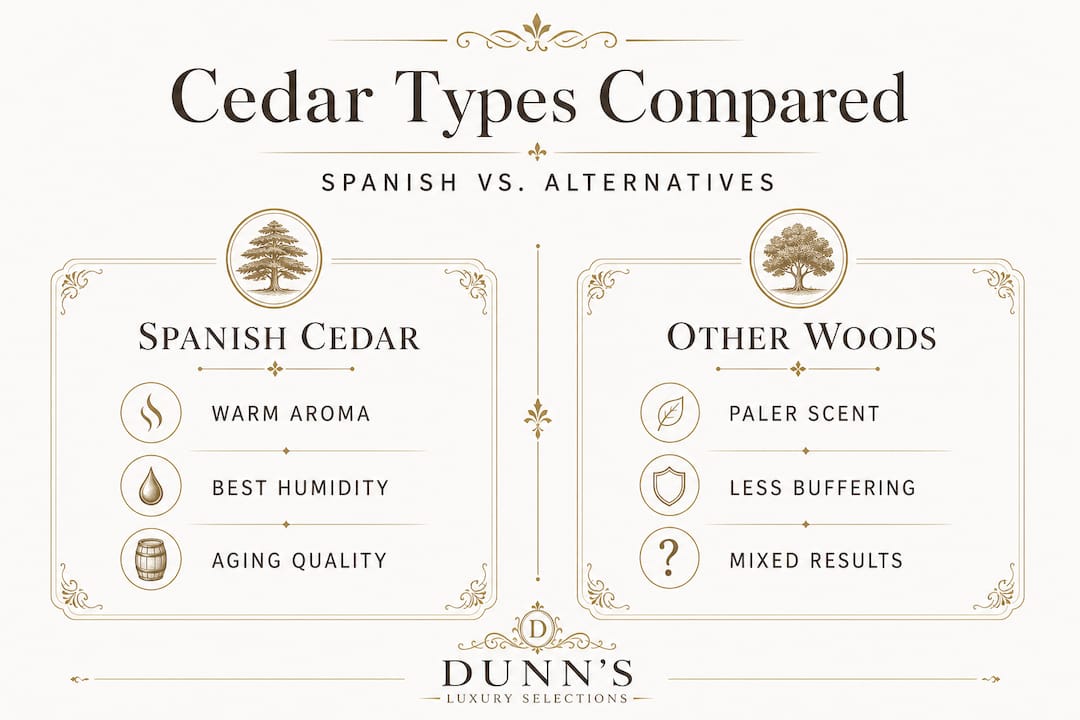
| Cedar type | Botanical name | Color | Scent intensity | Humidity performance | Best use |
|---|---|---|---|---|---|
| Spanish Cedar | Cedrela odorata | Reddish-brown, warm | Mild, sweet, resinous | Excellent | Premium humidor lining |
| American Red Cedar | Juniperus virginiana | Reddish, tight grain | Strong, sharp | Good | Budget humidors, closets |
| Western Red Cedar | Thuja plicata | Reddish-brown | Very strong | Moderate | Outdoor applications |
| Eastern White Cedar | Thuja occidentalis | Pale, light | Moderate | Low | Rarely used in humidors |
Spanish Cedar remains the gold standard for a precise reason: its mild, sweet aromatic profile integrates with tobacco without overwhelming it. American Red Cedar, despite its name and some shared properties, belongs to the juniper family and carries a far sharper, more penetrating scent. Storing premium cigars in an American Red Cedar humidor risks imparting a medicinal or camphor-like note that experienced palates will detect immediately.
Key indicators of genuine Spanish Cedar in a humidor interior:
- Color: Warm reddish-brown with visible grain variation, not uniform or overly pale
- Scent: Sweet, slightly spicy, reminiscent of sandalwood rather than the sharp, almost antiseptic note of red cedar
- Texture: Slightly coarse to the touch, with visible open grain that confirms its hygroscopic capacity
- Weight: Noticeably lighter than mahogany or oak, reflecting its lower density and open cellular structure
Pro Tip: Run your fingernail lightly across the interior cedar surface of a humidor you are considering purchasing. Genuine Spanish Cedar will leave a faint impression and release a burst of its characteristic aroma. A veneer over MDF will feel harder and produce no scent response.
When evaluating cabinet humidors for a serious collection, always confirm that the interior lining is solid Spanish Cedar rather than a thin veneer. The thickness of the cedar directly affects its buffering capacity and longevity.
Care and maintenance tips for cedar-lined humidors
Even with the finest cedar, neglecting care can undermine the benefits. Here is how to make your investment last.
Seasoning a new cedar-lined humidor is the single most important step a collector can take before placing a single cigar inside. Unseasoned cedar will aggressively draw moisture from your cigars, causing them to dry and crack. The process is straightforward but must not be rushed.
Seasoning a new humidor:
- Wipe the entire cedar interior with a clean, lint-free cloth lightly dampened with distilled water. Never use tap water, which contains minerals that can deposit on the wood and affect performance.
- Place a small open dish of distilled water inside the humidor alongside your charged humidification device.
- Close the humidor and allow it to sit undisturbed for 24 hours.
- Check the interior. If the wood has absorbed all visible moisture, repeat the process.
- Once the hygrometer reads a stable 65 to 70 percent relative humidity for 24 consecutive hours, the humidor is ready for cigars.
Routine maintenance:
- Inspect the cedar surface every three to four months for signs of dryness, which appears as a slight lightening of the wood’s color.
- Rotate cigars periodically to ensure even exposure to the cedar’s aromatic environment.
- Keep the humidor away from direct sunlight and heat sources, both of which accelerate moisture loss from the cedar.
- Never use flavored or scented humidification solutions. They alter the cedar’s natural aromatic profile and can permanently change the flavor of your cigars.
Pro Tip: A very light wipe of the cedar interior with distilled water once or twice a year, performed during a routine inspection, refreshes the wood’s hygroscopic capacity without over-saturating it.
Signs that cedar may need attention or replacement:
- Visible splitting or deep cracking along the grain
- Persistent gray or white discoloration suggesting mold growth
- A sour or musty odor that does not resolve after airing the humidor
- Warping of the cedar panels that prevents a proper seal
Collectors who invest in quality desktop humidors should treat the cedar interior with the same respect they give the cigars inside. The wood is not passive storage. It is an active participant in the aging process.
The overlooked nuances of cedar in luxury humidors
Having mastered maintenance, it is worth stepping back to address what even experienced collectors and some retailers consistently misunderstand about cedar.
The most common misconception is that more cedar always delivers better performance. We have seen collectors fill their humidors with extra cedar strips, cedar trays, and cedar dividers, believing that saturating the environment with wood will amplify every benefit. In practice, excessive cedar can create an overly dominant aromatic environment that begins to compete with rather than complement the cigars’ natural profiles. The relationship between cedar and tobacco is one of balance, not volume.
A second, more serious error involves assuming that any cedar is Spanish Cedar. The market for luxury humidors contains products lined with American Red Cedar or cedar-adjacent composites that are marketed without clear disclosure. The aromatic difference is significant, and the long-term impact on a carefully aged Nicaraguan or Dominican cigar is real. We have seen collections of considerable value compromised by this single oversight.
Perhaps the most nuanced truth we can offer is this: the cedar in your humidor is aging alongside your cigars. It is absorbing the oils from your tobacco, releasing its own compounds in return, and gradually developing a patina that reflects the specific cigars you have stored. A well-maintained cedar interior in a humidor sized for your collection is not just functional. It is a record of your collecting history, as individual as the cigars themselves.
Treat it accordingly.
Upgrade your cigar experience with the world’s finest cedar humidors
Every insight in this guide points toward a single truth: the quality of your cedar determines the quality of your collection’s future.

At Dunn Luxury Selections, we source and curate humidors lined with premium Spanish Cedar across every category, from intimate desktop models to commanding cabinet humidors built for serious aging collections. Each piece in our full humidor collection is selected with the precision and reverence that your cigars demand. Whether you are building your first sanctuary or upgrading to a cabinet worthy of a legacy collection, we are the partners who understand what is truly at stake inside that cedar-lined interior. Explore the collection and let the wood do what it was born to do.
Frequently asked questions
Why is Spanish cedar specifically chosen for humidors?
Spanish Cedar holds humidity well, deters tobacco beetles through its natural aromatic oils, and enhances cigar aging with a subtle complementary scent, making it the definitive choice for premium humidor interiors.
Can I use another type of wood instead of cedar for my humidor?
Other woods lack cedar’s precise balance of moisture buffering, natural pest resistance, and compatible aroma, meaning cigars stored in alternative materials face greater risk of drying, beetle damage, or flavor contamination.
How often should I season my cedar-lined humidor?
Season a new humidor thoroughly before first use, then re-season only if relative humidity drops persistently below the optimal 65 to 70 percent range despite a properly functioning humidification device.
What are signs that my cedar lining needs replacement?
Splitting, warping, persistent mold discoloration, or a sour odor that does not resolve after airing the humidor are all clear indicators that the cedar lining has reached the end of its effective life.
Does cedar affect the flavor of my cigars?
Cedar subtly infuses cigars with a warm, resinous aromatic note that experienced aficionados recognize as an enhancement rather than an intrusion, provided the cedar is genuine Spanish Cedar and not a more aggressive variety.
Recommended
You May Also Enjoy
Cigar Locker Dimensions: Sizing Guide for Collectors and Lounges
Cigar locker dimensions explained: compartment sizes, cabinet footprints, capacity math and clearances, so you size a locker bank...
Read Article
Sealing a Walk-In Humidor: Envelope, Door and Penetrations
How to seal a walk-in humidor properly: vapor barrier placement, door gasket, penetrations and the controlled airflow a...
Read Article
Retail Humidor ROI: How to Measure What a Display Earns
What does a retail or lounge humidor really return? A practical framework for cigar shops, lounges and clubs:...
Read Article