

Explore luxury smoking room inspirations that blend rich materials and design. Create a refined sanctuary for your smoking rituals today.
A luxury smoking room is defined as a dedicated architectural space where superior ventilation, rich materials, and curated ambiance combine to create a sanctuary for the cigar ritual. The finest examples, documented by design firms like Graf Developments and KPS World, range from intimate 100 sq ft retreats to grand lounges exceeding 1,000 sq ft, with project values reaching $1.4 million. These are not afterthoughts bolted onto a floor plan. They are permanent, purposeful spaces built around the art of the smoke. The luxury smoking room inspirations collected here give you a clear blueprint for creating something truly worth building.
1. Luxury smoking room inspirations: start with timeless materials
The foundation of every great cigar lounge is its material palette. Deep grounding colors like charcoal gray, cognac, and rich brown anchor the room in warmth and gravitas. These tones do not date. They deepen with time, much like the cigars stored within.
The materials you select must earn their place through both beauty and durability:
- Full-grain leather on seating develops a patina that synthetic materials cannot replicate
- Solid walnut for cabinetry and paneling brings warmth and grain variation that rewards close inspection
- Brass accents on hardware, lighting fixtures, and trim age from bright gold to a muted antique tone
- Stone or brick feature walls add thermal mass and a sense of permanence
- Reclaimed wood introduces texture and history without feeling contrived
Layered lighting transforms these materials from attractive to extraordinary. Warm, low-temperature sources cast amber light across leather grain and wood figure, making the room feel alive. Avoid cool white bulbs entirely. They flatten texture and destroy the mood you are trying to build.
Pro Tip: Choose materials that improve with age rather than materials that merely look good on day one. A room built from full-grain leather, solid walnut, and natural stone will look better in ten years than it does at installation.

2. Ventilation is the non-negotiable foundation
Ventilation is the single most important technical decision in a luxury smoking room. Prioritizing air exchange before decor is the lesson every experienced designer learns, often after watching a beautifully finished room become unpleasant within the first hour of use.
A professional-grade system requires multiple layers working together:
- Commercial-grade extraction fan rated for the room’s cubic footage, installed inline with dedicated ductwork
- Activated carbon filtration to absorb volatile organic compounds and odor molecules before air exits the room
- Independent air purification unit inside the room to handle ambient smoke between extraction cycles
- Sealed architectural envelope with custom weather stripping on all doors and penetrations
The room must function as a sealed architectural envelope with its own dedicated exhaust, completely separate from the home’s main HVAC system. Smoke migration into adjacent rooms is the most common failure point in home cigar room projects. It is also the most expensive to fix after construction is complete.
For room sizing guidance, the table below outlines extraction capacity benchmarks used by professional installers:
| Room Size | Recommended CFM | System Type |
|---|---|---|
| Up to 150 sq ft | 150–200 CFM | Inline fan with carbon filter |
| 150–400 sq ft | 300–500 CFM | Dedicated extraction with purifier |
| 400–1,000 sq ft | 600–1,000 CFM | Commercial extraction system |
| Over 1,000 sq ft | 1,000+ CFM | Multi-zone commercial system |
Pro Tip: Run your extraction ductwork during the framing stage, not after drywall is up. Retrofitting a proper ventilation system into a finished room costs three to five times more than planning it from the start.
3. Lighting and layout that set the mood
Lighting in a luxury cigar lounge is not about illumination. It is about atmosphere. Warm, dimmable sources layered across three planes create depth that a single overhead fixture never can.
The three lighting layers every opulent cigar lounge design needs:
- Ambient lighting: Recessed warm-white dimmers or cove lighting that sets the overall tone without harsh shadows
- Task lighting: Directional reading lights positioned beside seating for inspecting cigars and reading labels
- Accent lighting: Museum-style spotlights trained on display cabinetry, art, or architectural features
Seating arrangement defines the social character of the room. Chesterfield sofas and deep club chairs arranged in a conversational cluster invite lingering. A bar nook or drinks cabinet positioned along one wall creates a natural gathering point. Built-in humidor cabinetry integrated into the millwork keeps the collection visible and accessible without cluttering the floor plan.
Acoustic comfort matters more than most designers acknowledge. Wood paneling and slatted wall treatments absorb mid-frequency sound, reducing the hollow echo that makes a room feel cold. A room that sounds warm feels warm, and that sensation is part of what makes the smoking lounge experience worth repeating.
Pro Tip: Install dimmer controls on every circuit in the room, including accent lights. The ability to shift from bright and social to low and contemplative is what separates a great lounge from a well-decorated room.
4. Unique luxury features that define exclusivity
The details that separate a good smoking room from an extraordinary one are rarely structural. They are the choices made at the level of finish, display, and personal expression. High-end display cabinetry now extends well beyond wood shelving, incorporating onyx panels, high-gloss lacquer finishes, and smart-locked drawers that protect rare collections with the same seriousness as a museum vault.
Bespoke features worth considering for an exclusive cigar room concept:
- Humidor walls: Floor-to-ceiling Spanish Cedar-lined cabinetry that functions as both storage and display
- Dedicated tasting area: A small table with proper lighting positioned for evaluating new acquisitions
- Museum-style spotlights: Low-UV accent lights that showcase labels and bands without degrading tobacco
- Smart security cabinetry: Biometric or key-card locked cases for limited-edition and aged collections
- Custom millwork: Joinery designed specifically for the room’s proportions, not adapted from standard sizes
“The ritual of the cigar deserves a room built around it, not a room the cigar is merely permitted to enter.”
Technology belongs in a luxury cigar room only when it serves the ritual. A minimalist technology philosophy keeps large televisions and complex AV systems out of the space entirely, preserving the focus and ceremony that make the experience meaningful. Subtle background audio through discreet in-wall speakers is the ceiling, not the starting point.
5. The speakeasy aesthetic and atmosphere design
The most memorable cigar lounges create a sense of arrival before the guest even sits down. Speakeasy-style entrances with concealed doors, low lighting at the threshold, and a deliberate transition from the main home into a darker, more intimate space signal that something different is happening here. That psychological shift is part of the luxury.
Dark interiors work in a cigar room in a way they rarely do elsewhere. Deep walls, low ceilings with coffered or paneled detail, and minimal natural light create a cocoon-like environment that encourages relaxation and conversation. The contrast with the bright, open spaces of the main home makes the lounge feel like a destination rather than a room.
Scent is an underused design tool in this context. Cedar-lined walls, leather upholstery, and aged wood all contribute to an olfactory signature that becomes part of the room’s identity. A room that smells of cedar and aged tobacco before a cigar is even lit has already done half its job.
6. Architectural planning and room placement
A luxury smoking room must be treated as a permanent architectural feature from the earliest stages of design. Planning and execution timelines typically run from three to twelve months for a properly executed project. That timeline reflects the complexity of the ventilation system, the custom millwork, and the coordination required between trades.
Location within the home determines how well the room functions and how much it costs to build correctly:
- Buffer from main living areas: Position the room so smoke cannot migrate toward bedrooms, kitchens, or family spaces
- Proximity to outdoor access: A door to a terrace or garden allows natural air flushing and extends the usable space
- Connection to entertainment zones: Placing the lounge adjacent to a whiskey room, wine cellar, or game room creates a natural flow for entertaining
- Dedicated mechanical space: The ventilation system requires its own chase or utility area, which must be planned into the floor plan
Acoustic separation from the rest of the home is a secondary benefit of proper construction. A room built with sealed walls, solid-core doors, and independent ventilation naturally reduces sound transmission in both directions.
Key takeaways
A luxury smoking room succeeds only when ventilation, materials, and atmosphere are planned together from the start, not layered on after construction.
| Point | Details |
|---|---|
| Ventilation comes first | Plan commercial-grade extraction and a sealed envelope before finalizing any decor decisions. |
| Materials must age well | Full-grain leather, solid walnut, and brass improve over time and justify the investment. |
| Lighting defines atmosphere | Three-layer dimmable lighting separates a great lounge from a well-decorated room. |
| Location shapes function | Buffer the room from living areas and connect it to outdoor or entertainment spaces. |
| Technology should serve the ritual | Limit AV to discreet audio; preserve the ceremony that makes the experience worth having. |
What I have learned from rooms that get it right
The most common mistake I see is treating ventilation as a finishing detail rather than the structural backbone of the entire project. Homeowners invest heavily in leather, millwork, and lighting, then install an undersized inline fan and wonder why the room smells stale after twenty minutes. The ventilation system is the room. Everything else is decoration.
The second lesson is harder to accept: atmosphere matters more than technology. I have been in rooms with $50,000 worth of AV equipment that felt cold and purposeless, and I have been in rooms with a single leather chair, a cedar cabinet, and a well-placed lamp that felt like the most civilized place on earth. The difference is always intention. Every element in the best rooms was chosen to serve the ritual of the cigar, not to impress a visitor on first glance.
Timeless design beats trend-driven design every time in this category. The rooms that still look extraordinary after fifteen years are the ones built from natural materials, warm lighting, and honest craftsmanship. Embrace that principle early, and you will not need to renovate in a decade.
Curating your smoking room with the right humidor
A well-designed smoking room deserves a humidor that matches its ambition. Dunnluxuryselections carries a curated collection of premium cabinet humidors ranging from desktop pieces to full-scale cabinet units, each selected for craftsmanship, climate control, and visual presence.

The Raching MON800A brings water-cooled precision climate control to rooms where temperature stability is non-negotiable. For collectors who want bespoke display alongside function, the Bermuda large cabinet humidor integrates beautifully into custom millwork. Dunnluxuryselections also carries a full range of cigar accessories to complete the collection and maintain it at the standard the room demands.
FAQ
What makes a smoking room truly luxurious?
A luxury smoking room combines commercial-grade ventilation, rich natural materials like full-grain leather and solid walnut, and layered warm lighting into a dedicated architectural space. The technical systems and the aesthetic choices must work together from the planning stage.
How large does a home cigar lounge need to be?
Cigar lounges range from intimate 100 sq ft rooms to spaces exceeding 1,000 sq ft. The minimum functional size depends on the ventilation system required and the number of regular occupants, not on a fixed square footage rule.
What ventilation system does a home smoking room require?
A properly built home smoking room needs a dedicated commercial-grade extraction fan, activated carbon filtration, and a sealed architectural envelope separate from the home’s main HVAC system. Rooms up to 150 sq ft typically require 150–200 CFM of extraction capacity.
How long does it take to build a luxury cigar lounge?
Planning and execution timelines for a properly built luxury cigar lounge typically run from three to twelve months. That range reflects the complexity of custom ventilation, millwork, and trade coordination required.
What humidor works best in a dedicated smoking room?
A cabinet humidor with active climate control, such as a water-cooled or electronic unit, performs best in a dedicated smoking room where temperature and relative humidity must remain stable regardless of seasonal changes.
Recommended
You May Also Enjoy
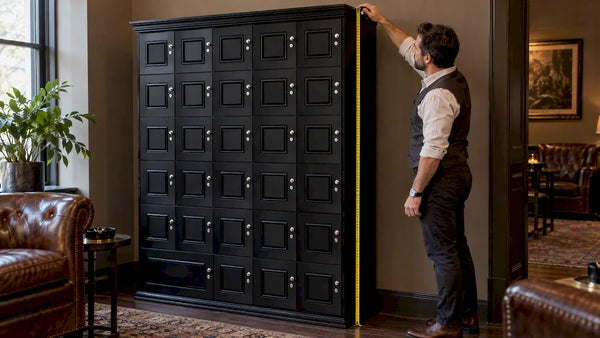
Cigar Locker Dimensions: Sizing Guide for Collectors and Lounges
Cigar locker dimensions explained: compartment sizes, cabinet footprints, capacity math and clearances, so you size a locker bank...
Read Article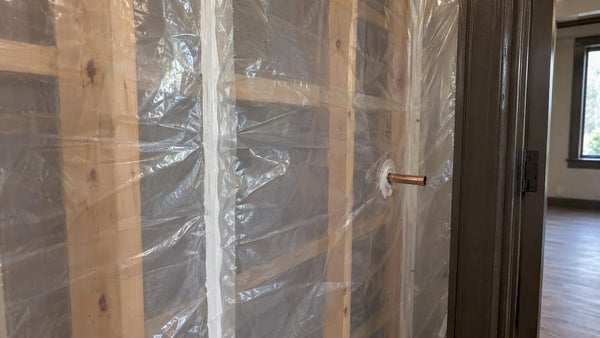
Sealing a Walk-In Humidor: Envelope, Door and Penetrations
How to seal a walk-in humidor properly: vapor barrier placement, door gasket, penetrations and the controlled airflow a...
Read Article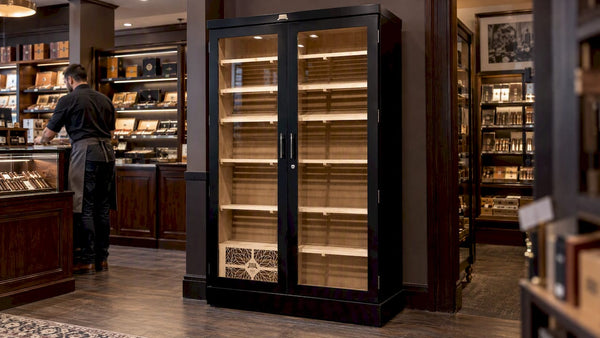
Retail Humidor ROI: How to Measure What a Display Earns
What does a retail or lounge humidor really return? A practical framework for cigar shops, lounges and clubs:...
Read Article